Physical Address
304 North Cardinal St.
Dorchester Center, MA 02124
Physical Address
304 North Cardinal St.
Dorchester Center, MA 02124

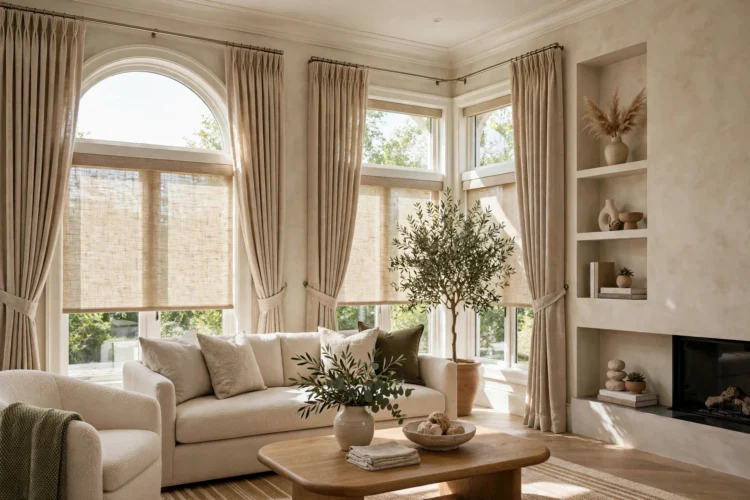
Arched, corner, and extra-wide windows need treatments that follow their shape. These ten ideas solve the tricky cases without a full renovation.
Most windows play by the rules. They sit in the middle of a wall, at a normal height, with a normal width, and any curtain rod from the store fits. Then there are the others. Arched tops, corner glass, spans so wide that one panel looks lost, and skylights you can barely reach. These window treatment ideas cover the windows that make standard curtains fail. The fix is rarely a special product. It is usually a different way of measuring, hanging, or layering what you already know. Start with the shape of the window, not the catalog. A treatment that follows the shape looks intentional. One that fights it looks like a mistake you paid for. Below are ten ideas for the windows that need a second thought, grouped by the problem each one solves.
An arched window wants the eye to follow the curve, so the worst move is a straight rod hung across the middle of the arch. It cuts the shape in half and turns a feature into an awkward gap. A custom arch shade fits the opening instead of fighting it. Honeycomb and pleated shades work well here because they fold flat into the curve and still open for light. Order the shade to the exact measurements of the arch, and measure at three points: top, middle, and base. Arches are rarely perfect, and a shade cut to the smallest measurement fits without gaps. Ready-made arched window curtains rarely fit, so measure first and order to size.
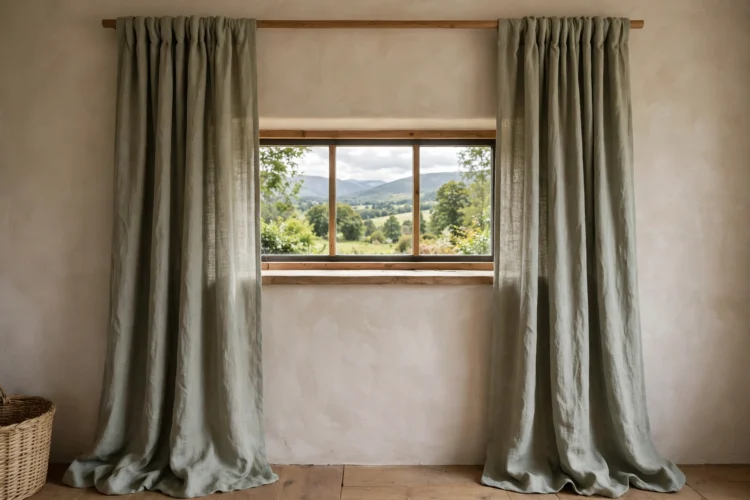
If a custom shade is out of reach, hang stationary side panels outside the arch and leave the curve open. The panels frame the shape instead of hiding it, and the window keeps its light. Mount the rod above the arch or at the spring line where the curve starts, and let the panels fall to the floor. This works best with a fabric that holds its shape, like linen or a cotton blend, because floppy fabric slides into the opening and covers the arch you wanted to show.

Two windows that meet at a corner read as one wide window, so treat them that way. Corner window treatments fail when each window gets its own rod and its own panels, because the corner turns into a gap with hardware showing. A single rod that bends around the corner, or two rods joined with a corner connector, lets one set of panels cover both sides. Hang the panels at the outer edges and let them stack on the wall, not on the glass. That keeps the corner clear and the light coming in from both directions.
Roman shades are another strong option for corners. Mount one shade on each window and match the fabric and the fold so the pair looks planned. Keep the shade length the same on both sides, even if one window is slightly narrower. The eye notices a mismatch in length before it notices a mismatch in width. For privacy, add a sheer layer behind the shades and leave it closed while the shades stay up.
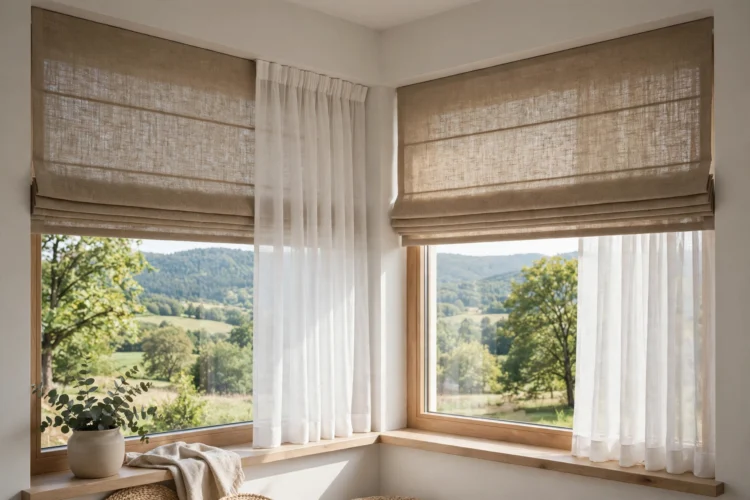
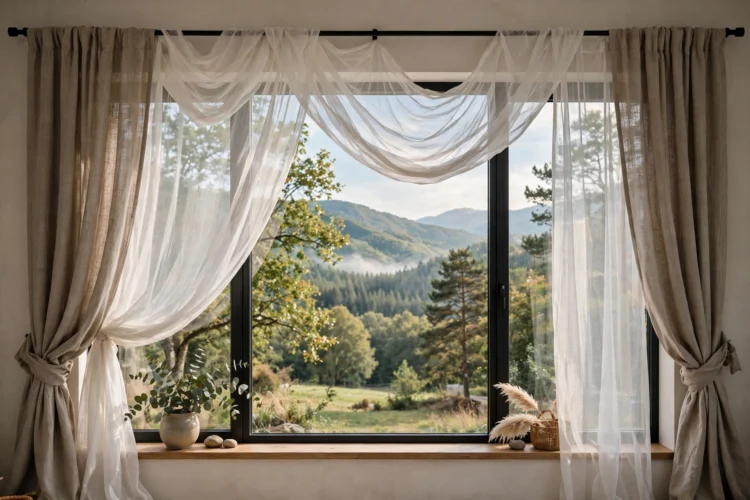
A window wider than eight feet defeats a single pair of curtains. The panels look stretched thin, and the rod sags in the middle. Split the span into two or three panels per side, and add a center support bracket every four to five feet. Wide window drapes need that support, or the whole treatment droops by the end of the first month. Choose a rod with a diameter of at least one inch for spans over ten feet, and check that the brackets anchor into studs, not just drywall.
A sheer layer behind the drapes solves the other problem of wide windows: glare. Sheers soften the light across the whole span while the heavier panels stay stacked at the edges. Mount the sheer rod a few inches inside the drape rod so the layers sit cleanly. When the sun is strong, close the sheers and leave the drapes open, and the room stays bright without the squint.
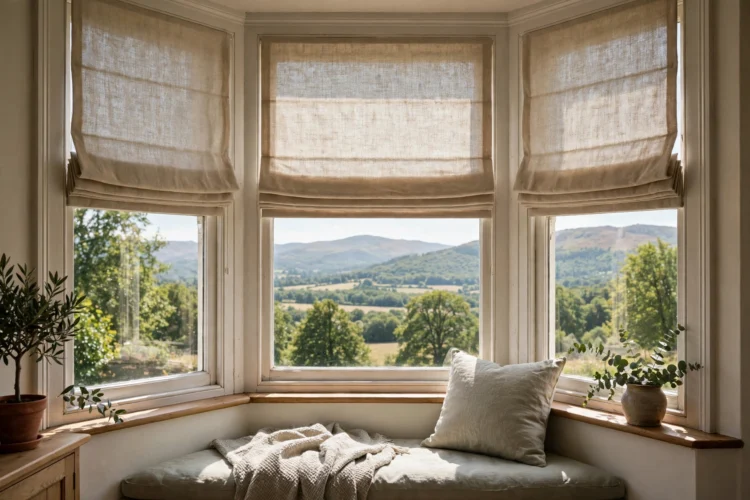
A bay window is three windows at angles, and the treatment should follow those angles instead of bridging across them. Mount a shade or a panel on each section, and match the fabric across all three so the bay reads as one unit. Bay windows suit Roman shades because the flat fold follows each angled section without bunching at the corners.
If you prefer curtains, use a bay window rod that bends at the same angles as the window. Hang the panels at the outer edges and let them stack on the wall. Pair the treatment with bay window ideas for the alcove that make the space useful, like a reading cushion or a small plant shelf, and the bay becomes the best seat in the room instead of a dust trap.
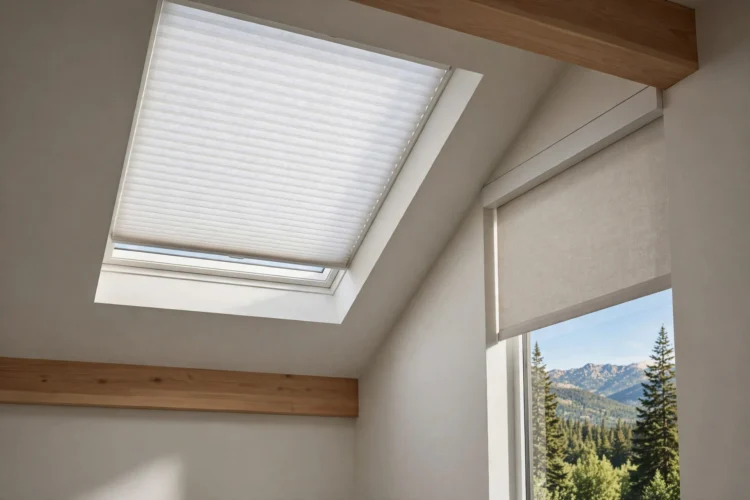
A skylight or a window set high on the wall is easy to ignore until summer, when the sun pours in and the room overheats. Custom window coverings for skylights usually mean a shade that mounts inside the frame and opens with a pole or a remote. Cellular shades are the common choice because they trap a layer of air and cut heat as well as light.
For high windows that you can reach with a step stool, a simple roller shade with a cord loop works, as long as the cord clears any furniture below. Keep the shade color light so the room does not lose its brightness. In an attic bedroom, the same approach works on sloped glass, and attic bedroom ideas for sloped ceilings can help you plan the rest of the room around the light you keep.
A short window makes a wall look squat, and a curtain that ends at the sill makes it worse. Hang the rod close to the ceiling and let the panels fall to the floor, even if the window ends halfway down the wall. The long line stretches the wall and the window looks taller than it is. This is the same trick behind curtain ideas that add height in living rooms, and it works in bedrooms too.
Use a shade inside the frame for privacy, and let the long panels do the visual work. A Roman shade in a plain fabric keeps the setup simple, and the panels add the softness. In a bedroom, layer the same setup with blackout lining on the panels. Bedroom curtain ideas for light control show how the layers work together, and the room stays dark at night without looking heavy during the day.
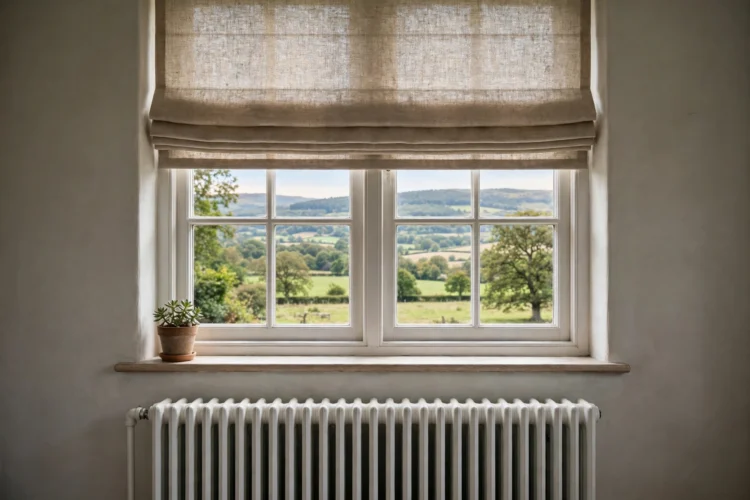
A radiator, a built-in bench, or a desk under a window rules out floor-length curtains. Fabric that rests on a hot radiator is a fire risk, and fabric that pools on a desk collects dust and blocks the work surface. The fix is a shade that ends at the sill, or a cafe curtain that covers only the lower half of the glass. Both leave the space below the window free.
Roman shades suit this spot because they fold up neatly and leave the sill clear. Choose a fabric that can take some heat and some sun, like a cotton canvas, and skip silk near a radiator. If the furniture below is a desk, mount the shade inside the frame so it does not catch on anything when it lowers. Leave a finger-width gap between the shade and the sill so it never drags.
Round windows, triangles, and tiny windows in hallways and bathrooms do not need a full treatment. A simple shade, a tension rod with a small cafe curtain, or nothing at all often looks better than a curtain forced onto a shape it does not fit. For a round window, a sunburst shade or a custom fan shade fills the shape without hiding it.
The rule for small windows is to keep the treatment in proportion. A heavy valance on a tiny window swallows the glass, and a long panel beside a narrow window looks like a mistake. Match the scale, keep the fabric plain, and let the window do its job. When the shape is truly strange, a local workroom can cut a shade to fit for less than a full custom curtain order.

Tricky windows reward a second look before you buy anything. Measure twice, match the treatment to the shape, and the window that looked like a problem becomes the best feature in the room.