Physical Address
304 North Cardinal St.
Dorchester Center, MA 02124
Physical Address
304 North Cardinal St.
Dorchester Center, MA 02124

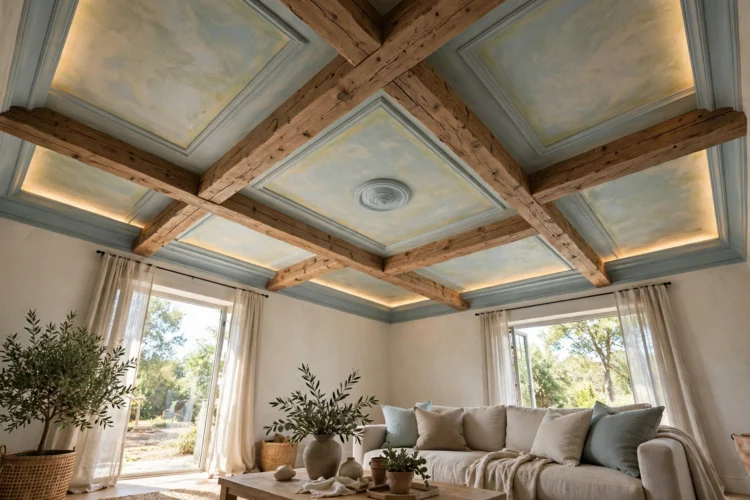
The ceiling is the fifth wall, and it deserves more than flat white paint. These twelve ideas turn it into a real design feature.
Look up. The ceiling covers as much square footage as the floor, and most of us paint it flat white and forget it exists. That is a missed chance. These ceiling design ideas treat the ceiling as a fifth wall, a surface that can add color, texture, and shape to a room without taking up a single inch of floor space. Some of these ideas take a weekend and a can of paint. Others need a carpenter and a budget. All of them start the same way: stand in the room, look up, and ask what the ceiling is doing for you right now. If the answer is nothing, one of these twelve ideas will fix that.
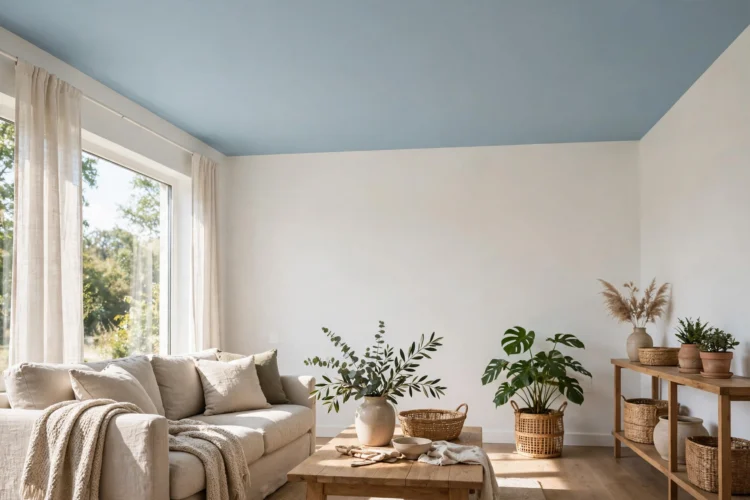
The cheapest ceiling makeover is a can of paint. A soft blue, pale green, or warm greige on the ceiling pulls the eye up and makes the walls look taller, because the color change marks where the wall ends. Painted ceiling ideas work best in rooms with white or pale walls, where the ceiling color reads as a deliberate choice instead of a mistake. Use a flat or matte finish so the paint does not show every flaw in the drywall.
Test the color on a large swatch first and look at it at different times of day. Ceiling paint looks darker than the same color on a wall because it gets less direct light. If the swatch looks right in the morning and too dark at night, go one shade lighter. Two coats are usually enough, and a roller with an extension pole keeps the job off a ladder for most of the room.
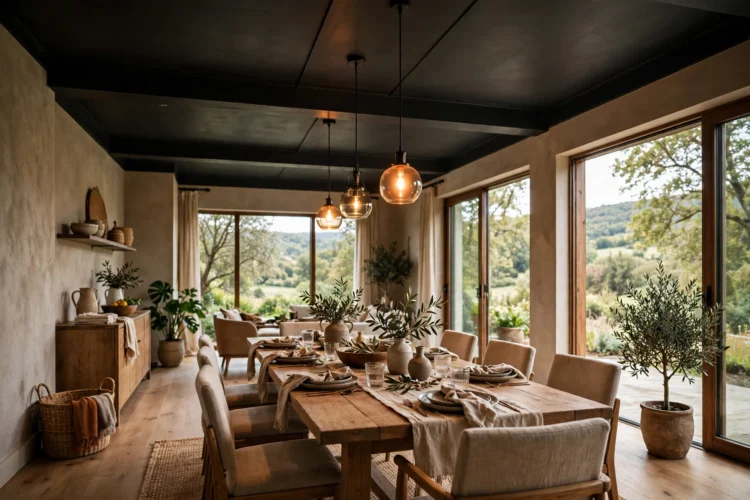
A dark ceiling sounds like it would shrink a room, and in a small room with low light it can. In a large room with tall windows, it does the opposite. Charcoal, navy, or deep green on the ceiling makes the room feel grounded and the walls look taller, because the dark surface reads as a canopy instead of a lid. The trick is contrast: keep the walls light and the trim white so the dark ceiling feels like a choice.
Dark ceilings suit dining rooms and bedrooms best, where the mood matters more than the brightness. Pair the paint with warm light bulbs and a dimmer, so the room can shift from dinner to evening without a second thought. If you are nervous about the commitment, paint the ceiling in one room first and live with it for a month before deciding.
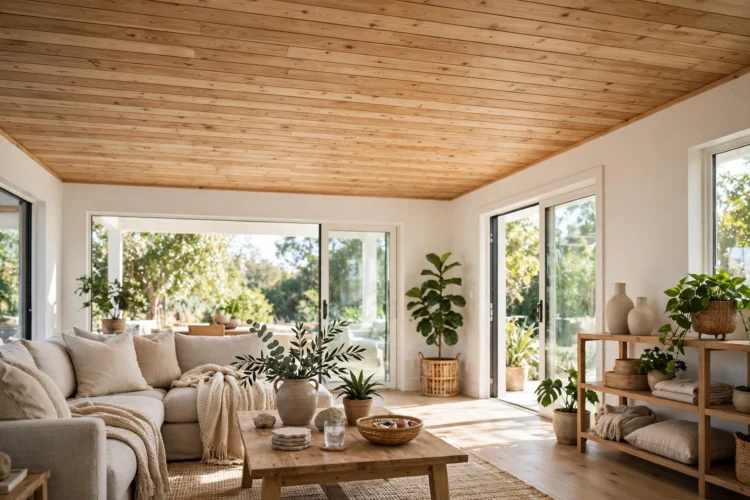
Wood ceiling panels add warmth that paint cannot match. Planks or shiplap run across the ceiling in long lines, and the direction of the lines changes how the room reads. Run the planks across the short side of the room and the room looks wider. Run them along the long side and the room looks longer. Paint the planks white for a coastal feel, or leave the wood natural for a cabin look.
Shiplap is a weekend job for a handy homeowner, but it is heavy work overhead. Rent a lift or borrow a second pair of hands, and start with a level line, because a ceiling that drifts by half an inch shows in every plank after it. Leave a small gap at the walls for the wood to expand, and cover the gap with trim.
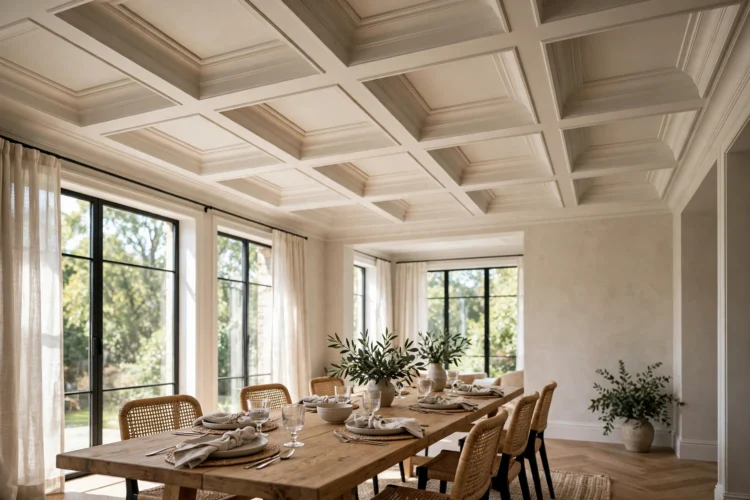
A coffered ceiling is a grid of recessed panels framed by beams, and it is the fastest way to make a plain room look built, not decorated. Coffered ceiling ideas suit dining rooms and living rooms with ceilings at least nine feet high, where the grid has room to breathe. The grid adds depth and shadow, and it gives a chandelier a natural frame to hang from.
Real coffers need a carpenter, but faux beam kits and applied molding can fake the look for less. The key is proportion: keep the grid squares roughly the same size, and do not make the beams so deep that they eat headroom. In a low room, crown molding ideas for low ceilings offer a lighter version of the same effect without dropping the ceiling height.
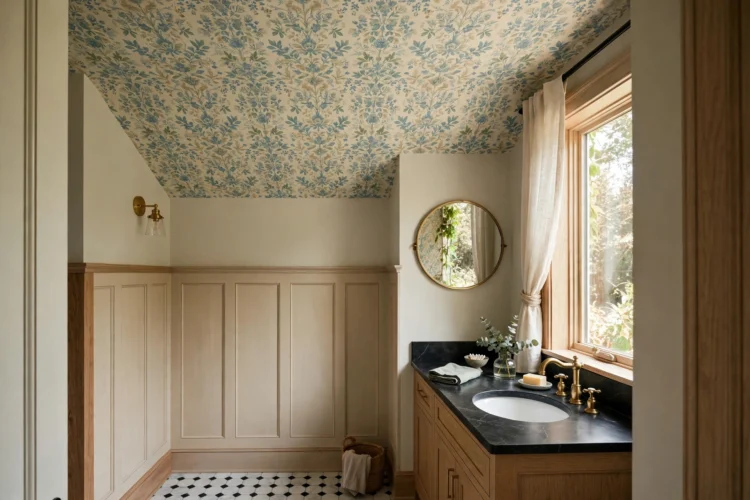
A wallpapered ceiling is the boldest idea on this list, and the one that gets the most compliments. A pattern overhead turns the ceiling into art, and it works in rooms where the walls need to stay calm. Small powder rooms are the classic spot, because the pattern wraps a tiny space and makes it feel finished instead of plain. Bathroom ceiling ideas often start here, and for good reason: the ceiling is the surface you see when you look up from the tub.
Hanging wallpaper overhead is a two-person job, and paste-the-wall paper is easier than paste-the-paper for a first try. Pick a pattern with a small repeat so the seams disappear, and avoid metallic paper in a steamy bathroom, where humidity can lift the edges. A bold pattern on the ceiling pairs best with plain walls and simple fixtures.
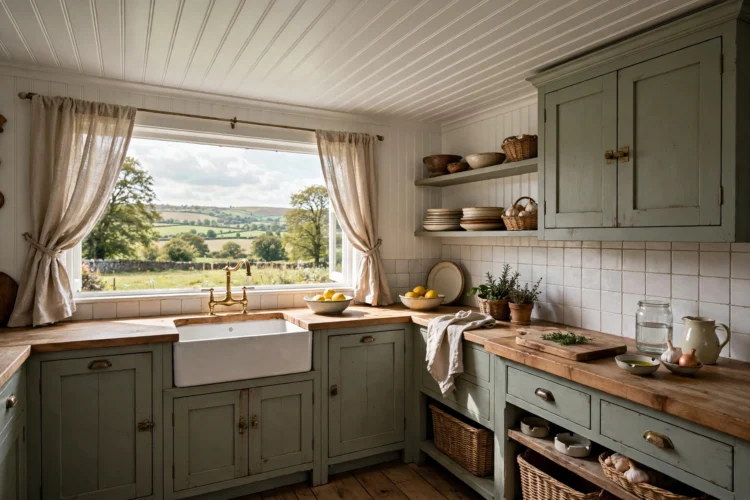
Beadboard is narrow wood planks with a small groove between each one, and it gives a ceiling the look of a cottage porch. It suits kitchens, bathrooms, and bedrooms where you want texture without a strong pattern. Paint it white for the classic look, or paint it a soft color that matches the walls.
Beadboard panels come in sheets, which makes the job faster than individual planks. Cut the sheets to fit, nail them to the ceiling joists, and cover the seams with thin battens. The seams are part of the look, so do not try to hide them. In a bathroom, use PVC beadboard instead of wood, because it will not swell in the steam.
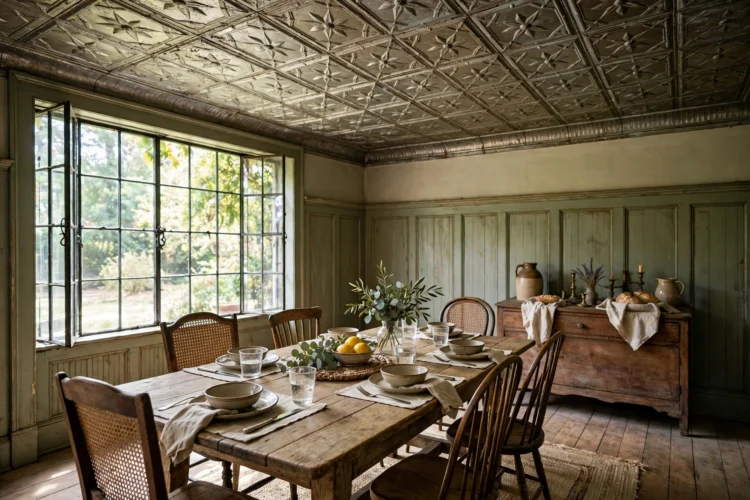
Pressed tin ceiling tiles date back to the 1800s, when they were a cheap stand-in for plaster. Today they read as vintage character, and they suit kitchens, dining rooms, and entryways with an old-house feel. The tiles come in patterns from simple squares to deep floral reliefs, and they catch the light in a way flat paint never does.
Modern tin tiles are usually aluminum or PVC, and they glue or nail to the ceiling. The pattern hides small flaws in the ceiling underneath, which makes them a good fix for a ceiling that is sound but ugly. Paint the tiles to match the room, or leave them in a metallic finish for a bistro look. Keep the pattern simple in a small room, where a busy tile can feel loud overhead.
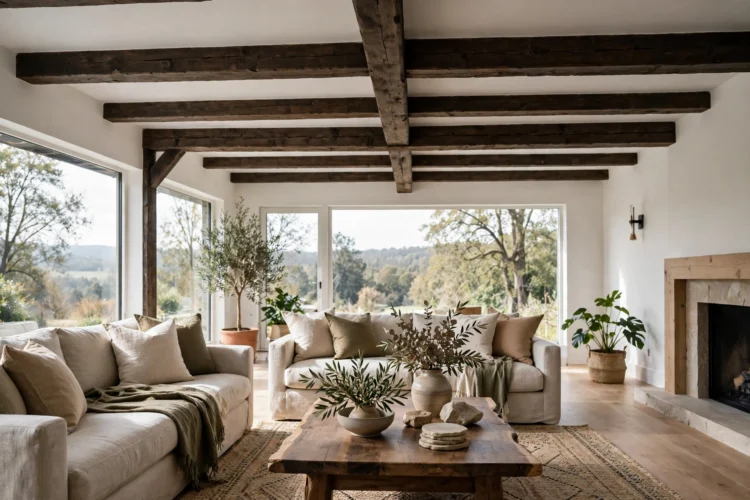
Exposed beams give a ceiling structure and rhythm, and they suit rooms with high ceilings and a rustic or modern farmhouse style. Real beams are structural, but most of what you see in new homes is faux: hollow boxes made from wood or foam that wrap a support or hang from the ceiling. Faux beams are lighter, cheaper, and easier to install.
Space the beams evenly and keep them in proportion to the room. Beams that are too thick for the ceiling look like they fell from a barn, and beams that are too thin look like trim. Dark wood beams on a white ceiling give the strongest contrast, while beams painted the same color as the ceiling add texture without the drama.
A tray ceiling is a raised center panel with a stepped edge, and it adds shape to a room without adding anything to the floor. The step creates a natural line for paint or wallpaper, and the recessed center is a good place for a chandelier or a flush mount. Tray ceilings suit bedrooms and dining rooms, where the ceiling is part of the mood.
The simplest version is a single step made from molding, which a carpenter can build in a day. A deeper tray with cove lighting takes more work, but the glow from hidden lights makes the ceiling look like it floats. Recessed kitchen lighting ideas use the same trick in a work room, where the light matters as much as the look. Keep the tray in the center of the room, and size it to the furniture below, not to the walls.
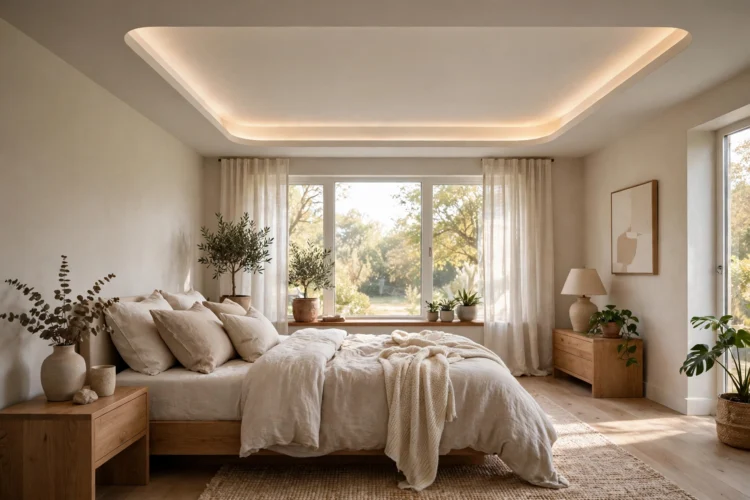
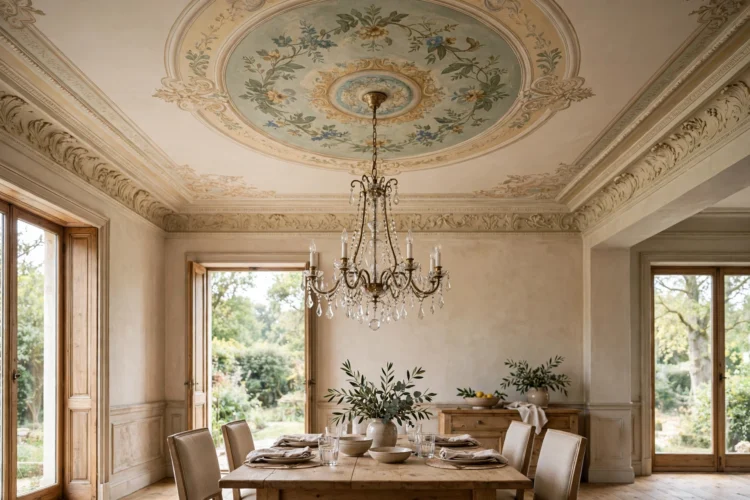
A ceiling makeover is not finished until the light fixture matches it. A statement light, a chandelier, a large pendant, or a cluster of small pendants, pulls the eye up and gives the new ceiling a reason to be noticed. Dining room chandelier ideas show how the right fixture anchors a table and sets the height of the room. Pick a fixture that suits the ceiling treatment: a crystal chandelier suits coffers, while a simple linen drum suits a painted ceiling.
A painted medallion around the fixture is the cheapest finish on this list. Paint a circle or a simple pattern on the ceiling where the fixture hangs, and the light looks placed instead of dropped. It works best on a plain painted ceiling, where the medallion is the only pattern overhead.
A stenciled pattern across the whole ceiling is the last idea, and it suits a room that needs pattern without the cost of wallpaper. Use a large stencil, a small roller, and a light hand, and work in sections so the pattern stays aligned. One accent color on a white ceiling is enough. Two colors start to fight the walls.
The ceiling is the largest surface in the room, and it is the one most people ignore. Pick one idea, start with a single room, and look up when it is done. The room will feel different, and you will wonder why you waited so long to notice the ceiling at all.