Physical Address
304 North Cardinal St.
Dorchester Center, MA 02124
Physical Address
304 North Cardinal St.
Dorchester Center, MA 02124


Eleven crown molding ideas for low ceilings, from slim profiles to ceiling coves. Go slim, paint smart, and keep the room feeling tall.
Low ceilings and crown molding seem like a bad match. Standard molding eats visual height, and a thick profile can make an 8 foot ceiling feel like 7. But the right profile adds finish detail without pushing the ceiling down, and the trick is to go slim, paint smart, and place the molding where it reads as part of the ceiling instead of a border on the wall. These crown molding for low ceilings ideas use profiles under 4 inches, paint tricks, and placement that keeps the room feeling tall. Measure your ceiling height first, then pick the profile that fits it.
Start with a profile between 2 and 3.5 inches tall. Slim profiles add the finished edge of crown molding without the heavy shadow line that makes a low ceiling feel lower. Foam and polyurethane profiles weigh little, cut with a handsaw, and install with adhesive and a few nails, which suits a first timer better than wood that needs perfect miter cuts.
Hold a sample against the ceiling and step back to the far wall before you buy. A profile that looks small in your hand can look right at ceiling height, while a profile that looks generous in the store can crowd an 8 foot ceiling. Most slim crown molding profiles come in 2, 3, and 3.5 inch heights, so pick the tallest one that still looks quiet on your wall. Buy one sample length and live with it taped up for a day.

Paint the molding the same color as the ceiling and the profile stops reading as a separate band. The eye sees one continuous surface from the wall up, and the ceiling feels higher because nothing marks where it starts. Use the same sheen on both, usually flat or matte, so the light falls evenly and no edge line shows.
These painted crown molding ideas work best in rooms with white or pale ceilings, where the molding blends completely. In a room with a colored ceiling, paint the molding the ceiling color anyway and extend that color 2 inches down the wall, so the ceiling reads taller and the wall starts lower. The result reads as a taller wall, and the molding still casts the soft shadow that makes the corner feel finished. Keep the wall color off the molding by taping carefully along the bottom edge.

A slim picture rail mounted a foot below the ceiling adds detail without touching the ceiling line. The rail gives you a place to hang art without nails in the wall, and the gap between the rail and the crown reads as a tall frieze that stretches the wall upward. Paint the rail the wall color so it reads as trim, not as a second molding.
Hang frames from the rail with wire and small hooks, and vary the heights so the display feels collected rather than lined up. The rail suits living rooms and hallways best, where art changes often. These gallery wall ideas show how to group frames above a rail so the wall stays balanced. Keep the rail slim, about 1 inch, or it will compete with the crown above it.

Corner blocks replace tricky miter cuts with a small square block at each inside corner. Cut the molding straight, butt it into the block, and the joint looks deliberate instead of gappy. Blocks suit foam and polyurethane molding especially well, since the material cuts cleanly and the block hides any small gap at the corner.
Pick blocks that match the profile height, or slightly taller, so the corner reads as a design choice. Add small rosettes where the molding meets a door casing for the same reason, a clean stop instead of a cut end. Paint the blocks with the molding so the whole run looks like one piece. A crown molding 8 foot ceiling install goes twice as fast with blocks, because the hardest cuts disappear from the job. Measure each wall run separately, since few rooms have perfectly square corners.
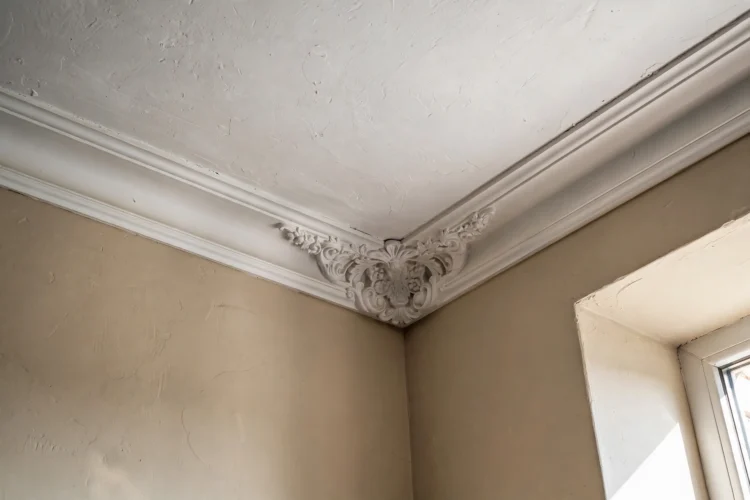
Layer a slim crown profile with a thin bed molding below it to build a custom look from two small pieces. The pair reads richer than a single profile, yet the total height stays under 4 inches, so the ceiling keeps its height. Install the larger profile first, then fit the smaller one tight beneath it, and caulk the seam between them for a single clean line.
Keep both pieces the same color and the same material so the layer reads as one molding. A thin bead of caulk or a slim bead molding along the bottom edge hides the seam and sharpens the line. This trick suits formal rooms where a single slim profile might look too plain, and these formal living room ideas show how layered trim and calm furniture work together. Test the stack on a scrap corner before you commit to the whole room.

A ceiling cove skips the molding entirely and paints a band of ceiling color down the top few inches of wall. The band reads as a soft shadow line that finishes the corner without any wood or foam at all. It suits very low ceilings, below 8 feet, where even a slim profile crowds the room. Tape the line with a level, paint the band, and pull the tape while the paint is wet.
Pair the cove with layered light, since a soft wash of light across the ceiling makes the room feel taller. These living room lighting layers show how to stack floor, table, and ceiling light so no single source does all the work. A cove also suits rooms where the ceiling meets a sloped wall, since paint follows a slope that molding cannot. Add a slim LED strip tucked behind a thin ledge above the cove for a wash of light that lifts the ceiling at night. Keep the band narrow, 3 to 4 inches, or it reads as a stripe instead of a shadow.

Measure every wall twice and cut the molding a hair long, then shave the end to fit. Walls in older homes run out of square, so a piece cut to the exact tape measure reading often lands short at one end. A coping saw handles inside corners on wood profiles, while foam profiles cut cleanly with a sharp utility knife and a miter box. Dry fit each piece before you glue or nail it, and number the pieces on the back with a pencil so the order stays clear. Keep a tube of paintable caulk nearby, since caulk hides the small gaps that even careful cuts leave behind.
Crown molding and low ceilings get along fine when the profile stays slim and the paint stays quiet. Pick one profile, test it taped to the ceiling for a day, and paint it the ceiling color before you judge it. Curtains hung high add to the same effect, and these living room curtain ideas show how to hang them for height. The molding should finish the room, not announce itself, and on a low ceiling the quietest choice usually looks the best.