Physical Address
304 North Cardinal St.
Dorchester Center, MA 02124
Physical Address
304 North Cardinal St.
Dorchester Center, MA 02124

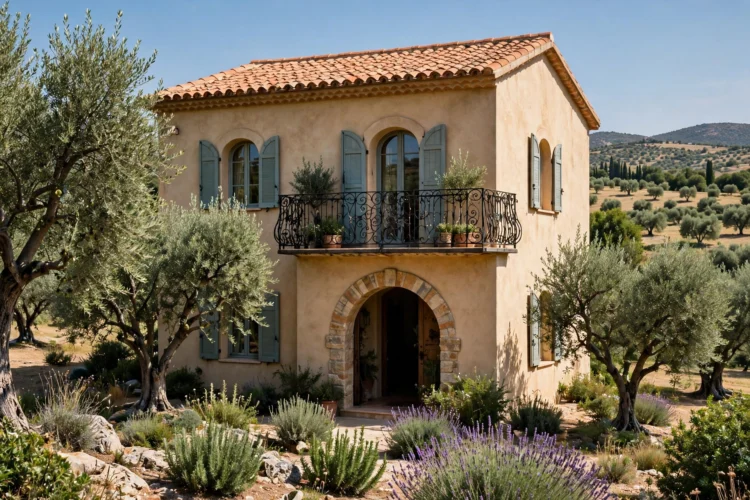
Mediterranean charm comes from a handful of details, not a full redesign. These ten facade details add warmth and old-world character one piece at a time.
Mediterranean houses have a warmth that is hard to fake and easy to love. Sun baked stucco, terracotta tile, arched doorways, and wrought iron all work together to make a house feel like it has been there for a hundred years. The good news is that you do not need a full redesign to get the feeling. Mediterranean house exterior details work best when you add them one at a time, starting with the pieces that suit your house and your climate.
This guide covers ten details you can use on almost any house, from a stucco ranch to a two story new build. Some are small, like a tile accent at the entry, and some are bigger, like a courtyard wall. Each one brings a little old-world charm on its own, and together they build a facade that feels warm, solid, and welcoming.
The mistake with Mediterranean style is to add everything at once. A house with stucco, tile, arches, iron, and a fountain can end up looking like a theme park instead of a home. The better approach is to pick two or three details and let them lead, while the rest of the house stays quiet. Mediterranean house exterior details are forgiving that way, because each one is strong enough to carry the style on its own. Arches and stucco need trim that matches their weight, and trim and casing upgrades for builder-grade homes show profiles that suit old-world facades.
Start with the surface. Stucco texture and a warm color set the tone for everything else, and they are the details people notice first. Then add one architectural feature, like an arch, and one accent, like iron or tile. Keep the palette warm and the lines soft, and the charm will follow.
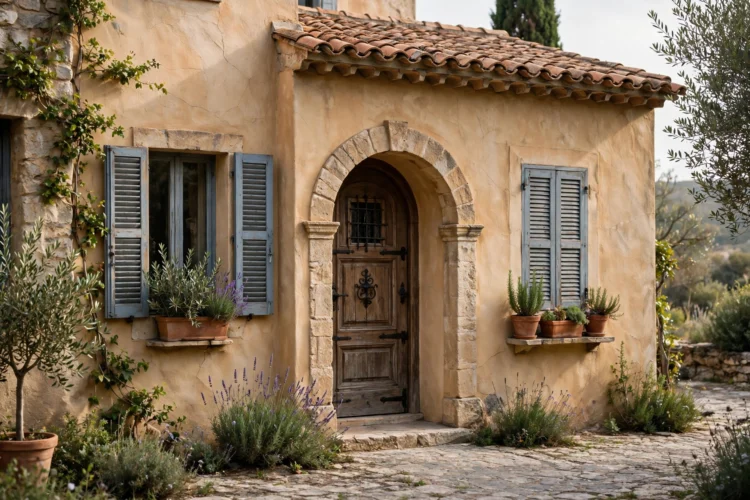
Stucco is the surface that defines a Mediterranean facade. A hand troweled finish with a soft, uneven texture catches the light and makes a flat wall look alive. Smooth stucco reads modern, while a light sand or skip trowel finish reads old-world, so choose the texture that matches the feeling you want.
Mediterranean stucco texture usually comes in warm tones: cream, sand, pale gold, or a soft terracotta wash. Avoid bright white, which can look stark in strong sun, and avoid gray, which cools the warmth out of the style. If your house already has stucco, a fresh coat in a warm tone and a new texture on one accent wall can change the whole facade. Keep the color consistent across the house so the walls read as one surface. For the same warmth inside, faux brick wall ideas add old-world texture to a plain interior wall without a full masonry job.
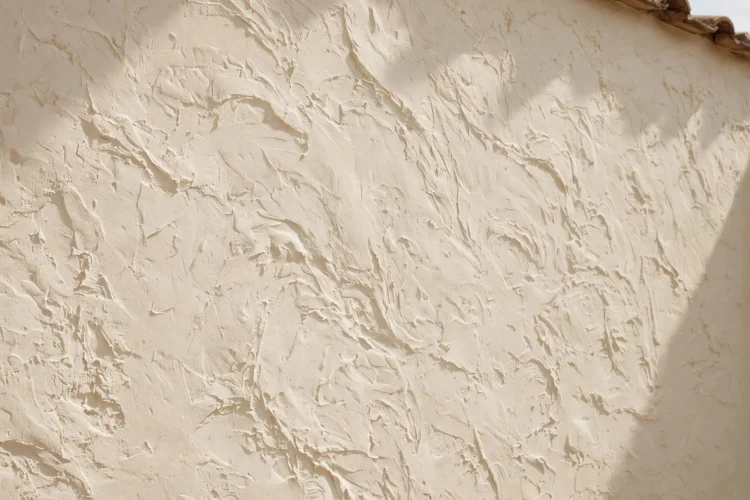
A terracotta tile roof is the most recognizable Mediterranean detail, but you do not need to re-roof the whole house to get the effect. Terracotta tile roof accents work as a small canopy over a window, a cap along the top of a courtyard wall, or a row of tiles over an entry porch. The warm red orange color and the curved shape bring the Mediterranean feeling in a small dose.
If you do have a tile roof, keep it in good repair and replace broken tiles with matching ones, since mismatched tile is easy to spot from the street. If you are adding an accent, use real clay tile rather than a plastic lookalike, because the color variation in real tile is what makes it look old and handmade. One accent is enough. Two or three small accents beat a single large one that looks pasted on.
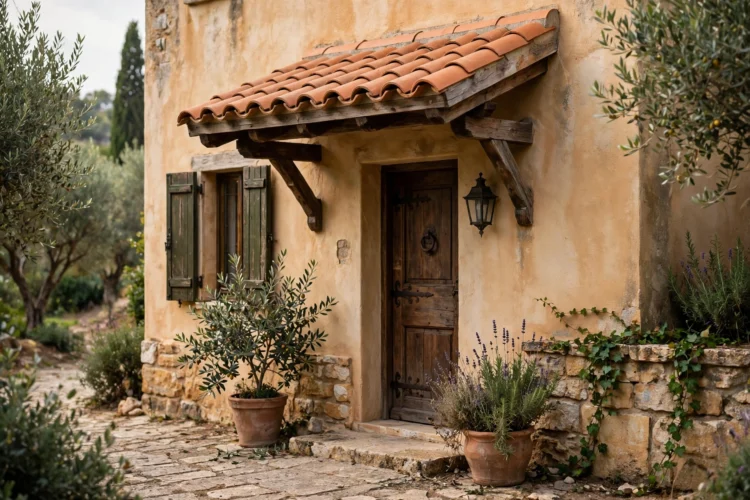
Arches are the shape of Mediterranean design. An arched doorway, an arched window, or a small arched niche in the wall all soften a facade that would otherwise be all straight lines. The arch does not need to be grand. A single arched niche beside the front door, holding a lantern or a potted plant, brings the feeling in a small space.
Mediterranean arched niches work best when the arch is a true curve rather than a flat top with rounded corners, so ask your builder for a proper radius. Keep the trim around the arch simple, with the same stucco as the wall, so the shape does the work. The same idea works inside the house, where interior archway ideas soften boxy floor plans and connect rooms without a door.
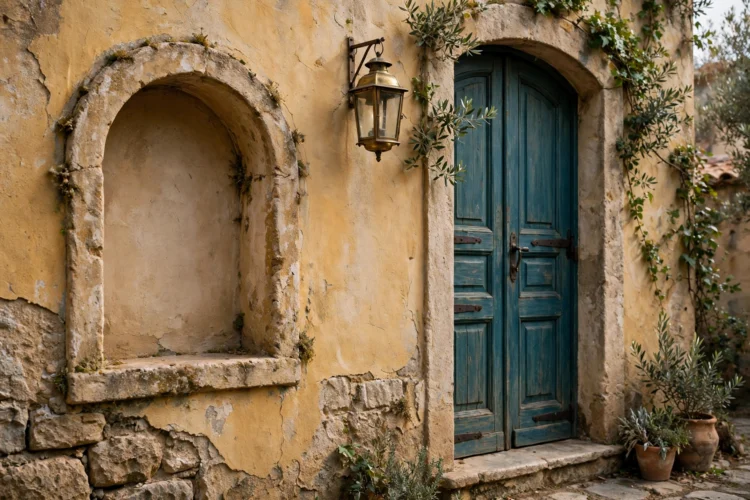
Wrought iron adds a dark, hand forged contrast to warm stucco walls. Window grilles, a gate, a balcony rail, or a lantern all work, and the iron should look simple rather than fussy. Straight bars with a small scroll or two read Mediterranean, while heavy ornate patterns can tip the house toward a different style. A tiled niche or wrought-iron grille works like an accent feature, similar to the accent wall ideas that are not just paint inside the house.
Keep the iron matte black and repeat it in at least two places, such as the gate and a window grille, so it feels planned. Real wrought iron is heavy and needs a solid mount, so check the wall and the fixings before you hang anything. Paint the iron each year or two to keep rust away, since rust stains on stucco are hard to clean.
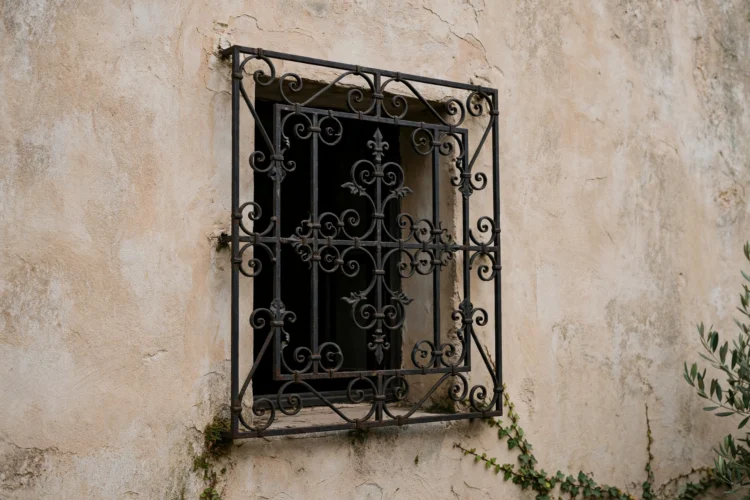
A low stucco courtyard wall with a wooden gate turns a front yard into a private outdoor room. The wall does not need to be high. Waist to shoulder height is enough to mark the boundary and give the entry a sense of arrival, while keeping the house visible from the street. A wooden gate with iron hinges and a simple handle is the finishing touch.
Plant against the wall to soften it. Climbing jasmine, bougainvillea, or a small olive tree all suit the style and grow well in warm climates. Keep the gate wide enough for a wheelbarrow or a large planter, since the courtyard will become the route for garden work as well as guests.
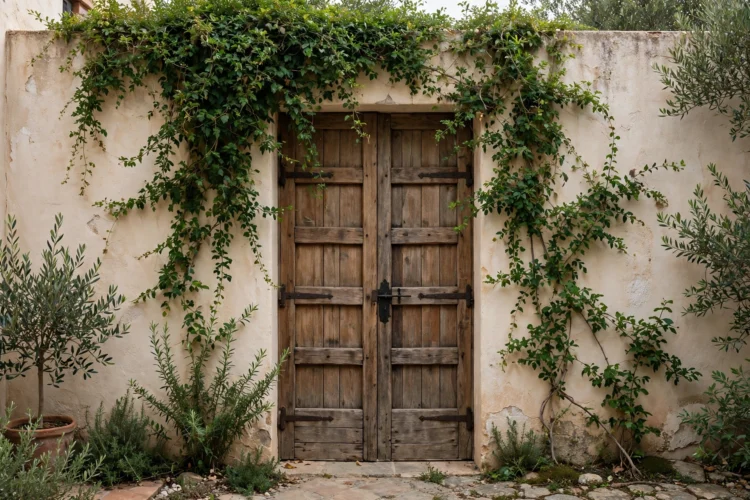
A small panel of mosaic tile at the entry is one of the most charming Mediterranean details, and one of the cheapest to add. A tiled step riser, a house number panel, or a border around the front door all bring color and pattern to a plain stucco wall. Hand painted tiles with a slight variation in glaze look best, since the imperfection is part of the charm.
Keep the tile to one small area so the color stays special. Blue and white is the classic Mediterranean pairing, but warm yellows and greens work too if they match the house. The same idea works inside, where subway tile bathroom ideas show how a small tiled area can change a whole room.
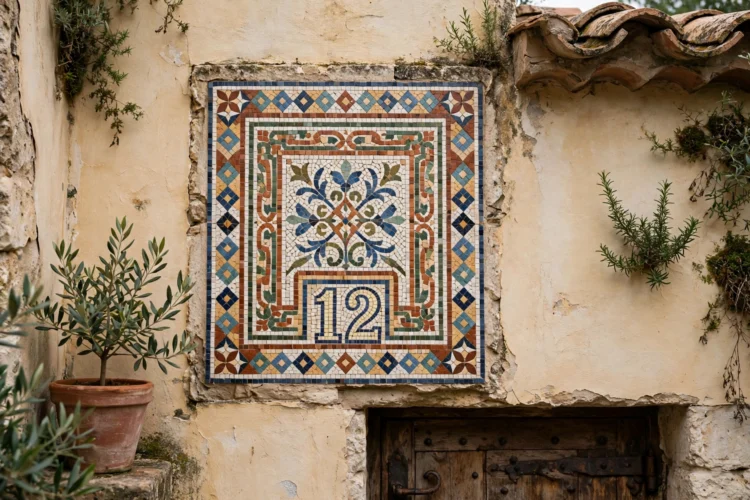
Wood shutters in a warm tone give a Mediterranean facade depth and shadow. They should look like they could actually close, which means sizing them to the window and mounting them on hinges or with a fixed mount that leaves a small gap from the wall. Painted shutters in olive, sage, or a warm brown suit the style better than bright colors.
A canvas awning over a sunny window adds shade and a soft line to the facade. Choose a plain fabric in a warm neutral or a classic stripe, and keep the shape simple. Awnings need cleaning and occasional replacement, so pick a fabric rated for sun and rain, and take the awning down or retract it in a storm.
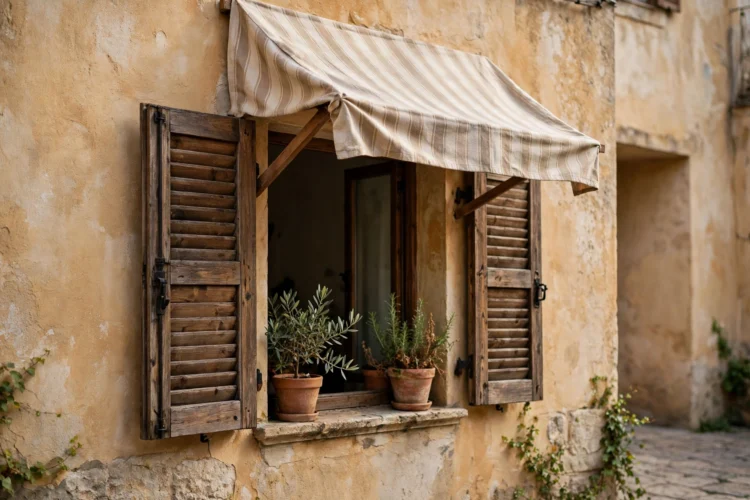
Nothing says Mediterranean like a potted citrus or olive tree by the front door. A pair of matching terracotta pots framing the entry gives the house a welcoming, lived in feeling, and the trees are easy to move or replace. Lemon, lime, and olive trees all grow well in pots in warm climates, and they need only sun, water, and a yearly feed.
Choose pots that are heavy enough not to blow over and wide enough for the root ball to grow. Terracotta is the classic choice, and it ages well, developing a soft patina over time. Keep the trees pruned to a tidy shape so they frame the door rather than blocking it, and water them on a schedule, since pots dry out faster than garden beds. Inside, the same old-world feel comes from plaster and paneling, as these wainscoting styles for modern homes show.
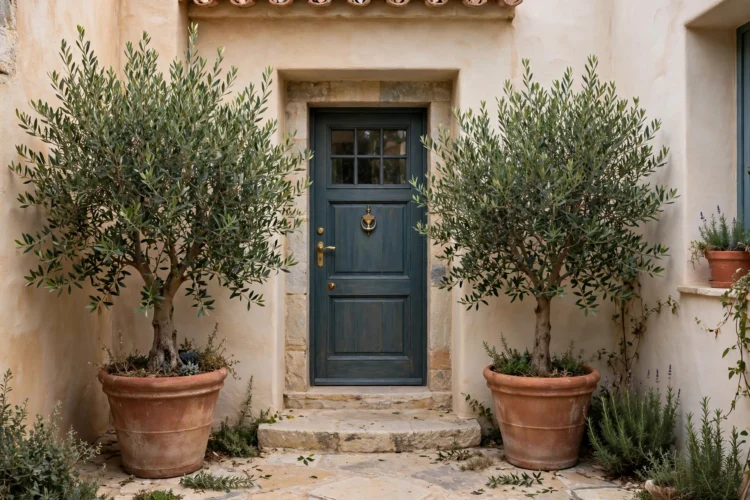
Mediterranean charm is a slow build. Start with warm stucco and one arch, add a tile accent at the entry, and let the iron and the planting follow over time. Each detail is small on its own, but together they give a house the warmth and the old-world feeling that make Mediterranean style so loved. Pick the details that fit your house, keep the palette warm, and let the facade grow into the style one piece at a time.