Physical Address
304 North Cardinal St.
Dorchester Center, MA 02124
Physical Address
304 North Cardinal St.
Dorchester Center, MA 02124

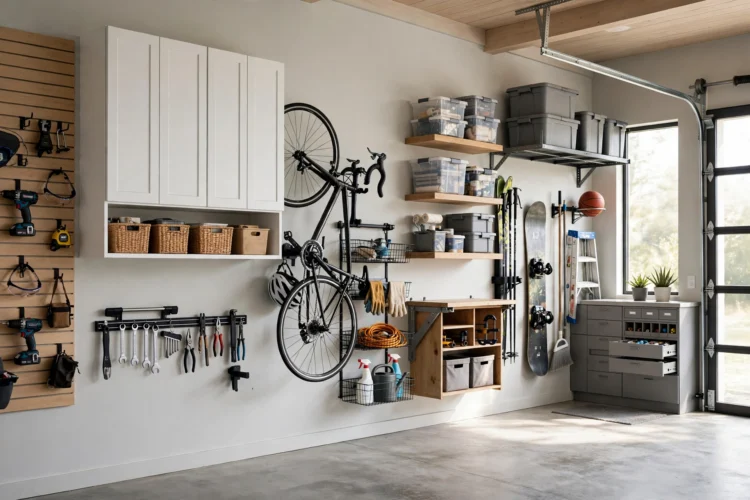
Pegboard is only the start. Slatwall, French cleats, cabinet walls, and tool rails each hold different loads, and the right mix keeps heavy tools and light gear in their place.
Garage storage wall ideas start where pegboard stops. Pegboard holds light hand tools well, but it sags under heavy gear, its hooks fall out, and it looks tired after a few years. The good news is that the wall can do much more. Slatwall takes heavy loads, French cleats move with your projects, cabinet walls hide the mess, and a simple rail keeps daily tools within reach. The eleven ideas below compare them honestly, so you can match each wall to the weight it will actually carry.
Slatwall is the workhorse of garage walls. The panels have horizontal grooves that accept hooks, baskets, shelves, and bins, and the whole system locks in place instead of hanging loose. A good slatwall panel holds heavy tools, power tool cases, and even bikes when the hooks are rated for the load. Mount the panels into wall studs with screws, never just into drywall, because the panel is only as strong as its fixing.
Slatwall costs more than pegboard, but it earns the money on the heavy wall. Start with one panel over the workbench, where the heaviest tools live, and expand later if the system proves itself. Slatwall garage storage also rearranges in minutes: lift a hook out of the groove, slide it along, and the wall changes with the project.
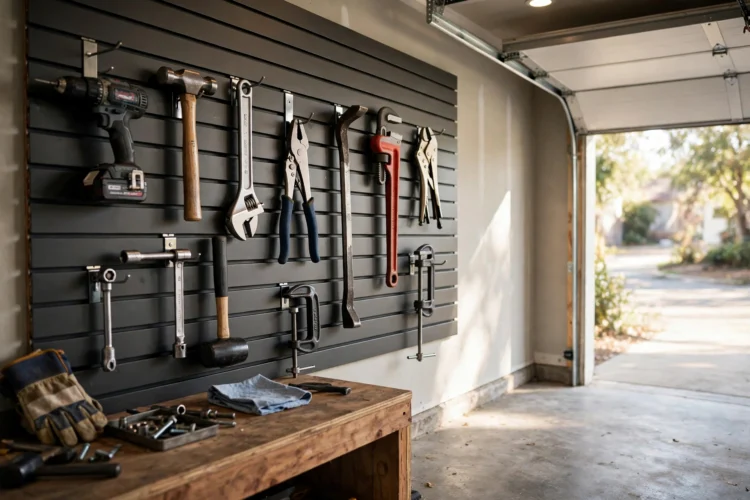
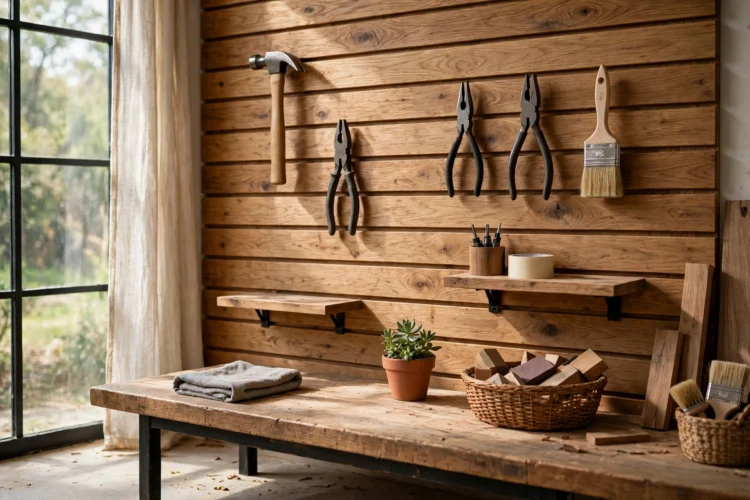
A French cleat wall is two strips of wood cut at an angle, one screwed to the wall and one on the back of a holder. The holder drops onto the wall strip and locks in place under its own weight. Build the wall from plywood strips, then build holders for each tool: a shelf for the drill, a rack for screwdrivers, a bin for sandpaper. Every holder moves, so the wall grows with your collection.
Cleats suit a garage tool wall for woodworkers and DIYers because the holders are custom. A holder that fits your exact saw is better than a generic hook that almost fits. Keep the cleat angle consistent across the whole wall, usually 45 degrees, so every holder works on every strip. A french cleat wall is the cheapest heavy-duty option here, and it looks sharp when the holders are built from the same plywood.
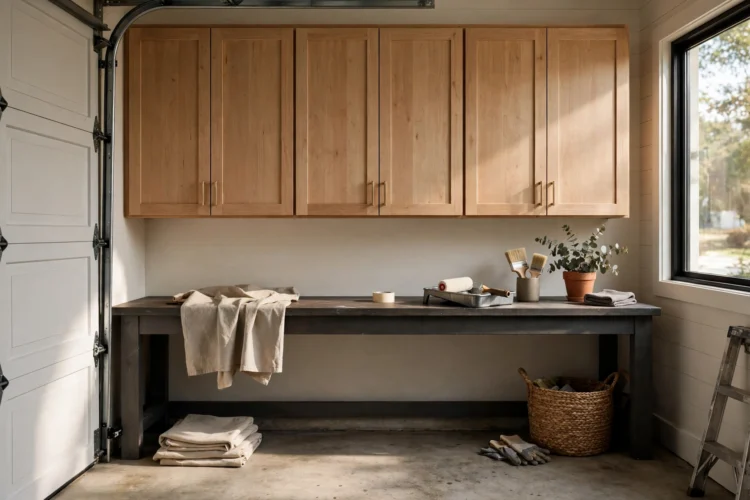
Some garage contents will never look good on display: half-empty paint cans, car fluids, old rags, and cleaning chemicals. A cabinet wall hides all of it behind flat doors. Wall-mounted cabinets keep the floor clear for sweeping, and they protect the contents from dust. Keep the most-used items at eye level and the rarely touched ones up high. Add a lock or a high latch if kids use the garage.
Garage wall cabinets work best as one full run, not as a single box lost on a big wall. A run of matching cabinets reads as furniture, while one cabinet reads as an afterthought. Inside, use the same bin and label habit as the rest of the garage, so the hidden storage stays organized instead of becoming a dark junk drawer.
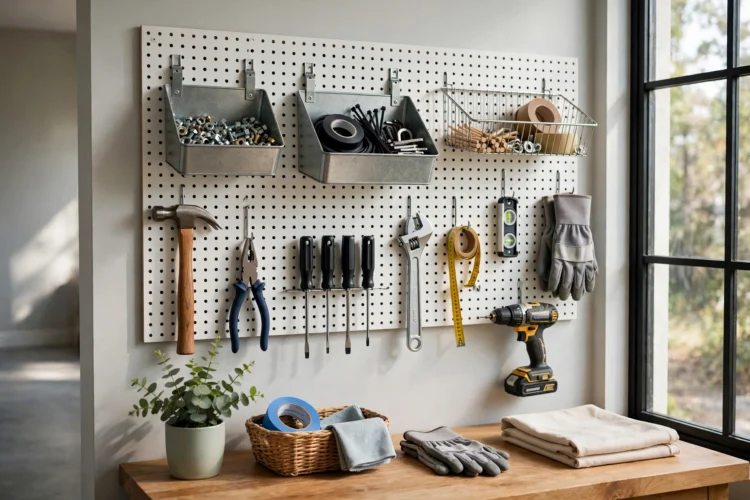
Pegboard deserves a second chance if you fix its weak points. Standard hooks fall out, so use locking hooks that twist into place. Add metal bins that hang from the board for screws, drill bits, and small parts. Paint the board a dark color so the tools stand out against it, and mount it on battens with a gap behind so hooks have room to seat fully.
Pegboard still suits light gear best: hand tools, measuring tools, and craft supplies. Keep heavy tools on slatwall or cleats instead. An upgraded pegboard over a small bench is a fine system, and it costs a fraction of a full slatwall install. The trick is respecting its limits instead of fighting them.
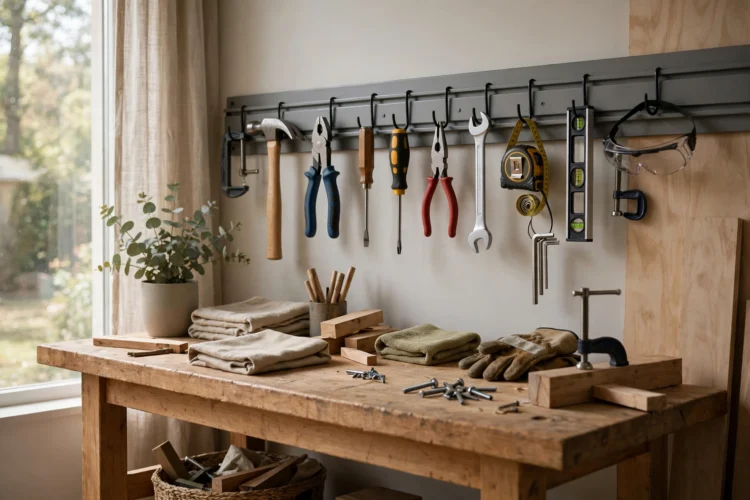
A tool rail is a single metal bar with sliding hooks, mounted above the workbench at arm height. It holds the five or six tools you reach for every day: the hammer, the tape measure, the utility knife, the screwdrivers. The rail keeps them visible, reachable, and off the bench surface, which means the bench stays clear for actual work.
Mount the rail where your hand naturally goes when you stand at the bench, usually just above the backsplash. If the rail is too high, the tools become decoration. Too low, and they crowd the work surface. One rail beats three crowded pegboards for daily tools, because the tools you use most should be the easiest to grab and the easiest to return.
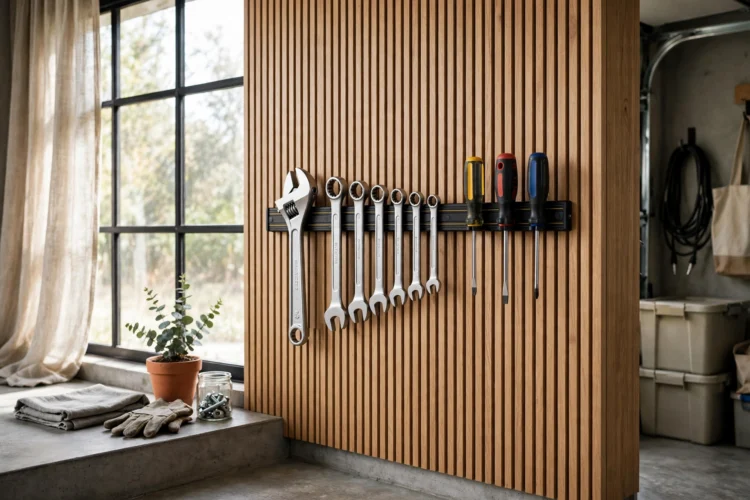
A magnetic strip turns a wall into a grab-and-go rack for wrenches, screwdrivers, pliers, and scissors. Mount a strip or two above the bench and the small metal tools line up in a neat row, visible and sorted by size. The strip holds them firmly enough for daily use and releases them with a simple pull. It also shows at a glance what is missing, which makes cleanup a quick scan instead of a hunt.
Keep the strip away from phones, credit cards, and anything with a magnetic stripe. Use it only for tools, and keep it short enough that the row stays readable. Two strips of about two feet each beat one long strip that turns into a cluttered line. Small tools deserve a small system.
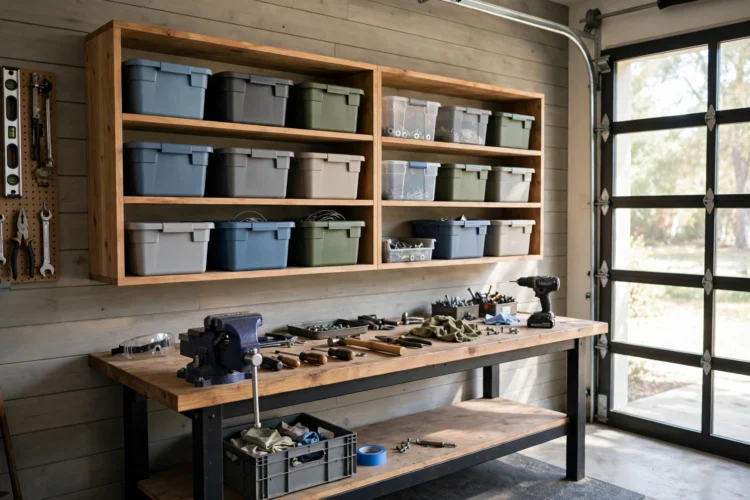
Open shelves above the workbench hold the things you need to see: labeled bins of fasteners, glue, tape, and sandpaper. Build the shelves from plywood and brackets screwed into studs, and keep them shallow, about twelve inches deep, so nothing hides behind a front row. Label the front of every bin in large words so the shelf reads like a menu.
Open shelving works when the contents are tidy and labeled. When the shelves fill with random boxes, they become visual noise, and that is when a cabinet door earns its keep. The same shelving logic works inside the house too: pantry shelving ideas use shallow, labeled shelves for the same reason. Keep one shelf empty as a landing spot for the next project, and the wall stays flexible.
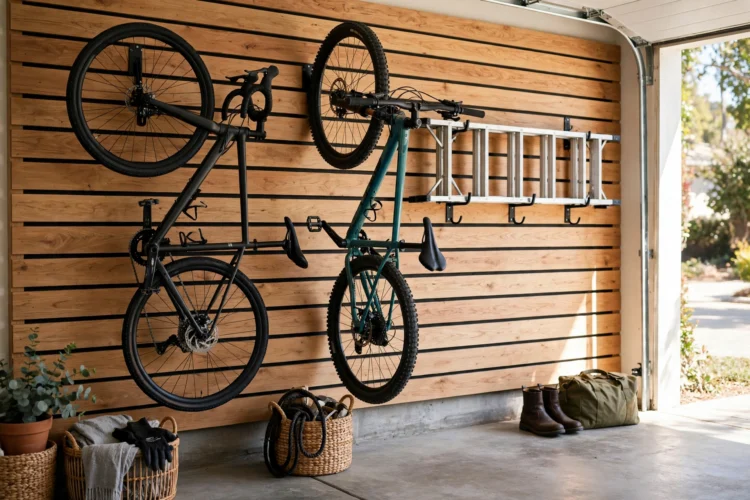
Bikes and ladders are the two bulkiest things in a garage, and both belong on the wall. Vertical bike hooks lift the bike by its front wheel and free a full parking strip. A ladder hangs horizontally on two large hooks high on the wall, out of the way but easy to lift down. Put both on the same wall if you can, so one wall takes the bulk and the rest of the garage stays open.
Check the hook rating against the real weight before you hang anything. A bike hook rated for a road bike will not hold a heavy e-bike. Mount every hook into a stud, and test it with a firm pull before you trust it overnight. Heavy items on a wall need strong fixings, not hope.
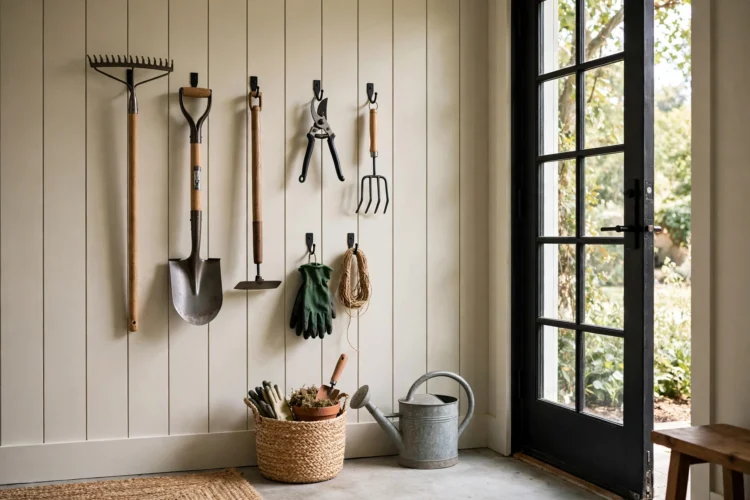
Garden tools live best by the door they leave through. A short wall near the side door, with hooks for shovels and rakes and a rack for hoses, keeps muddy tools out of the house and out of the car bay. Hang long-handled tools head down so dirt falls to the floor instead of onto the handles. Add a small shelf for gloves, twine, and seed packets.
A boot tray under the rack catches the mud before it spreads across the concrete. If the side door opens to the garden, this wall saves a dozen trips a week. It is a small system, but it protects the rest of the garage from the messiest tools in the house. The same idea works for laundry room shelves near the door: one landing spot, everything with a hook, nothing on the floor.
The best wall in the world drifts without labels. Put a small label at the start of each zone on the wall: hand tools, power tools, garden, car care. Labels tell everyone in the house where things belong, and they make the weekly reset a matter of matching, not guessing. Use a label maker or stencils, and keep the words plain. A label that needs explaining has failed.
Walk the wall once a month and check that every hook still holds what its label promises. Hooks migrate over time, and a five-minute correction keeps the system honest. A DIY wooden crate on the floor below the wall can catch the overflow: spare parts, rags, and the tools waiting for a hook. The wall works when the floor stays clear, and the floor stays clear when the wall tells the truth about where things live.
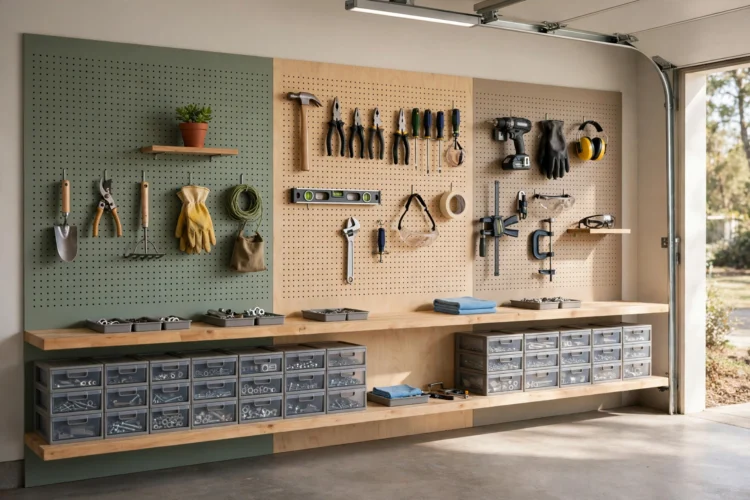
Start with the heaviest wall first. Slatwall or cleats over the bench, a cabinet wall for the mess, and a rail for the daily tools. The rest of the wall can wait until the heavy work is hanging safely.