Physical Address
304 North Cardinal St.
Dorchester Center, MA 02124
Physical Address
304 North Cardinal St.
Dorchester Center, MA 02124

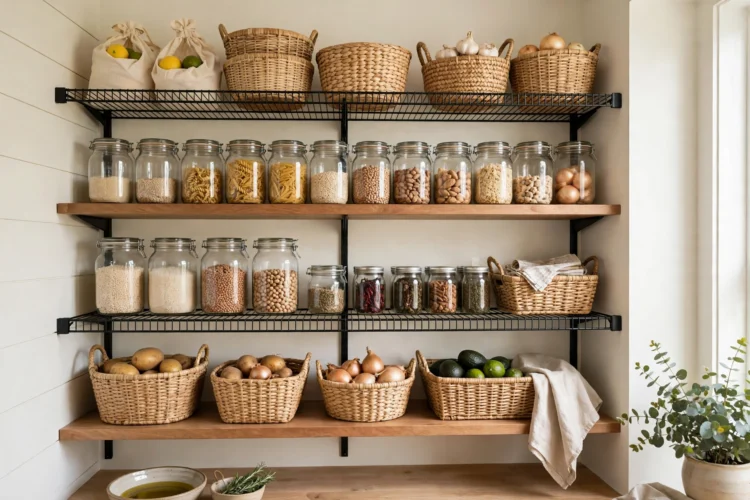
Wire, wood, and adjustable shelves compared by cost, strength, and looks, so you can pick the pantry setup that fits your wall, your groceries, and your budget.
Pantry shelving ideas make or break how a pantry works. A good shelf holds the weight of canned goods, keeps everyday items within reach, and still looks decent when the door swings open. A bad shelf sags, wastes vertical space, or hides food at the back until it expires. The good news is that you do not need a full remodel to fix it. Wire, wood, and adjustable pantry storage shelves each suit a different budget and a different kind of cook. This guide compares eight pantry shelving ideas by cost, strength, and looks, so you can pick the setup that fits your wall, your groceries, and your wallet.
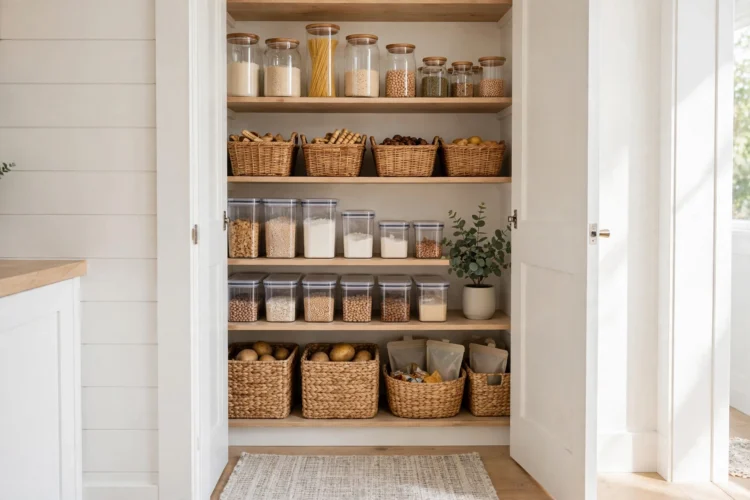
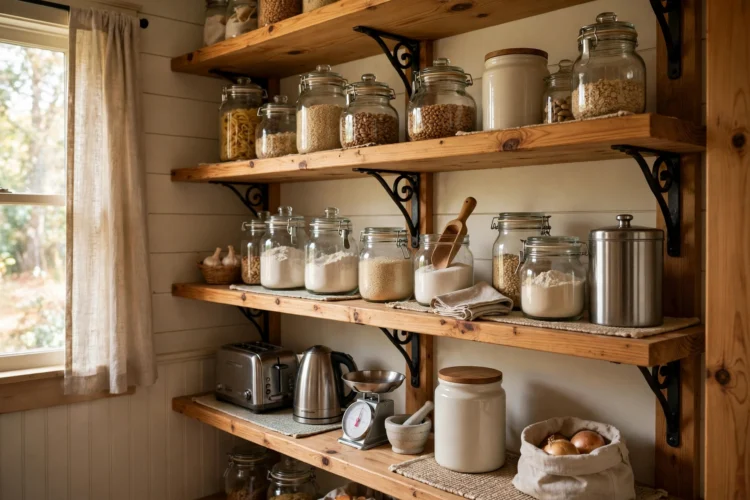
Solid wood shelves are the classic choice for a reason. A thick pine or plywood board spans a wide gap without bending, and it holds heavy jars, flour canisters, and small appliances without complaint. Wood also warms up a pantry that would otherwise feel like a storage closet, and you can paint or stain it to match the rest of the kitchen. The trade-off is cost and upkeep. Wood runs higher than wire, and bare boards can stain from spills, so seal the surface or line the shelves with washable mats. Keep spans under about 36 inches between brackets, or the middle will bow over time under a full load. Wood pantry shelves pair well with a worktop below, and they sit naturally beside butcher block countertop ideas in a kitchen that leans warm and traditional. If you want one upgrade that changes how the whole pantry feels, start here.
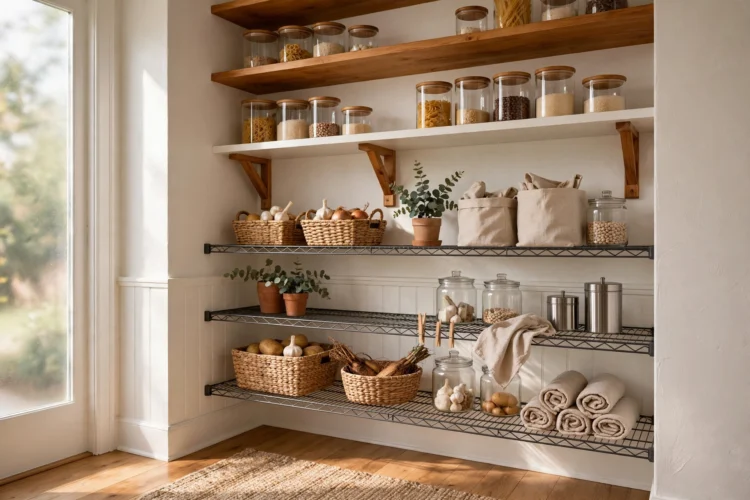
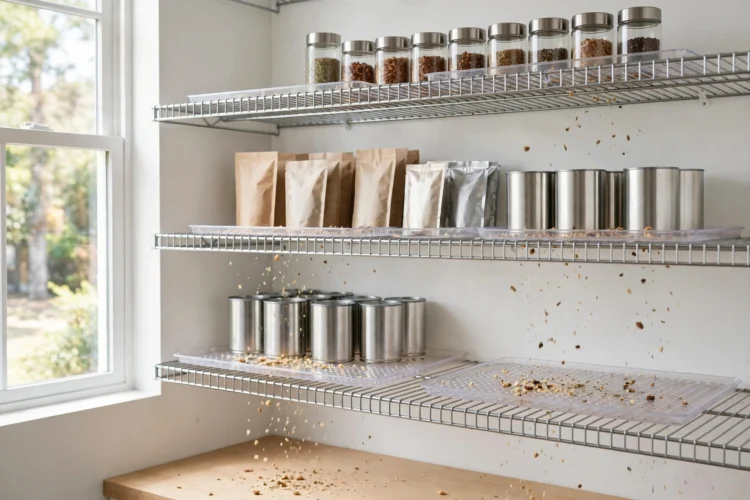
Wire shelving is the budget pick that still does a serious job. Open wires let air move around stored food, which helps in a pantry that runs warm or damp, and crumbs fall through instead of collecting on a flat surface. You can wipe the wires clean in minutes, and most systems clip together without special tools. The weak point is small items. Spice jars, packets, and cans under a certain size can tip or slip between the wires, so add shelf liners on the levels where you keep small things. Wire also looks more utilitarian than wood, which suits a working pantry but can feel plain in a pantry with glass doors. Wire pantry shelving costs the least of the three main materials, and it is the fastest to install, so it works well when you want a working pantry now and plan to upgrade later.
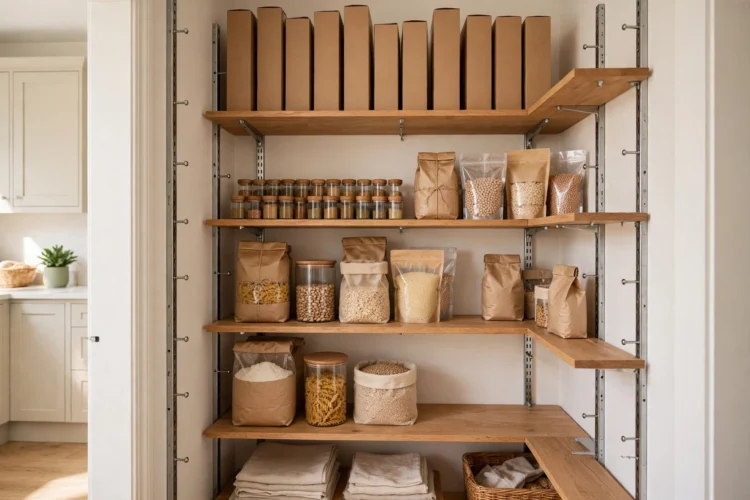
Adjustable shelving solves the problem every pantry owner knows: the shelf spacing that worked last year no longer fits what you buy now. Shelf pins or wall tracks let you move a shelf up or down in minutes, so tall cereal boxes, short spice jars, and bulk packs each get the height they need. This flexibility also cuts waste, since you stop stacking things in front of each other just because the gap is wrong. Adjustable pantry shelves work in any material, though wood and melamine boards on pin supports are the most common pairing. Plan the track spacing before you drill, and leave one shelf fixed near the bottom to keep the uprights rigid. This is the most practical of all pantry shelving ideas for a household whose shopping habits change, and it fits neatly into wider kitchen organization ideas for the rest of the kitchen too.
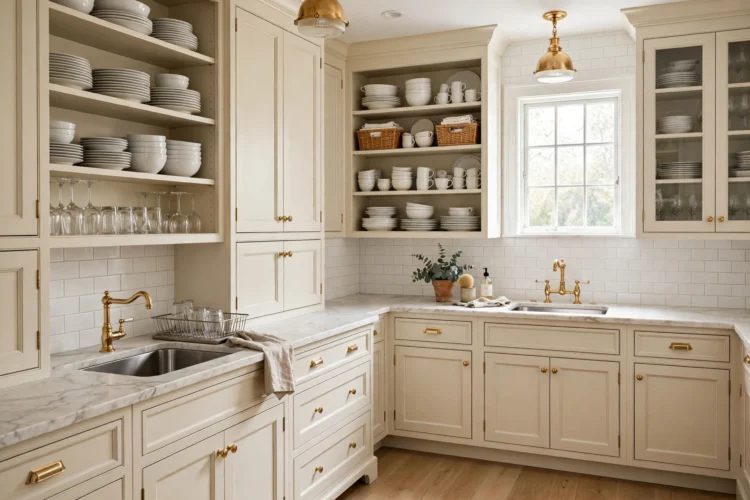
Floating shelves suit small pantries and open pantries where brackets would crowd the view. A hidden bracket holds the shelf from the wall, so the shelf looks like a clean plank with nothing under it. That clean look makes a narrow pantry feel wider, and it leaves the wall below free for hooks, a bin, or a step stool. Floating shelves carry less weight than bracketed shelves, so keep the heavy items low and the light ones up high. Use solid brackets rated for the load, and always screw into studs rather than drywall alone. Two or three short floating shelves often work better than one long one, because shorter spans sag less and let you group items by use. If the pantry opens onto the kitchen, the look ties in with open shelving kitchen ideas that keep everyday dishes and jars on display.
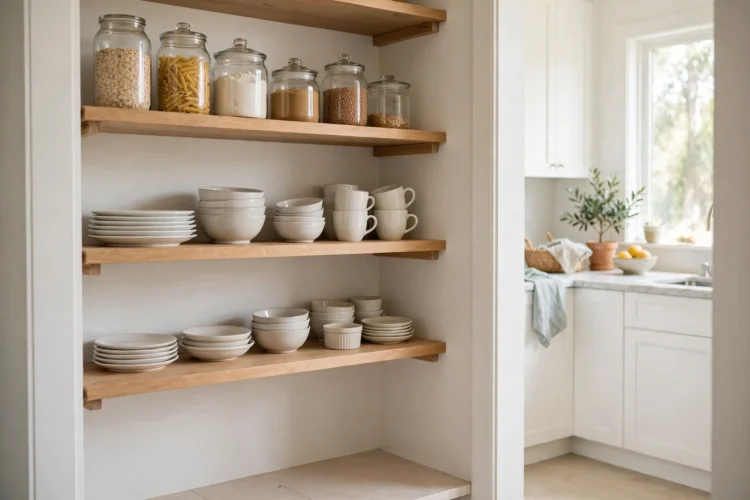
Deep shelves, around 16 to 20 inches, hold bulk packs, large pots, and the extra supplies you buy on sale. The extra depth means fewer trips to the store and room for the big items that never fit on a standard shelf. The risk is the back row. Items pushed to the back disappear from view and expire unnoticed, so deep shelves need a system. Use clear bins that slide out like drawers, keep one category per bin, and label the front so you can see what lives at the back without pulling everything out. Reserve the deepest shelf for the items you reach for least, and keep everyday goods on a shallower shelf at eye level. Deep pantry storage shelves reward a household that buys in bulk, but they punish a household that never looks behind the front row, so the bins matter as much as the boards.
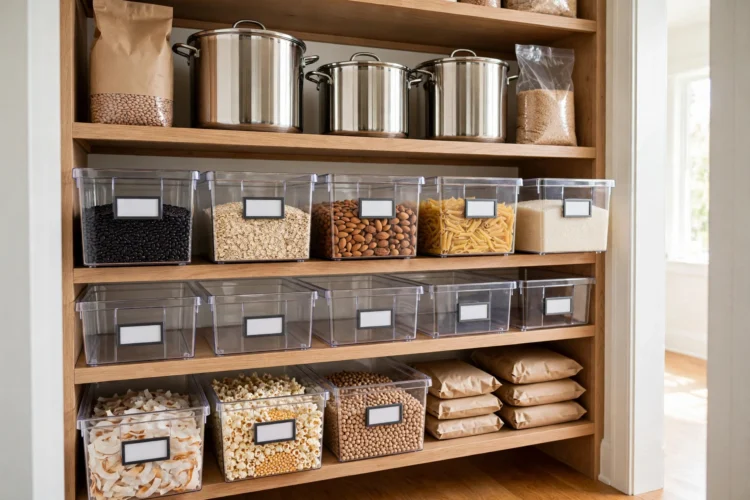
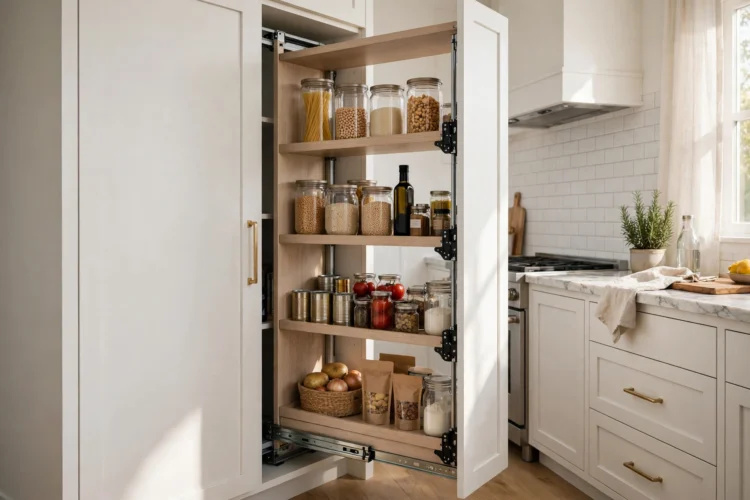
Pull-out shelves turn the back of a cabinet into usable space. A shelf on full-extension slides rolls toward you, so you can reach the last jar without moving five others out of the way first. This matters most in lower cabinets and deep pantries, where bending and reaching turn into a daily chore. Pull-outs cost more than fixed shelves, and the slides need solid mounting, so measure the opening twice and pick slides rated above the weight you plan to store. Shallow pull-outs work best for cans and jars, while deeper ones suit pots and small appliances. A pull-out at the bottom of the pantry also makes a good home for heavy items such as a stand mixer, since you roll it out instead of lifting it over a lip. Among pantry shelving ideas, this one saves the most effort per dollar for anyone who cooks daily.
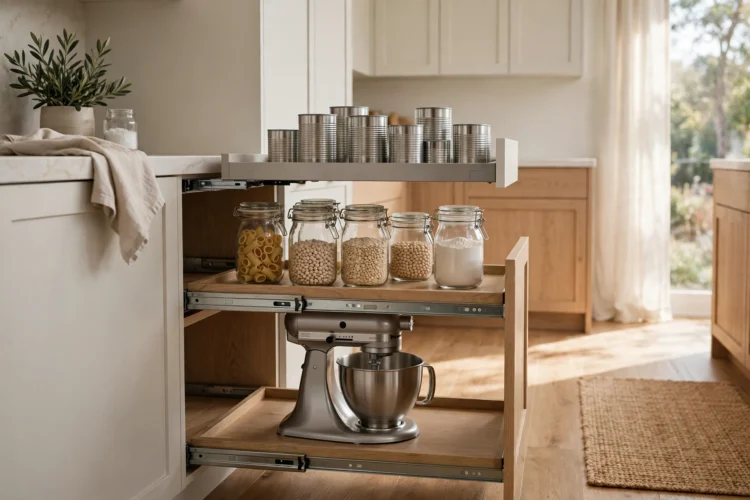
Corners waste more pantry space than any other spot. A standard shelf runs into the corner and stops, leaving a triangle of dead space behind it. Corner shelving fixes that with L-shaped boards that wrap both walls, or with a rotating tray that spins the back row to the front. L-shaped shelves cost little more than straight ones, but they need careful measuring, since few corners are perfectly square. Rotating trays cost more and hold less, yet they work well for spices and condiments that otherwise vanish at the back. Keep the corner shelf shallow enough that you can still see what sits there, and reserve it for a single category such as baking supplies or canned goods. A corner done well adds a full shelf of storage to a pantry without taking a single inch from the rest of the room.
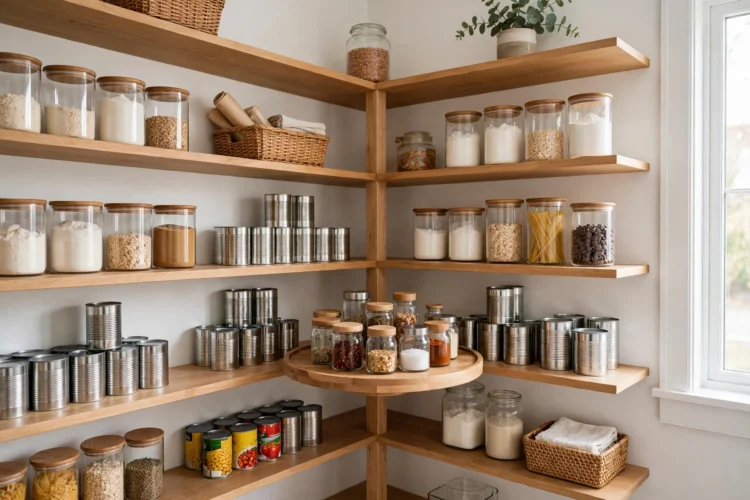
Mixing materials gives you a custom look without a custom price. Use wood shelves where you see them and wire where you do not, or pair a wood top shelf with adjustable wire below. Another proven mix is painted melamine shelves on wood brackets, which reads as built-in from the front and costs far less than solid hardwood throughout. The trick is to pick one material as the star and let the other support it, so the pantry looks planned rather than patched together. Match the finish to the kitchen next door, and a simple pantry can echo Shaker cabinet kitchen ideas without a single new cabinet. Before you buy anything, measure the wall, list what the shelves must hold, and price the same layout in wire, wood, and a mix of the two. The cheapest option that still holds your heaviest items is usually the right one, and you can always swap a single shelf later as your needs change.