Physical Address
304 North Cardinal St.
Dorchester Center, MA 02124
Physical Address
304 North Cardinal St.
Dorchester Center, MA 02124

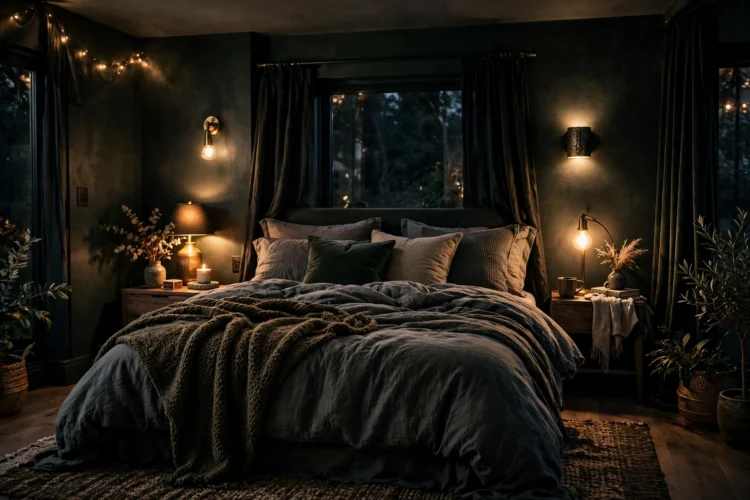
Deep wall colors can make a bedroom feel like a cocoon instead of a cave, as long as the lighting is layered. These dark bedroom ideas balance moody color with warmth and light.
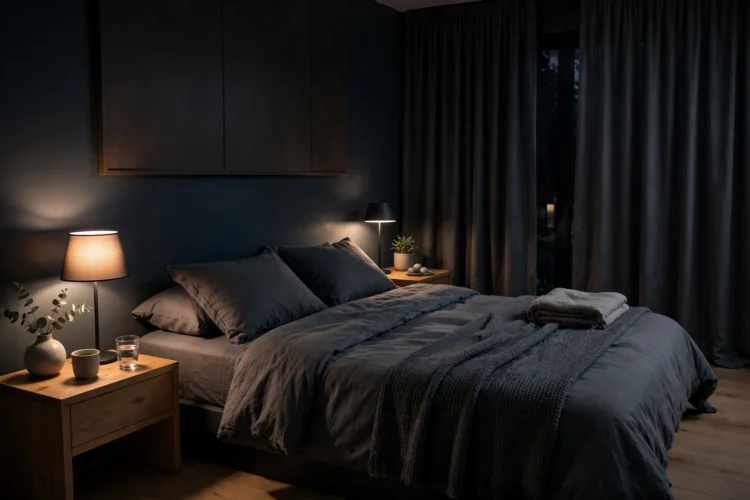
Dark bedroom ideas divide people. Some hear dark walls and picture a cave, while others picture the best sleep of their life in a room that feels like a cocoon. The difference is almost never the paint color itself. It is the lighting, the texture, and the balance of dark and light in the room. A room built on dark bedroom decor with one ceiling light and no other layers will feel gloomy, but the same room with warm lamps, soft bedding, and a mirror or two will feel cozy and calm. Deep colors also help a bedroom feel restful at night, since the room already looks dim when the lights go low. This guide shows how to embrace dark walls without losing light, warmth, or a sense of space.
The rule for a dark bedroom is simple: every dark surface needs a warm or reflective partner nearby. A deep charcoal wall pairs with warm wood furniture, brass lamps, and cream bedding, so the eye has light places to rest. A navy wall pairs with white bedding and a light rug, so the room reads as moody rather than heavy. The cave feeling comes when dark covers everything, including the bedding, the curtains, and the floor, with no relief. Keep at least one large light element in the room, usually the bedding or the rug, and the dark walls will feel like a backdrop instead of a box. Test the balance by standing in the doorway: if you can see the bed clearly and the room feels inviting, the balance is right.
Start with one dark wall if you are nervous. A single accent wall behind the bed gives you the moody feeling with less commitment, and you can extend the color later if you love it.
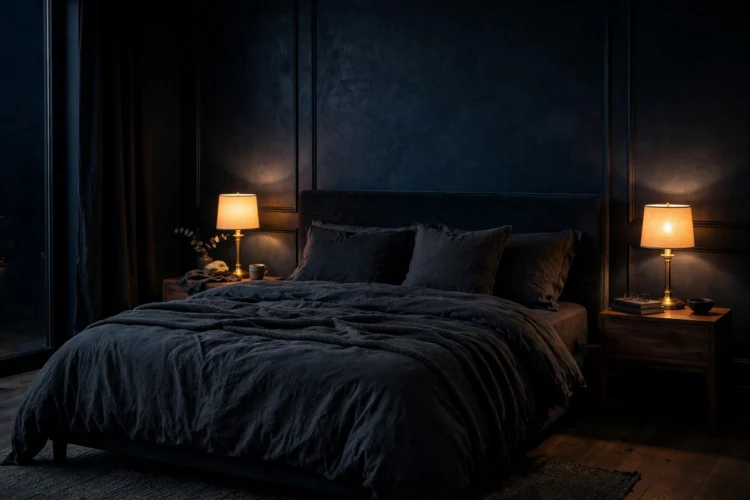
A dark bedroom wall color should suit your light and your furniture, not just a paint chip. Charcoal works in most rooms because it reads as neutral and pairs with almost any bedding. Deep green feels natural and calm, especially with wood furniture and plants. Navy feels classic and pairs well with white and brass. Very dark brown can feel warm and rich, but it needs good lighting to avoid looking muddy. Whichever color you choose, test large swatches on the wall and look at them in daylight and at night, since dark paint shifts a lot between the two. A color that looks sophisticated in the store can look almost black at home, which may be more than you wanted.
Finish matters too. A matte or eggshell finish softens dark walls and hides imperfections, while a high gloss finish reflects light but shows every bump. Matte is usually the safer choice for a bedroom.

Moody bedroom lighting works in layers: ambient light for general glow, task light for reading, and accent light for warmth. Ambient light might be a ceiling fixture on a dimmer or a pair of wall sconces. Task light is the bedside lamp you read by. Accent light is the small lamp on the dresser or the glow from a candle style light that makes the room feel finished. A dark room needs all three, because one overhead light creates harsh shadows on dark walls and leaves corners black. Spread the light sources around the room so no corner stays fully dark, and keep the brightness low and warm in the evening. The layered approach also gives you control: bright for getting dressed, soft for winding down.
Place at least one light source on each side of the room. A room lit from only one side will always have a dark half, no matter how bright that one lamp is.
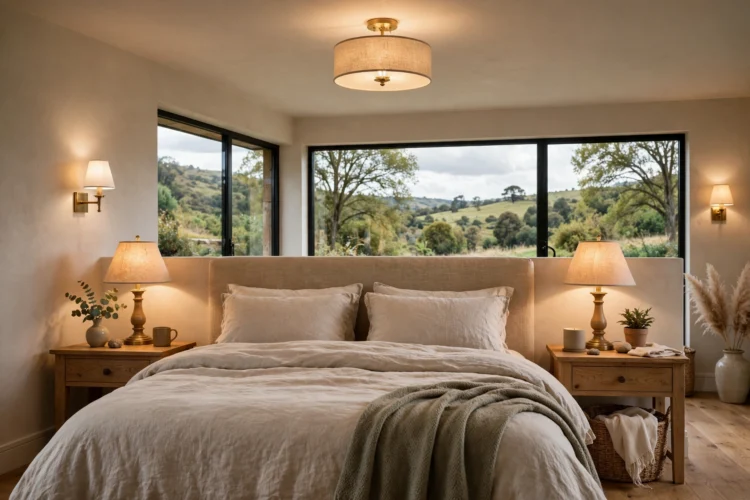
Warm bulbs are non negotiable in a dark bedroom. Cool white bulbs on dark walls look clinical and make the room feel cold, while warm bulbs make the same walls glow. Look for bulbs labeled warm white, and put the main lights on dimmers so you can lower the brightness as the evening goes on. A dimmer is the cheapest upgrade with the biggest payoff in a dark room, since it lets one room serve both getting ready and winding down. Bedside lamps with their own dimmers or three way bulbs give each sleeper control, which matters when one person reads and the other sleeps. Check that your dimmer matches your bulb type, since mismatched dimmers can flicker or buzz.
Keep a small, very dim light for nighttime trips across the room. A soft plug in night light or a lamp on its lowest setting is enough, and it keeps the room feeling safe without breaking the mood.
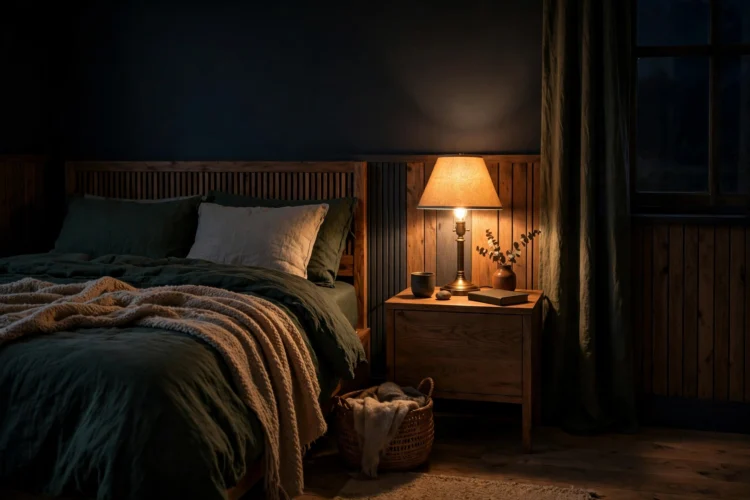
Texture keeps dark walls from feeling flat. A wood paneled wall, a woven wall hanging, a fabric headboard, or a gallery of framed prints all break up a large dark surface and give the eye something to follow. Even a simple picture ledge with a few frames changes how a dark wall reads. The same principle applies to bedding and curtains: a chunky knit throw or a velvet cushion adds depth that flat fabric cannot. When everything in a dark room is smooth and flat, the room feels heavy. When surfaces vary, the room feels rich. Choose textures that catch light, such as wood grain, woven fabric, and brushed metal, since they create small highlights across the dark background.
Do not cover every inch of wall. Leave some breathing room around art and panels so each piece reads clearly instead of blending into a busy dark field.
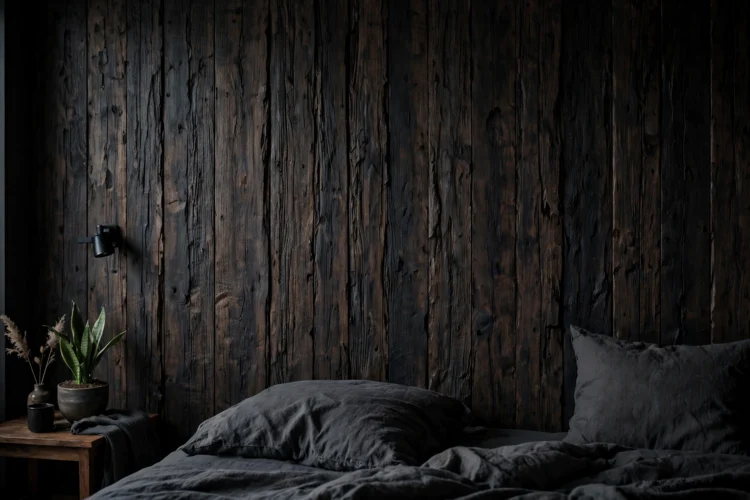
Bedding is the largest light surface in a dark bedroom, so use it well. Cream, soft white, or pale gray bedding lifts the whole room and keeps the bed as the focal point. If you prefer darker bedding, keep the top layer light, such as a cream throw folded across a charcoal duvet, so the bed does not disappear into the walls. Curtains should be full and soft, in a color close to the walls or slightly lighter, so the window feels dressed rather than bare. Heavy curtains also help the room feel cocoon like and block early morning light. For layering combinations that work in a moody palette, these bedding layering ideas show how to build a cozy, finished bed without losing the dark room mood.
Wash bedding in warm water and keep it fresh, since a dark room shows dust and lint on light bedding more readily than a bright room does.
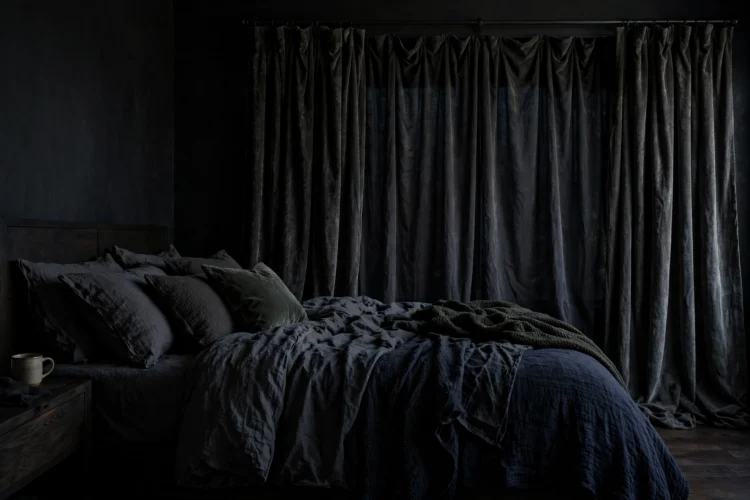
Mirrors are a dark bedroom best friend. A large mirror opposite or beside a window doubles the daylight, and a mirror above the dresser bounces lamplight around the room at night. Metal accents do the same job on a smaller scale: brass lamp bases, a gold framed mirror, or a metallic tray catch light and sparkle against dark walls. Use mirrors and metal in a few deliberate places rather than everywhere, since too much reflection can feel busy. One large mirror and two or three metal accents are usually enough. A dark room with good reflective touches feels layered and bright in the right places, not uniformly dim.
Nightstands are a natural home for a lamp and a small metal accent, and these nightstand ideas beyond the matching pair show how mismatched tables can still look intentional in a moody room.
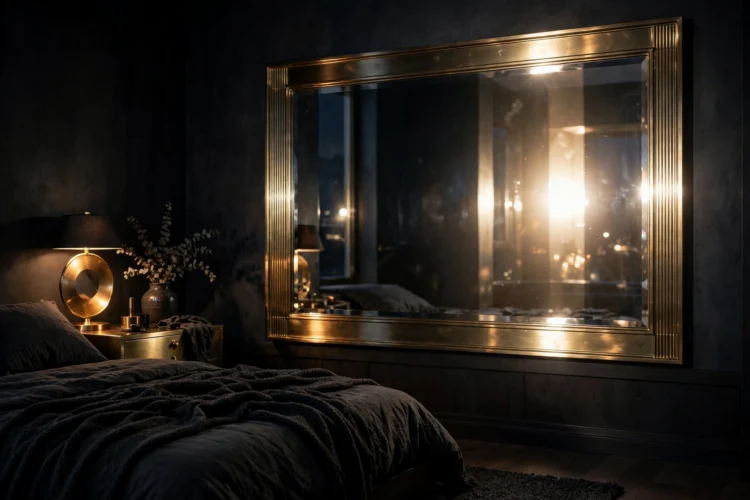
A dark bedroom should help you sleep, so keep the rest of the room calm. Clear surfaces, since clutter shows up fast against dark walls and makes the room feel smaller. Keep the color palette tight: one dark wall color, one light bedding color, and one metal accent is enough. Add a plant or two for life, since green reads beautifully against charcoal or navy, but do not crowd the room with decor. The same calm, restful approach drives these master bedroom ideas for a calm retreat and these small bedroom layout ideas, where a clear layout matters even more when the walls are dark.
Paint the walls, layer the light, keep the bedding light, and your cozy dark bedroom will feel like a cocoon you look forward to every night.