Physical Address
304 North Cardinal St.
Dorchester Center, MA 02124
Physical Address
304 North Cardinal St.
Dorchester Center, MA 02124

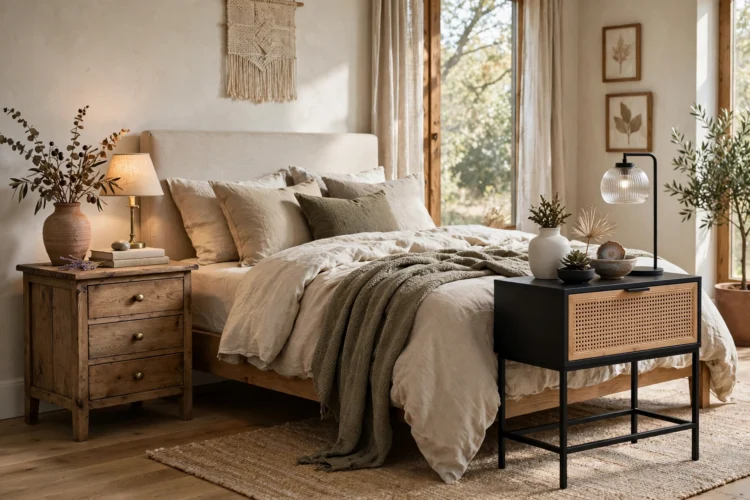
Matching nightstands are safe, but they are rarely interesting. These nine ideas use stools, shelves, and vintage finds to give the bedside real personality.
Nightstand ideas usually start with a matching pair, because furniture sets make shopping easy. The result is a bedroom that looks tidy but forgettable. Breaking the pair habit does not mean giving up function. A bedside spot still needs to hold a lamp, a book, a phone charger, and a glass of water. It just does not need to match its twin to do that job. The ideas below keep the function and add character, often for less money than a new set.
Start by deciding what each side of the bed actually needs. One side might need a drawer for medicine and reading glasses, while the other only needs a surface for a lamp and a book. Once you list the real needs, the matching pair stops making sense. Different pieces can serve different people, and the room looks collected over time instead of bought in one afternoon. Keep one shared element, such as a similar height or a matching lamp, so the two sides feel related without being identical.
Height matters more than matching. A nightstand should sit within a few inches of the top of the mattress, so reaching for a lamp or a book feels natural in the dark. Measure before buying, since a beautiful piece at the wrong height becomes annoying within a week.

A sturdy stool is the simplest bedside table alternative. It holds a lamp and a book, slides under a low shelf when not needed, and doubles as extra seating when friends visit. Wooden stools suit warm, casual bedrooms, while a metal stool fits an industrial room. Pick one with a flat top wide enough for a lamp base, and add a small tray to stop items sliding off.
Stools work best in small rooms where a bulky nightstand would block the path to the bed. They also cost less than most nightstands, leaving budget for a better lamp or nicer bedding. Look for a stool with a solid, level top and legs that do not wobble on your floor type. A three legged stool can rock on uneven boards, while a four legged one stays steady. If the stool will hold a lamp every night, choose one rated for the weight and test it at home for a week before committing, since a stool that tips in the dark is worse than no table at all.
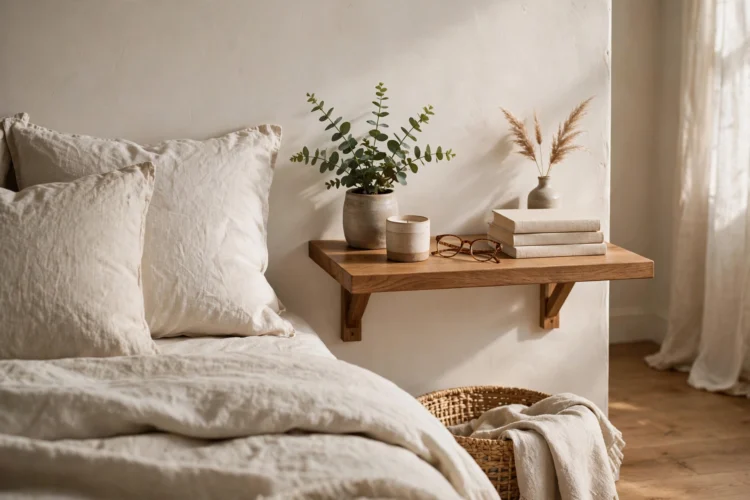
When floor space is tight, a wall mounted nightstand shelf frees the floor completely. A single shelf at mattress height holds a phone, a book, and a small lamp, while a second shelf above it holds extras. This setup suits tiny bedrooms and beds pushed against a wall, where a traditional nightstand never fits. Fix shelves into studs or use proper wall anchors, since a shelf that sags under a lamp becomes a hazard.
Keep the shelf shallow, about ten inches deep, so it does not crowd the pillow. A small lip or rail along the front edge stops books sliding off in the night, and a clip on the wall keeps the charger cable tidy.

Vintage nightstand finds give a bedroom something a new set never can: a story. An old sewing cabinet, a small apothecary chest, or a mid century side table brings patina and detail that mass produced furniture skips. Check charity shops, flea markets, and online marketplaces, and look for solid joints and smooth drawers rather than perfect finishes. A scuffed top can be sanded and oiled, but a wobbly frame is harder to fix.
Mix one vintage piece with a simpler modern piece on the other side. The contrast keeps the room from feeling like a museum, and the vintage piece becomes a talking point instead of clutter. Before buying, open every drawer, check for a musty smell, and look underneath for woodworm holes or water stains. Minor cosmetic wear adds character, but damaged joints and swollen drawer bottoms signal repairs that cost more than the piece is worth. A quick wipe with beeswax polish often revives tired wood without hiding its age.

If the bedroom lacks storage, a small dresser at the bedside solves two problems at once. Three shallow drawers hold socks, sleepwear, and chargers, while the top serves as a normal nightstand surface. This works well in guest rooms and in main bedrooms where the closet is full. Pick a dresser no wider than the bedside space allows, and keep the top clear except for a lamp and one book.
A dresser also anchors a tall bed. When the bed is high, a low nightstand looks lost, but a dresser of similar height balances the composition. Add a mirror or art above it, and the bedside becomes a proper vignette.
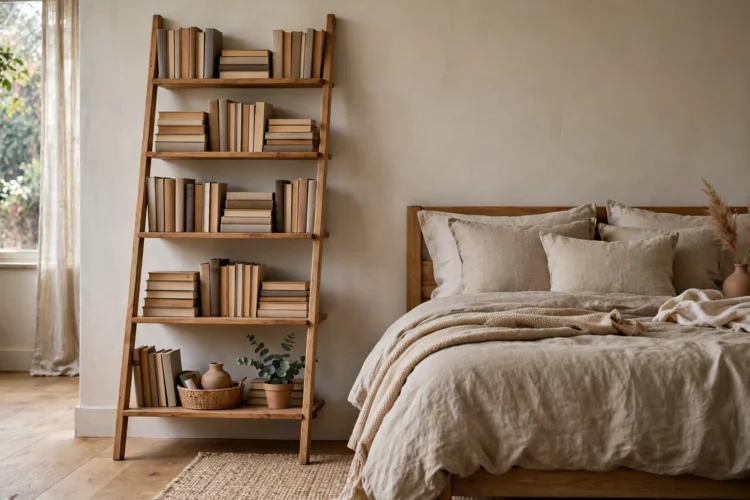
A leaning ladder shelf gives bedside storage without a bulky footprint. Books, a small plant, and a clock sit on the rungs, and the open design keeps a small room feeling airy. Ladder shelves suit renters too, since they lean against the wall and leave no fixing holes. Check that the feet grip the floor and the top rests securely, especially on smooth floors where a shelf can slip.
Small nightstand solutions like this work best when you edit ruthlessly. A ladder shelf with three well chosen items looks styled, while one crammed with ten items looks like overflow storage. Keep the bottom rung for a basket that hides chargers and small clutter.
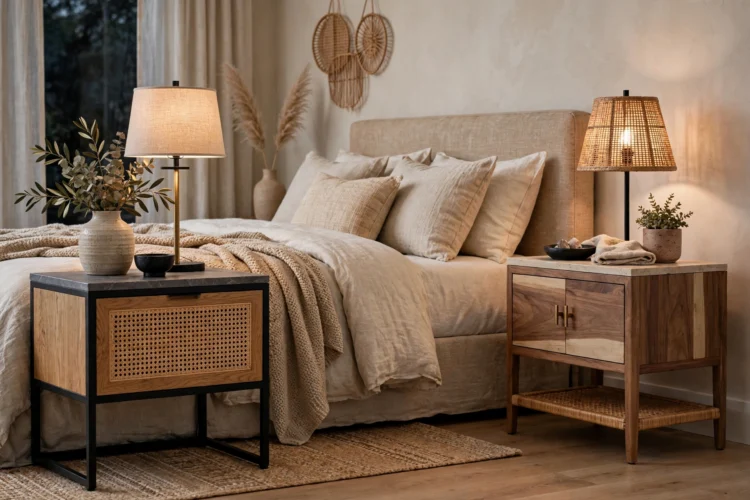
Mixing materials is what makes unmatched nightstands look intentional. Pair wood with metal, rattan with painted wood, or stone with warm timber, and repeat one material elsewhere in the room to tie it together. A wooden stool on one side and a metal side table on the other works when both share a warm wood accent, such as a matching tray or lamp base. Without that shared thread, the room can feel random.
Limit the mix to two or three materials in the bedside zone. Bedside table alternatives feel curated when the palette stays tight, and the rest of the room can stay simple around them.
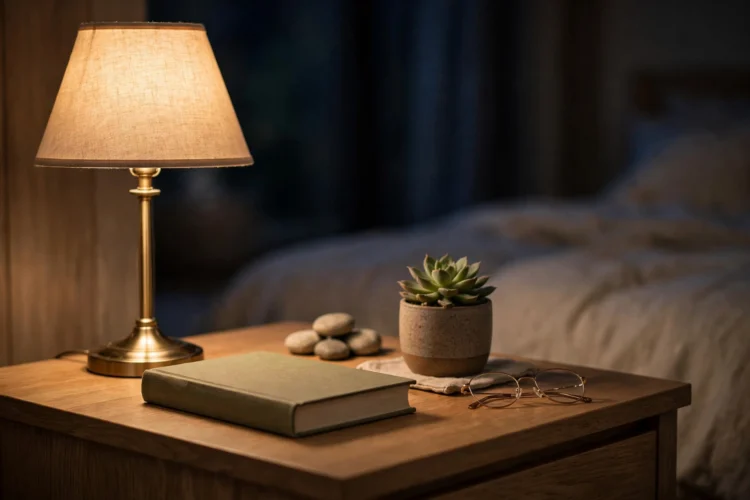
The best bedside setup leaves room to actually use it. Keep five items at most on the surface: a lamp, a book, a charger, a glass of water, and one personal item. Everything else goes in a drawer, on a shelf, or in a basket. Do a weekly clear out, returning stray items to their homes, and the bedside stays calm without much effort.
The same edit-everything mindset improves other rooms too. Ideas from bathroom storage ideas help decide what earns a spot on a small surface, while powder room ideas show how a tiny room stays tidy with strict limits. Borrow the calm finish of spa-like bathroom ideas for the bedside palette, and take lighting cues from bathroom lighting ideas when choosing a lamp that flatters the room at night. End with a lamp you can reach without sitting up, and the bedside finally works as hard as it looks.
Think about power before you finish styling the bedside. A lamp, a phone charger, and an alarm clock all need an outlet, and a tangle of cables ruins even the prettiest setup. Run one short extension or a small power strip behind the piece, and clip the cables along the back leg or the wall so only the ends you use each night stay visible. If the piece has a drawer, drill-free cable clips inside the drawer can hold a charging cable in place, so the phone rests on top while the cable stays out of sight. A bedside that charges quietly and looks calm in the morning is far more likely to stay tidy than one that fights you every night.
Finally, test the setup for a full week before calling it done. Use the lamp at night, reach for the book in the dark, and notice whether anything wobbles, slides, or ends up on the floor. Small fixes at this stage cost nothing: a felt pad under a stool, a tray to corral a glass and a charger, or a slightly taller lamp so the light falls on the page instead of your eyes. A good bedside earns its place by working without thought, night after night, while still looking like it belongs in the room. When the piece passes that week-long test, you have found a bedside that suits your habits, not just your floor plan.