Physical Address
304 North Cardinal St.
Dorchester Center, MA 02124
Physical Address
304 North Cardinal St.
Dorchester Center, MA 02124

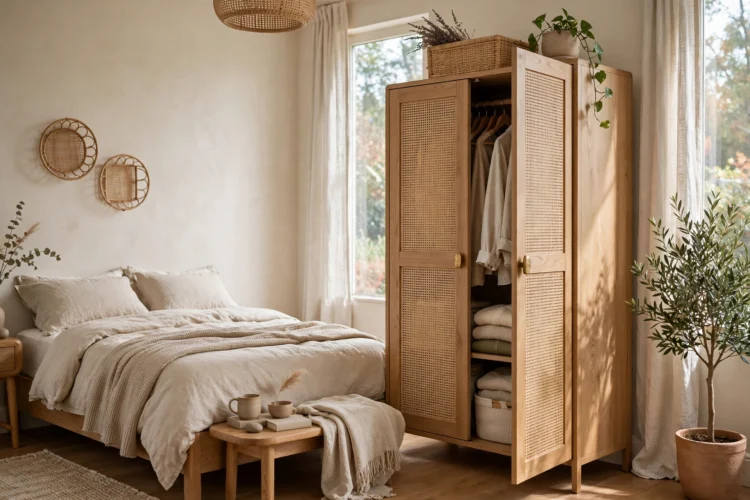
Older homes and rentals often skip the closet entirely. These eleven bedroom wardrobe ideas use armoires, open racks, and built-in-look pieces to give every garment a proper home.
Wardrobe ideas for bedrooms without closets matter most in rooms that were never built with a closet. Older homes often have a small wardrobe nook at best, and many rentals offer a single rail or nothing at all. Without a plan, clothes end up on chairs, in laundry baskets, and draped over doors. A good wardrobe system gives each category a place, keeps daily clothes within reach, and lets the bedroom stay a place to rest rather than a place to store.
Start by counting what you actually own. Hang the clothes you wear weekly, fold knits and T-shirts, and set aside off-season pieces for higher or harder-to-reach storage. That count decides whether you need one tall armoire, a wall of open racks, or a mix of closed and open storage. Measure the wall, the door swing, and the ceiling height before buying, since a wardrobe that blocks a door or crowds the bed will annoy you daily.
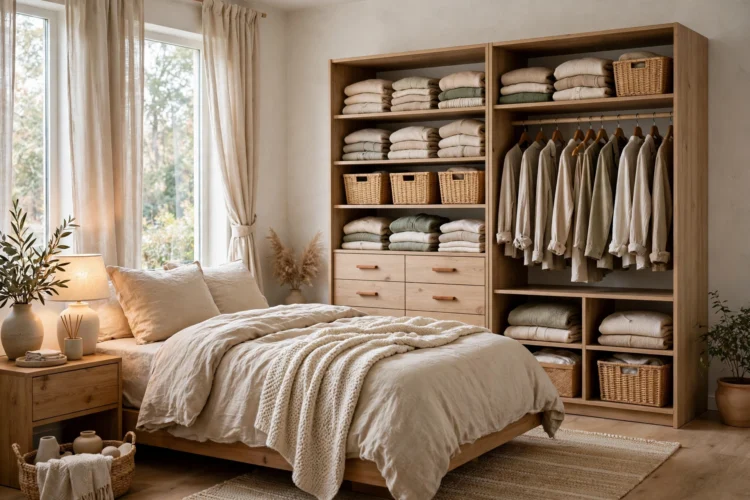
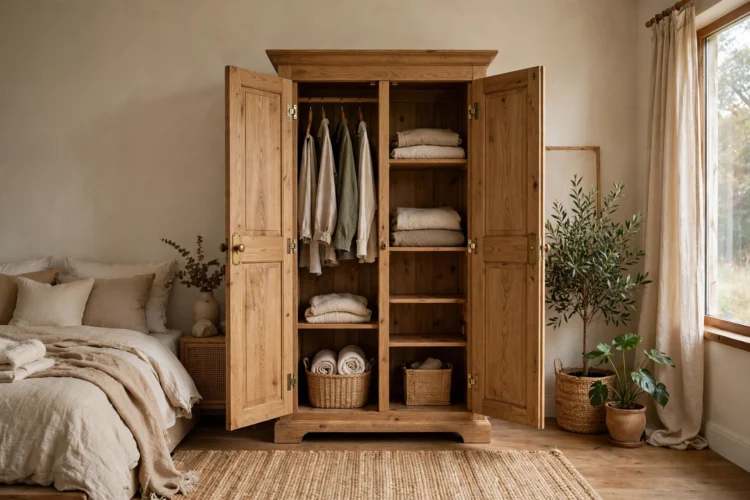
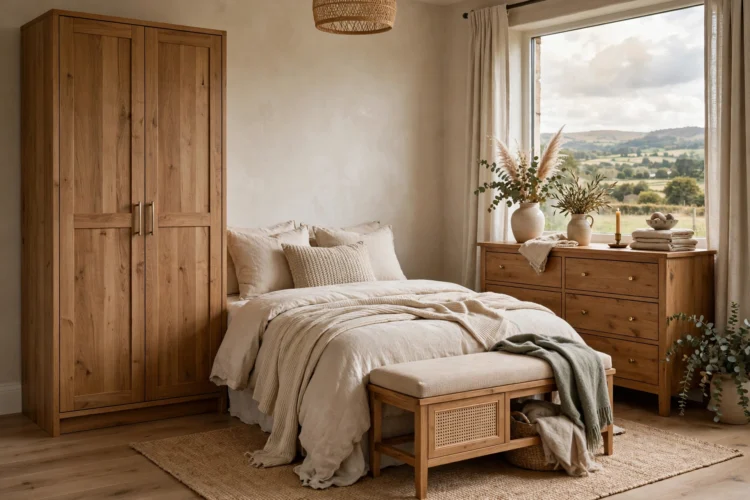
A freestanding armoire is the closest thing to a built-in closet you can buy without renovating. It hides clothes behind doors, which keeps a bedroom looking calm even when the inside is full. Look for an armoire with a hanging rail, at least one shelf, and a drawer for small items, since a single empty box wastes vertical space. Solid wood armoires last for years and move with you, while flat-pack versions suit renters on a tighter budget.
Place the armoire on a wall with enough clearance to open both doors fully, and anchor it to the wall if you have children or live in an earthquake-prone area. A tall armoire can make a small room feel top-heavy, so balance it with a lower dresser or bench on the opposite wall. If the armoire holds most of your clothes, keep daily items at eye level and off-season pieces on the top shelf. A tidy interior matters as much as the exterior, a lesson that also drives these small closet organization ideas.
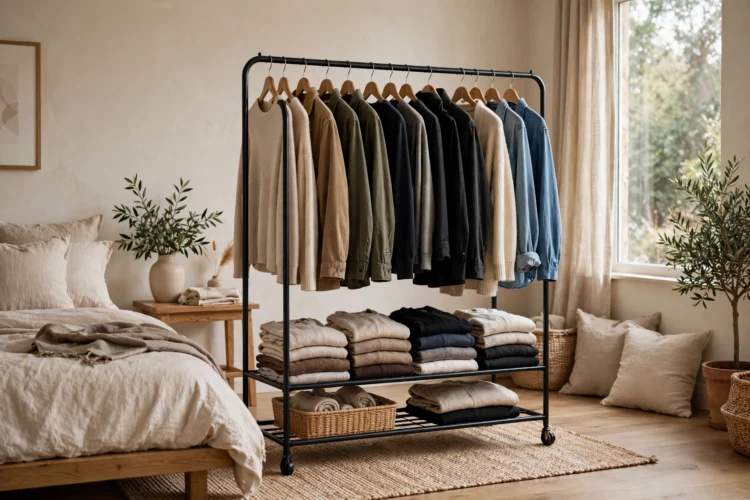
Open clothing racks suit people who like to see their clothes and grab an outfit fast. A sturdy metal rack with a lower shelf for shoes takes up little floor space and costs far less than a closed wardrobe. The trade-off is visibility: everything is on display, so the rack needs regular editing to stay tidy. Keep the rack to clothes you wear often, and move rarely worn pieces elsewhere.
Choose a rack rated for the weight of your clothes, since a cheap rack bows under heavy coats and denim. A rack with a second lower rail doubles hanging space for shirts and trousers, while a top shelf holds baskets for accessories. Hang clothes by type and color so the rack reads as intentional rather than cluttered, and leave breathing room between hangers so garments do not crush each other. Open storage works best when paired with a closed dresser for items you do not want on show.
You can get a built-in look without opening a wall. Place two or three matching wardrobes side by side, add a top pelmet board to close the gap to the ceiling, and paint or stain them to match the trim. The result reads as one piece of fitted furniture rather than a row of boxes. Flat-pack wardrobes in the same range are the easiest route, since their heights and depths already match.
Measure the full wall run before ordering, and leave a small gap at each end for uneven walls. If the wardrobes sit beside the bed, check that doors open without hitting nightstands. Add interior lighting strips so the back of the wardrobe does not stay dark, and use matching handles for a finished look. This approach suits renters too, since the units come apart and move, unlike a true built-in. A fitted look also helps a room feel planned, the same quality that makes these master bedroom ideas feel calm.
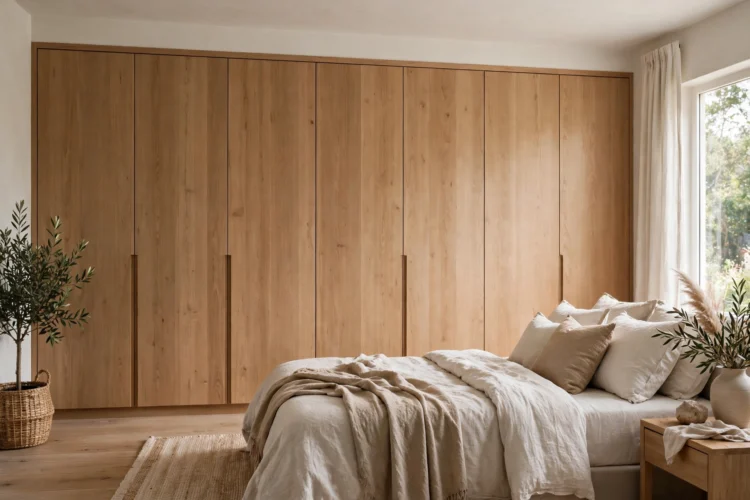
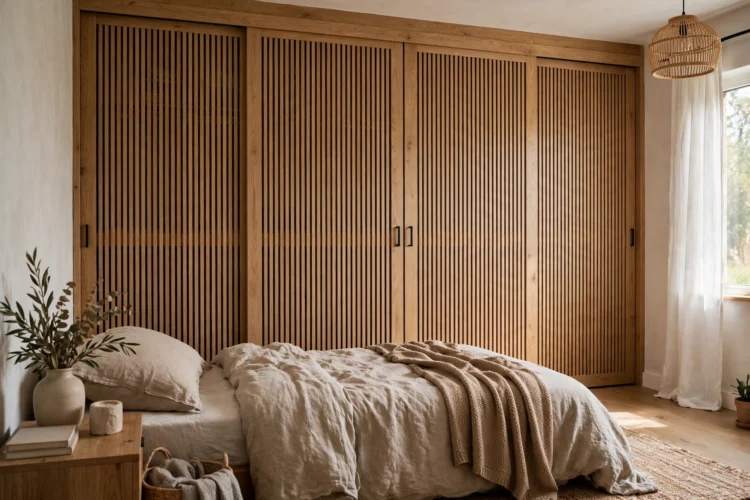
A wardrobe wall uses the full length of one bedroom wall for storage, which sounds large but often frees more floor space than scattered furniture. One run of wardrobes replaces an armoire, a dresser, and a shoe rack, leaving the rest of the room open. In small bedrooms, choose wardrobes with sliding doors so you do not need clearance to swing doors open beside the bed.
Plan the interior before the exterior. Give hanging clothes the tallest section, folded clothes shallow shelves, and shoes a low section near the floor. Leave one section open for a mirror or a small dressing shelf, so the wall serves a second purpose. Light-colored doors keep a full wall from feeling heavy, while mirrored doors can make the room feel larger. Keep the top of the wardrobe clear, since boxes stored up high make the whole wall look unfinished.
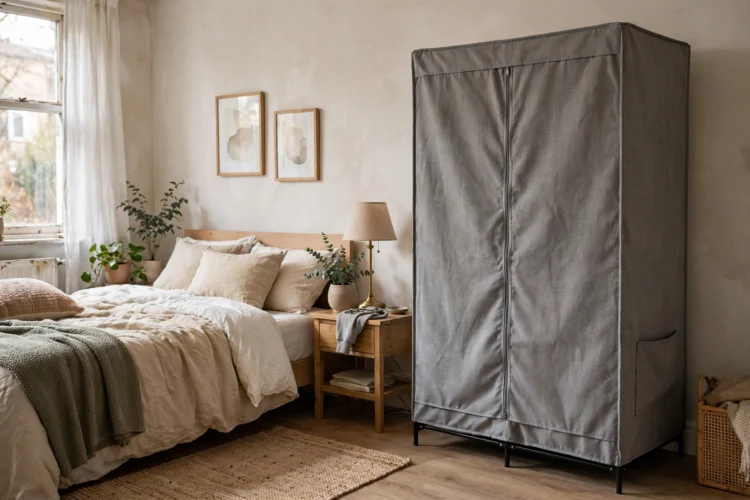
Renters need wardrobe ideas that leave no marks and move easily. Freestanding racks, portable wardrobes with fabric covers, and modular shelving units all fit that brief. A fabric-covered wardrobe hides clothes and protects them from dust, while a modular shelf unit with baskets adapts as your wardrobe changes. Avoid drilling into walls unless the lease allows it, and use freestanding units that stand on their own.
Renters should also think about the move-out. Flat-pack wardrobes disassemble, but repeated assembly weakens joints, so choose sturdier pieces if you move often. A rolling rack can move from room to room and doubles as a garment rack for drying delicate items. Keep the system simple: one main wardrobe, one dresser or drawer unit, and one rack for daily outfits. Three pieces are easier to move and easier to keep tidy than five scattered ones.
Bedrooms without closets often have an awkward corner or alcove that a standard wardrobe cannot fill. A corner wardrobe unit, an L-shaped rail system, or a simple tension rod across an alcove can turn that dead space into storage. Measure the alcove at several heights, since older walls are rarely square, and choose a solution that adapts to uneven walls rather than fighting them.
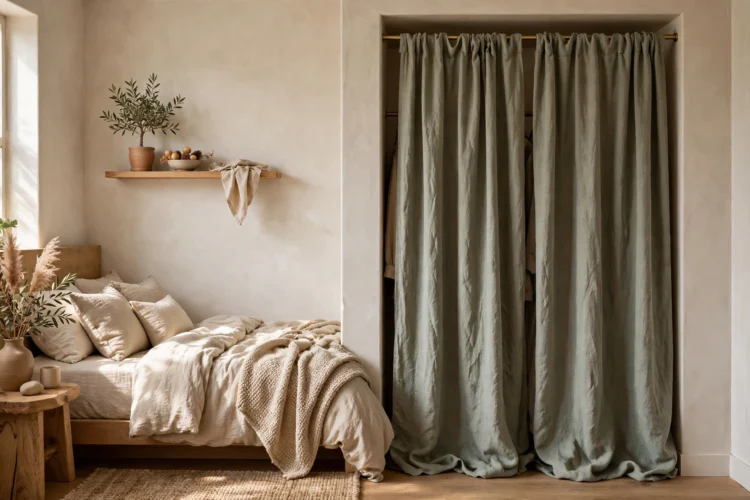
An alcove with a curtain instead of doors is a cheap and flexible option: a tension rod, a shelf above it, and a floor-length curtain hide the clothes while keeping them accessible. Curtains also suit sloped ceilings, where wardrobe doors would not fit. Choose a curtain fabric that matches the bedding so the alcove reads as part of the room. For more on using tight spaces well, the planning logic in these small bedroom layout ideas applies directly to alcove storage.
A wardrobe alone rarely solves bedroom storage. Dressers hold folded clothes, underwear, and accessories, while a bench at the foot of the bed gives a place to lay out tomorrow’s outfit. Together, they split storage by use: hanging clothes in the wardrobe, folded clothes in the dresser, and daily outfits on the bench. That split stops any single piece from overflowing.
Match the pieces loosely rather than exactly. Same wood tone or same hardware finish is enough to tie them together, and a mix of old and new pieces can feel more personal than a matched set. A dresser with a mirror above it doubles as a dressing station, which matters in rooms without a closet mirror. Keep the tops of dressers clear except for one or two useful items, so the room stays calm. The dressing-station idea pairs naturally with the bedside balance in these nightstand ideas.
The best wardrobe system fails without a routine to maintain it. Do a quick edit each season: remove clothes you did not wear, repair or donate damaged pieces, and move off-season items to higher storage. A weekly reset takes ten minutes: return clothes to hangers, fold what belongs in drawers, and clear the chair that collects outfits. Without a closet door to hide behind, this routine is what keeps the room calm.
Set a one-in, one-out rule for new clothes, since a closet-free room has a fixed capacity. When a new garment arrives, an old one leaves, which stops the wardrobe from creeping into the rest of the room. Use baskets for laundry and accessories so small items do not drift onto surfaces. A bedroom without a closet can feel just as tidy as one with a walk-in, as long as every garment has a place and that place gets used daily.