Physical Address
304 North Cardinal St.
Dorchester Center, MA 02124
Physical Address
304 North Cardinal St.
Dorchester Center, MA 02124

Ten first power tool projects from real beginners, from a floating shelf and a cutting board to a workbench and a bookshelf, each with the lesson learned the hard way.
First power tool projects are where most DIYers either fall in love with building or swear off it forever. The difference is rarely talent. It is the project. The ten projects below come from real beginners, people who bought their first drill or circular saw and built something they still use. Each story includes the lesson they learned the hard way, so you can skip that part.
A note before the stories: every builder below started with safety gear, a measured cut list, and a practice cut on scrap wood. That is not the fun part, and it is the part that keeps all ten fingers attached. Buy the safety glasses before the saw. Read the manual before the first cut. Then pick a project from this list and build it.
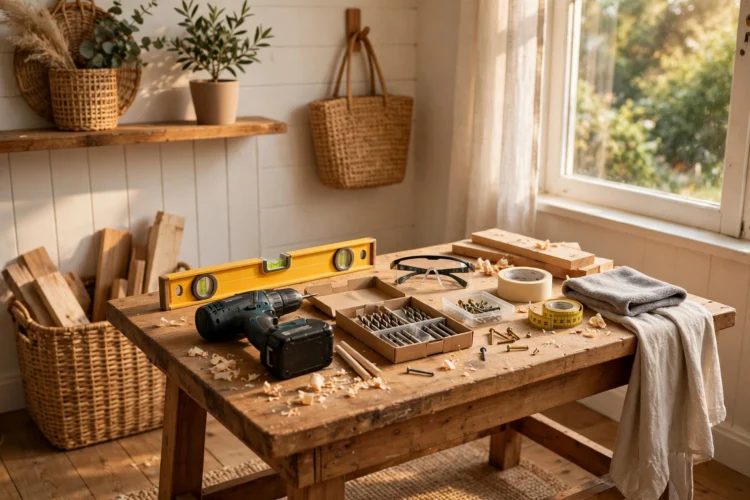
Ask ten beginners what they bought first and nine will say a drill. It drills holes, drives screws, and, with a cheap attachment, sands edges. The first project for most of them was a simple floating shelf: two brackets, one board, and four screws. One reader, Sam, hung his shelf crooked on the first try because he trusted his eye instead of a level. He took it down, found the stud with a magnet, and hung it again in twenty minutes. The lesson stuck: a level is not optional, and a stud finder costs less than a patch kit.
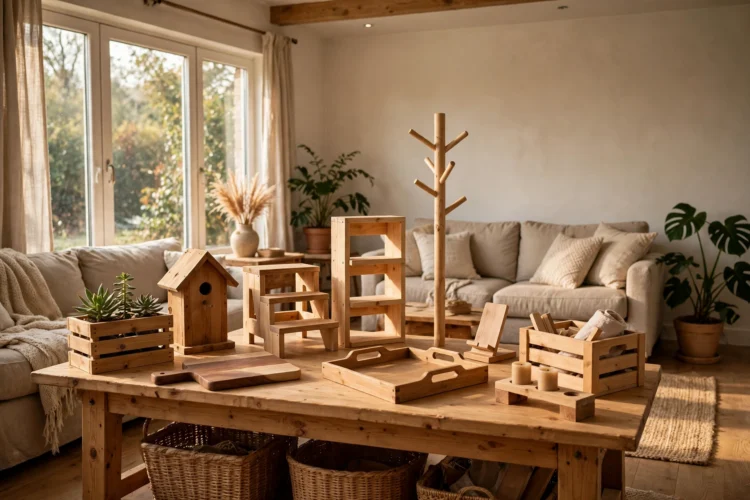
A drill also forgives mistakes better than a saw. Most beginner power tool projects start exactly this way, with a drill and a shelf. A shelf, a crate, and a cutting board are the easy drill projects beginners finish in one afternoon, and each one teaches a skill the next project needs. A hole in the wrong place becomes a new hole an inch away, and nobody sees it behind the shelf. Start with a cordless drill, a set of bits, and a project that needs fewer than ten screws. Confidence comes from finishing, not from the size of the build.
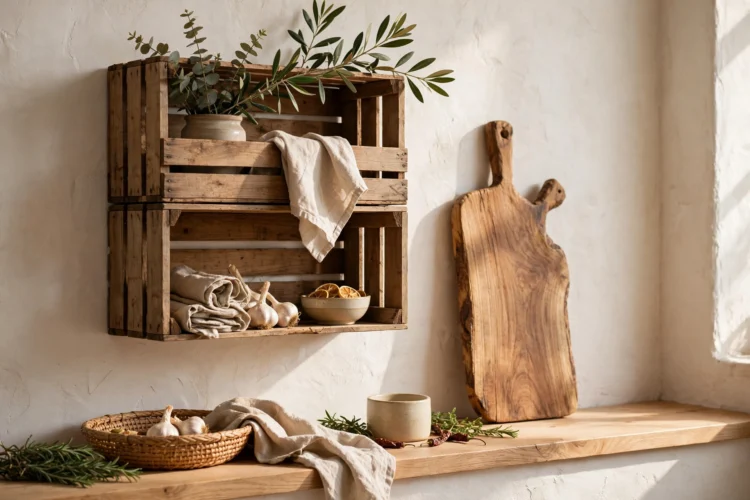
Two projects share this section because they teach the same skills in different shapes. The crate shelf is a wooden crate on its side, sanded smooth and mounted to the wall. It teaches sanding, finishing, and mounting, and it holds books the same day you build it. One reader built three in an afternoon and now has a wall of them in her hallway.
The cutting board teaches measuring and straight cuts. A single board, cut to size, sanded through three grits, and finished with food-safe oil becomes a kitchen tool you use daily. The beginner who shared this story cut her first board too short because she measured from the wrong end of the tape. Her fix was to measure twice and mark with a pencil line, not a mental note. If you want more small builds in this spirit, these DIY wooden crate projects for storage and decor turn the same crate idea into storage, planters, and side tables.
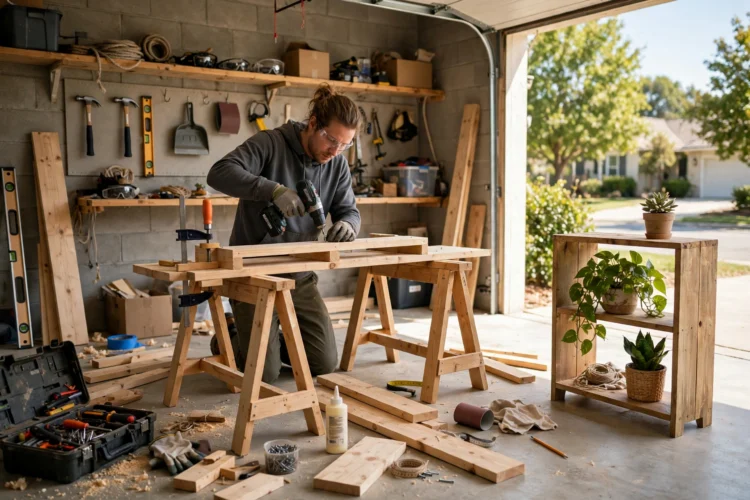
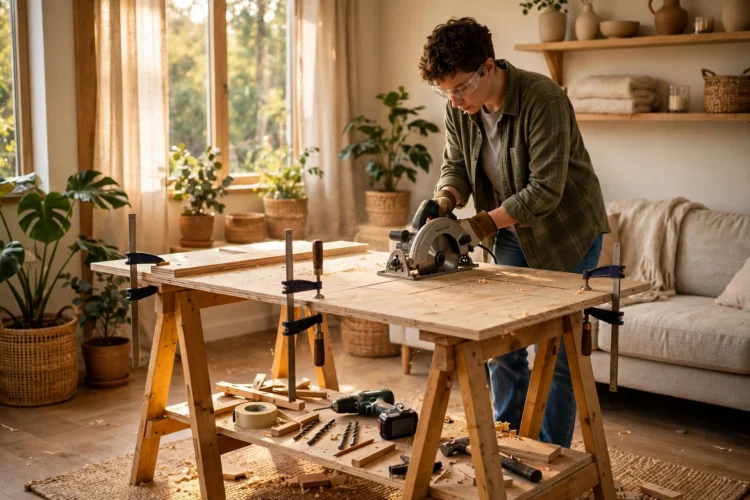
A circular saw intimidates beginners because it is loud and fast, and that is exactly why the first project should be a workbench. It does not need to look good. It needs to be flat, strong, and yours. One reader, Dan, built his on two sawhorses with a plywood top and a lower shelf. His first cut wandered off the line, so he clamped a straight board to the plywood as a guide and every cut after that came out clean. The guide trick is the single most useful thing a beginner can learn.
A workbench also gives every future project a home. Cutting on the ground is slow and hard on the knees, and a bench at waist height changes the whole experience. Build the bench first, and the second project gets easier before you even start it. For a gentler on-ramp, these no-power-tool DIY projects for absolute beginners build the same measuring and assembly habits without a saw at all.
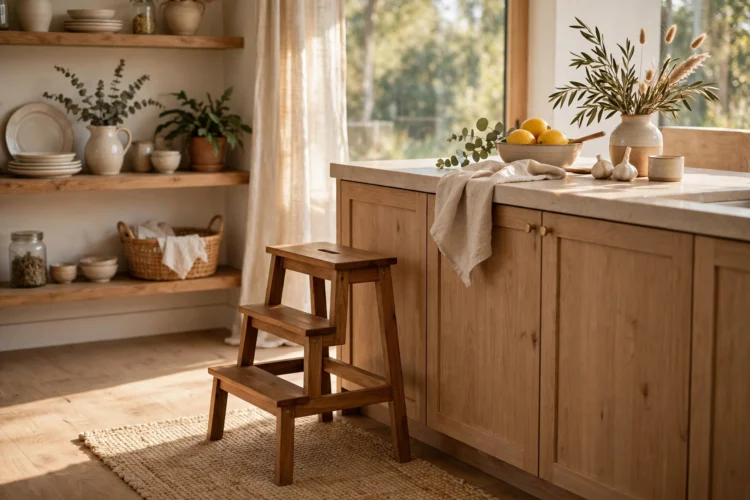
A step stool looks simple until you build one. The legs splay, the steps must sit level, and a wobble shows up the moment you stand on it. One reader built hers from a free plan she found online and cut the legs at the wrong angle, so the stool rocked. She fixed it by trimming one leg a fraction at a time and testing after each cut, which is slower than measuring right the first time and faster than starting over.
The stool now lives by her kitchen counter, where her kids use it daily. She says the project taught her that a plan is a starting point, not a promise, and that test-fitting beats hoping. A step stool is a good second project because it is small enough to finish in a day and useful enough to keep forever.
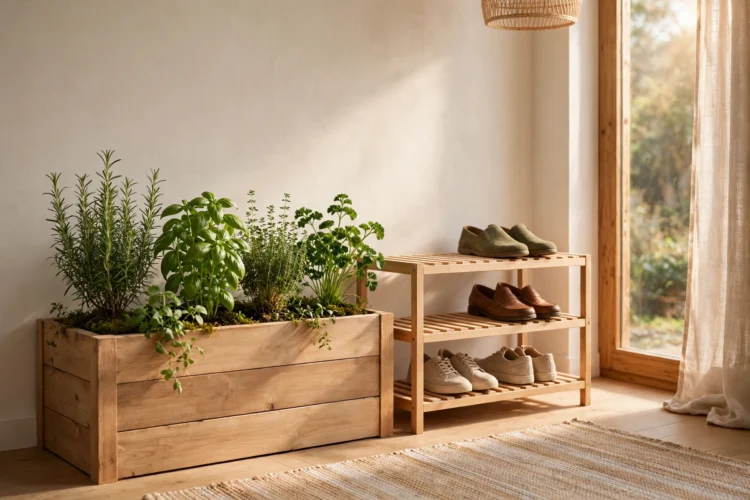
Outdoor projects forgive a lot. A planter box does not need perfect joints, because soil and plants hide them. A reader built hers from fence pickets in one afternoon, lined it with landscape fabric, and filled it with herbs. Her lesson was about wood choice: untreated pine rotted in one season, so the second box used cedar and is still going strong three years later.
Her second lesson was to pre-drill every hole after splitting a board on the last screw of the project. Pre-drilling takes seconds and saves boards. A planter box is the right first outdoor project because the stakes are low and the result gets used every day.
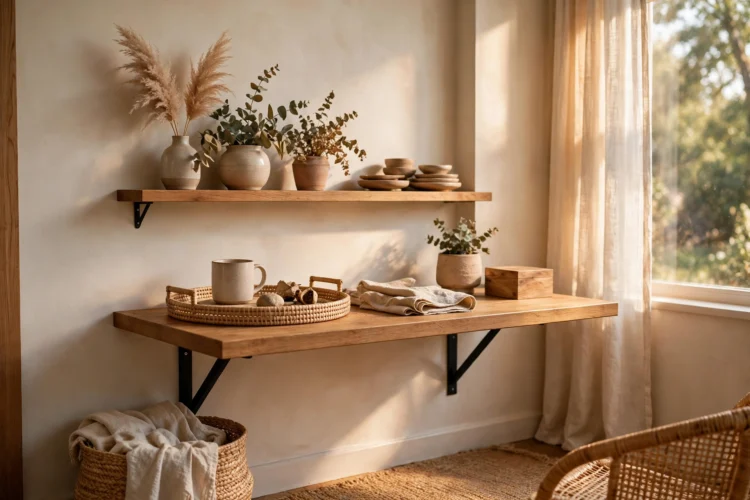
A picture ledge is a long, shallow shelf with a lip, and it is the project that turns a beginner into someone who hangs things level. One reader built two ledges for her hallway and learned that a stud finder and a long level matter more than the saw. She marked the studs with painter tape, drilled pilot holes, and the ledges have held art for two years without sagging.
The wall-mounted desk is the same idea scaled up: a board, two brackets, and a clear wall. The reader who built his said the hardest part was choosing the height, so he taped cardboard to the wall at desk height and sat in his chair for a day before drilling. Measure with your body, not just the tape. A desk at the wrong height is a project you rebuild, and a day of testing is cheaper than a second board.
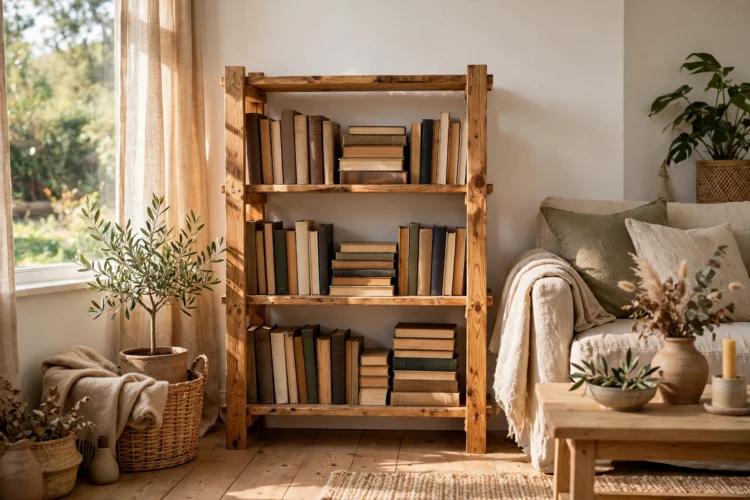
A simple bookshelf, four boards and two sides, is the project that hooks people. One reader built hers in a weekend with a circular saw and a drill, and she still remembers the moment the shelves slid into place without forcing. Her lesson was about sanding: she skipped the final grit on the first shelf and the finish came out rough, so she sanded the rest properly and the difference was obvious even to her kids.
She has since built three more shelves, a coffee table, and a bed frame. The bookshelf was the gateway, and the lesson is that finishing matters as much as cutting. Sanding is boring, and it is also the difference between a project that looks homemade and one that looks handmade. Take the extra twenty minutes.
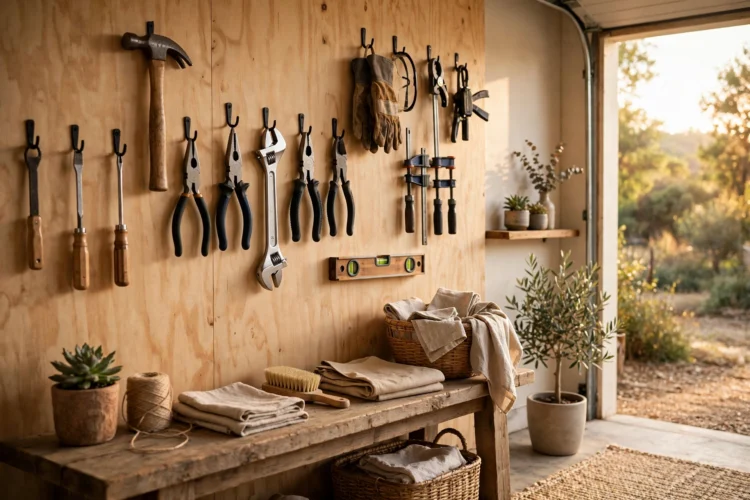
Every beginner ends up with a pile of tools and nowhere to put them. A tool wall solves that with a sheet of plywood, a few hooks, and an afternoon. One reader built his after his drill, saw, and sander had lived in a cardboard box for six months. He traced each tool on the plywood so every item has a marked home, and he says the wall saves him ten minutes every time he starts a project.
The lesson here is to build storage before you need it, not after the pile wins. A tool wall also shows you what you own, which stops you buying a second tape measure. For layout ideas, this guide to garage tool wall ideas for quick grab-and-go covers hooks, bins, and panels that work in a garage or a spare corner. And if you want proof that weekend builds turn into real skills, these beginner woodworking projects you can build in a weekend show where the first project can lead.
Every builder above started with the same three things: a simple plan, a practice cut, and a willingness to fix a mistake instead of hiding it. Pick the smallest project on this list, build it this weekend, and let the second project be bigger. The tools do not make the builder. Finishing the first project does.