Physical Address
304 North Cardinal St.
Dorchester Center, MA 02124
Physical Address
304 North Cardinal St.
Dorchester Center, MA 02124

Sharing a room teaches kids to compromise, but the room still has to work for homework, sleep, and play. These 9 ideas give each child a zone of their own.
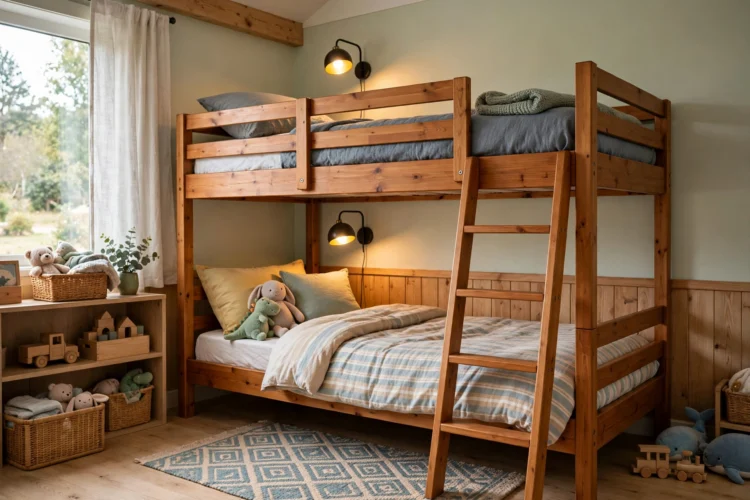
Shared kids bedroom ideas start with the bed layout because beds take the most floor space and set the shape of the room. Get the beds right and everything else finds a place.
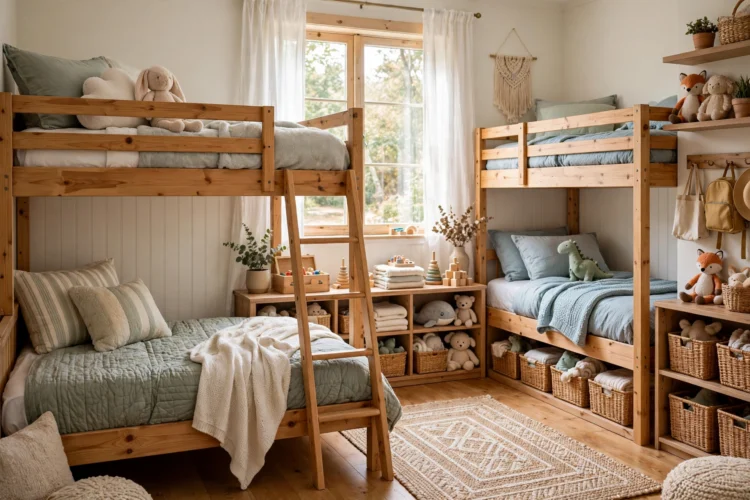
Bunk beds stack two sleepers into the footprint of one, which leaves the rest of the room for desks and play. Check the ceiling height first: the child on top needs enough room to sit up without hitting the ceiling. A guard rail on the top bunk and a sturdy ladder are non-negotiable, and a small clip-on light gives the top sleeper reading light without waking the other. For rooms where bunks fit the ceiling, loft bed ideas show how raised beds open up desks and storage below.
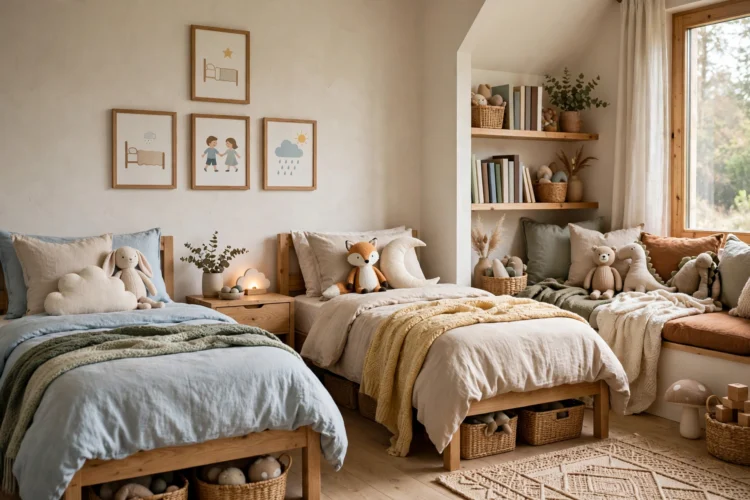
Two twin beds on opposite walls suit siblings who want their own side of the room. A single nightstand between the beds saves space and gives both kids a lamp and a spot for a book. A rug down the middle of the room marks shared ground and softens noise.
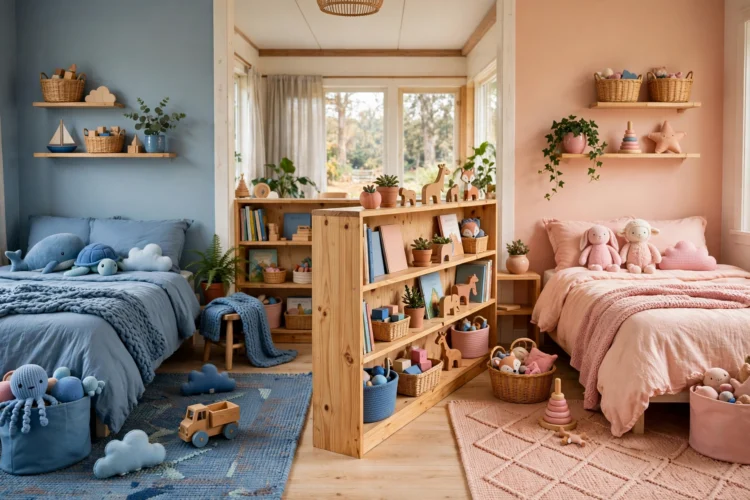
Kids argue less over a shared room when each one has a corner that is clearly theirs. Zones do not need walls, just a clear signal like a color, a rug, or a piece of furniture.
Paint or decorate each side in a different accent color while keeping the main walls neutral. Bedding, art, and storage bins in each child’s color make the split obvious without building anything. This trick also works when the room is small, since color costs no floor space.
A low bookshelf, a curtain on a ceiling track, or an open shelving unit marks a boundary while letting daylight pass. Keep dividers below eye level for younger kids so you can still see across the room, and anchor any freestanding shelf to the wall for safety.
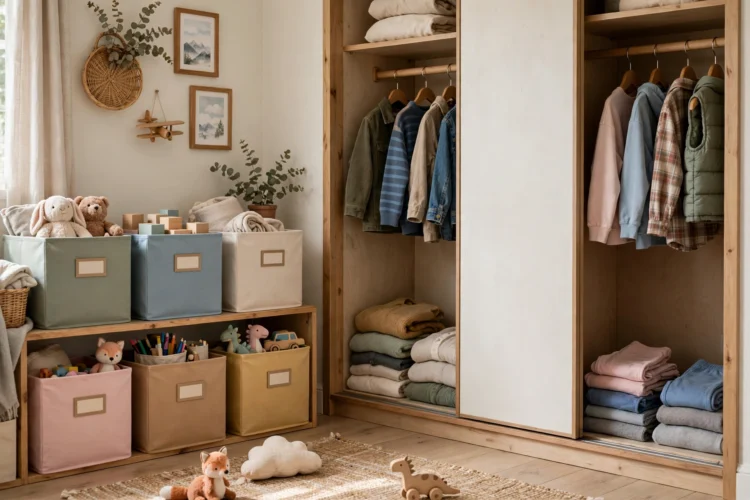
Most shared-room fights start with stuff: mixed-up toys, borrowed clothes, and lost school supplies. Separate storage for each child ends most of it before it starts.
One bin per child for toys, one for school supplies, and one for keepsakes keeps ownership clear. Labels with names or pictures help younger kids who cannot read yet. Keep the bins at the same height and size so neither child feels they got the smaller deal.
Split the closet down the middle with a rod on each side and a shelf stack in the center. Each child gets a hanging section and a few shelves, and a small basket on each side holds socks and underwear. If closet space is tight, a small bedroom layout idea that frees floor space can show where a second dresser fits.
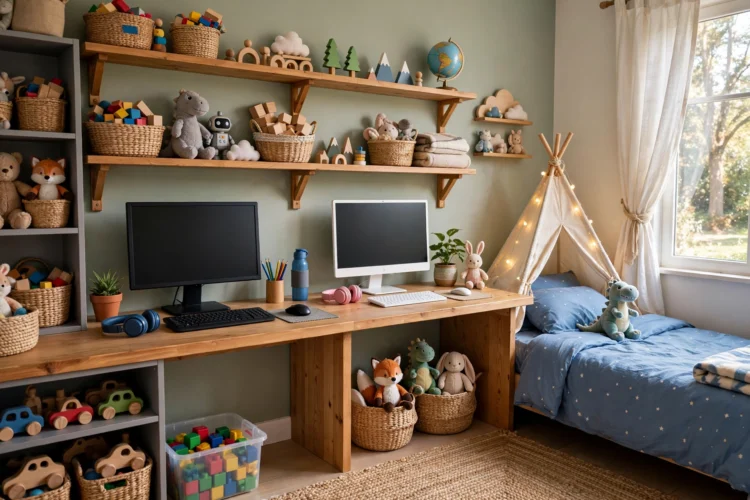
Homework in a shared room needs two work spots that do not face each other, or every pencil tap becomes a distraction.
A single long desk with a divider in the middle gives each child a defined workspace while sharing one piece of furniture. A small shelf or desk organizer marks the boundary, and two task lamps keep light personal. Keep the desk near a window for daylight, and leave the wall above it free for a pinboard per child.
Walls in a shared room can carry storage, display, and personality without taking floor space, which matters when two beds already fill the room.
Let each child pick art or a decal for their side of a shared accent wall. Framed drawings, a growth chart, or a row of shelves for collections gives each child a visible stake in the room. Keep the base wall color calm so the displays do not clash, following the same balance found in bedroom accent wall ideas with paint, panels, and wood. A calm base also helps the room feel restful at bedtime, as in neutral bedroom ideas that keep shared spaces from feeling loud.
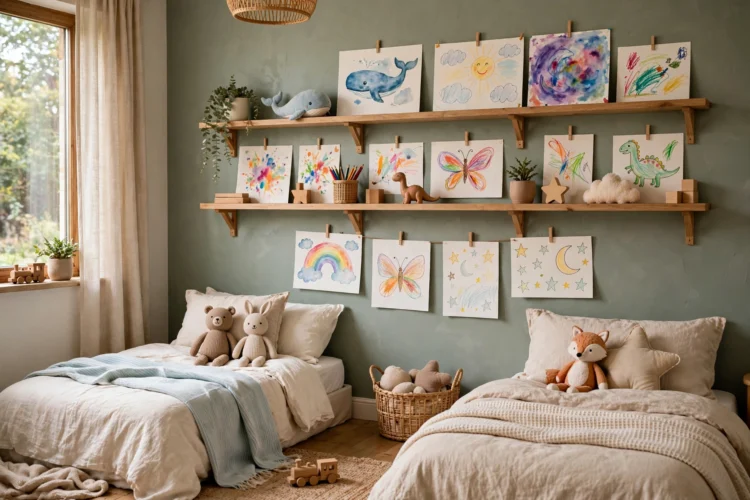
A shared kids room gets more wear than a single child’s room, so safety and cleaning deserve their own plan. Anchor every dresser, bookshelf, and desk to the wall, since climbing is a matter of time with younger kids. Keep cords for lamps and chargers behind furniture or inside cord covers so nobody trips during a midnight bathroom trip. Choose washable bedding and removable cushion covers, because shared rooms see twice the spills and twice the laundry.
Cleaning goes faster when every item has a visible home. A weekly ten-minute tidy with both kids works better than a monthly deep clean, and it teaches both children to care for shared space. Rotate toys every few weeks so the room does not overflow: keep one set out and store the rest in labeled boxes in the closet. When the room stays manageable, the zones you built for each child keep working instead of drowning in clutter.
A safe, clean room also settles arguments faster. When both children know where things live and the room is easy to reset, small messes stay small and bedtime runs smoother for everyone.
Night lighting deserves a quick note too. A small plug-in night light near the door helps both children find the bathroom without waking each other, and it keeps the room from going fully dark for kids who dislike that. Pick a warm, dim light and place it low, away from beds, so it guides feet without shining in anyone’s eyes. Check the bulb each month, since a dead night light is worse than none when a child wakes up confused in the dark.
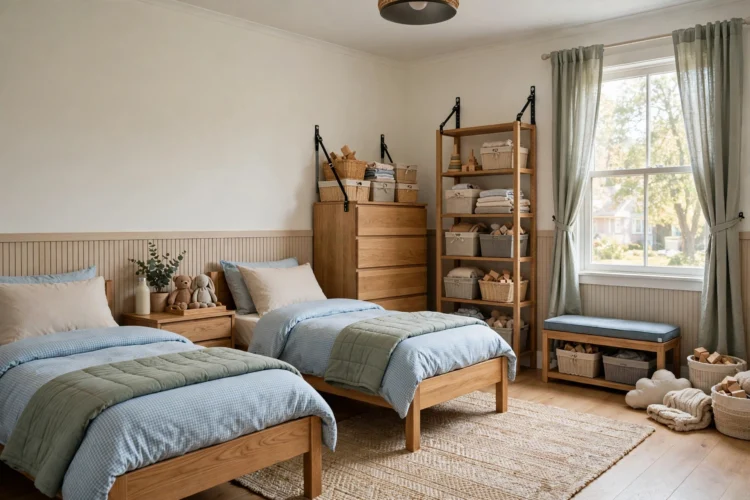
The best shared room design still needs a few house rules, and the room itself can make those rules easy to follow.
Write down three rules together: what is shared, what is private, and when the room goes quiet. Post the list inside the closet door where both kids see it daily. A shared charging station by the door keeps devices out of beds at night, and a small basket for borrowed items, returned by morning, ends most borrowing disputes.
Start with beds and storage, then let each child shape their own zone. A room that feels fair is a room siblings actually enjoy sharing, and a fair room is one they will keep tidy without being asked twice.