Physical Address
304 North Cardinal St.
Dorchester Center, MA 02124
Physical Address
304 North Cardinal St.
Dorchester Center, MA 02124

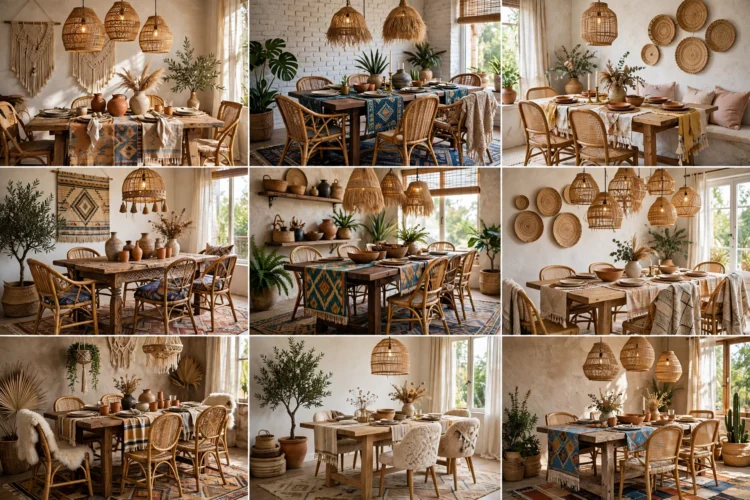
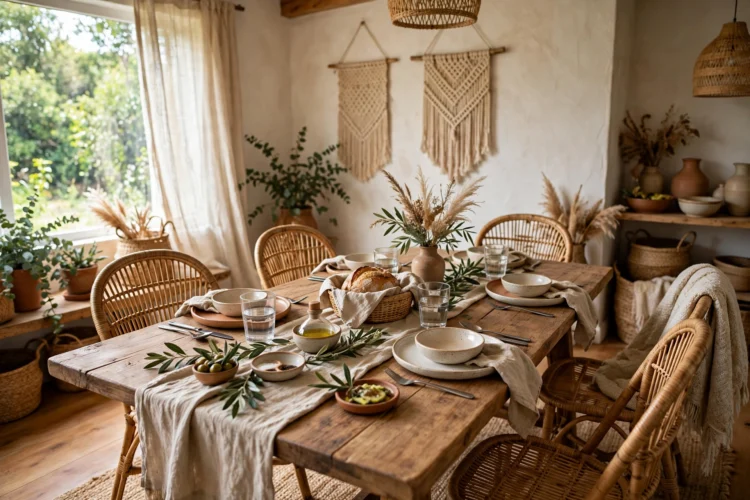
Rattan, patterned rugs, and collected textiles give a boho dining room its warmth, while washable, family-proof materials keep it practical. Here are nine ideas that layer texture without the clutter.
These boho dining room ideas start with a simple truth: boho style is about collecting, not buying a set. A rattan chair found at a market, a rug from a trip, a tablecloth passed down from a relative, and a plant that survived three moves all belong in the same room. The layers tell a story, and the story is what makes the room feel warm instead of decorated.
The risk is clutter. Layers without a plan turn into a pile, so every idea below comes with a practical ceiling: washable materials, a limited palette, and one strong base that holds the room together. The result is a dining room that feels collected and global but still works for a family dinner on a Tuesday. If the room connects to the kitchen, these kitchen refresh ideas that skip the renovation entirely use the same low-cost layering logic and pair well with a boho palette.
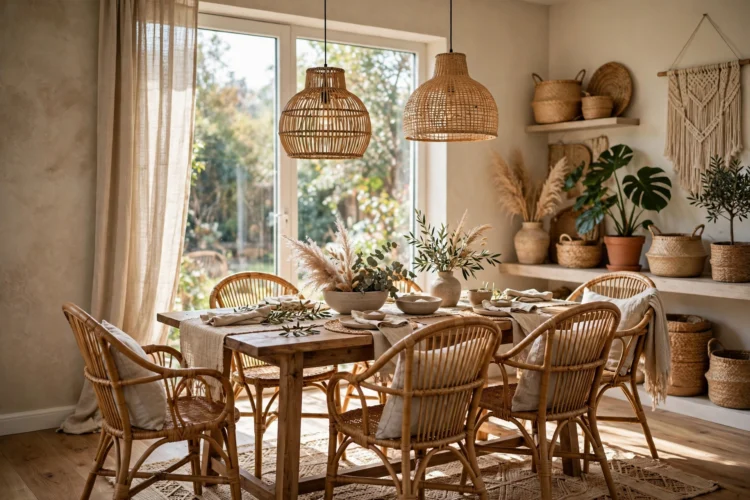
Rattan is the base that holds a boho dining room together. A rattan pendant light, rattan chairs, or a rattan bench gives the room a natural texture that every other layer can build on. Natural rattan in a honey tone works with almost any color, and it ages well, darkening slightly over time. If full rattan chairs feel too casual, use rattan on the two end chairs and wood or upholstered chairs on the sides.
Check rattan for quality before buying. The weave should be tight and even, with no loose strands or sharp ends. Wipe it with a damp cloth every few weeks to keep dust out of the weave, and keep it out of direct rain if the dining room opens onto a patio. A boho dining room decor scheme needs one material that repeats through the room, and rattan is the easiest one to repeat: a light, a chair, and a basket are enough to tie it all together.
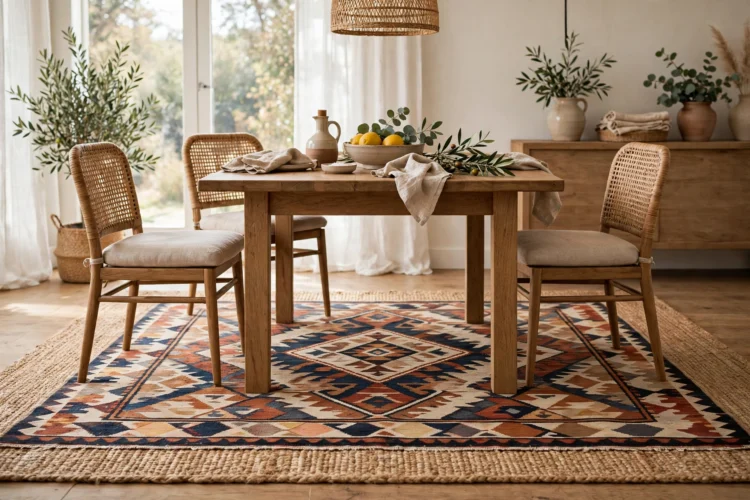
A patterned rug is the fastest way to give a boho dining room its global feel. A Persian-style rug, a kilim, or a Moroccan Berber pattern all work, and each one brings color and history to the floor. Choose a low-pile rug so chairs slide easily and crumbs vacuum up without a fight. A rug with several colors in it hides stains better than a solid one, which matters under a dining table.
Layering works here too. A large jute rug as the base with a smaller patterned rug on top gives depth and keeps the pattern from overwhelming the room. Keep the top rug centered under the table and at least 60 centimeters larger than the table on each side, so chairs stay on it. If the budget is tight, start with the jute base and add the patterned layer later. The same staged approach behind these budget kitchen makeover ideas that look anything but cheap works for rugs: build the base first, add the color when you can.
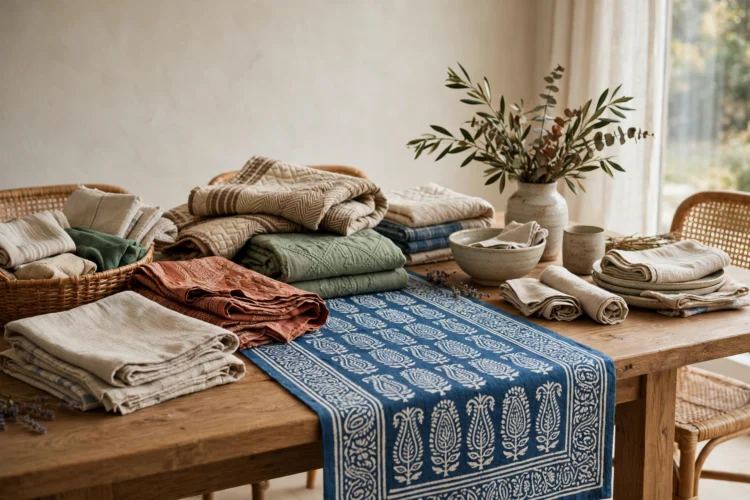
Collected textiles are the heart of boho style, and the dining table is where they show. A handwoven runner, a block-printed tablecloth, or a set of mismatched cloth napkins in related colors all work. The key is a shared palette: pick three colors and let every textile use at least one of them. A table with a rust runner, cream napkins, and terracotta plates feels collected. A table with six unrelated colors feels random.
Mix patterns by scale, not by color alone. A large-scale pattern on the tablecloth pairs well with a small-scale pattern on the napkins. Two large patterns fight each other, and two tiny patterns blur into noise. Keep one textile plain to give the eye a rest: a solid linen runner under a patterned centerpiece, or plain plates under a patterned cloth. Collected does not mean chaotic. It means every piece was chosen, even if it was chosen years apart.
Plants give a boho dining room its living layer, and hanging them at different heights makes the room feel like a garden rather than a shelf. A macrame hanger by the window, a trailing pothos on the sideboard, and a tall fiddle-leaf fig in the corner give the eye three levels of green. The mix of heights matters more than the number of plants. Three plants at three heights look lush. Six plants at the same height look crowded.
Choose plants that tolerate the light you actually have. Pothos, snake plants, and ZZ plants survive low light and missed waterings. Herbs like basil and mint like a bright windowsill and double as dinner ingredients. Water sparingly and always use pots with drainage, since a plant sitting in water rots fast. One healthy plant beats a shelf of struggling ones, and a bohemian dining room with living green feels warmer than any amount of decoration.
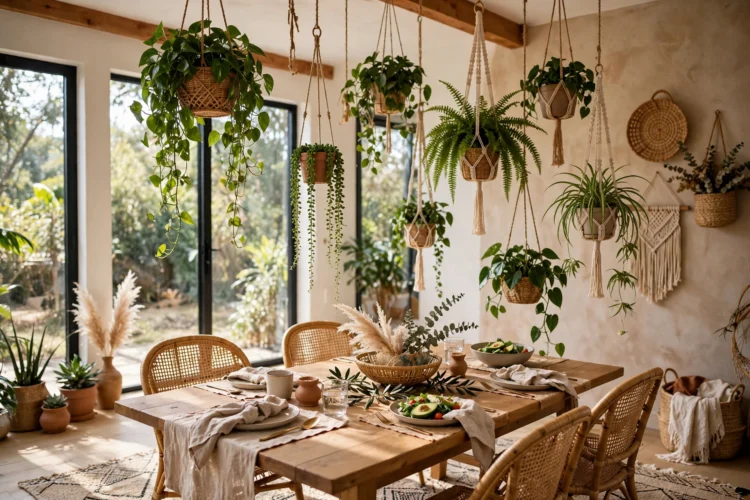
Boho style looks relaxed, but it only stays relaxed if the materials survive real life. Choose washable slipcovers, a tablecloth that goes in the machine, and chair cushions with removable covers. A dining room that cannot be cleaned becomes a room nobody wants to use, and a boho room full of delicate, dry-clean-only textiles is a room that punishes its own family.
Test materials the way a family will use them. Spill coffee on a fabric sample, let it sit for ten minutes, and wash it. If the stain stays, the fabric does not belong on a dining chair. Outdoor-rated fabrics, which resist stains and fade, now come in soft textures that pass for indoor linen. Use them on seat cushions and bench covers. The layered boho dining look depends on textiles, and textiles that wash well are the ones that stay on the table instead of living in a cupboard.
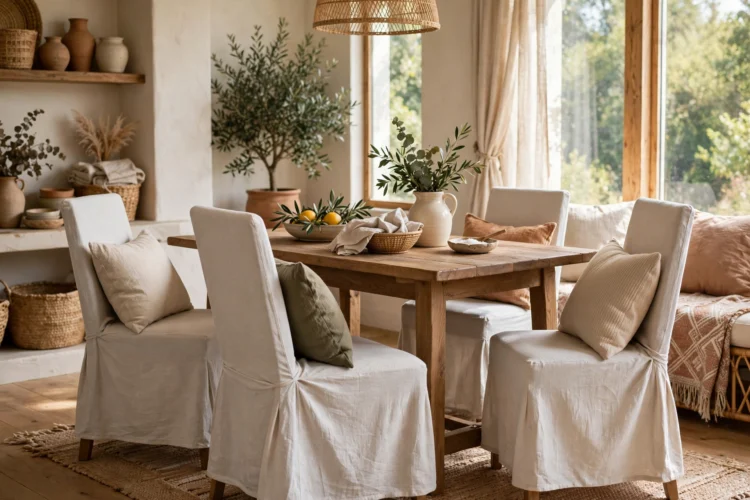
Global patterns are the soul of boho style, but too many at once turn the room into a market stall. The rule is three patterns, maximum. A kilim rug, a block-printed runner, and a woven basket give the room its global feel. Add a fourth pattern and the eye has nowhere to rest. Each pattern should appear at least twice, so it feels intentional rather than accidental: the rug pattern echoes in a cushion, the runner pattern echoes in a napkin.
Give the patterns a quiet background. Plain walls in warm white or pale clay let the patterns stand out, while patterned wallpaper behind patterned textiles competes for attention. Keep the walls simple and let the textiles and rugs carry the color. If the room already has a busy feature, like a patterned tile floor, keep the textiles nearly plain and let the floor be the star. One strong pattern per surface is the limit, and it keeps the room feeling collected rather than crowded.
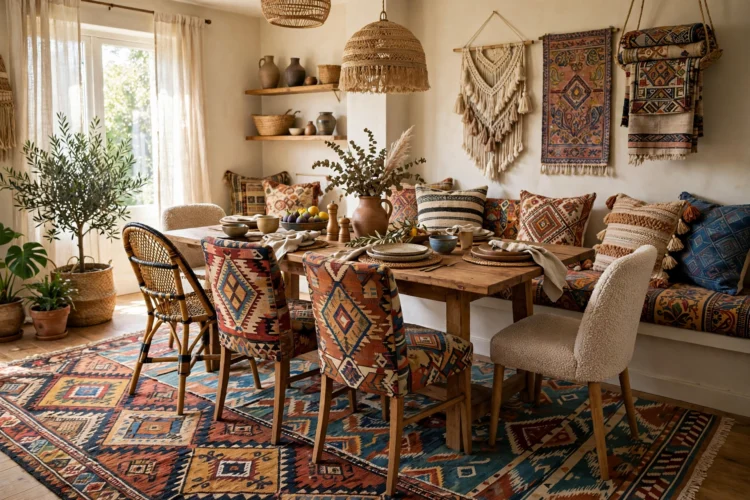
Low, warm lighting is what makes a boho dining room feel inviting after dark. A rattan pendant on a dimmer, a cluster of candles on the table, and a small lamp on the sideboard give the room three levels of glow. Warm bulbs around 2700K make skin tones look healthy and food look good. Cool white bulbs make the same room feel like an office, no matter how many textiles you add.
Hang the pendant low enough to pool light on the table, about 75 centimeters above the tabletop, so the glow stays intimate. Add candles in simple glass holders rather than ornate ones, so the light stays the focus. If the room gets used for homework or bills during the day, a brighter bulb in the pendant works for work hours, and the dimmer brings it back down for dinner. Light is the cheapest layer in a boho room, and it changes the mood more than any textile.
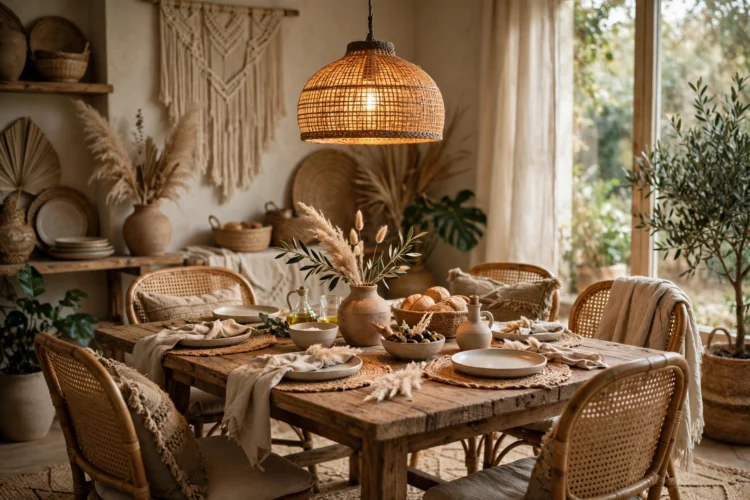
A gallery wall is where a boho dining room shows its story. Hang a mix of framed prints, woven wall hangings, small mirrors, and a piece or two from travels. The mix is the point: a woven basket next to a framed photo next to a small textile panel. Keep the frames varied but related, with two or three finishes at most, so the wall feels collected rather than random.
Plan the layout on the floor before hanging anything. Lay the pieces out, step back, and check the balance. Start with the largest piece in the center and build outward, keeping about 5 centimeters between frames. Hang the wall where people see it from the table, not behind the sideboard where nobody looks. A gallery wall that tells the family’s story is the most personal piece in the room, and it costs nothing except the frames you already own. For rooms that need more light to show the wall off, these ways to brighten a dark kitchen without painting the cabinets use the same light-first approach.
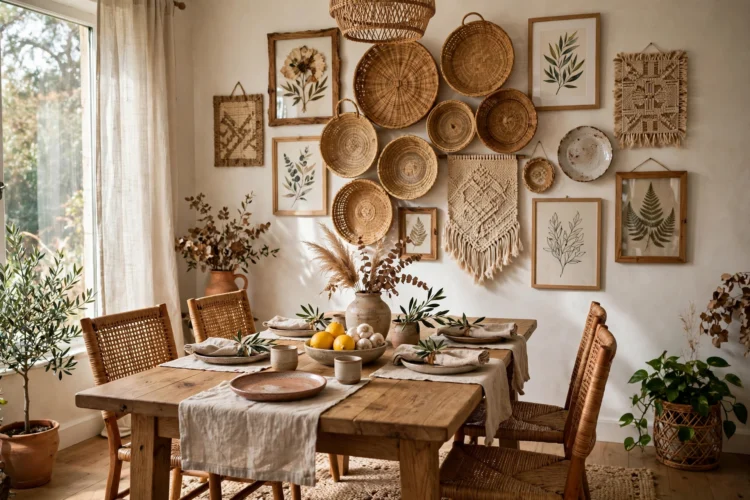
A boho dining room works when the table is always ready. Keep a washable runner on the table, a set of placemats in the sideboard, and a simple centerpiece that never needs moving: a wooden bowl, a vase with dried grasses, or a cluster of candles. When the table is ready, dinner happens there. When the table is bare and the runner lives in a drawer, dinner happens on the sofa.
Choose a centerpiece that survives daily life. Dried grasses need no water, a wooden bowl holds fruit, and candles light in a second. Fresh flowers are lovely, but they need replacing every few days, and a dead bouquet on the table is worse than no bouquet at all. The boho dining room is not a showroom. It is a room for eating, talking, and lingering, and a table that is always ready is a table that gets used. Layered, global, and practical is the whole idea, and it starts with a table that is set before anyone asks.