Physical Address
304 North Cardinal St.
Dorchester Center, MA 02124
Physical Address
304 North Cardinal St.
Dorchester Center, MA 02124

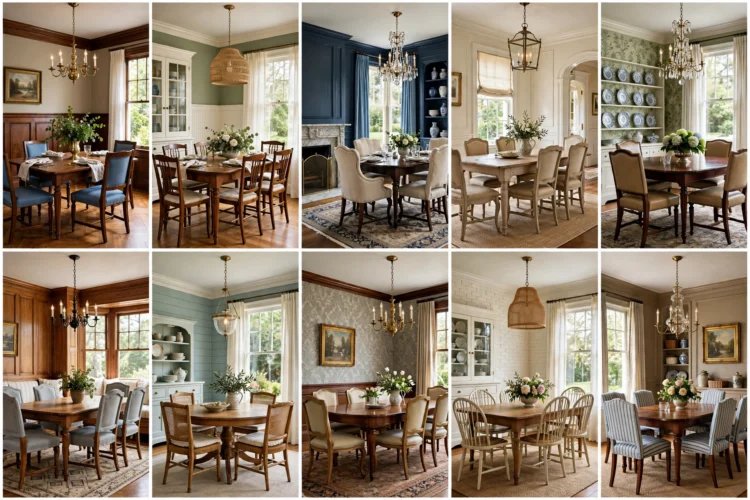
Classic symmetry, warm wood tones, and heirloom-friendly styling give a traditional dining room its staying power. These ten ideas mix antiques with new pieces without looking dated.
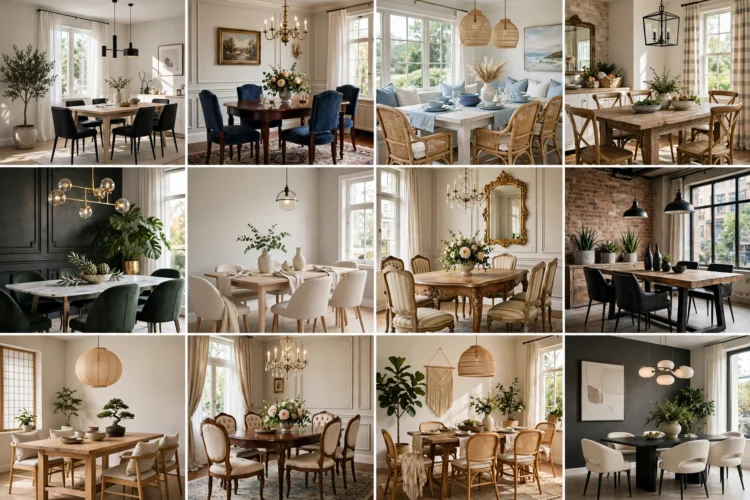
These traditional dining room ideas rest on one idea: good bones outlast trends. A well-proportioned room, a solid wood table, and balanced furniture will look right in ten years, when the current fashion has already faded. Traditional style is not about copying a period house. It is about using the old rules, symmetry, warm wood, and honest materials, in a room that still works for modern life.
The best traditional rooms mix old and new. An antique sideboard next to a new table, a family quilt folded over a modern chair, a chandelier that has seen three generations above a table that seats a laptop and a homework pile. The mix is what keeps the room from looking like a museum. For a room that opens to the kitchen, these arched kitchen ideas from doorways to cabinet details show how classic shapes can carry through an open plan without a full remodel.
Symmetry is the oldest trick in traditional design, and it still works. Center the table under the chandelier, place a chair at each end, and balance the sideboard with a pair of lamps or a pair of framed prints. The eye reads symmetry as calm and order, which is why a balanced room feels restful the moment you walk in. It also makes the room easy to arrange, since every piece has a clear place.
Symmetry does not mean everything matches. A pair of lamps can share a shape and differ in color. Two chairs at the ends can be upholstered while the side chairs stay wooden. The structure stays balanced while the details stay interesting. If the room has an off-center window or a fireplace on one wall, balance it with a tall piece on the opposite side, like a china cabinet or a large mirror. A traditional dining room with a clear center line feels settled, and settled rooms get used.
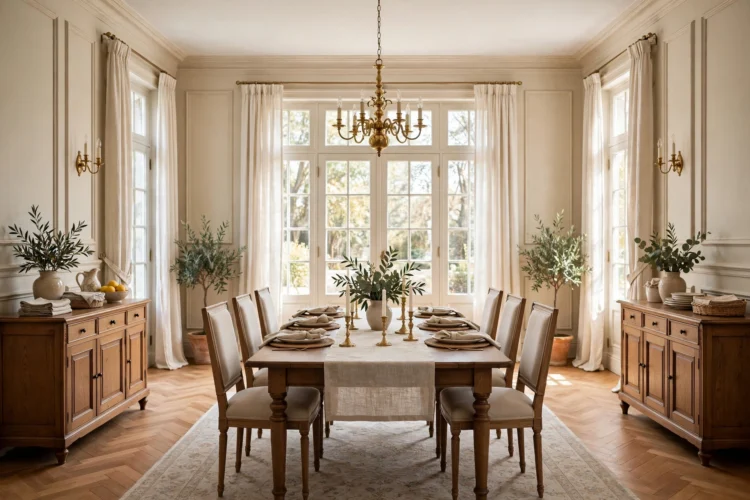
Wood is the main material in a traditional dining room, and its tone sets the whole mood. Warm mahogany, cherry, and walnut give the room depth and a sense of history. They look best against soft wall colors like warm white, sage, or pale butter, which keep the dark wood from turning heavy. If the room already has dark wood furniture, lighten the walls and the textiles rather than replacing the furniture.
Mix wood tones carefully. Two tones, like a dark walnut table and a medium oak sideboard, look intentional. Four tones look accidental. Keep the darkest wood for the largest piece, usually the table, and let the smaller pieces go lighter. Oil or wax the wood twice a year to keep it from drying out, and use coasters and placemats for hot dishes. Wood that is cared for darkens gently with age, which is exactly what a timeless dining room should do.
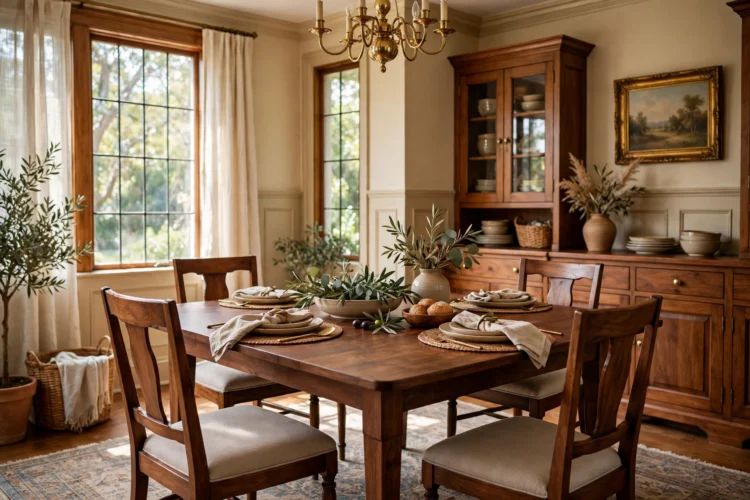
An antique in a dining room works best when it has a job. A grandmother’s sideboard holds the serving dishes. An old mirror hangs over it and bounces light across the table. A set of antique chairs gets reupholstered in a fresh fabric and sits at the table every day. When an antique is used, it stops being a relic and becomes part of the room. When it sits untouched behind glass, it becomes a museum piece.
Mix one or two antiques with new pieces rather than filling the room with old furniture. A new table with antique chairs, or an antique table with new chairs, gives the room a story without making it feel like a period set. Check antiques for stability before daily use: tighten joints, re-glue a wobbly leg, and add felt pads under feet to protect the floor. A classic dining room that mixes eras feels collected over time, which is the most convincing kind of traditional style.
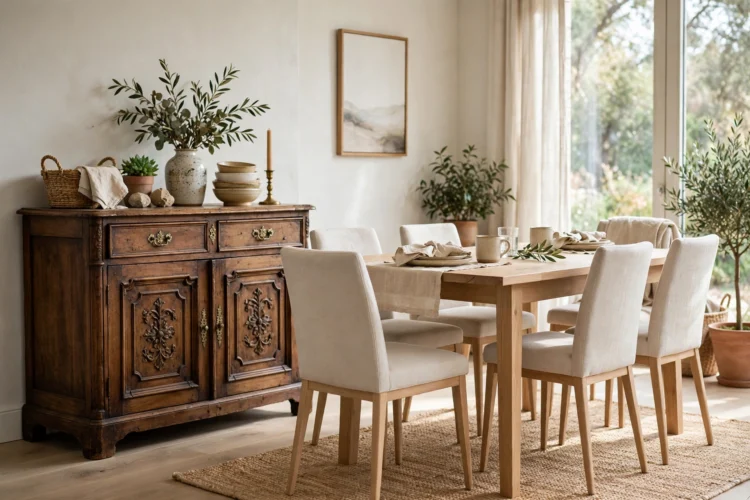
A classic chandelier is the centerpiece of a traditional dining room, and it earns that place. Crystal, brass, or wrought iron all work, as long as the scale fits the table. A chandelier that is too small disappears above a long table. One that is too large crowds the room. As a rule, the chandelier should be about half to two-thirds the width of the table, and it should hang 75 to 85 centimeters above the tabletop.
If the chandelier you inherited feels dated, change the shades or the bulbs before replacing the fixture. Linen shades soften a crystal chandelier, and warm bulbs make brass glow instead of glare. A dimmer switch is the single best upgrade for any chandelier. It lets the same fixture serve a bright family dinner and a low, candle-like evening. The chandelier is the one piece in the room allowed to be purely decorative, so let it be beautiful.
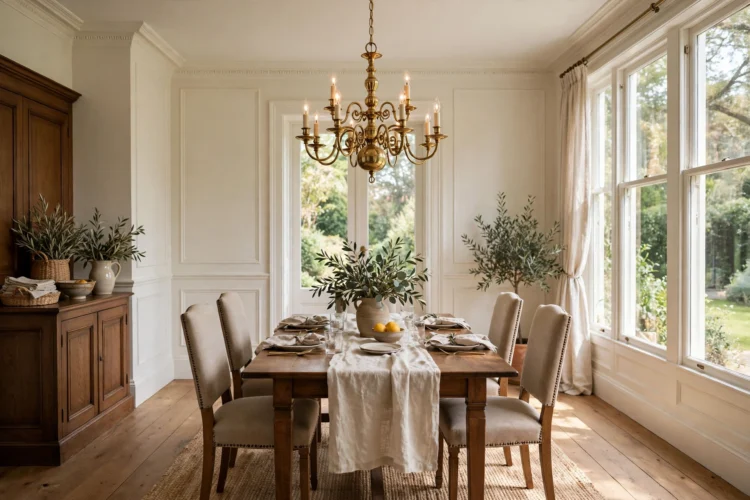
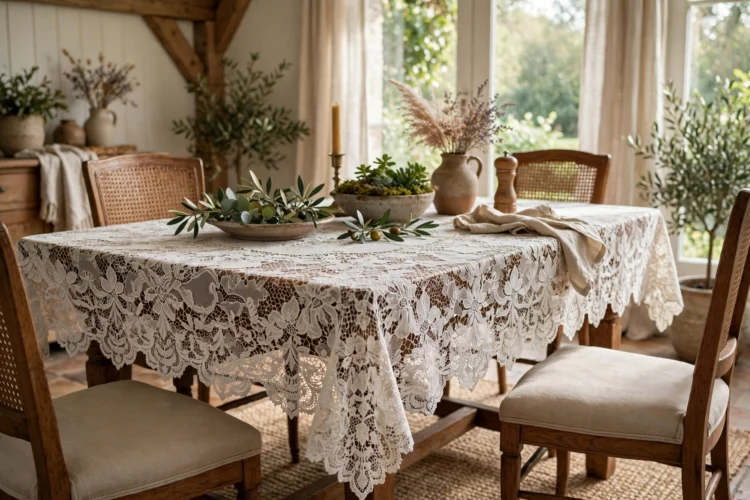
Heirloom textiles carry the family history into the dining room, and the table is where they belong. A grandmother’s tablecloth, a set of embroidered napkins, or a hand-stitched runner turns an ordinary dinner into something with a past. Use them, even if they are not perfect. A small stain or a frayed edge is part of the story, and a textile that stays folded in a drawer helps no one.
Protect heirloom pieces while you use them. Lay a plain cotton cloth underneath a lace tablecloth to shield it from spills, and wash heirloom linens by hand in cool water with a gentle soap. Rotate them with everyday linens so no single piece wears out. Pair an heirloom runner with plain modern plates, so the old textile stands out instead of competing with a busy pattern. A traditional dining room decor scheme that uses its heirlooms feels personal in a way no shop can copy.
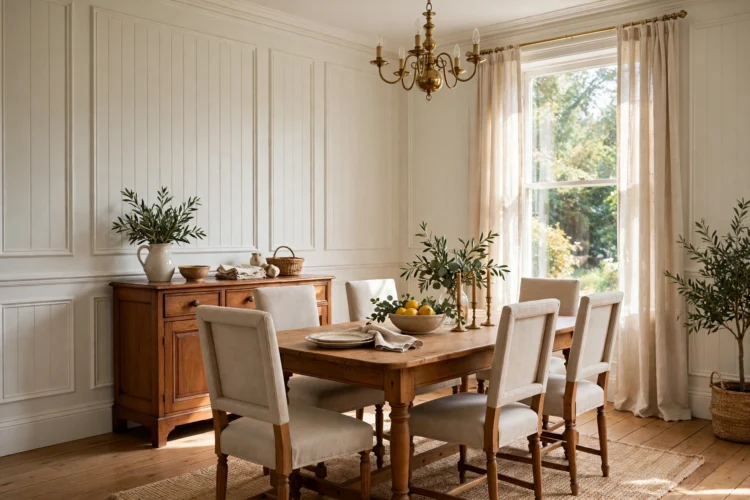
Wainscoting and paneling give a dining room its traditional bones. A chair rail with panels below it protects the wall from chair backs and adds architectural detail that paint alone cannot give. Paint the paneling the same color as the walls for a subtle effect, or one shade darker for definition. White paneling against a soft sage or warm grey wall is the classic combination, and it works in rooms of any size.
Keep the panel height at about one-third of the wall, roughly 90 centimeters, so the proportions stay classic. If the room is small, keep the panels simple and skip the fussy moldings. The same low-cost, high-impact thinking behind these kitchen wallpaper ideas that handle steam and splatters applies here: one strong wall treatment changes the whole room.
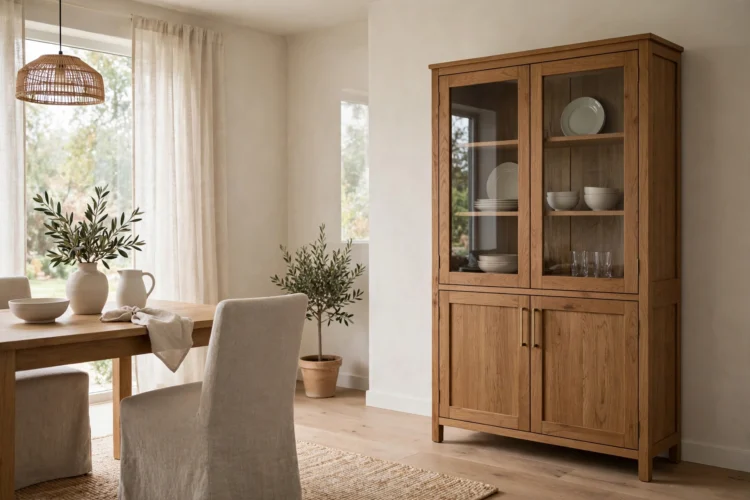
A china cabinet is the display case of a traditional dining room, and restraint is what makes it look good. Display one set of dishes, one set of glasses, and one or two decorative objects per shelf. Leave breathing room between groups so each piece is visible. A cabinet packed edge to edge reads as storage. A cabinet with space between pieces reads as a collection.
Arrange by color and height. Tall pieces at the back, short pieces at the front, and a single color repeated across shelves ties the display together. Use the dishes, too. A cabinet full of plates nobody touches becomes a shrine. Rotate a few pieces into daily use and replace them with others from the cupboard, so the display changes and the dishes earn their keep. A china cabinet that is both display and working storage is the most honest piece in a traditional dining room.
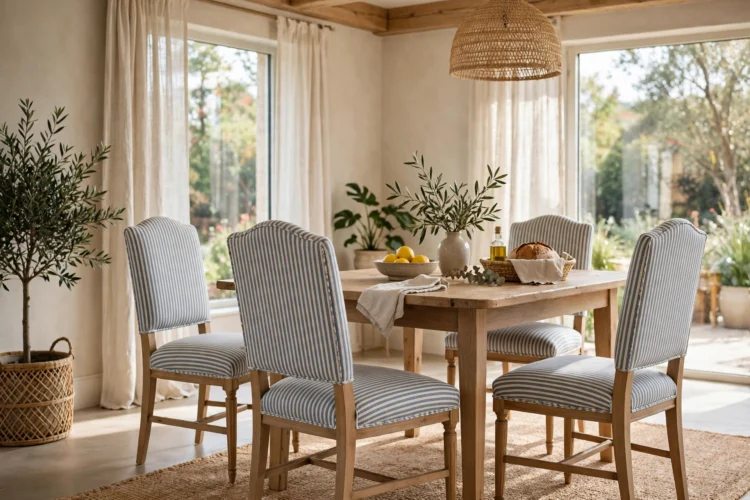
Upholstery sets the color story of a traditional dining room, and timeless patterns age best. A small stripe, a subtle damask, or a plain linen in a warm neutral will look right for a decade. Avoid large trendy prints and bright colors that date fast. The chairs are expensive to reupholster, so choose a fabric you will still like in five years, not one that excites you for five months.
Durability matters as much as pattern. A tightly woven fabric with a stain treatment survives family dinners, and a removable seat cushion can be re-covered cheaply when it wears. If you love a bold pattern, use it on one accent piece, like the two chairs at the ends of the table, and keep the side chairs plain. That way the pattern adds character without committing the whole room to it. Timeless upholstery is the quiet background that lets the wood and the antiques do the talking.
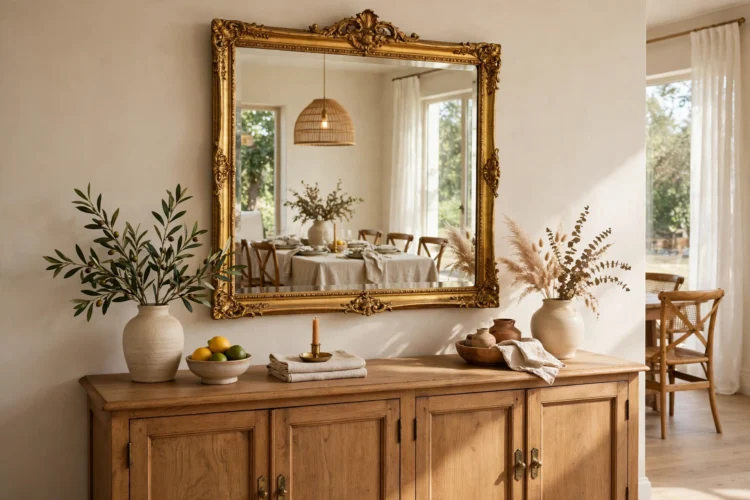
A mirror is the traditional dining room’s best friend. Hung opposite a window, it doubles the daylight. Hung above the sideboard, it reflects the chandelier and makes the room glow at dinner. Choose a mirror with a frame that matches the room: gilt wood for a formal feel, dark wood for a warm one, or a simple black frame for a quieter look. The frame should feel like furniture, not an afterthought.
Hang the mirror so its center sits at eye level for a seated person, about 145 centimeters from the floor. Check what it reflects before fixing it in place. A mirror that reflects a blank wall or a cluttered corner doubles the wrong thing. A mirror that reflects a window, a chandelier, or a vase of flowers doubles the best part of the room. In a small dining room, a large mirror can make the space feel twice its size, which is a trick worth using.
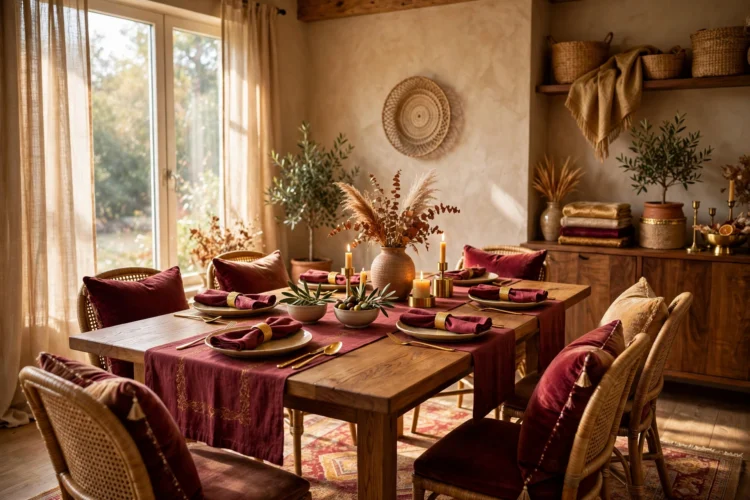
A traditional dining room feels grounded when its palette stays warm. Warm white walls, wood tones in the furniture, and textiles in sage, burgundy, or deep gold give the room a settled feeling. Avoid cool greys and stark whites, which fight the warm wood and make the room feel unfinished. If the walls are already cool, warm them with textiles: a burgundy runner, gold-toned cushions, and brass candlesticks shift the whole temperature of the room.
Keep the palette to three main colors plus the wood tones. A warm white, one deep accent like burgundy or forest green, and one metallic like brass is enough. Repeat each color in at least two places so the room feels connected. A traditional dining room ideas list always ends here for a reason: the palette is what makes the room feel timeless, and a warm, grounded palette never goes out of style. When the room needs a bigger change, the same budget-first approach in these budget kitchen makeover ideas that look anything but cheap proves that paint and textiles can remake a room without new furniture.