Physical Address
304 North Cardinal St.
Dorchester Center, MA 02124
Physical Address
304 North Cardinal St.
Dorchester Center, MA 02124

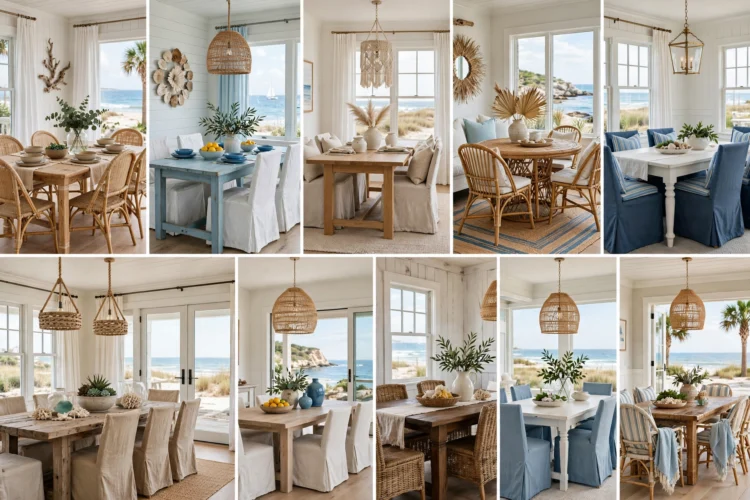
Light woods, woven textures, and sea-glass palettes bring the coast into the dining room without a single themed anchor. Here are ten ideas that keep the room relaxed and easy to live with.
These coastal dining room ideas work whether you live two streets from the beach or two hundred miles inland. The trick is suggestion, not theme. Pale wood, woven texture, and soft blue-green color read as coastal because they borrow from the shoreline, not because they spell it out. Nobody needs a wall of shells to get the feeling.
A good coastal dining room also stays practical. Chairs get pulled out every day, the table collects crumbs and coffee rings, and the light changes from morning to night. The ideas below keep that real life in mind, so the room looks calm without turning precious. If your dining area opens onto the kitchen, these eat-in kitchen ideas that work without a separate dining room pair well with the same light palette.
The table sets the tone for everything else, so start there. A pale oak, ash, or whitewashed pine table keeps the room bright and gives every other coastal detail something to sit against. Dark mahogany can work in a coastal room, but it pulls the eye down and fights the airy feeling most people want. Light wood does the opposite. It reflects daylight and makes a small room feel wider.
Look for a matte or satin finish rather than high gloss. A matte top hides small scratches and water rings better, and it looks more like driftwood than furniture polish. If your table is already dark, a linen tablecloth in natural flax or soft white gives you the same effect for the price of a wash. That is the heart of relaxed coastal dining room decor: the room should look lived in, not staged.
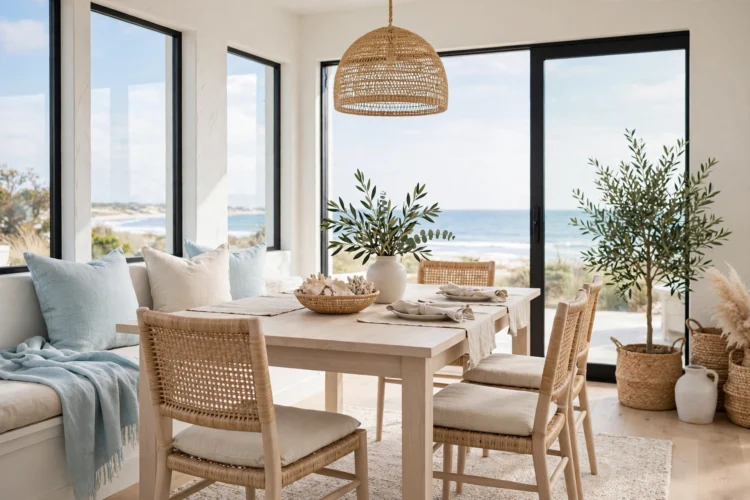
A woven rug anchors the table and softens hard floors, and in a coastal room it does double duty as texture. Jute, sisal, and seagrass all work. Jute is the softest under bare feet and the easiest to find in large sizes. Sisal is tougher and holds up better under chair legs that get dragged back and forth. Seagrass sheds water, which helps if the room sits near a back door or a pool entrance.
Size matters more than material. The rug should extend at least 60 centimeters beyond the table on every side, so chairs stay on the rug when they are pulled out. A rug that is too small looks like a placemat and trips the eye. Choose a flat weave with no deep pile, since crumbs and chair legs sink into thick pile. If a full rug feels like too much commitment, a budget kitchen makeover approach works here too: start with a washable runner down the center of the room and upgrade later.
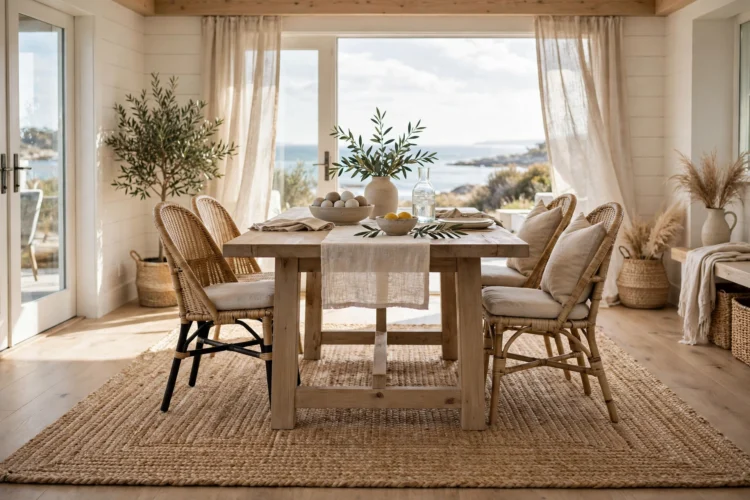
Sea-glass color is the quiet version of coastal blue. Think soft aqua, pale sage, dusty blue, and the pale green you see in old glass bottles. These tones sit well on walls because they read as color without shouting. Paint one wall or the whole room, depending on how much light you get. In a north-facing room, keep the walls near-white and put the color in textiles instead, so the room does not go cold.
Test paint in the room itself, not in the shop. A color that looks like pale aqua under store lights can turn mint green in afternoon sun. Paint a large swatch on the wall the table faces and live with it for two days before committing. For textiles, mix two sea-glass tones rather than matching one exactly. A dusty blue runner with sage napkins looks collected. A matching set looks like a showroom. That mix is what makes beach dining room style feel personal instead of packaged.
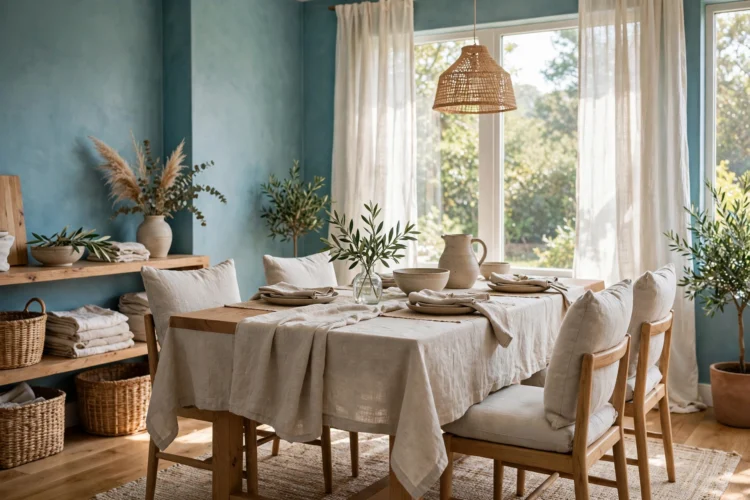
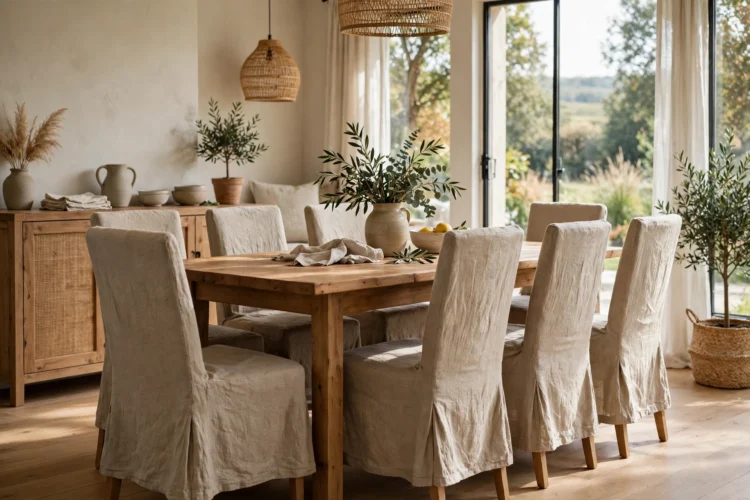
Linen slipcovers are the coastal dining room’s best trick. They soften hard chair frames, hide worn upholstery, and come off for washing when someone spills red sauce. Choose a natural flax, soft white, or pale stone color. Avoid bright white if the room gets daily use, since it shows every mark and needs washing twice as often.
Fit matters. A slipcover that bags at the corners looks sloppy, so measure the chair back and seat before ordering, and pick a style with ties or a fitted skirt that holds its shape. If your chairs are wooden, a simple seat cushion in washed linen gives the same soft effect with less fabric to manage. Pair the slipcovers with a washable tablecloth and the whole room becomes spill-proof, which is the point. A dining room should invite people to sit down, not warn them to be careful.
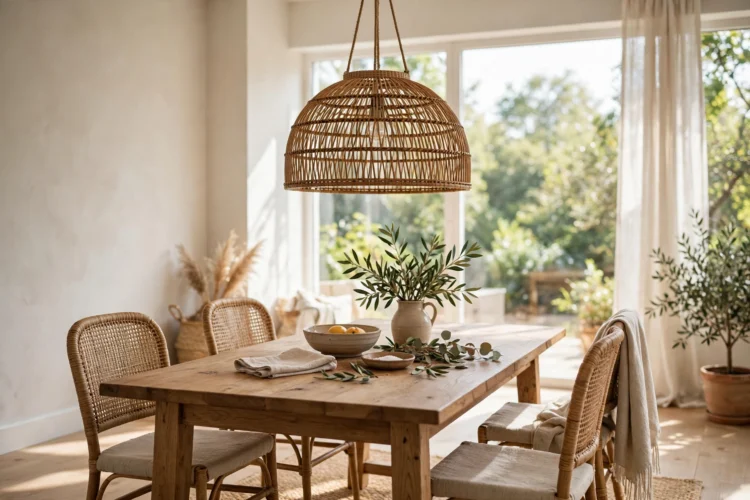
One strong pendant light does more for a coastal dining room than a dozen small accessories. Rattan, woven bamboo, or a driftwood frame throws warm, patterned shadows on the table and reads as coastal the moment you walk in. Hang it so the bottom sits about 75 to 85 centimeters above the tabletop. Too high and the light washes out; too low and it blocks sightlines across the table.
If the room already has a chandelier, swap the shades rather than the whole fixture. Woven or linen drum shades on an existing frame give you the texture without rewiring. Use warm bulbs, around 2700K, so the light feels like late afternoon rather than an office. A dimmer switch is worth the small cost. It lets the same light work for a bright family breakfast and a slow evening dinner.
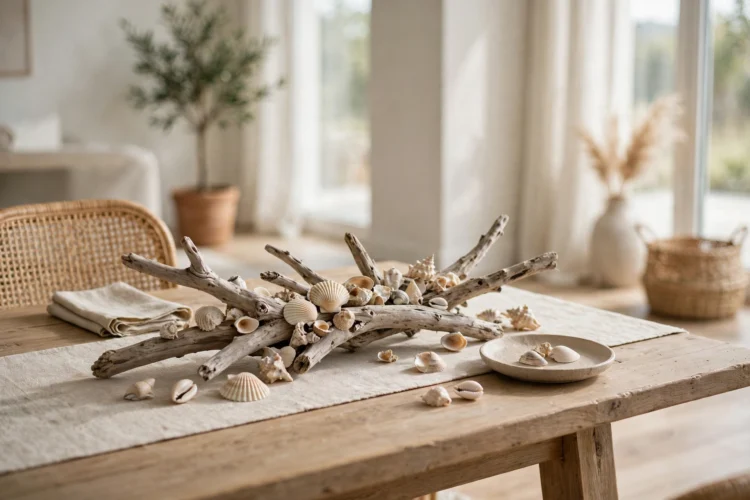
Shells and driftwood belong on a coastal table, but only in small doses. One piece of driftwood down the center, a small bowl of shells, or a single coral branch in a glass vase is enough. The moment the table holds three shell collections, a starfish garland, and a rope-wrapped candle holder, the room stops feeling like a dining room and starts feeling like a gift shop.
Rotate the pieces with the seasons. In summer, a bowl of pale shells and a sprig of eucalyptus keeps the table fresh. In winter, swap in a few pinecones or a simple candle cluster and the same driftwood still works. Keep the centerpiece low so people can see each other across the table. Anything taller than a wine bottle blocks conversation, and conversation is the reason the table exists.
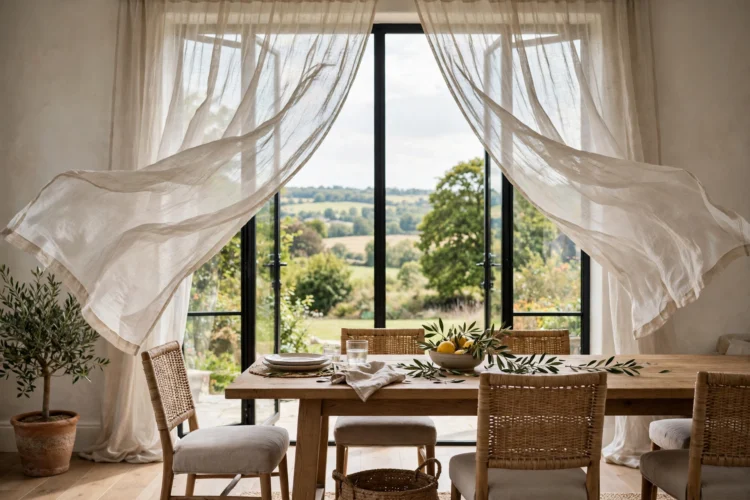
Sheer linen curtains are the easiest way to make a dining room feel airy. They soften hard window frames, filter harsh midday sun, and move when a window opens, which is a small pleasure that heavy drapes never give. Choose a sheer in white or natural flax, hung from a simple wooden or black metal rod. Avoid fussy tiebacks and valances, which add weight the room does not need.
Hang the rod close to the ceiling and let the panels fall to the floor. That extra length makes the windows look taller and the room feel bigger. If privacy is a concern, layer the sheer over a simple roller blind in the same tone. The blind does the private work at night and disappears during the day. For rooms that feel dark even at noon, these ways to brighten a dark kitchen without painting the cabinets use the same light-first thinking and translate well to dining rooms.
A coastal room looks flat when every wood surface matches. Mixing whitewashed and natural wood finishes gives the room depth without adding color. Try a whitewashed table with natural oak chairs, or a natural wood sideboard against whitewashed wall paneling. The contrast is gentle, but it keeps the eye moving and stops the room from looking like a furniture set.
Keep the mix to two finishes, not four. A third or fourth wood tone starts to look accidental. If your table is whitewashed and your chairs are natural oak, pick a sideboard in one of those two finishes and let everything else stay painted or woven. Sand and re-oil natural wood once a year to keep it from drying out, and wipe whitewashed surfaces with a damp cloth rather than harsh cleaner, which can lift the finish.
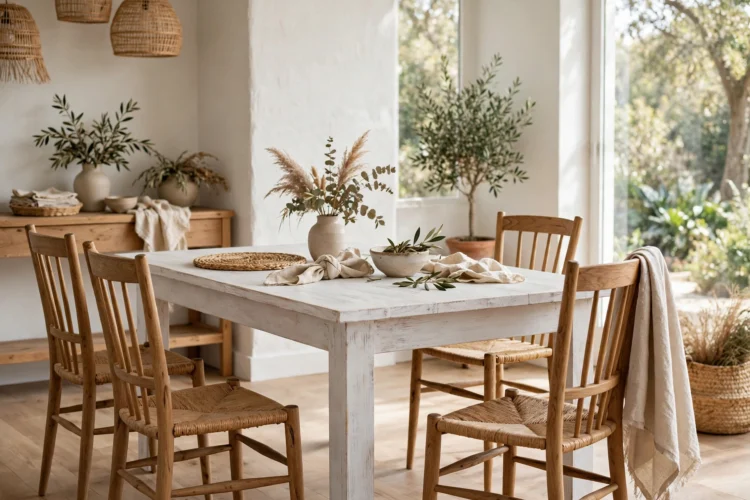
Plants add the green that a coastal palette needs, and a bright dining room is a good home for them. Olive trees, fiddle-leaf figs, and snake plants all tolerate the strong light near a dining window. An olive tree in a terracotta pot beside the sideboard gives height without blocking the table. Smaller herbs like rosemary and basil on the windowsill double as dinner ingredients.
Watering is where most dining room plants fail. A plant that sits in a decorative pot with no drainage rots within weeks. Always use a pot with a hole and a saucer, and empty the saucer after watering. If you travel often, choose a snake plant or a ZZ plant, which both survive weeks of neglect. One healthy plant beats five struggling ones, and a single strong green shape is all an airy dining room needs.
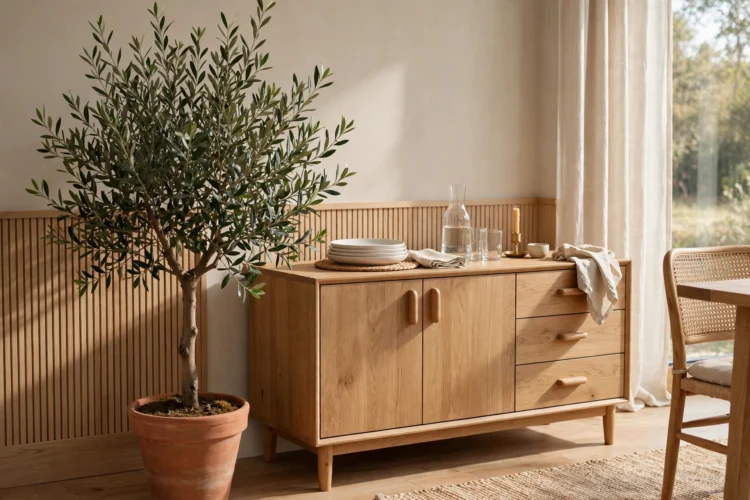
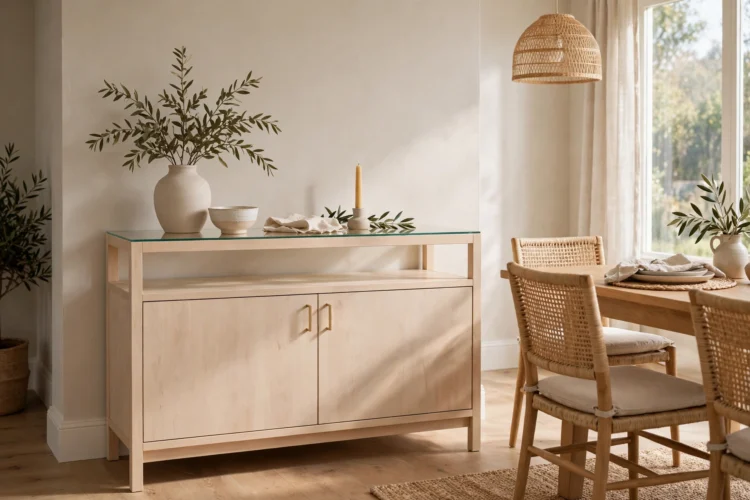
The sideboard is where coastal dining rooms either stay calm or fall apart. Keep its top to three things: a lamp or a vase, a stack of plates or bowls, and one decorative object. Everything else belongs inside. Use the drawers for table linens, the cupboard for serving dishes, and a basket on the lower shelf for placemats. When the top stays clear, the room feels bigger and setting the table takes half the time.
Choose a sideboard in the same pale wood as the table or in a soft painted finish like sage or pale blue. Avoid dark stain, which anchors the room too heavily. If the sideboard came with the house or a previous owner, a coat of chalk paint in a coastal tone can remake it in a weekend. The same low-cost refresh logic behind these kitchen refresh ideas that skip the renovation entirely applies here: paint, hardware, and a clear top do more than new furniture. A relaxed coastal dining room is not about owning the right things. It is about owning fewer things and letting light, wood, and texture do the work.