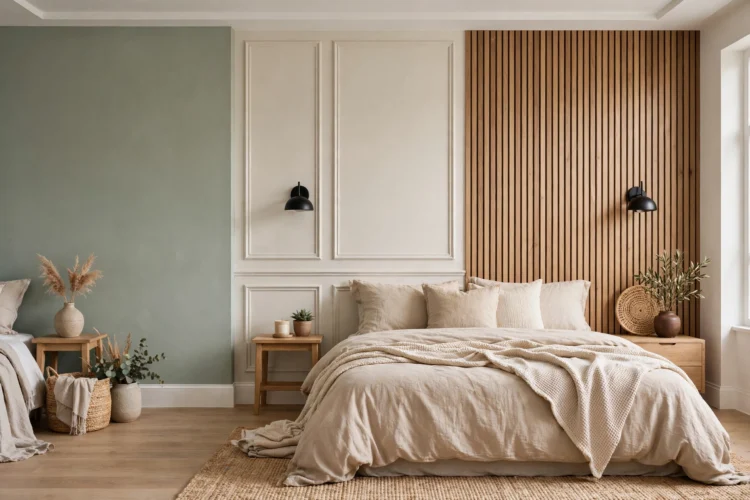
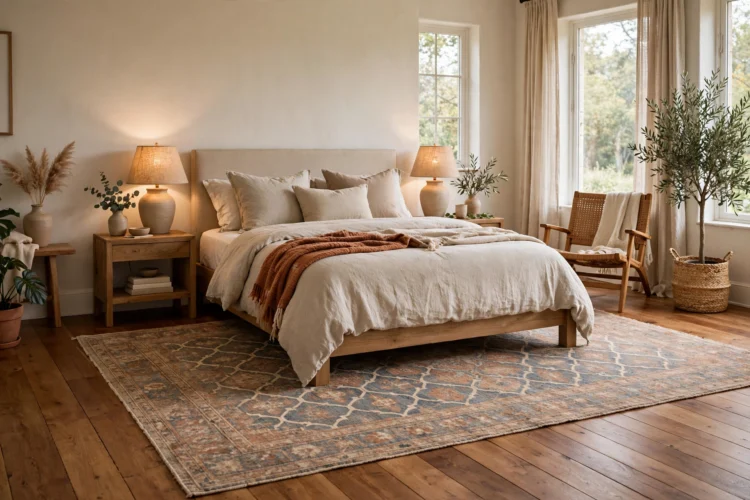
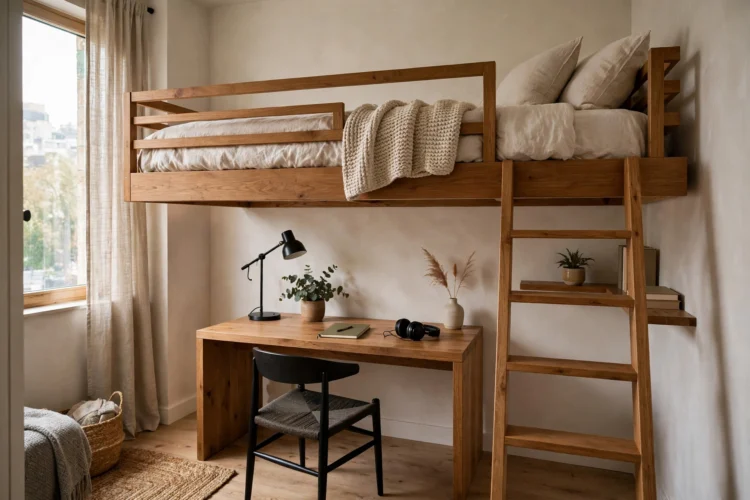
Physical Address
304 North Cardinal St.
Dorchester Center, MA 02124
Physical Address
304 North Cardinal St.
Dorchester Center, MA 02124

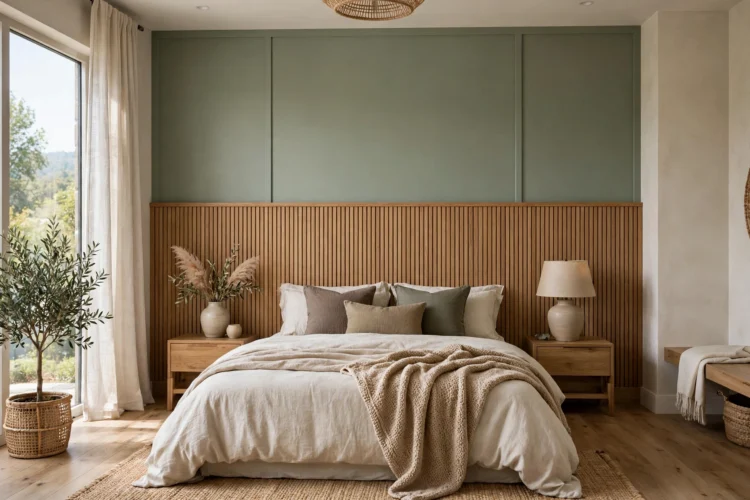
One strong wall can change how a whole bedroom feels. These twelve bedroom accent wall ideas compare paint, panels, and wood by effort, cost of materials, and staying power.
Bedroom accent wall ideas work best when you match the treatment to the room you actually live in, not the room in a photo. A bold paint color suits a renter with one free weekend. Wood slats suit a homeowner who wants texture that lasts for years. Panels sit in the middle, giving a tailored look without a full renovation. Start with the wall behind the bed, since that wall already acts as a natural focal point, then choose a finish that works with your bedding, flooring, and light.
Before you buy anything, test the idea at full scale. Paint a large swatch and live with it through morning light and evening lamplight. Hold a wood sample against the headboard and the floor. Check how a panel layout lines up with outlets, light switches, and closet doors. These small checks prevent the most common regret, which is a wall that looks great in a close-up photo but fights the rest of the room every day.
Paint is the fastest route to a bedroom accent wall, and it is also the easiest to reverse. A deep green, warm terracotta, or inky navy can ground a pale room in a single afternoon, while a soft sage or dusty blue adds color without making a small room feel closed in. Choose a finish with a slight sheen, such as eggshell, so the wall wipes clean and catches light without showing every roller mark.
Paint the wall in two coats and let the first coat dry fully before judging the color. Colors often dry darker than they look wet, and a shade that seems perfect under store lighting can shift at home. If you want a softer result, paint only up to picture rail height and leave the upper wall white, or paint the wall behind open shelves so the color reads as a backdrop rather than a block. For more on how a room’s layout shapes the result, see these small bedroom layout ideas before you commit to a dark shade.
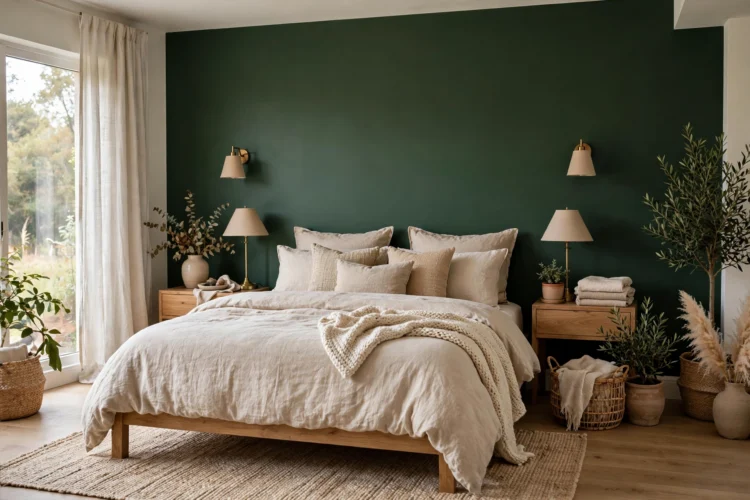
Vertical wood slats add rhythm and warmth to a bedroom, especially in rooms with plain white walls and simple furniture. Narrow slats feel modern and quiet, while wider boards with visible grain feel rustic and relaxed. Walnut-stained slats pair well with linen bedding and black metal lamps, and pale oak slats suit rooms that need warmth without darkness. Space the slats evenly and keep the gaps consistent, since uneven spacing is the detail the eye notices first.
Slats work best when they stop at a clear boundary, such as the ceiling, a piece of trim, or the edge of the headboard wall. Running them partway across a wall can look unfinished unless a shelf or bench gives the edge a reason to stop. If you rent, look for slat panels that mount with removable strips or a French cleat, and confirm the wall can hold the weight before you start. A slat wall also gives a plain bed a finished backdrop, much like the soft structure in these upholstered headboard ideas.
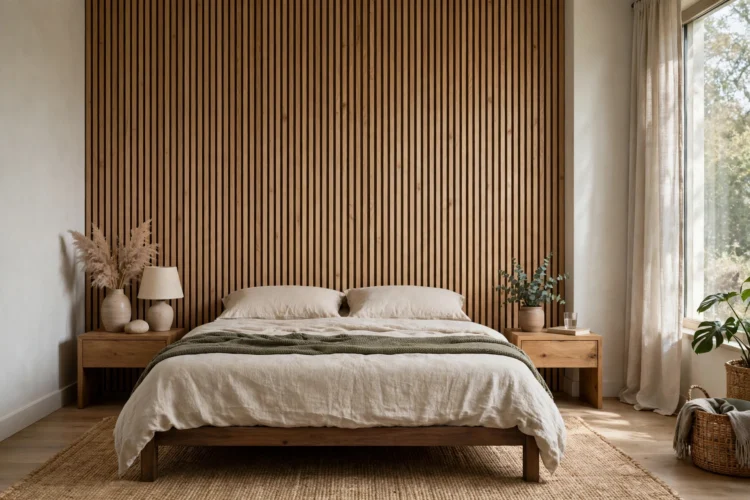
Board and batten uses flat boards and vertical strips to build a grid on the wall, and the result reads as tailored rather than rustic. A simple grid with wide spacing suits a modern bedroom, while a tighter grid with a chair rail feels more traditional. Paint the whole wall one color, including the boards, so shadows do the decorating instead of contrasting trim. White board and batten brightens a dark room, while the same grid in deep green or charcoal turns the bed wall into a clear focal point.
Measure the wall and sketch the grid on paper before cutting anything. Aim for panels of similar width, and adjust the spacing slightly so the outer panels match rather than leaving one narrow strip at the edge. This is weekend work for a confident DIYer, but it needs patience at corners and around trim. If the grid will sit behind a tall headboard, plan the panel heights so the headboard does not hide the best part of the pattern.
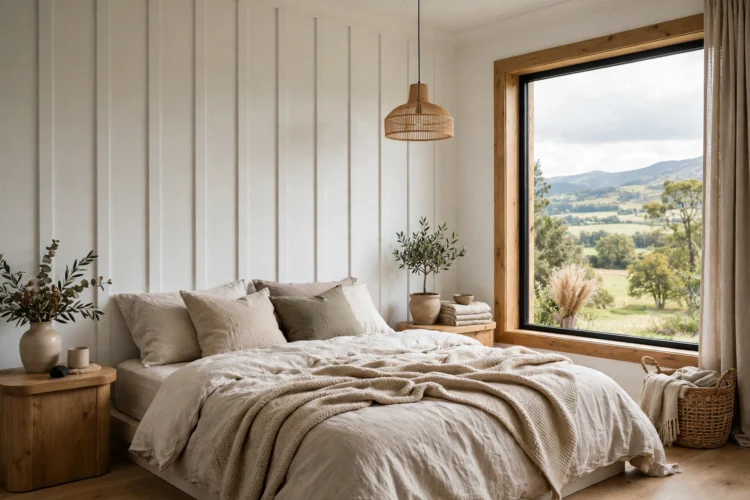
Shiplap gets dismissed as farmhouse shorthand, but the boards themselves are neutral. Painted in a soft white or warm greige, horizontal shiplap adds subtle shadow lines that suit coastal, transitional, and even minimal bedrooms. Vertical shiplap draws the eye upward and can make a low ceiling feel taller, which helps in rooms where the bed fills most of the wall. The trick is restraint: one wall, one color, and bedding that does not compete with the lines.
Real wood shiplap costs more in materials and time than peel-and-stick versions, but it also sits flatter and lasts longer. Peel-and-stick planks suit renters and quick refreshes, as long as the wall is smooth and clean before application. Either way, start at the bottom and work up, checking level every few rows so a small drift does not turn into a visible slope at the ceiling.
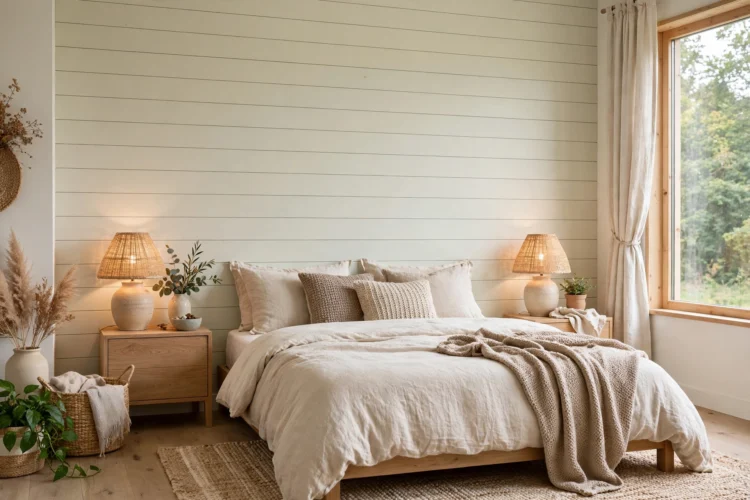
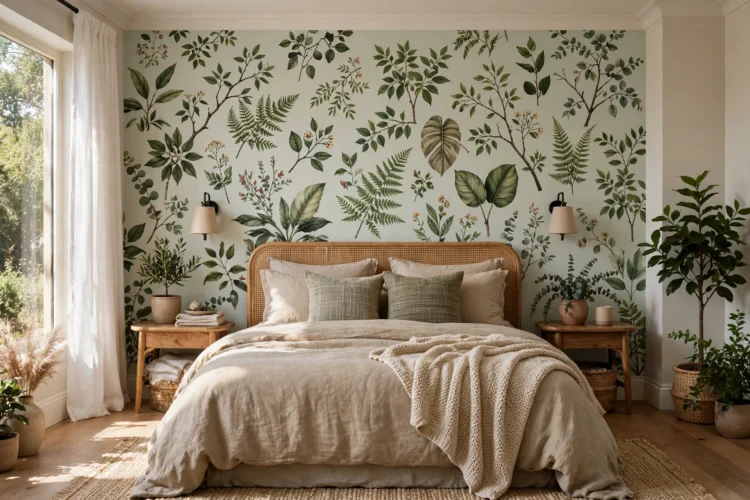
Wallpaper is the right choice when paint feels too flat and wood feels too heavy. A large-scale botanical print, a soft stripe, or a hand-painted style mural can carry a whole bedroom scheme, letting you keep furniture simple. Peel-and-stick wallpaper has made this option realistic for renters, and it now comes in convincing grasscloth, linen, and plaster looks. Paste-the-wall papers still suit long-term homes, since they hang straighter on large walls and resist peeling at the edges.
Order an extra roll beyond the estimate, because pattern matching wastes more paper than most people expect. Line the pattern up at eye level behind the bed, where guests and photos will notice it most, and let mismatches fall near the ceiling or behind furniture. If the print is bold, repeat one color from it in a throw or cushion so the wall feels connected to the bed rather than pasted on. A calm, restful scheme around it matters too, as these master bedroom ideas show.
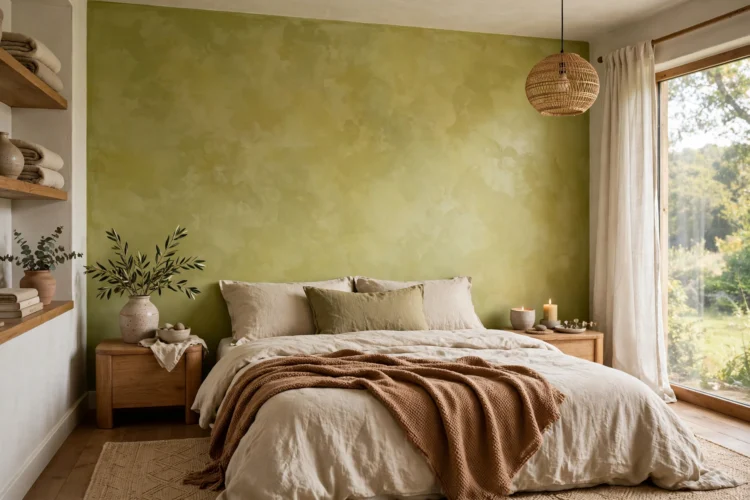
Limewash and textured plaster give a bedroom accent wall a soft, cloudy surface that changes with the light. Unlike flat paint, these finishes have movement: brush strokes and mineral variation create depth without pattern. They suit bedrooms that aim for calm, with linen bedding, wood furniture, and minimal art. Earth tones such as clay, sand, and warm gray work well, while white limewash adds texture to an all-white room without adding color.
These finishes need a properly prepared wall. Fill cracks, sand rough patches, and apply the recommended primer, since plaster and limewash show flaws that flat paint hides. Work in sections with a large brush and keep a wet edge so lap marks do not dry into stripes. The result rewards patience, and it pairs naturally with layered textiles like those in these bedding layering ideas, which soften the wall’s mineral edge.
Choose by weekend reality, not by ambition. Paint takes a day and reverses with another coat. Peel-and-stick wallpaper or planks take a weekend and suit renters. Board and batten, slats, and plaster take longer and need tools, measuring, and patience, but they also last for years and add the most character. Write down your budget for materials, your available days, and whether you can live with the result for at least two years before you start.
Then check the wall against the rest of the room one last time. A strong accent wall needs a calm bed, simple nightstands, and lighting that flatters it after dark. If the room already has patterned curtains, a busy rug, and colorful art, a quiet paint color may serve you better than wood or wallpaper. The best accent wall is the one you still like on an ordinary Tuesday morning, not just on installation day.