Physical Address
304 North Cardinal St.
Dorchester Center, MA 02124
Physical Address
304 North Cardinal St.
Dorchester Center, MA 02124

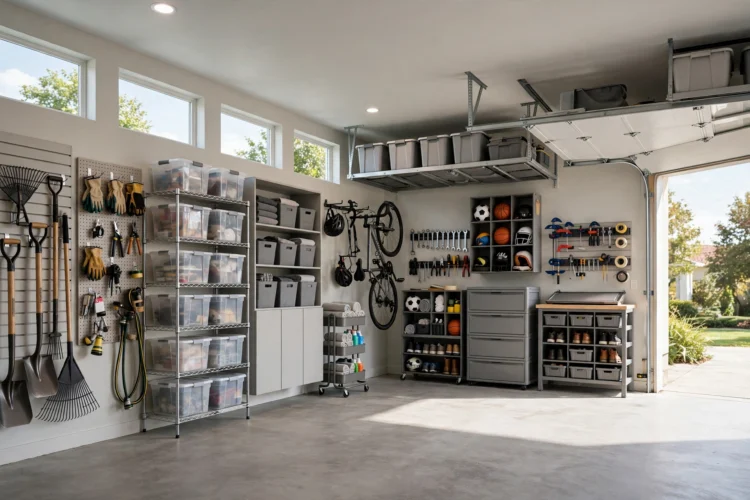
Most garage cleanups last a month. These twelve zone-based systems give every category a labeled home, so the tidy state survives real daily use.
Garage organization ideas fail when they only address the mess you can see. A big cleanup feels great for a month, then the boxes creep back, the tools scatter, and the floor disappears again. The fix is not a bigger purge. It is a set of systems that make putting things away easier than leaving them out. The twelve systems below work together: zones decide where things live, labels make the homes obvious, and a short weekly reset keeps the whole thing honest. Build them one at a time and the garage starts to stay tidy on its own.
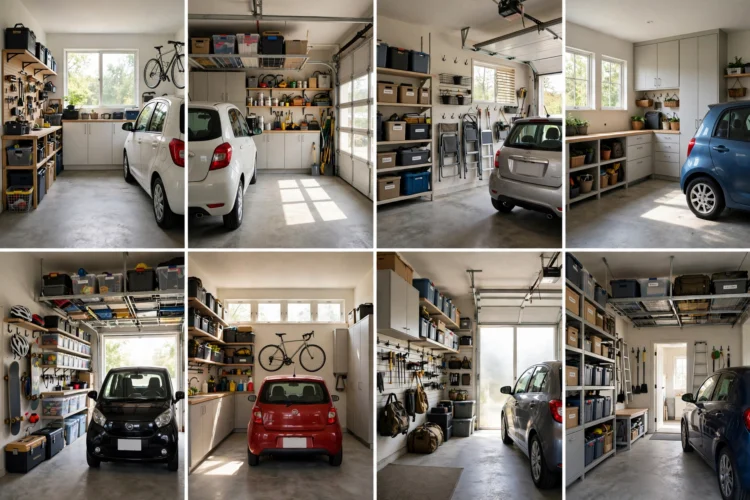
Divide the garage into four zones before you buy a single bin. A tools zone near the workbench, a car care zone near the door, a sports and outdoor zone by the entrance, and a long-term storage zone along the back wall. Every item gets one zone, and zones never overlap. When a bike pump lives in the sports zone, nobody hunts for it in the tool area. When paint lives in long-term storage, it never blocks the workbench.
Mark the garage zones with tape on the floor for the first month. The lines look silly and they work, because they make the boundary visible to everyone in the house. After a few weeks the habit sticks and the tape can come up. An organized garage layout starts with these invisible walls, not with shelves.
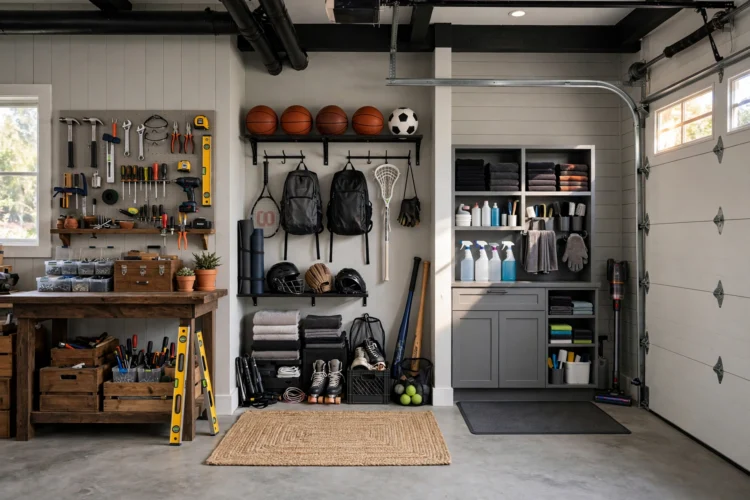
A home without a label is a suggestion. A home with a label is a rule. Put every category in its own bin and label the front in large, plain words: camping, holiday lights, car wash, dog gear. Labels work best when anyone in the house can read them from the doorway, so skip cute codes and abbreviations. If a guest cannot find the bin, the label failed.
Use the same size bins within each zone so they stack cleanly and the shelves look calm. Clear bins help for categories you forget, like spare parts, while solid bins hide visual noise for everything else. Labeled garage bins also make the weekly reset fast, because anything out of place has an obvious destination. The same labeling habit pays off inside the house too, and small pantry organization uses the same idea: one category per container, one label per container.
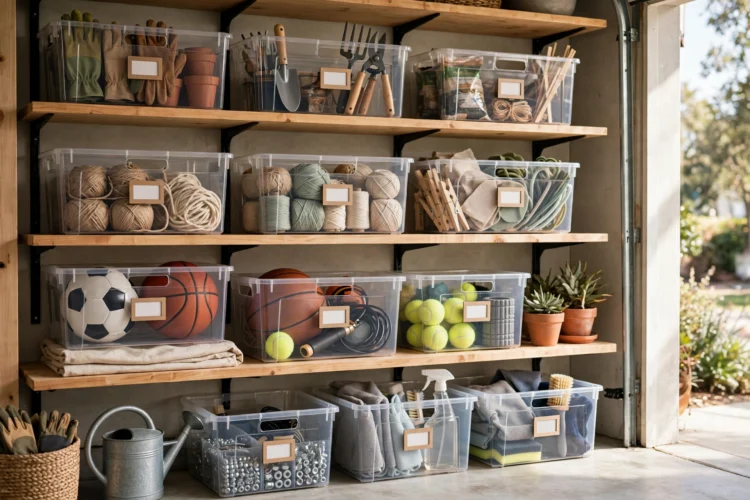
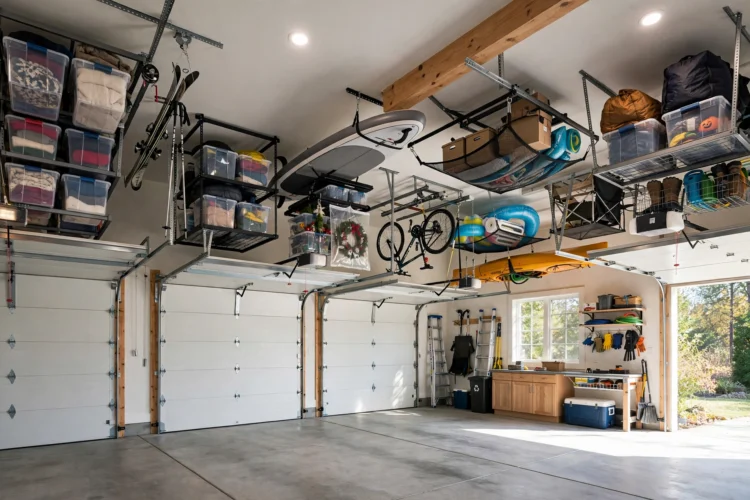
The ceiling is the most underused storage in the garage. Overhead racks mounted to the ceiling joists hold holiday decor, camping gear, and off-season sports equipment without touching a square foot of floor. Keep the load light and balanced, and leave a clear gap above the car so nothing hangs low enough to bump a roof rack. Store the things you touch twice a year up high, and keep daily gear at arm level.
Label the bottom of each overhead bin so you can read it from the floor. A rack you cannot identify from below turns into a mystery shelf within a year. If you rent or cannot drill into joists, freestanding tall shelving along the back wall gives you most of the same benefit without touching the ceiling.
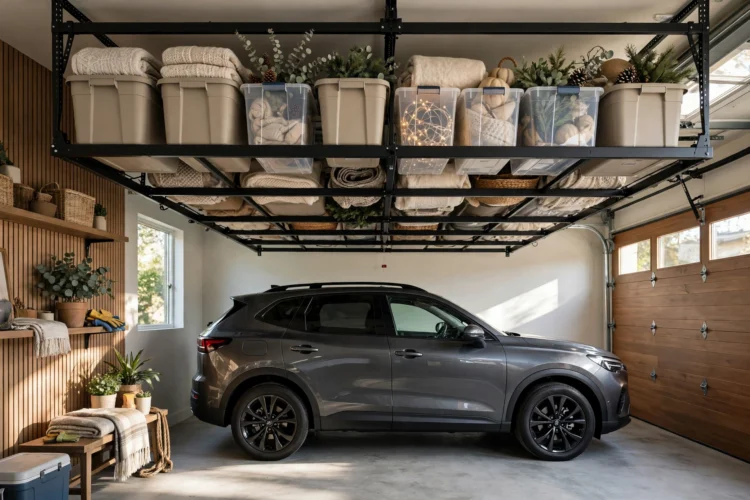
Some things will never look tidy on an open shelf: half-used paint cans, car fluids, glues, and cleaning chemicals. A wall of closed cabinets hides all of it behind flat doors. Mount the cabinets high enough that the floor below stays clear for mopping, and keep the most-used items at eye level so nobody has to climb for them. Locking cabinets or a high shelf keep chemicals away from kids and pets.
Inside the cabinets, the same zone rule applies. One shelf for car care, one for paint, one for cleaning. Line the shelves so spills wipe up fast, and keep a small tray under anything that might leak. Garage storage systems work when the messy middle has a door to hide behind.
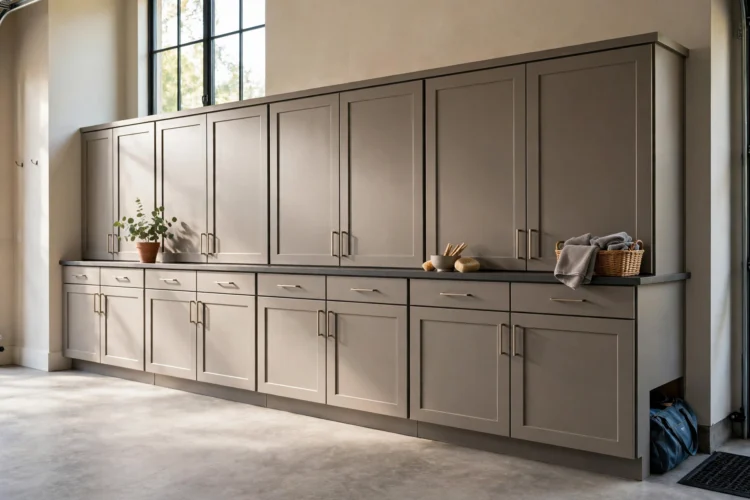
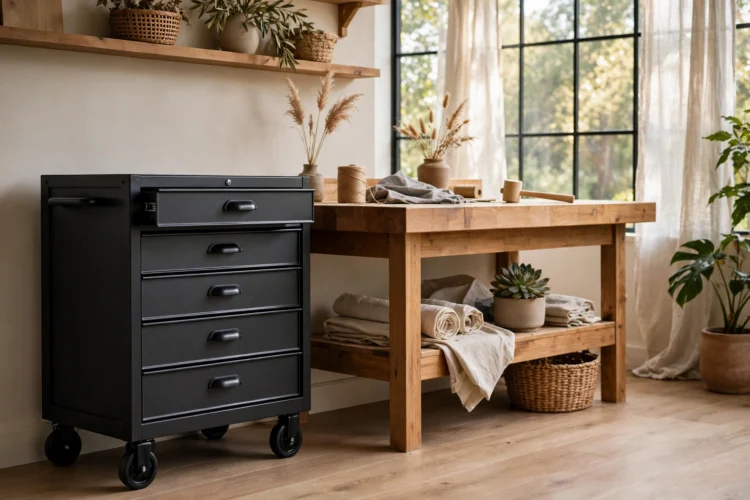
A rolling cart turns any corner of the garage into a temporary workstation. Load it with the tools for one job, roll it to the car or the bench, and roll it back when you finish. The cart keeps tools off the floor during the job and gives them a home after it. Choose a cart with locking casters so it stays put while you work, and drawers that close fully so small items cannot fall out in transit.
Give each cart one role: one for car detailing, one for woodworking, one for gardening. A cart with a mixed load becomes a junk drawer on wheels within a month. If you build your own storage, a DIY storage bench uses the same principle in a fixed spot: one piece of furniture, one clear job.
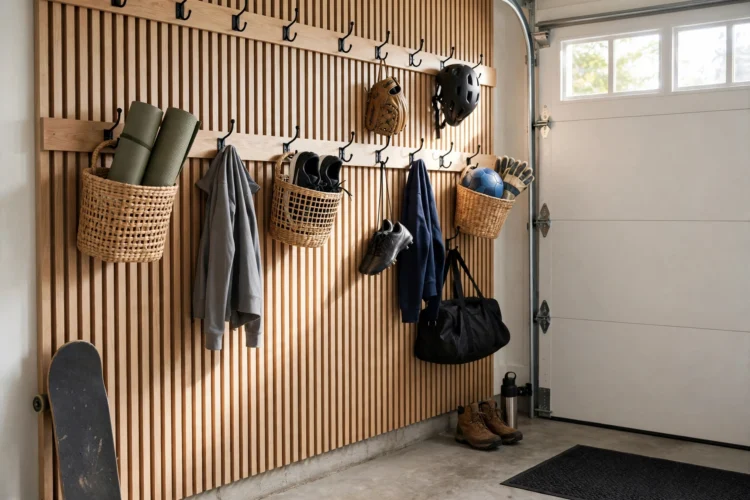
Sports gear fails the tidy test because it enters and leaves through the same door as the car. Put the sports zone right beside that door: wall hooks for bikes, a tall basket for balls, and a low shelf for shoes and helmets. When the gear lives ten steps from the door, kids actually put it back. When it lives at the far wall, it lands on the floor halfway there.
Hang bikes vertically to save floor space, and keep a small pump and a rag in the zone so flat tires get fixed at the door instead of becoming a pile. A boot tray under the shelf catches mud before it spreads across the concrete. The sports zone is the highest-traffic system in the garage, so it deserves the best spot.
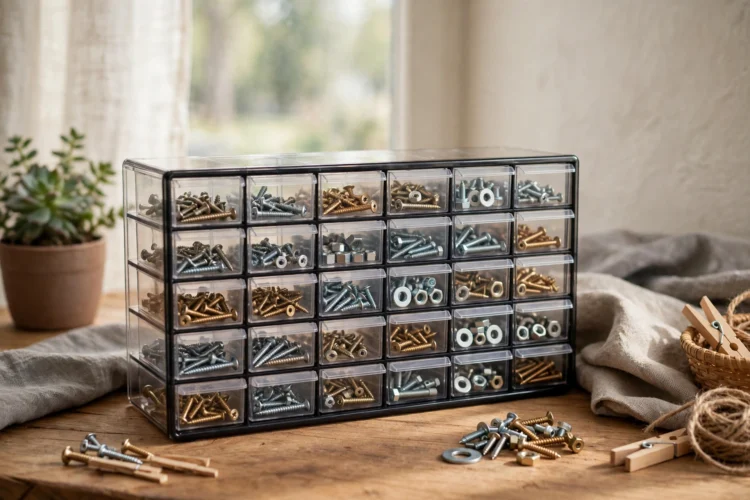
Screws, bolts, wall anchors, and picture hooks vanish into junk drawers because they have no home sized for them. A wall-mounted parts organizer with small clear drawers fixes that. Sort by type, not by project, so the drawer labeled wood screws holds wood screws from every job. Clear fronts let you see the contents without opening ten drawers.
Keep the parts organizer near the workbench and at eye level. When a screw is easy to find and easy to return, the workbench stays clear. Resist the urge to keep every leftover fastener. If you have not touched a part in two years, it belongs in the donation box, not in the drawer.
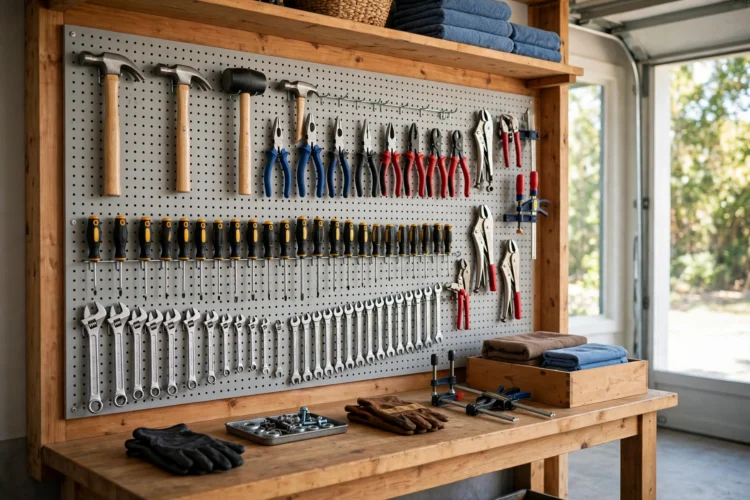
Tools that hang on a wall get used. Tools that sit in a drawer get forgotten. Outline each tool on the wall behind its hook so the empty spot shows exactly what is missing. That simple trick turns cleanup into a matching game: every silhouette filled means every tool is home. Group tools by job, with saws near saws and wrenches near wrenches, so your hand goes to the right area without thinking.
Keep the wall shallow and lit. A single strip light above the tool wall beats a bright ceiling bulb for finding small tools. Heavy tools go low, light tools go high, and anything sharp points down or away from hands. A tool wall you can read at a glance is one of the cheapest garage storage systems and one of the most satisfying to maintain.
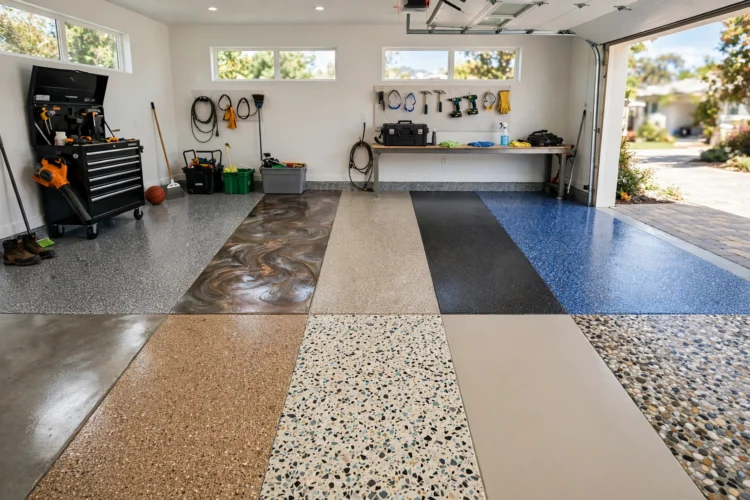
Storage creeps into parking space one box at a time. Paint or tape a clear rectangle on the floor for each car and treat the line as a rule: nothing stored inside the rectangle. Add a small stop marker on the floor or a hanging tennis ball so the driver knows exactly where to stop. The markings also show kids where bikes and scooters may not park.
Use floor paint or heavy-duty tape made for concrete, and clean the floor first so it sticks. The line costs almost nothing and prevents the slow creep that eats a parking bay over a year. When the car fits every time without a shuffle, the system has paid for itself.
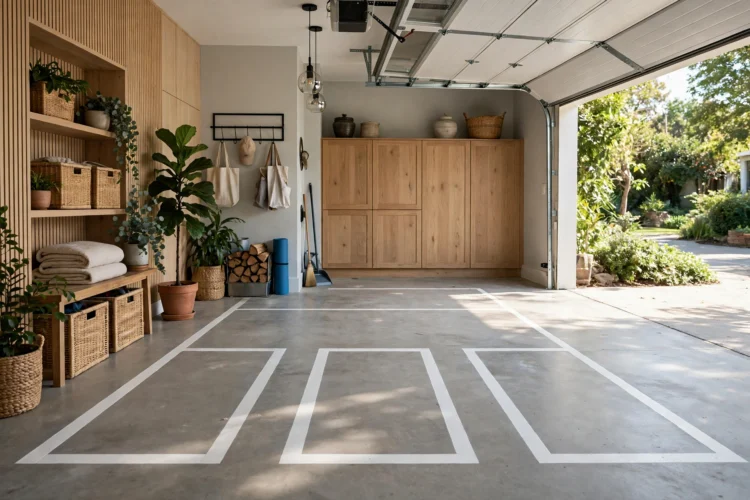
Every system above needs one habit to survive: a five-minute reset once a week. Set a timer, walk the zones, and return anything that drifted. Hang the tool that stayed on the bench, roll the cart home, toss the empty box. Five minutes a week beats a full Saturday every six months, and the reset catches small drifts before they become a new mess.
Do the reset right before a regular weekly moment, like taking the bins out or after the weekend. Tie it to something that already happens and it sticks. Storage that needs a reset is not a failure. It is the design. Even the best small closet organization needs the same habit, and a garage is no different. If the garage feels far from the house, borrow the logic of a mudroom: one landing spot by the door, everything with a hook or a bin, nothing on the floor. Start with zone one this weekend, and let the rest follow.
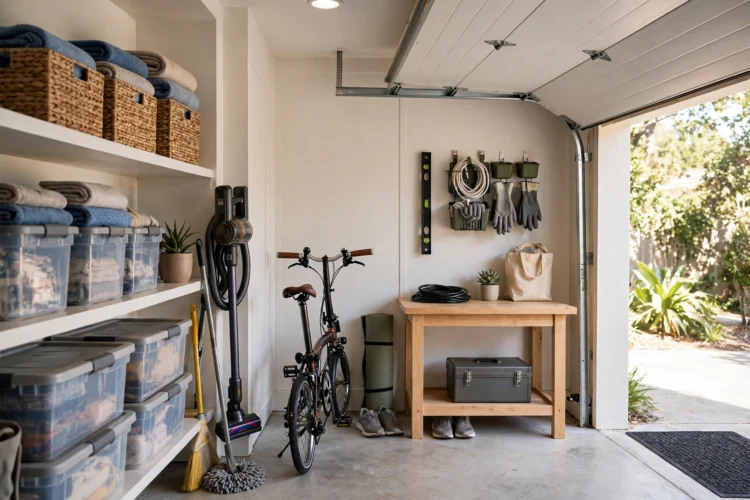
Pick the zone that bothers you most and build it first. One labeled home, one wall of hooks, one clear parking rectangle. The garage does not need a full makeover to stay tidy. It needs a few systems that make the tidy choice the easy one.