Physical Address
304 North Cardinal St.
Dorchester Center, MA 02124
Physical Address
304 North Cardinal St.
Dorchester Center, MA 02124

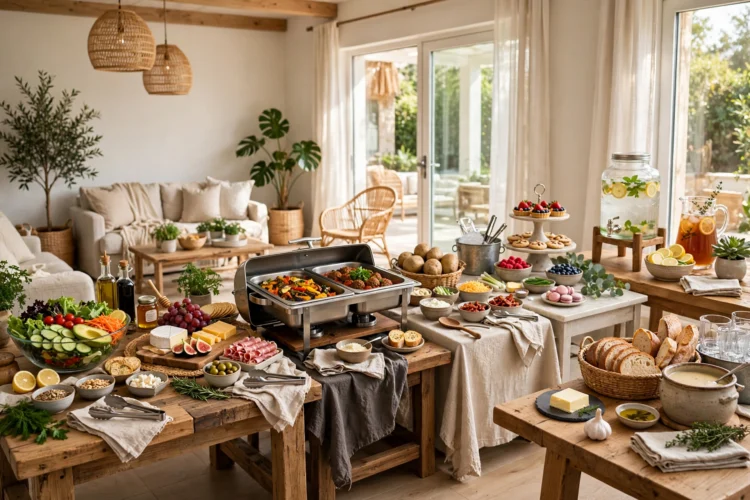
A buffet lets a small dining room seat everyone while the food lives elsewhere. These seven station ideas use consoles, counters, and folding tables to keep traffic moving.
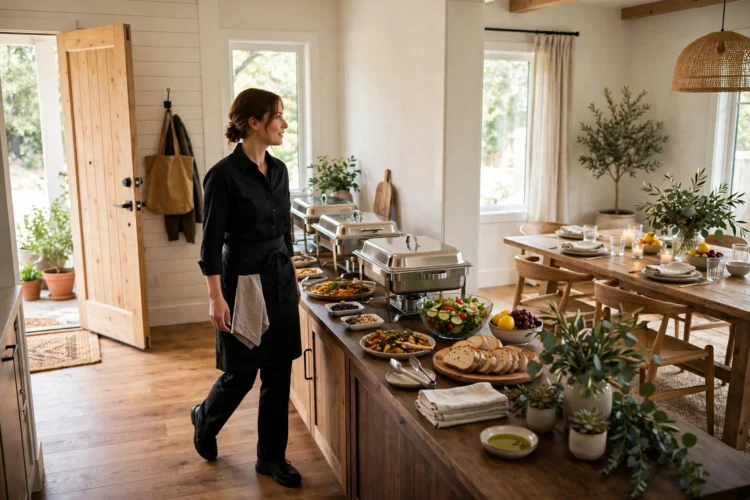
These buffet serving station ideas solve a common hosting problem: the dining table seats everyone, but it cannot serve everyone too. When the food, plates, and drinks all crowd onto the table, guests pass dishes instead of talking, and nobody can reach the second helping. Move the serving to a station elsewhere in the room, and the dining table goes back to being a place to sit and eat.
A good buffet table setup follows the flow of a guest: plate first, then food in the order it is eaten, then cutlery and napkin, then the seat. Drinks live on a separate station so the food line never stalls behind someone pouring a glass. The seven ideas below use furniture you already own, a console, a kitchen counter, a folding table, to build stations that keep traffic moving in a small space.
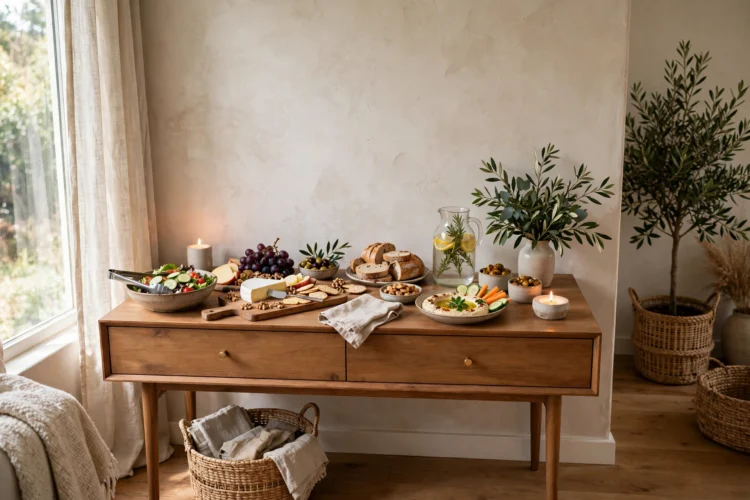
A console table against the dining room wall is the easiest buffet serving station you already own. Clear the decor, lay a runner or cloth to protect the top, and set the dishes in a single line from one end to the other. Guests walk along the console, fill a plate, and carry it to the table, which keeps the dining table free for eating and conversation.
Use risers to add height at the back of the console: a sturdy box, a stack of books under a cloth, or an overturned crate. Height at the back keeps the front dishes reachable and stops the station from looking flat. Keep the console close to the dining table but not blocking the doorway, and leave a clear path back to the seats. A styled sideboard does the same job with storage built in; these sideboard styling ideas show how to keep that surface both pretty and practical when it serves as a buffet.
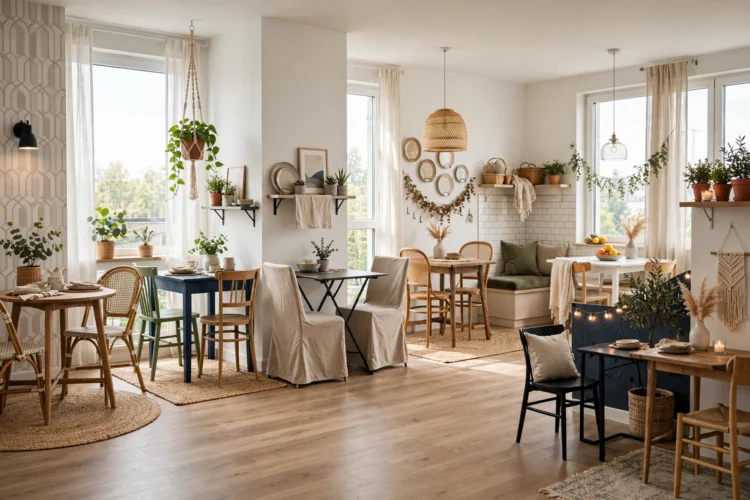
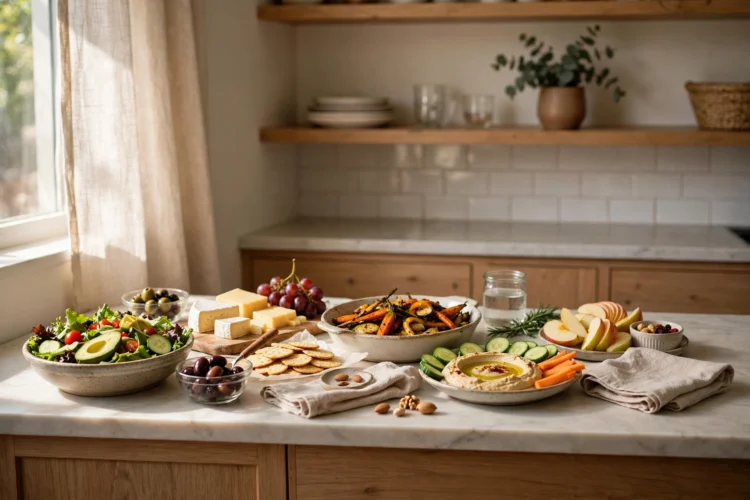
A small space buffet works well on a kitchen counter, because the kitchen is where the food already is. Clear one stretch of counter, set the hot dishes on trivets, and let guests serve themselves before walking to the dining room. The counter keeps spills near the sink and keeps the cook close to the stove for refills.
Separate the counter into zones so guests never double back: plates and main dishes first, then sides, then bread and condiments at the far end. Put a small sign or a simple label on any dish with nuts, dairy, or spice, so guests with allergies can choose safely. Keep the counter height in mind: a standard counter is higher than a table, so use shallow serving bowls that guests can reach into easily. If the kitchen is small, move the drinks out entirely and give them their own station in the dining room.
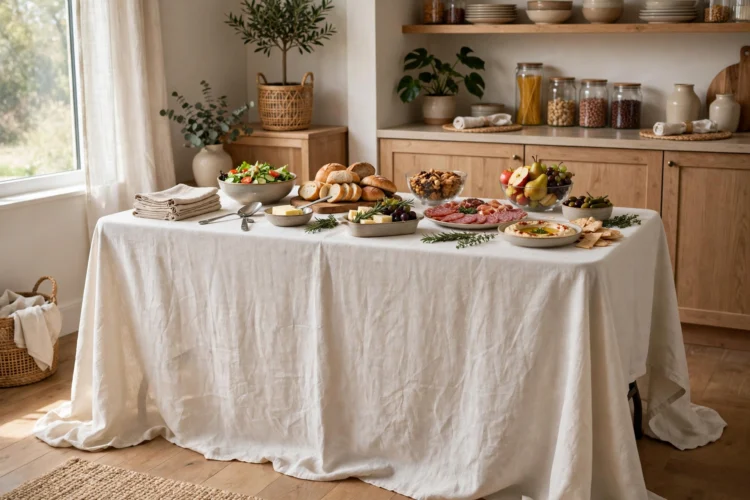
A folding table is the most flexible buffet table setup for a small home. Open it in the living room, a hallway, or a corner of the dining room, cover it with a cloth that reaches the floor, and it becomes a proper serving station that disappears after the party. A six foot table holds a full buffet for twelve, while a four foot table suits desserts or drinks alone.
Hide the folding legs with a floor length cloth, and add a second layer, a runner or a contrasting cloth, on top for polish. Place the table against a wall so guests approach from one side only and the line moves in one direction. Keep a spare folding table in a closet if you host often, because a second station for desserts or drinks solves more traffic problems than any amount of rearranging. When the party ends, the table folds flat and the room returns to normal in minutes.
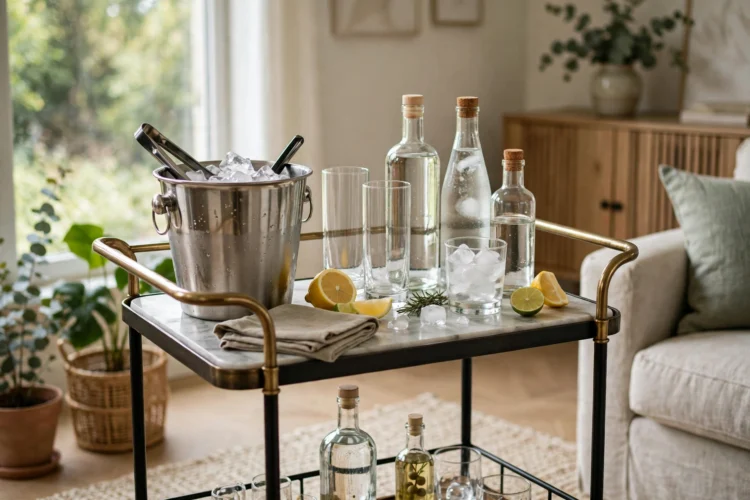
A drink station setup keeps the buffet line moving, because pouring a drink takes longer than scooping food. Set drinks on a separate surface: a bar cart, a small side table, or the far end of the sideboard. Put glasses, ice, water, and one or two drink options there, and let guests help themselves before or after they fill a plate.
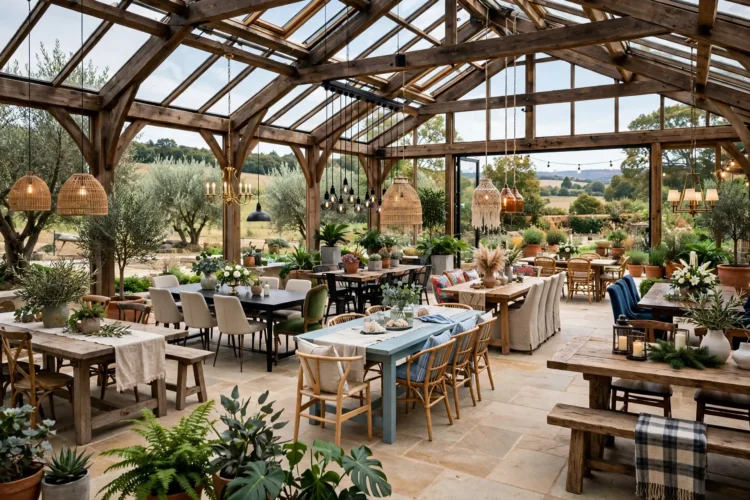
Keep the drink station away from the food line so the two queues never merge into one crowd. A tray under the bottles catches drips, and a small bucket of ice keeps drinks cold without a trip to the freezer. Label the drinks simply, water, lemonade, and wine, so guests do not have to ask. For outdoor parties, move the drink station to the patio or garden; these summer outdoor dining ideas show how a drink station works outside. Refill glasses and ice before they run out, because an empty drink station stalls the whole party.
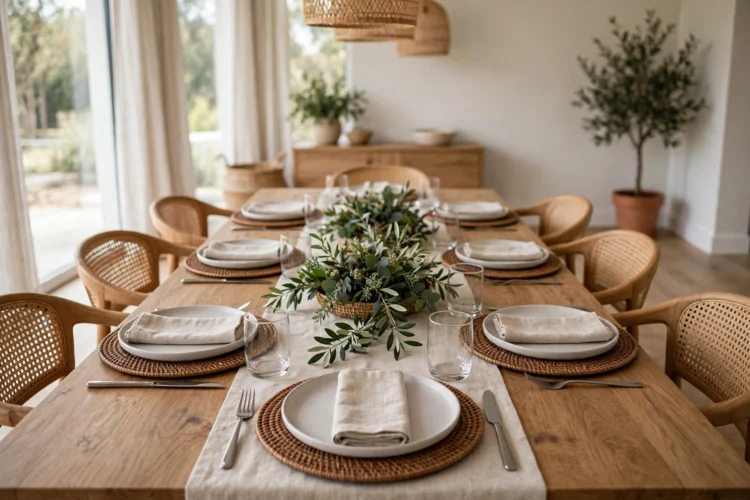
Once the buffet is set, the dining table has one job: seating. Set the table with placemats or chargers, glasses, and cutlery, but leave the center clear except for a low centerpiece and candles. Guests arrive with a full plate, sit down, and eat, instead of juggling serving bowls across the table.
This split changes the whole feel of the evening. Conversation starts faster because nobody is passing a heavy casserole, and the host can sit down instead of standing to serve. Keep a few serving spoons and an extra stack of plates on the buffet, not on the table, so seconds mean a short walk, not a reach across a neighbor. A china cabinet nearby holds the extra dishes and glasses; these china cabinet ideas show how to keep that storage earning its floor space. Clear used plates to the kitchen as guests finish, so the table stays calm through dessert.
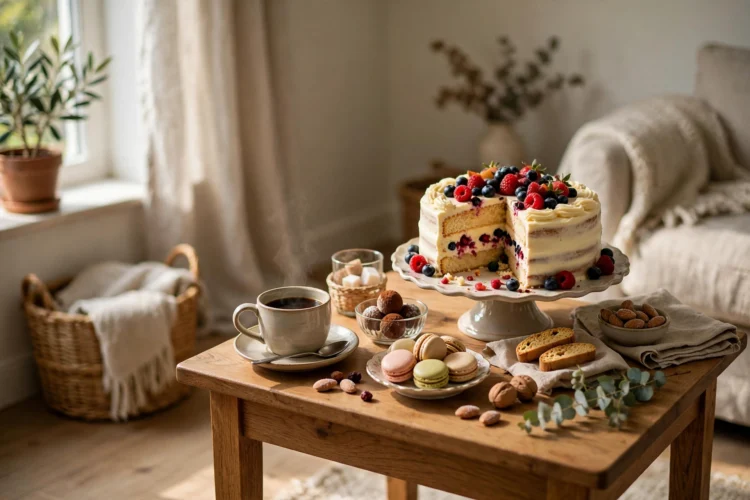
A dessert station that opens late gives the party a second act. Keep the dessert table covered or set in another room during the main course, then open it when plates are cleared. Guests stretch their legs, choose a slice of cake or a scoop of ice cream, and the evening gains a natural break between courses.
Use a small table, a console, or even a cleared kitchen counter for desserts, and keep the setup simple: one cake, one or two small sweets, coffee, and tea. Small plates and dessert forks are enough, because a full place setting at the dessert station wastes space. Put the coffee maker or kettle on the same station so guests pour their own cup without queuing in the kitchen. A late dessert station also hides a store bought cake in plain sight, because the presentation, not the recipe, carries the moment.
Traffic flow is the part of a buffet most hosts forget, and it is the part guests feel first. Walk the route yourself before the party: enter the room, pick up a plate, move along the food, pour a drink, and sit down. If you bump into furniture, cross another guest, or double back, move a table or shift a station until the loop runs smoothly in one direction.
Keep the start of the buffet near the entrance and the end near the dining table, so guests move forward instead of circling. Leave at least three feet of clear floor in front of every station, and keep chairs tucked in so they do not block the path. Put the trash or a clearing tray in an obvious spot near the kitchen door, so guests can drop a used napkin without hunting. Hidden storage helps here: these dining room storage ideas show spots for extra plates and linens within arm’s reach. Test the flow once more after the food is out, then relax and enjoy the party you planned.