Physical Address
304 North Cardinal St.
Dorchester Center, MA 02124
Physical Address
304 North Cardinal St.
Dorchester Center, MA 02124

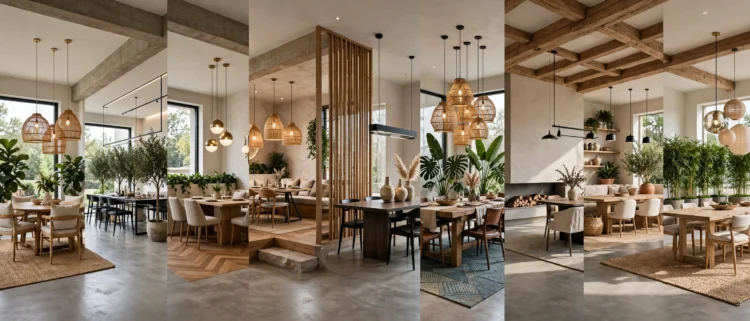
A table floating in a big open room needs a zone of its own. These ten ideas use rugs, light, and furniture placement to give dining its own identity.
Open plan dining room ideas solve one problem: a table floating in a big room with no sense of place. Without walls, dinner drifts toward the kitchen counter or the sofa, and the dining table becomes a dumping ground. Zoning gives the table its own identity without building anything.
The tools are simple. A rug, a pendant, a sideboard, and the direction the chairs face do most of the work. These ten open plan dining zone ideas use those tools one at a time, so you can start with the rug and add the rest over time.
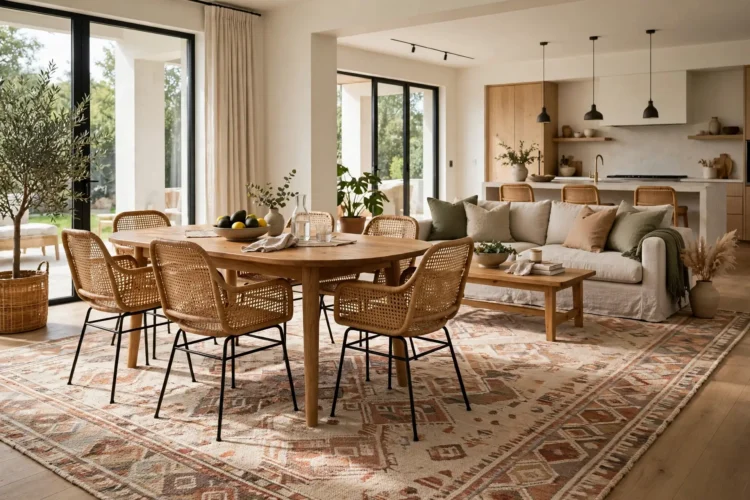
A rug is the fastest way to draw a room inside a room. In an open concept dining room, the rug marks the dining zone the way walls used to. Size it so all four chair legs stay on the rug even when someone pulls a chair out to sit down.
That usually means a rug at least 24 inches wider than the table on every side. A flat weave or low pile survives chair legs and spills better than a thick shag. For patterns and materials that hold up, see these dining room rug ideas that survive spills and chair legs. Dining room rug zoning works best when the rug is big enough to be obvious.
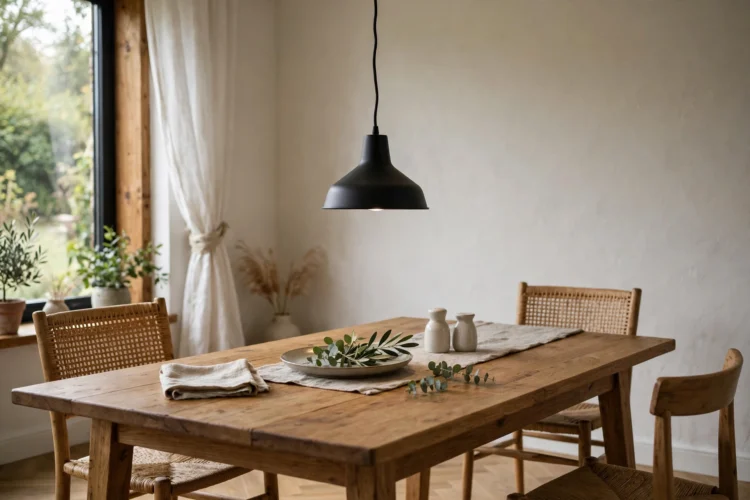
A pendant hung low over the table creates a pool of light that says dinner happens here. Hang it 30 to 34 inches above the tabletop, low enough to feel intimate and high enough to see across the table.
One strong pendant beats three small ones scattered across the ceiling. The single fixture becomes the center of the zone, and everything else in the open plan orbits around it. Choose a shade that matches the scale of the table, not the scale of the whole room. If one pendant feels too small for a long table, hang two at the same height and the same distance from each end. The pair still reads as one fixture, and the light spreads evenly down the table. Keep the shades identical so the zone stays calm.
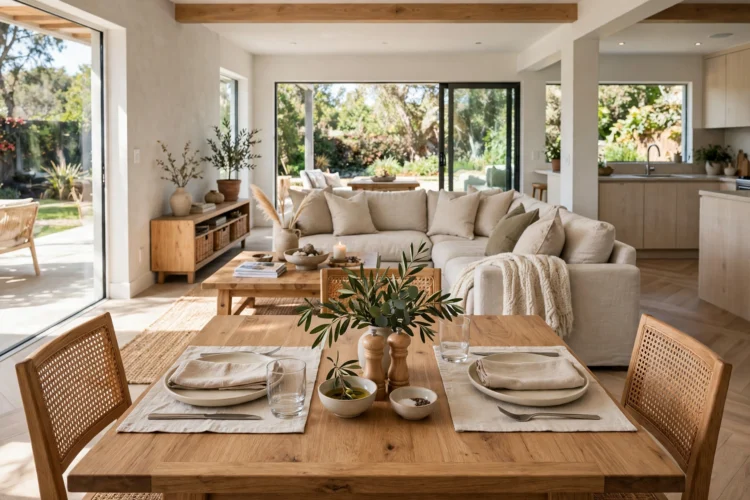
Furniture orientation is free zoning. Turn the table so the long side faces the living area and the chairs look into the room, not at a wall. The table reads as a destination instead of an afterthought.
Leave a clear path of at least 36 inches behind the chairs on the side people walk past. When the path is generous, the dining zone feels intentional instead of cramped, even in a small open plan. A rug under a turned table still works, but the rug should turn with the table. If the rug stays put while the table turns, the edges will look wrong from the living side. Move both together and the zone stays neat.
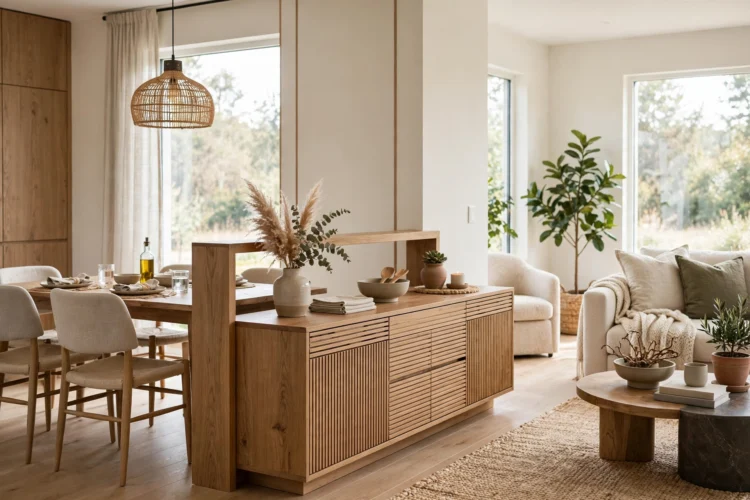
A sideboard placed with its back to the living area works like a low wall. It blocks the sightline just enough to separate the zones while keeping the room open and the light moving.
Style the top of the sideboard for the dining side, not the living side. A lamp, a stack of plates, and a vase tell everyone which room they are looking at. These sideboard styling ideas that make the dining room feel finished show how to dress one without cluttering it.
Light is the cheapest wall you can build. A pendant over the table, a lamp on the sideboard, and a dimmer on both create a warm pool around the dining zone while the kitchen and living areas stay brighter or darker.
Put the dining lights on their own switch so the zone can glow on its own in the evening. When only the dining area is lit, the rest of the open plan fades back and dinner gets the whole room’s attention. A dimmer switch is a small job in most homes, and it pays for itself in mood. Even a plug-in lamp with a dimmable bulb gives the zone its own evening setting without an electrician.
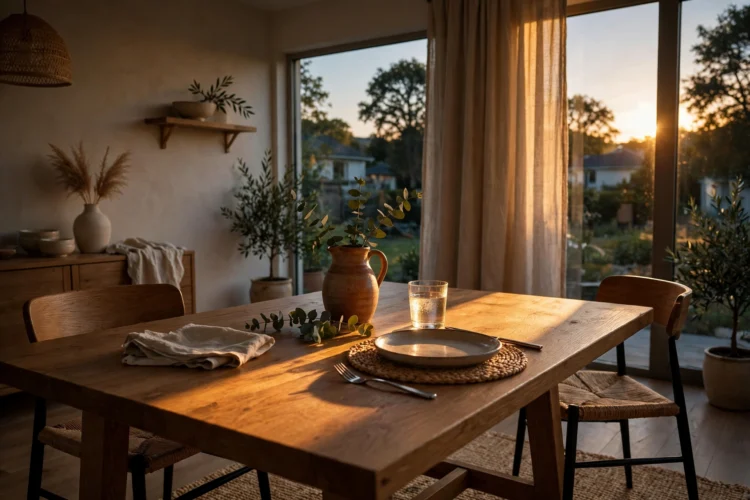
A zone feels finished when its pieces belong together. Pick one material, like warm wood, black metal, or linen, and repeat it in the table, the pendant, and one textile. The repetition ties the zone together without matching sets.
Keep the material out of the neighboring zones, or use it sparingly there. The contrast between the dining zone’s wood and the kitchen’s stone is part of what makes each area read as its own place. Wood is the easiest material to repeat because most dining tables already use it. Match the pendant’s finish to the table’s tone, warm with warm and pale with pale, and the zone will look planned rather than matched.
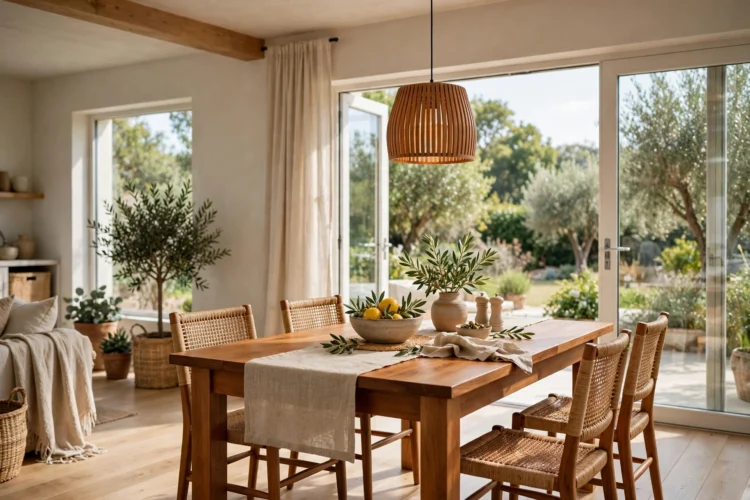
Zoning fails when it blocks the view. Keep dining furniture low and open so you can see across the room from a chair. Low-back chairs, a slim sideboard, and a table without a heavy apron keep the open plan feeling open.
A mirror on the dining wall helps here too. It bounces light across the zone and makes the area feel larger without adding furniture. These dining room mirror ideas that double the candlelight show placements that work next to a table.
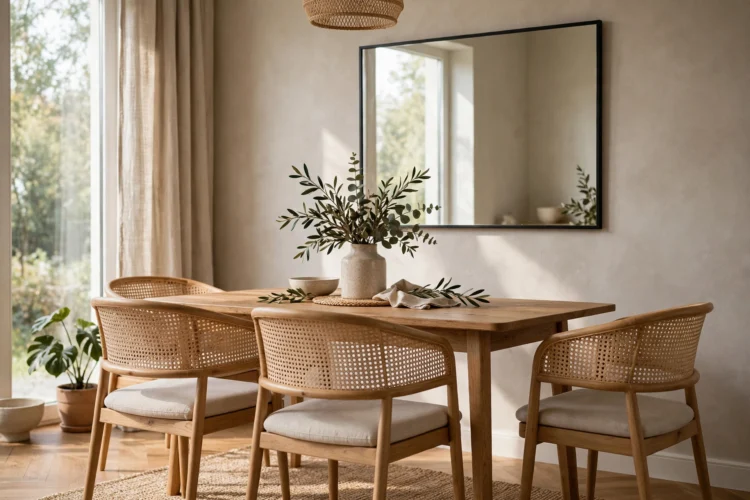
One wall can do the work of four. Paint the wall behind the table a deeper color, hang a large piece of art, or add simple paneling. The treated wall becomes the backdrop for the whole zone.
Keep the treatment to the dining wall only. When the color or paneling stops at the edge of the zone, the boundary is obvious from anywhere in the room, and the rest of the open plan keeps its own character. Art works as wall treatment too, as long as it is big enough. One large print or a wide mirror fills the wall behind the table better than a row of small frames, and it costs less than paint and paneling.
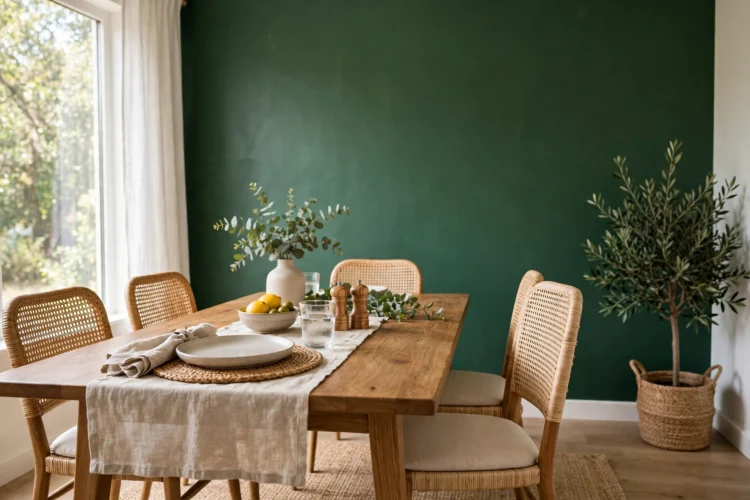
A tall plant or a row of smaller ones marks a boundary without blocking light or conversation. Place one large plant at the corner where the dining zone meets the living area, or line up three small pots along the back of the sideboard.
Choose plants that like the light the dining area actually gets, and keep them in pots that match the zone’s material. A plant that dies in a month is not a boundary, it is a chore.
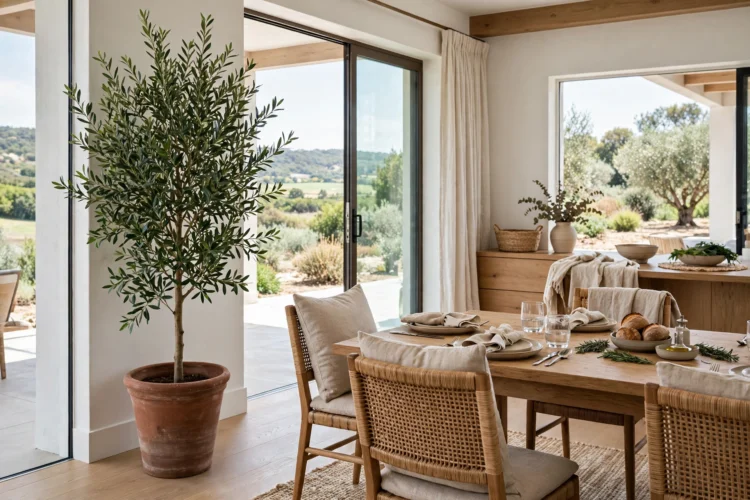
A zone needs an edge, and the edge is the path people walk. Decide where foot traffic goes, usually between the dining zone and the kitchen, and keep that path clear of chairs, plants, and side tables.
When the path is obvious, guests walk around the dining zone instead of through it, and the table keeps its calm. A pendant light dining area feels complete when the walkway and the table each have their own space.
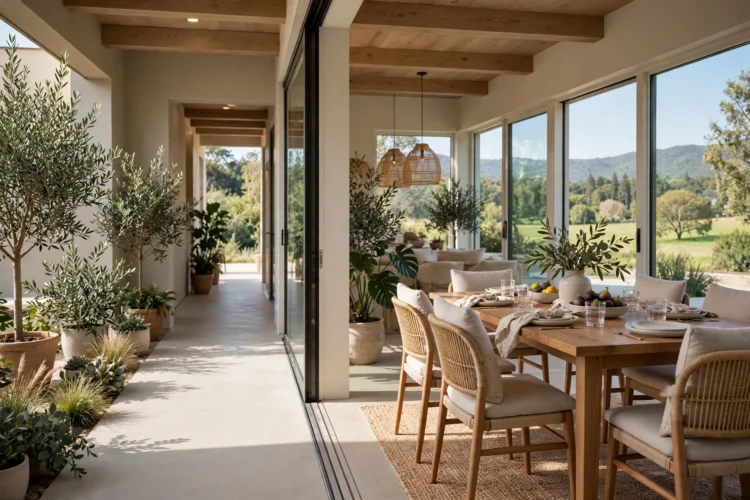
Start with the rug and the pendant. Those two moves alone give most open plans a dining zone with a real identity, and the rest of the ideas layer on top without a renovation.