Physical Address
304 North Cardinal St.
Dorchester Center, MA 02124
Physical Address
304 North Cardinal St.
Dorchester Center, MA 02124

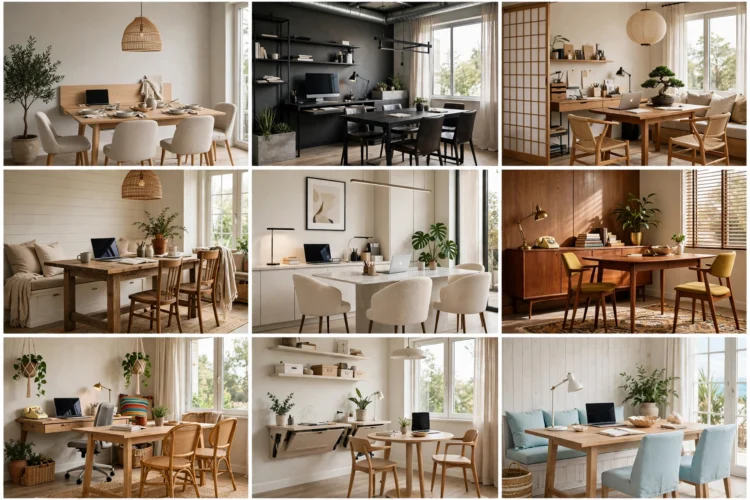
A dining room home office combo only works when the room can switch modes fast. These nine ideas hide the workday at dinner time, no renovation needed.
A dining room home office combo sounds like a compromise, and in a way it is. The trick is designing the room to switch modes on purpose. At five in the afternoon the laptop closes, the papers vanish, and the table becomes a dinner table again. That switch only works when the work side of the room has somewhere to go, so every idea below gives office gear a real home.
These nine ideas focus on the practical parts of a dual purpose dining room. Storage that closes. Cords that stay hidden. Light that changes with the hour. A short routine that resets the room in minutes. None of them needs a renovation, and most of them take a weekend at most.
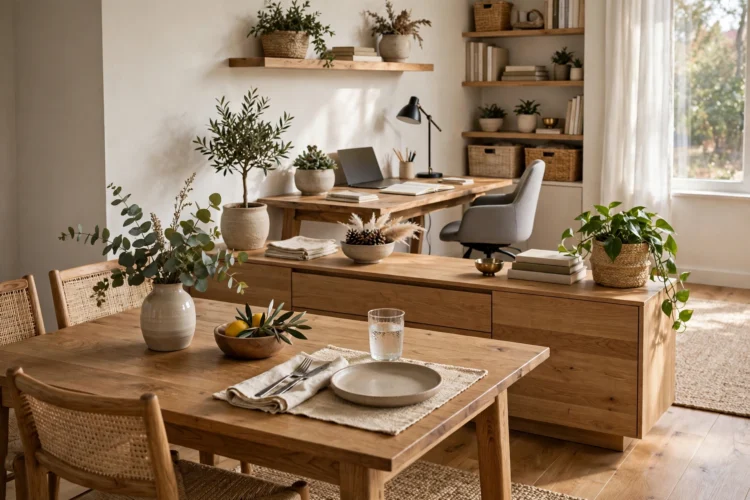
A combo room fails when work and dinner share the same square meter with no line between them. Draw the line with furniture, not walls. A low sideboard behind the table marks the office side and swallows chargers, notebooks, and printer paper. A rug under the table marks the dining side and tells everyone where meals happen.
Keep the boundary visible even when the room is tidy. If the laptop lives on the sideboard end of the table and dinner happens at the rug end, the room reads as two places at once. For styling ideas, see these sideboard styling ideas that make the dining room feel finished. The boundary also helps guests: they sit down to dinner, not to your inbox.
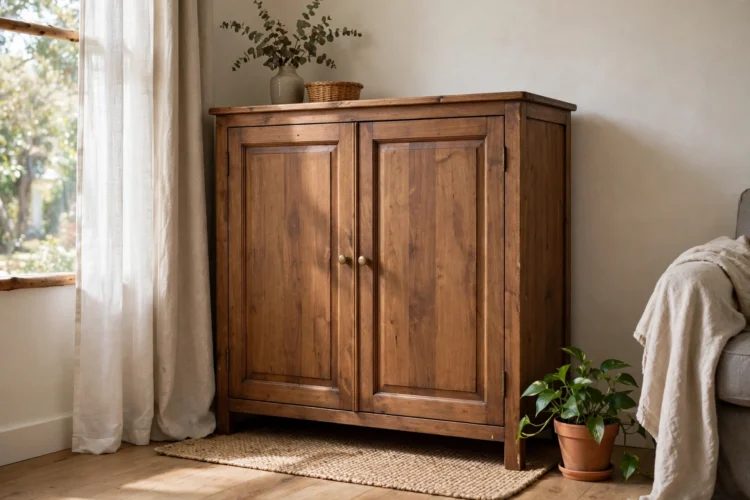
Open shelves look great in photos and terrible at six in the evening, when binders and cables are still on display. Closed storage is the whole secret of a hidden desk dining room. A cabinet with doors, a sideboard with drawers, or a hutch with solid fronts hides the workday in one motion.
Give every work item a named spot inside that storage. Laptop on the left shelf, chargers in a small box, papers in one tray. When the spot is full, something leaves before anything new comes in. That rule keeps the room from slowly turning into an office with a table in it. More storage ideas live in this guide to dining room storage ideas hidden in plain sight.
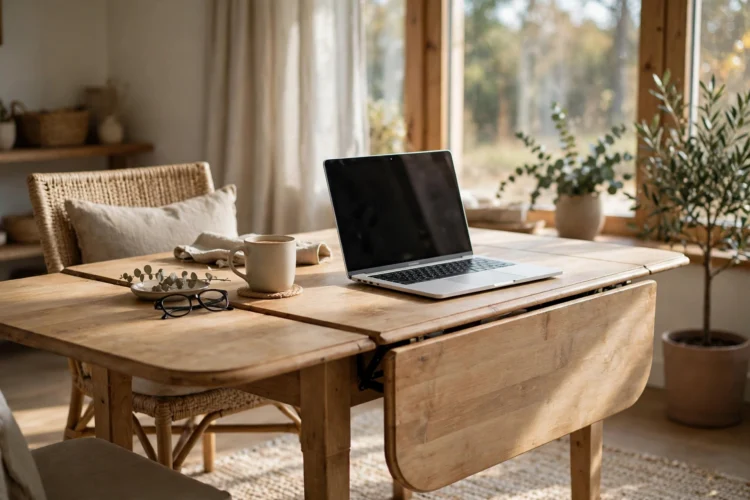
A full-size dining table makes a generous desk, but it also makes the room feel like an office all day. A drop-leaf table solves that. Open one leaf for a laptop and a notebook during work hours, then fold it down for dinner so the table shrinks back to dining size.
Choose a leaf that locks flat and level, because a wobbly edge will annoy you every day. A work from home dining table should also sit at a height that suits a chair with a back, not a bar stool. If a drop-leaf suits your space, these drop-leaf dining table ideas for part-time dining rooms show how the fold works in real rooms.
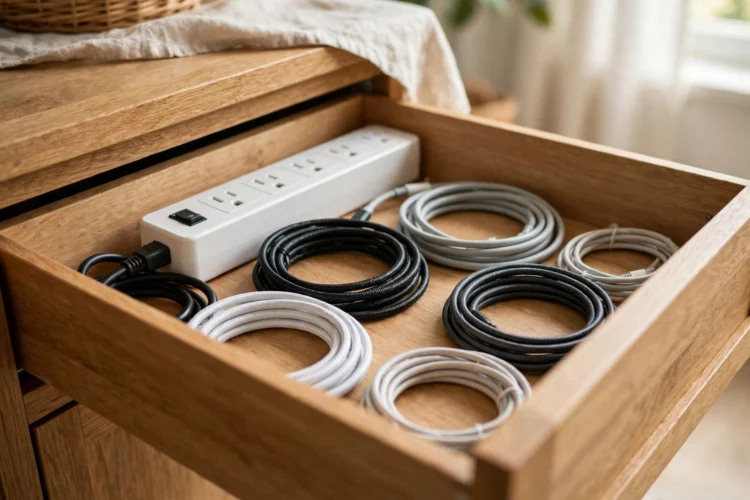
Cords are what betray a home office fastest. One cable across the floor turns a dining room into a workstation. Dining room cord control starts with a single power strip mounted inside a drawer or behind the sideboard, so every charger plugs in out of sight.
Run the laptop cable through a small hole in the back of the drawer and keep a short cable on the table for the hours you work. At dinner, the drawer closes and the cables disappear with it. Add a cable clip under the table edge for the one cord that must stay out, and the floor stays clear for chairs and feet.
One ceiling light cannot serve both a workday and a dinner party. The room needs two lighting moods, and a dimmer is the cheapest way to get them. Bright, even light for spreadsheets and calls. Warm, low light for dinner. A dimmer on the main light costs little and changes the room more than any single piece of furniture.
Add a small desk lamp that lives in the closed storage when the workday ends, so the table stays bare at dinner. If the room has a pendant over the table, put it on a dimmer too. The switch from task to ambient light is the fastest signal to your brain that work is over.
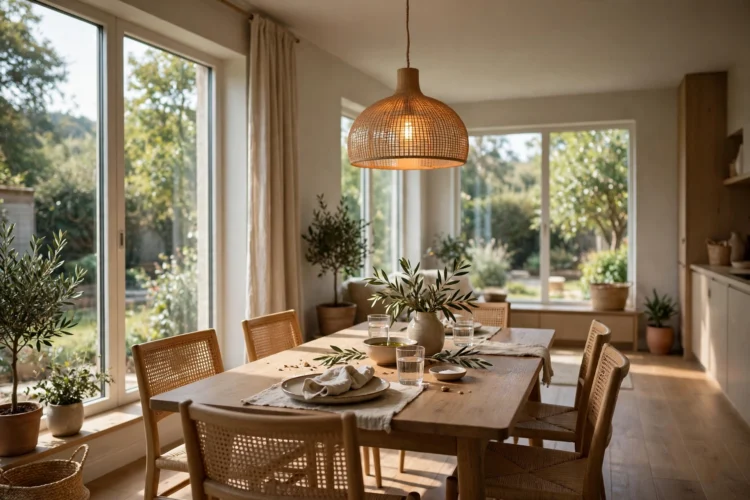
The dining chair is the hardest piece to get right in a combo room. A stiff wooden chair punishes a four-hour work session. A full office chair ruins dinner. The middle ground is a dining chair with a padded seat, a real backrest, and a height that fits the table.
Test the chair at the table with a laptop before you buy a set. Your elbows should rest near table height without hunching. Upholstered seats help more than they look like they would, and these upholstered dining chair ideas for long, comfortable dinners show styles that still look like dining chairs.
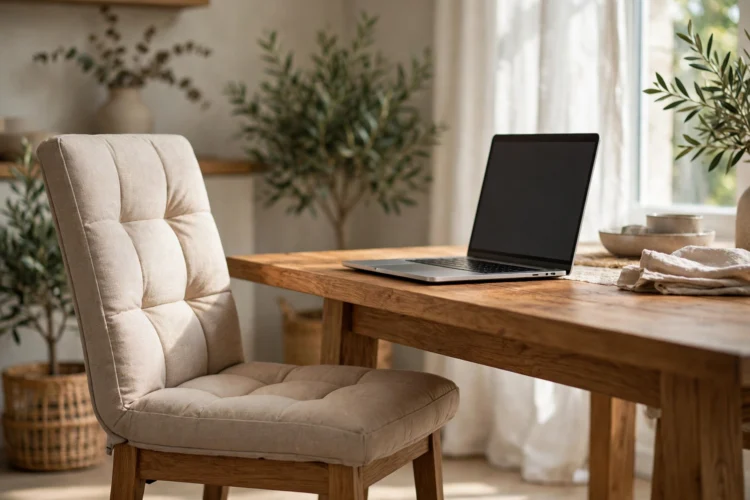
A combo room lives or dies on the reset. Without one, papers pile up and dinner moves to the sofa. Write a short routine and tape it inside a cabinet door until it becomes habit: laptop into the drawer, papers into the tray, cables coiled, table wiped, placemats out.
Time the routine once. Most rooms reset in under five minutes, and knowing that number makes the habit stick. Do the reset at the same time every day, even on days when nobody is coming to dinner. The room stays a dining room because you keep proving it is one.
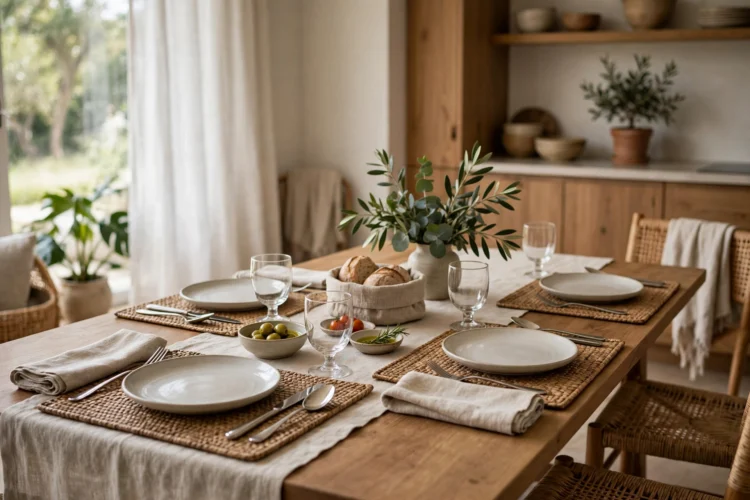
Video calls in a dining room echo, and the rest of the house can hear every meeting. Soft surfaces fix most of it. A rug under the table, curtains on the window, and a fabric runner all soak up sound that bare wood and plaster throw back.
For privacy, agree on a simple signal with the household, like a closed door or a small sign on the table, that means a call is live. A pair of good headphones handles the rest. If the dining room opens onto a hallway, a curtain or a folding screen across the doorway adds another layer of quiet without blocking the light. You do not need a separate room. You need surfaces that absorb sound and a household that respects the signal.
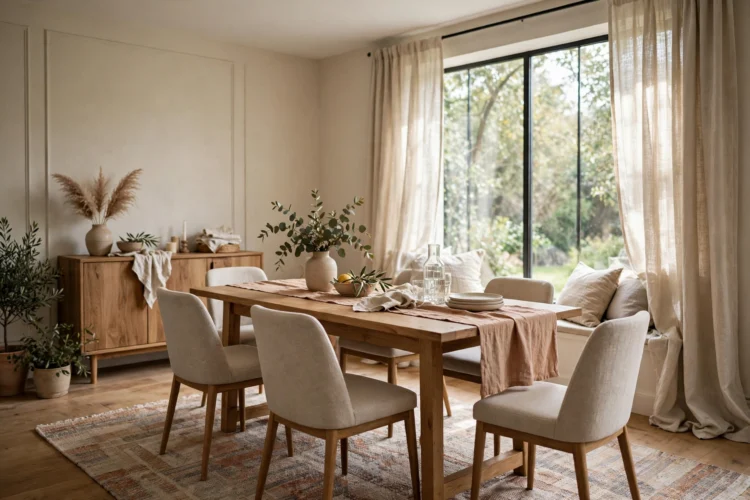
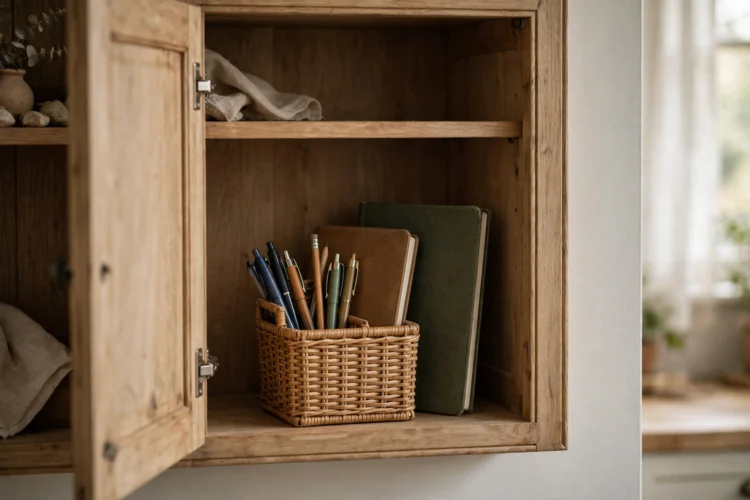
Treat office supplies the way the room already treats dishes: everything has a place, and nothing lives on the table between uses. A small caddy holds pens, sticky notes, and scissors the way a cutlery tray holds forks. A single magazine file holds active papers.
Keep the caddy inside the closed storage, next to the laptop shelf, so the whole work kit travels in one trip. At the end of the day the kit goes home and the table goes back to being a table. That is the whole idea: the office packs up, the dining room stays.
A dining room home office combo works when the switch is easy and the room always looks ready for dinner. Start with closed storage and a five-minute reset, then add the lighting and the chair. The room will do the rest.