Physical Address
304 North Cardinal St.
Dorchester Center, MA 02124
Physical Address
304 North Cardinal St.
Dorchester Center, MA 02124

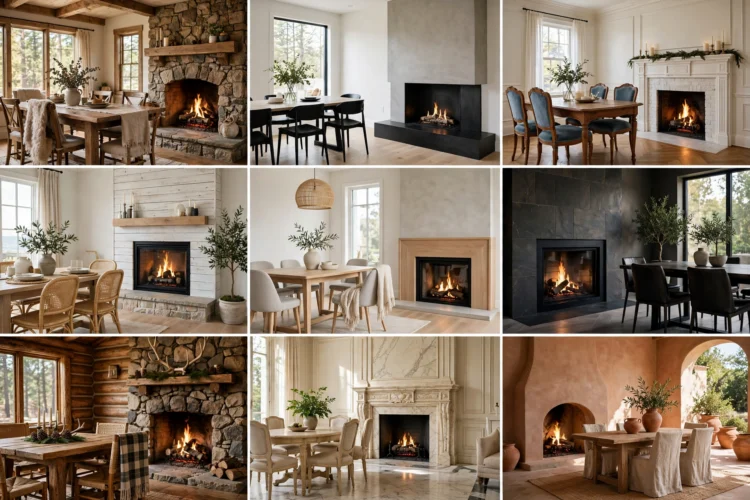
A dining room with a fireplace already has the best feature in the house. These nine ideas let the hearth lead while the table, light, and seating follow.
A dining room with fireplace ideas is a rare brief, because most dining rooms never had a hearth. When yours does, the fireplace sets the rules. The table, the seating, and the light all answer to it, and the room works best when you let the fire win.
These nine ideas cover table orientation, mantel styling, and seating layouts for a dining room with a working hearth, plus rescues for one that no longer burns. The goal is a room where dinner and the fire share the evening.
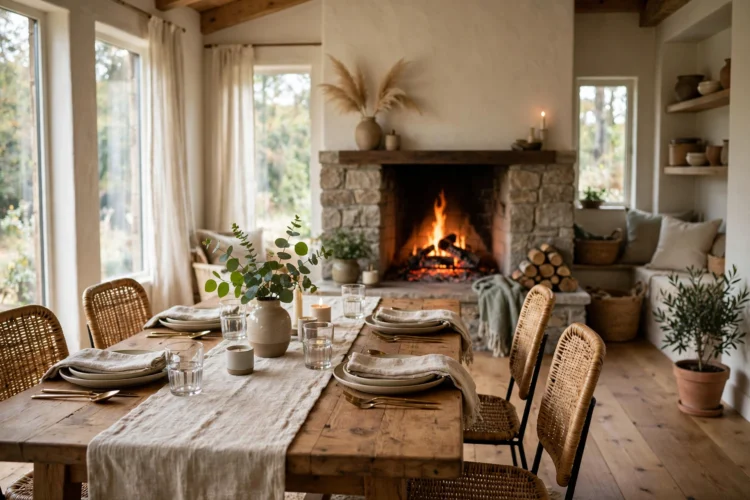
Put the long side of the table parallel to the fireplace wall, or turn the table so the head of the table faces the fire. Either way, the people at dinner should see the hearth without turning around.
A fireplace dining room layout like this puts the fire at the center of the room’s attention, the way a window wall does in other houses. Leave at least three feet between the table and the hearth so chairs can pull out without crowding the fire. If the table must sit with its back to the fire, place the host at the end facing the hearth and let the fire be the view for the person who sits there longest. Nobody should eat dinner with their back to the best thing in the room if it can be avoided.
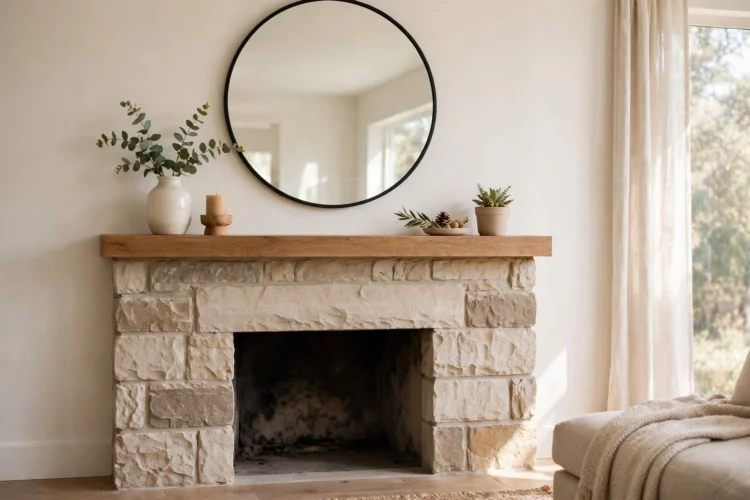
The mantel is the room’s natural display shelf, and dining room fireplace mantel decor should stay simple enough to survive dinner. A mirror or one large piece of art above the mantel, plus two or three objects on it, is enough.
Keep the mantel clear of anything that melts, wilts, or blocks the mirror. A mirror above the mantel also bounces candlelight back onto the table. These dining room mirror ideas that double the candlelight show sizes that suit a mantel wall. A row of plates on the mantel wall also works, and these plate wall ideas that turn family china into art show arrangements that suit a fireplace wall. A simple garland of greenery or a row of small vases suits a dining mantel better than a crowded collection. Leave empty space on the mantel so the few objects there can breathe, and change the display with the seasons instead of adding to it.
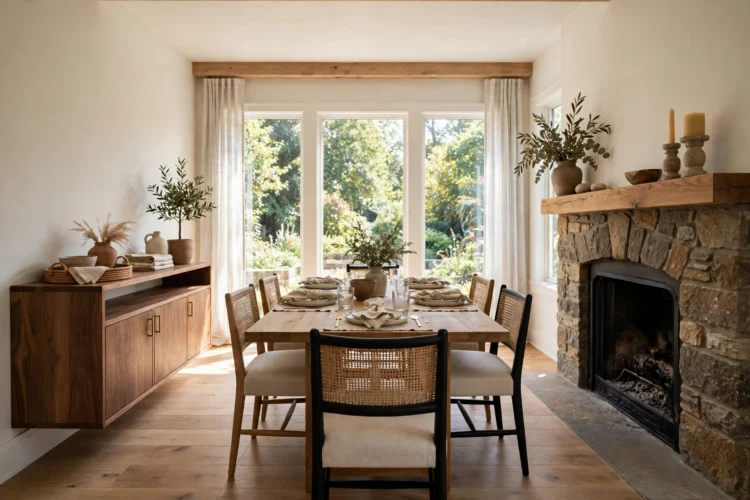
A fireplace dominates one wall, so the opposite wall needs weight of its own. A sideboard on the wall across from the fire balances the room and gives dinner a serving station within reach.
Match the sideboard’s height to the mantel’s shelf line if you can. The echo between the two horizontals ties the room together. For styling, see these sideboard styling ideas that make the dining room feel finished. A china cabinet on the opposite wall works too, and it adds storage for the dishes that only appear at holidays. Keep its height close to the mantel line so the two walls feel like a pair, not a competition.
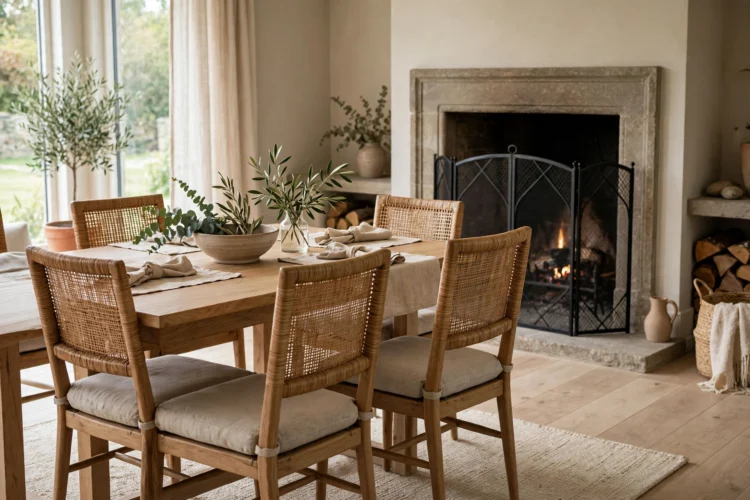
A chair too close to a working fireplace gets hot, and the person in it spends dinner shifting away from the heat. Keep at least three feet between the nearest chair and the firebox, more if the fire burns hot.
Use the chairs nearest the fire for short stays, like the seats guests use before dinner, and keep the main dinner seats farther back. A fire screen also helps, catching sparks and softening the heat on the closest chairs. A fire screen with a simple frame suits a dining room better than a heavy ornate one. It should be easy to move aside when someone tends the fire and easy to put back when dinner starts.
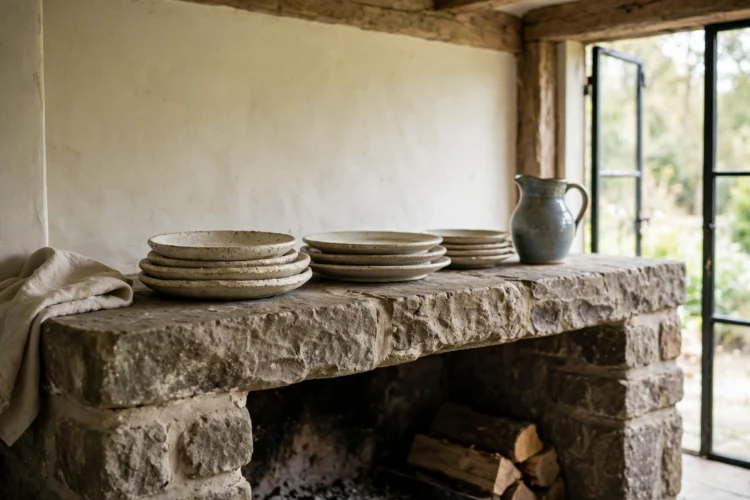
A wide hearth makes a useful shelf during dinner, holding a pitcher, a stack of plates, or the dessert plates waiting for their turn. The stone or brick stays cool enough at the edges for serving pieces.
Keep hot dishes off the hearth itself and use it for staging, not cooking. The hearth is part of the table’s support system on a night when the sideboard is full and the kitchen is far. A tray on the hearth keeps plates and pitchers from sliding on smooth stone. Choose a tray that matches the table linen, and the hearth stops looking like a ledge and starts looking like part of the table setting.
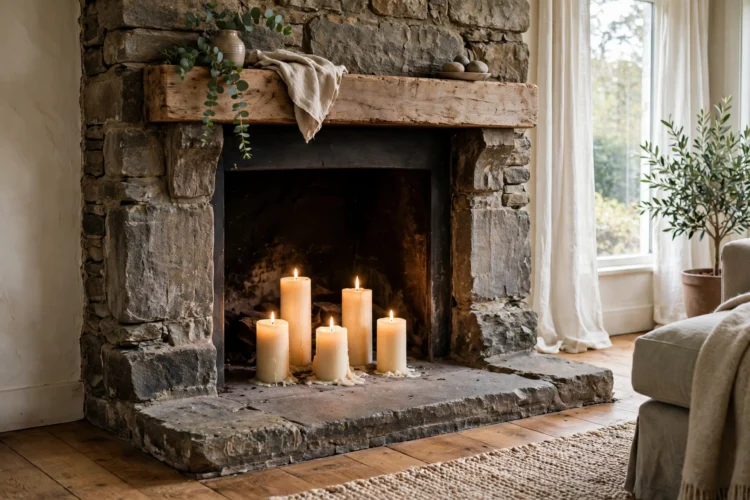
A non working fireplace dining room still has the best focal point in the house. It just needs a new flame. A cluster of pillar candles on the hearth, in a tray or a large lantern, gives the firebox a glow without a real fire.
Battery candles work too, and they are safer if the firebox is shallow or the room has kids. Fill the rest of the firebox with stacked books or a potted plant, and the dead fireplace reads as a styled feature instead of a hole in the wall.
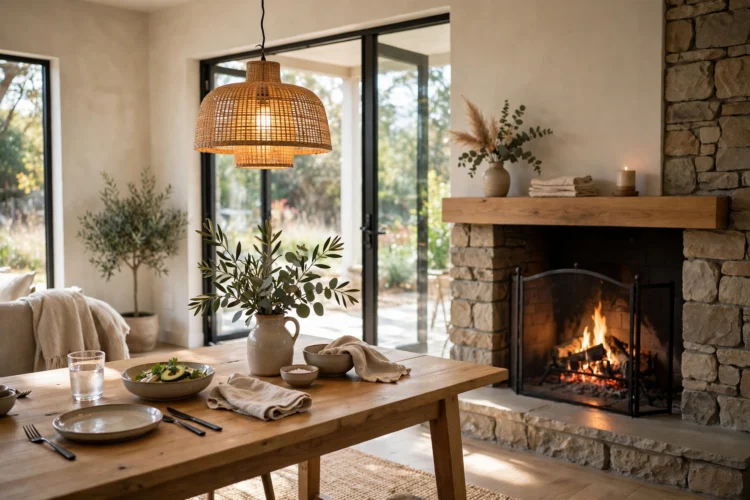
Firelight is beautiful and uneven. It flatters faces and leaves plates in shadow, so the room needs a second light source over the table. A pendant on a dimmer gives dinner the light it needs without killing the mood.
Keep the pendant low and warm, and let the fire stay the brightest thing in the room at eye level. The two lights together make the room feel layered instead of dark. Candles on the table also help, but keep them short and in sturdy holders. A tall taper near a fireplace can drip wax onto the tablecloth when the room warms up, and a low votive gives the same glow without the risk.
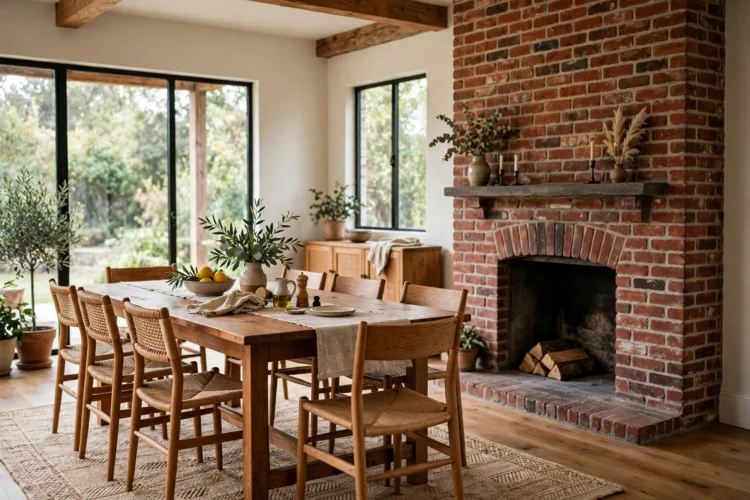
Brick and stone bring strong color into a room, and the dining palette has to answer to it. Warm wood, cream linen, and deep green sit well with red brick. Cool gray and black sit well with gray stone.
Repeat the fireplace material once elsewhere, like a stone serving board or a brick-red runner, so the hearth feels connected to the table instead of stranded on its own wall. White or cream walls suit both brick and stone, because they let the fireplace carry the color. If the walls are already painted, a neutral tablecloth and plain linen napkins keep the room from fighting the hearth.
The first sight of the room is usually from the doorway, and the fireplace should be part of it. Arrange the table so the fire is visible from the door, not hidden behind a tall chair or a sideboard.
A table facing fireplace from the doorway invites people in. The room’s best feature does its work before anyone sits down, and dinner starts with the fire already in view. Stand in the doorway before you finalize the layout. If the fire is the first thing you see, the room is right. If a chair back or a tall plant blocks it, shift the table a few inches until the hearth shows.
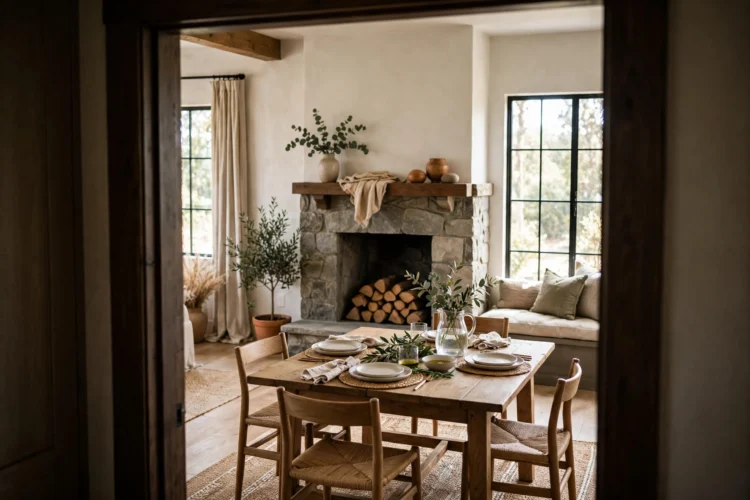
Let the fireplace lead and the table follow. When the seating, the light, and the mantel all answer to the hearth, the room feels settled in a way no other dining room can match.