Physical Address
304 North Cardinal St.
Dorchester Center, MA 02124
Physical Address
304 North Cardinal St.
Dorchester Center, MA 02124

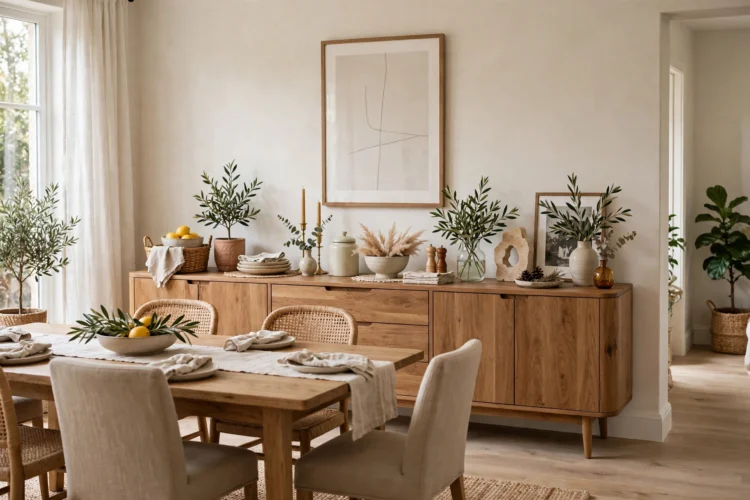
The sideboard is the dining room's hardest working surface. These eleven styling ideas show how to layer lamps, stacks, art, and serving pieces into vignettes that look collected, not cluttered.
The sideboard tells guests whether the dining room is finished or just furnished. A bare top looks like a waiting room, while a crowded top looks like storage. These sideboard styling ideas give you small vignette formulas to copy, for rooms that host often and rooms that mostly display.
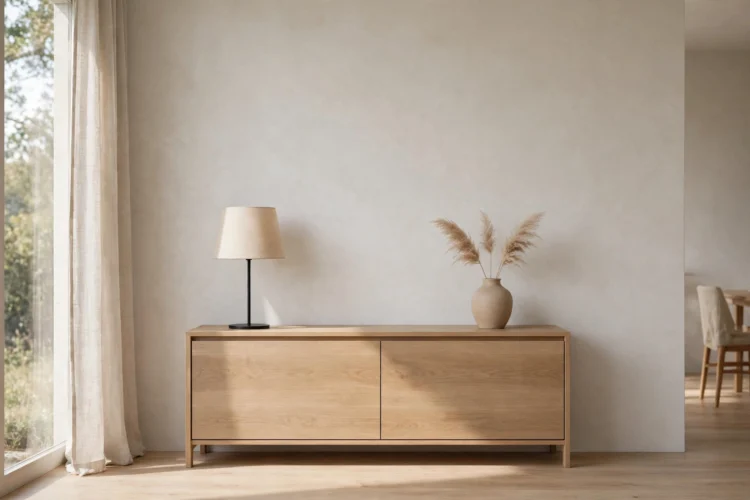
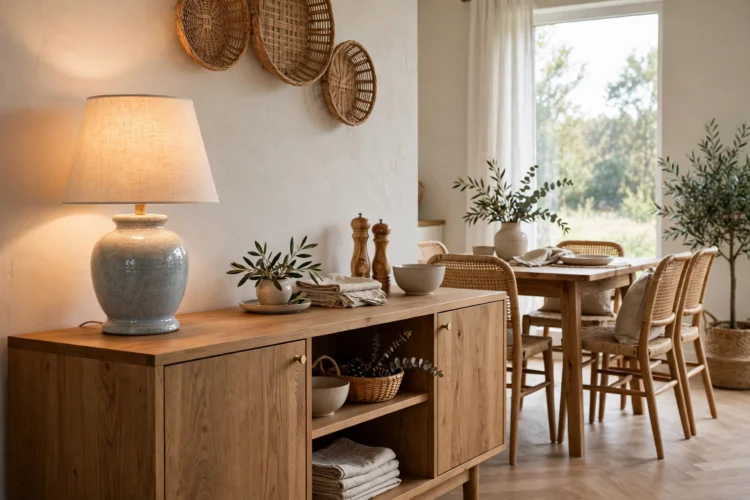
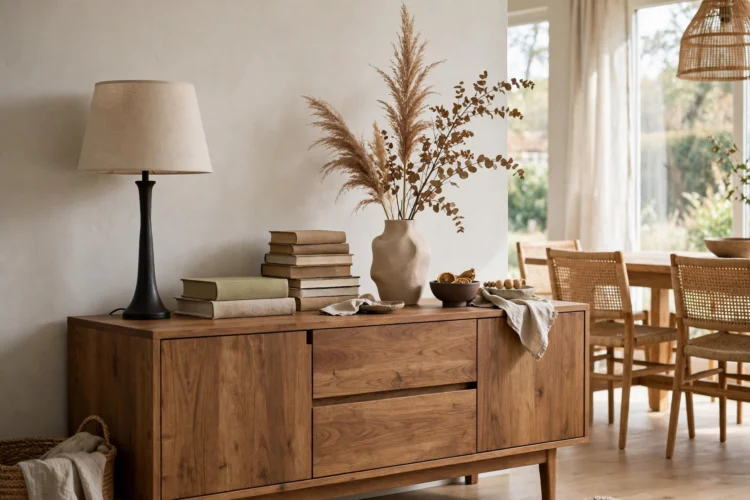
A lamp is the easiest way to make a sideboard look intentional, because it adds height, light, and a clear focal point in one object. Place one lamp at one end of the sideboard, about a third of the way in from the edge, and leave the other end for a lower vignette. The lamp base should suit the room: ceramic for a soft traditional look, brass for warmth, black metal for a modern edge. Choose a shade that throws light upward and outward, not straight down onto the sideboard top, so the glow reaches the wall and the room. A lamp also earns its place at dinner, when its low light softens the whole room after the overhead light goes off. Keep the cord tidy with a small clip behind the sideboard, because a visible cord ruins the vignette faster than a wrong lamp.
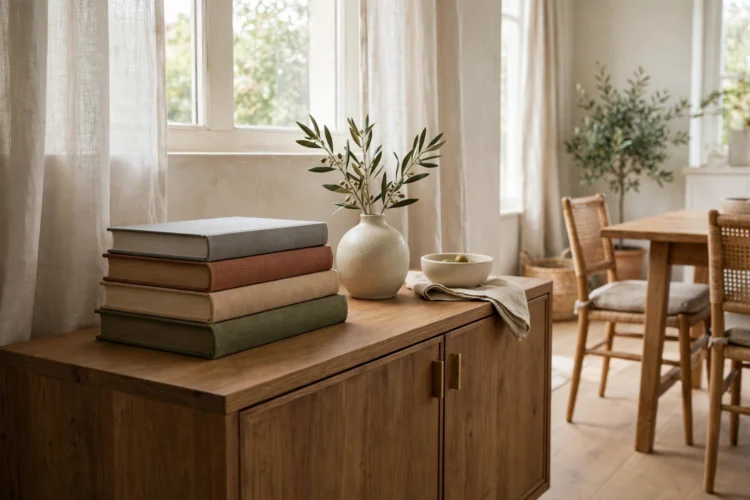
A stack of two or three hardcover books is the cheapest styling tool you own. It lifts a small object to eye level, adds color through the spines, and gives a vignette a base that feels collected rather than placed. Stack the books largest at the bottom and smallest on top, with the spines facing the room or turned inward for a quieter look, and set a small vase, a candle, or a ceramic bird on top. The stack should sit to one side of the sideboard, not dead center, so the eye moves across the top instead of stopping in the middle. Choose books whose covers suit the room, and remove the dust jackets if the colors clash. A stack of books also solves the problem of a short object that disappears behind a taller one: raise it, and it joins the composition.
Keep the stack honest. Books you actually own, with worn covers and real titles, look better than a set bought for color alone, because the wear reads as a home, not a showroom. Rotate the top book seasonally, and use the stack to hide a small remote or a set of coasters underneath the bottom book if the sideboard doubles as a serving station. For more stacking formulas that work anywhere, these coffee table styling formulas that always work use the same rule of three objects at three heights.
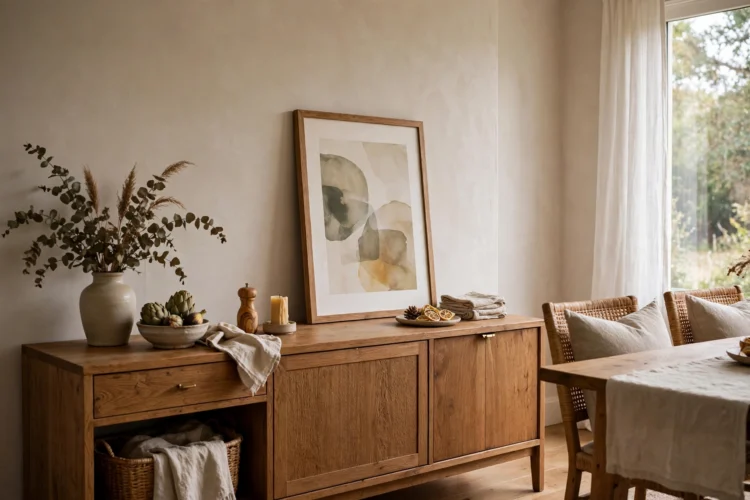
Leaning a framed print against the wall on the sideboard top adds a casual layer that a hung frame cannot match. The lean suits a room that changes often, because you can swap the art in seconds, and it suits renters, because it needs no holes. Choose a frame at least two thirds as wide as the sideboard section it sits over, and lean it at a slight angle with the bottom edge a few inches out from the wall. Layer a smaller frame in front of it, slightly off center, so the two frames overlap and create depth. A leaned frame also softens the hard line where the sideboard meets the wall, which is exactly the edge that makes a dining room feel stiff. Keep the glass clean, since a leaned frame catches the light and shows every fingerprint.
A beautiful serving piece should live on the sideboard, not in a cupboard. A silver tray, a ceramic tureen, or a wooden salad bowl adds a dining purpose to the styling and reminds guests that the room is for eating. Place the serving piece in the center of the sideboard or at the end opposite the lamp, and keep it empty or holding one simple thing, such as a few lemons or a linen napkin. A serving piece that holds clutter, such as keys and mail, stops being decor and becomes a tray for mess, so give the clutter a drawer instead. Polish silver pieces monthly, since tarnish shows under dining room light, and wash ceramic pieces before display so the glaze shines.
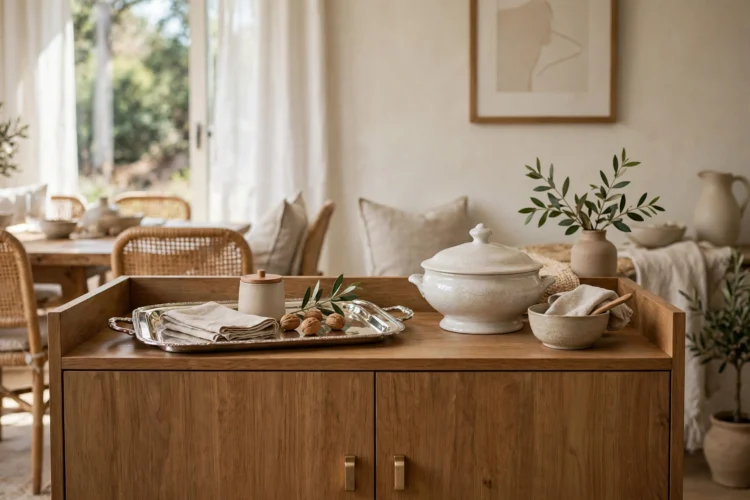
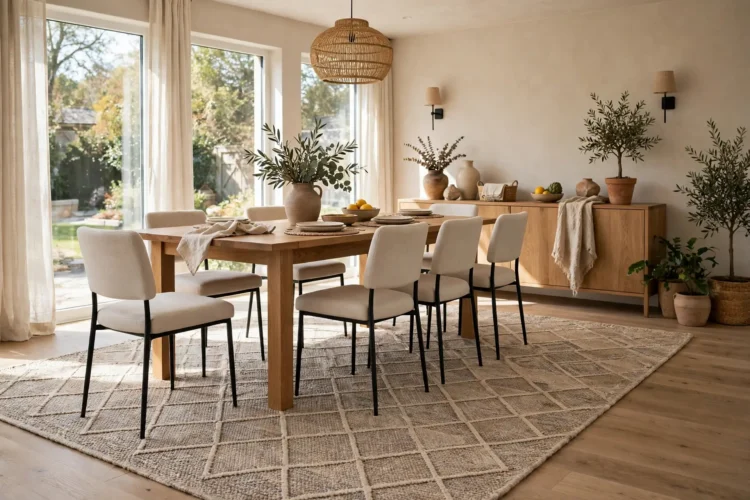
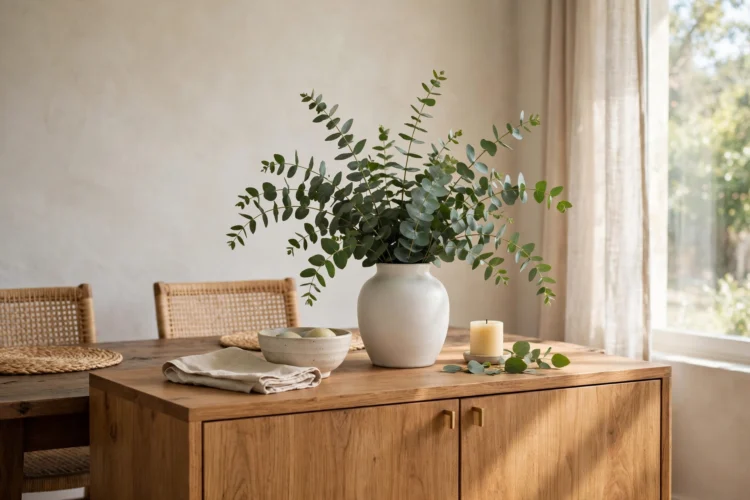
A plant or a vase of fresh greenery is the fastest way to soften a wooden sideboard. A small potted olive tree, a trailing pothos, or a simple vase of eucalyptus adds a living line against the straight edges of the furniture. Place the greenery at the end opposite the lamp, so the two tall elements frame the center, and keep the pot or vase in a material that suits the room, such as terracotta for warmth or white ceramic for calm. Fresh greenery needs water and light, so choose a spot near a window if the sideboard allows it, and trim stems weekly so the arrangement stays fresh. A faux plant works in a dark corner, but choose one with varied leaf sizes and a matte finish, because shiny uniform leaves read as plastic from across the room.
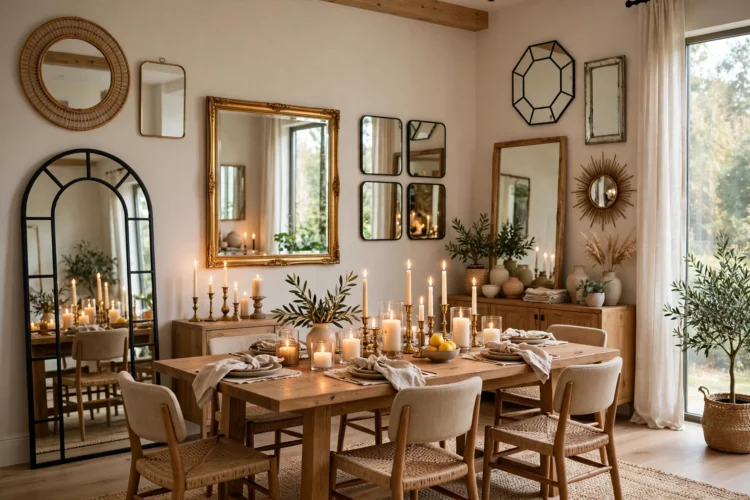
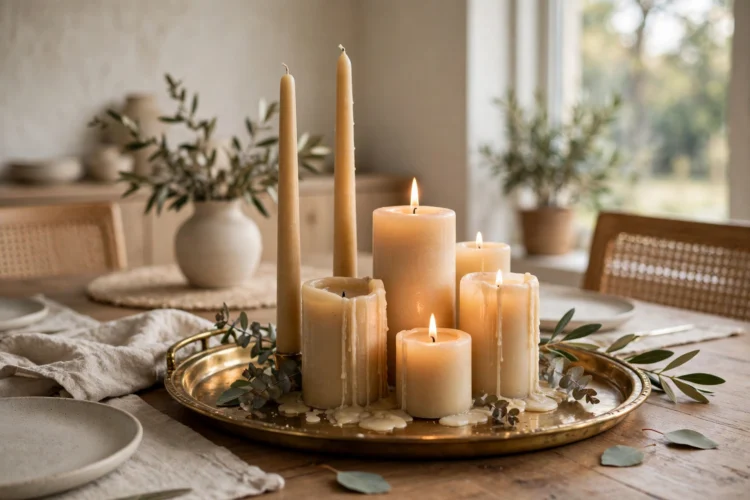
A group of candles on the sideboard gives the dining room its evening mood before anyone sits down. Cluster three candles of different heights on a tray, so wax drips land on the tray and not on the wood, and keep the group to one end of the sideboard so it reads as a vignette, not a row. Use unscented candles at the table, since scented candles fight the smell of food, and save scented ones for the sideboard only if the room is large and well aired. A tray in brass or dark wood grounds the group and makes it easy to move the candles aside when the sideboard becomes a serving station. Light the candles ten minutes before guests arrive, so the room glows when they walk in.
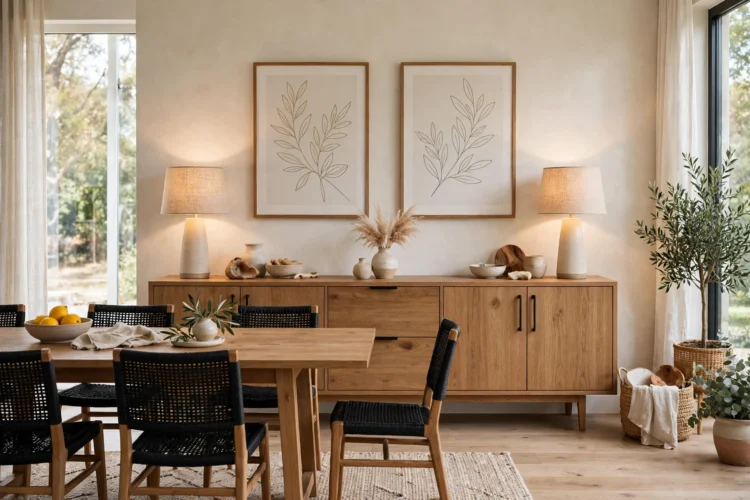
A formal dining room loves symmetry, and the sideboard is the place to give it. Place matching lamps at both ends, a centered piece of art above, and a low centered bowl or tray in the middle, and the sideboard reads as calm and deliberate. Symmetry suits a room with a centered chandelier and a centered table, because the whole room shares one axis. Keep the center object low, so it never blocks the art, and keep the two ends truly matching: same lamp, same shade, same height. A pair of matching candlesticks or matching vases can replace the lamps if the room already has enough light. The risk with symmetry is stiffness, so break it gently with one small organic object, such as a bowl of fruit or a small plant, placed slightly off center in the middle.
A collected dining room suits asymmetry: a tall lamp at one end, a low stack of books at the other, and a medium vase near the center, with no mirror image anywhere. The eye moves across the sideboard instead of stopping at the center, which makes the room feel lived in rather than staged. The rule that holds asymmetry together is the visual triangle: place the tallest object at one end, the medium object near the center, and the shortest at the other end, so the heights step down across the top. Vary the materials too, such as wood, ceramic, and metal, so each vignette reads as its own small scene. Asymmetry suits a room with mixed chairs or a vintage table, because the sideboard echoes the collected feel of the rest of the furniture.
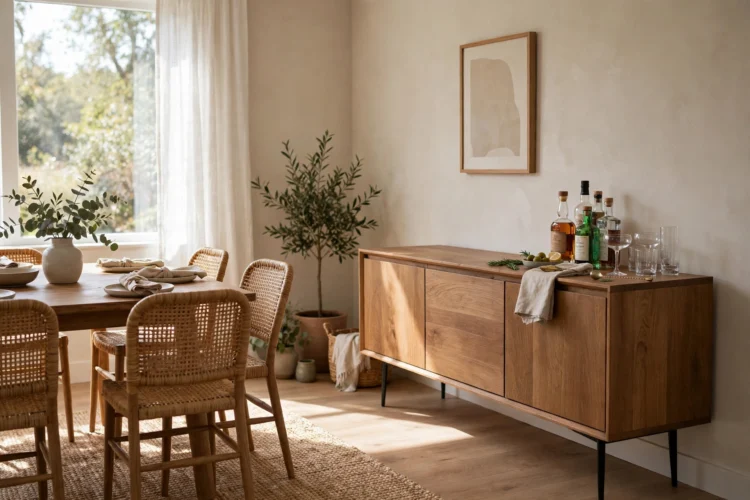
A sideboard that hosts often earns a bar setup at one end: a tray with two bottles, a few glasses, and a small ice bucket, arranged so guests can help themselves without crowding the kitchen. Keep the bar to one third of the sideboard top, so the rest stays styled, and choose bottles with labels you like, since they become part of the display. A small framed drinks menu or a handwritten card adds charm, and a linen towel folded on the tray keeps the setup practical. For a full drinks station, these bar cart ideas for stylish home entertaining show how the sideboard and a cart share the work. Restock the bar before guests arrive and clear it the next morning, because a bar left out for a week stops looking festive and starts looking forgotten.
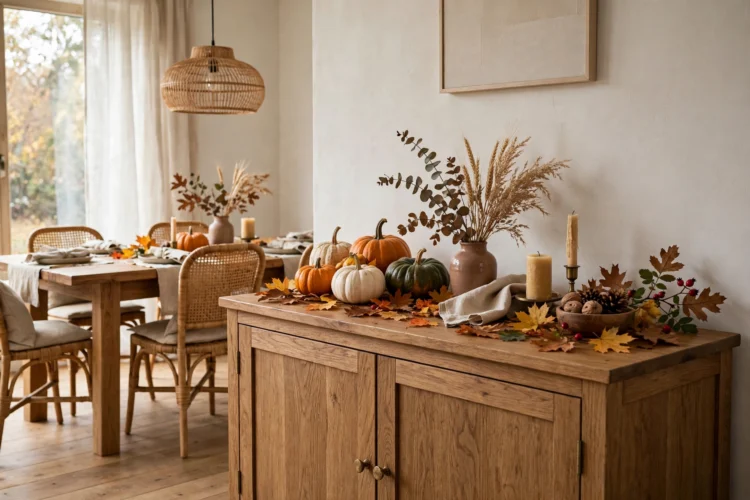
A sideboard styled for the season takes five minutes to change if the base stays fixed. Keep the lamp, the art, and the largest object in place all year, and swap only the small things: a bowl of pinecones in winter, a vase of tulips in spring, a bowl of lemons in summer, a cluster of small pumpkins in autumn. The fixed pieces give the sideboard its structure, and the seasonal swap gives you a reason to notice it again. Store the seasonal pieces in one labeled box per season, so the swap is a single trip to the cupboard, not a hunt through the house. A seasonal swap also protects the sideboard top, since lifting and replacing objects lets you dust and check the finish four times a year.
Choose seasonal pieces in colors that suit the room, not just the season. A red bowl in a blue room fights the palette even in December, while a white ceramic bowl with red berries suits both the season and the room. For seasonal table ideas that match the sideboard, these fall dining room decor ideas for a cozy table show how the table and the sideboard change together.
The bravest sideboard styling choice is leaving space empty. A sideboard with one lamp, one vase, and a long stretch of bare wood looks confident, because it trusts the furniture to carry the room. Negative space also makes the sideboard useful: the empty stretch holds serving dishes at dinner, a laptop during homework, or a stack of plates before a party. Plan the empty space deliberately, such as the middle third of a long sideboard, and keep it clear every day, not just when guests come. A sideboard that is always full cannot serve, and a sideboard that never holds anything looks like a museum piece.