Physical Address
304 North Cardinal St.
Dorchester Center, MA 02124
Physical Address
304 North Cardinal St.
Dorchester Center, MA 02124

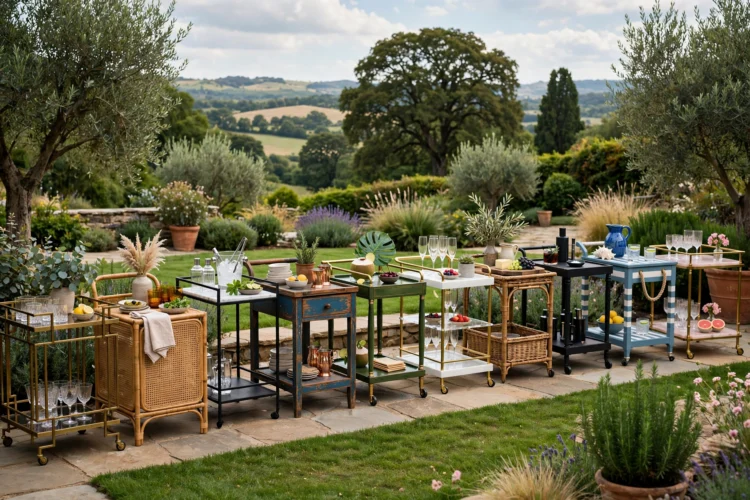
Styling formulas for bar carts, from bottles and glassware to greenery, plus placement ideas beyond the dining room.
A bar cart earns its place by being useful and good-looking at the same time. These bar cart ideas cover styling formulas for bottles, glassware, and greenery, plus placement ideas beyond the dining room, so the cart works for quiet weeknights and full-house parties alike.
The formula is simple: heavy bottles low, glasses in the middle, and one green or decorative touch on top. Bar cart styling starts with that order, and everything else is a variation on it. The ten ideas below start with the styling basics and move through placement, seasons, and the small habits that keep a bar cart tidy instead of cluttered.
Most bar carts have two or three tiers, and each tier has a job. Bottles go on the bottom shelf where their weight keeps the cart stable, glasses and tools sit in the middle at hand height, and the top holds one bottle, a small plant, and the glasses in current use. The cart reads as organized because the heavy things anchor it.
Limit the bottle count to the ones you actually pour. Four or five bottles look curated; twelve look like a liquor store shelf. Keep the labels facing out and group by type, so guests find what they want without moving everything else.
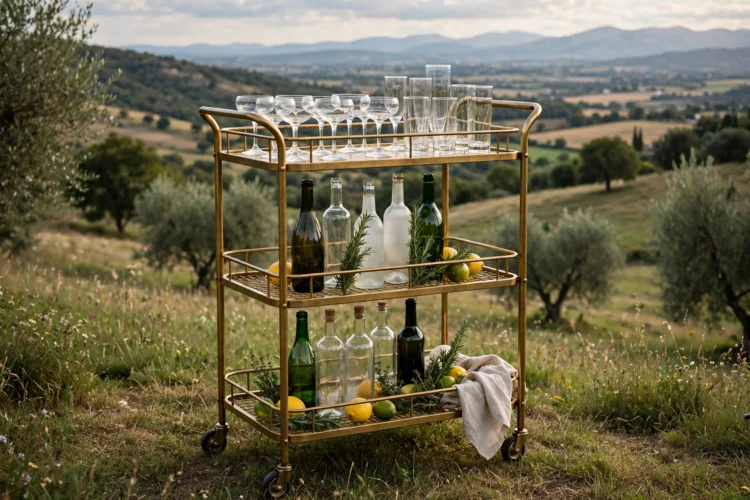
Glassware does more for a bar cart than any bottle, because glass catches light and adds height without bulk. Hang stemware from an under-shelf rack if the cart has one, or stand tumblers in a neat row with a small gap between each glass so they read as a set instead of a crowd.
Mix two glass shapes at most: a rocks glass and a stemmed glass cover nearly every drink, and the restraint keeps the cart calm. A small tray under the glasses catches drips and lets you carry the whole setup to the table in one trip.
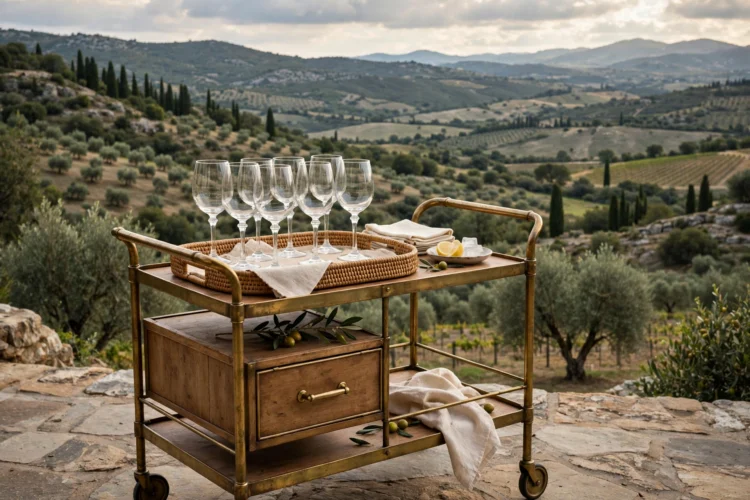
One small plant changes a bar cart from a drinks station into a piece of furniture. A trailing pothos, a small herb pot, or a sprig of eucalyptus in a bud vase softens the hard lines of bottles and metal. Greenery also gives the cart a reason to sit in a living room, where a drinks-only cart can feel out of place.
Choose a plant that tolerates low light and irregular watering, since the cart moves and the plant gets forgotten. A faux stem works too, as long as it looks real from across the room and never collects dust for months. Keep the plant small so it never blocks the bottles behind it.
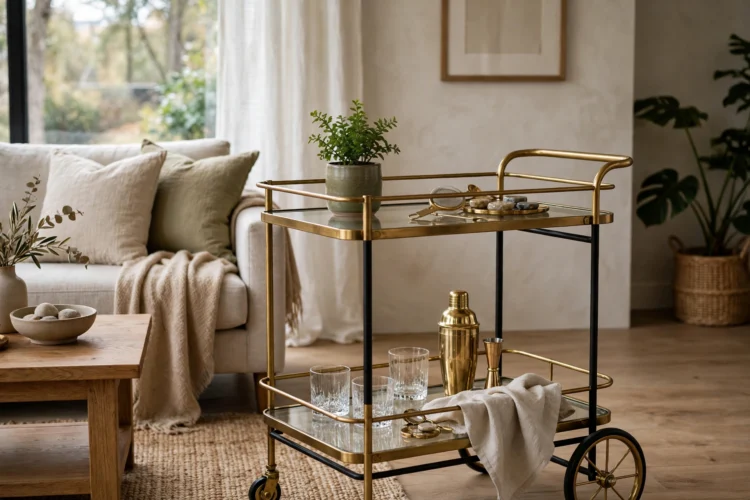
Group bottles by color instead of by brand, and the cart instantly looks designed. Amber bottles together, clear bottles together, and one green bottle as an accent give the shelves a rhythm that brand labels never will. Turn the prettiest label outward and the plainest ones to the back.
Repeat one metal finish across the cart: brass tools with a brass cart, black tools with a black cart. A matching set of bar tools, a jigger, a stirrer, and a small strainer, hung on the side rail or laid on a tray, finishes the look without adding clutter.
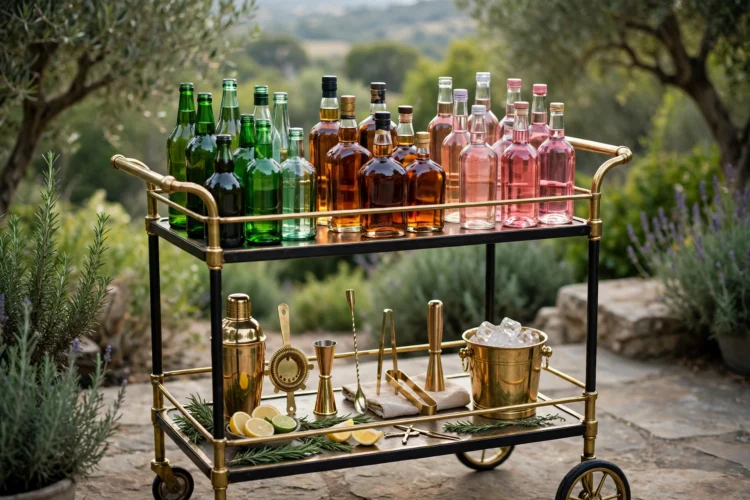
Bar cart placement matters as much as styling: a home bar cart does not have to live beside the dining table. In the living room it serves drinks without a trip to the kitchen, in a home office it marks the end of the workday, and on a covered porch it turns a summer evening into a small event. The cart works anywhere guests gather and the kitchen feels far away.
Park the cart near an outlet if it carries a small lamp, and near a wall so it never blocks a walkway. A coffee bar nearby can share the same corner, with the cart handling evenings and the coffee station handling mornings, which keeps one corner working all day.
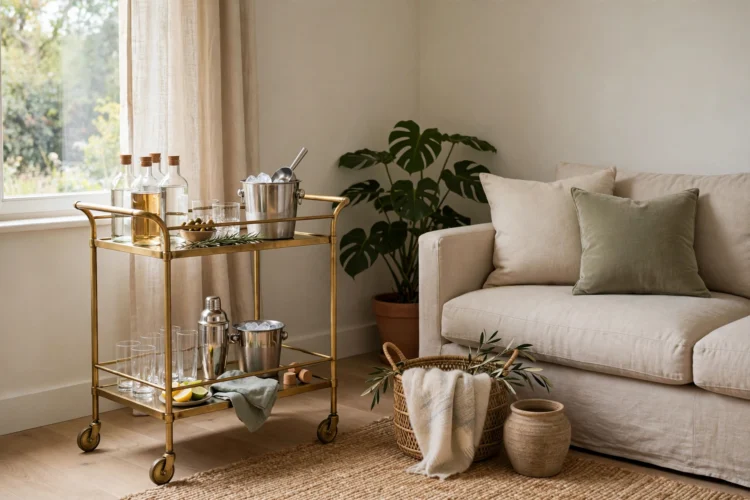
A bar cart earns more use when everyone can drink from it. Stock the cart with sparkling water, a few syrups, citrus, and a set of nice glasses, and it becomes a mocktail station for kids, non-drinkers, and weekday evenings. The styling stays the same; only the bottles change.
Keep a small cutting board and a paring knife on the cart for citrus, plus a bowl of ice nearby when guests arrive. A glass dining table set with the same glasses ties the cart to the dining room even when the cart itself lives across the house.
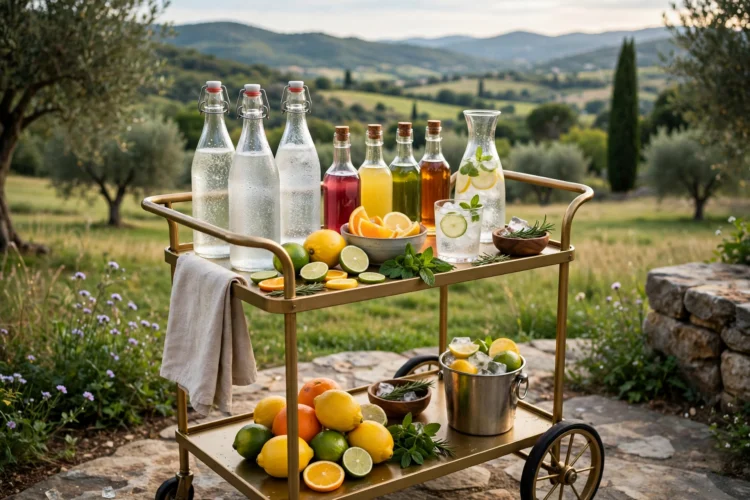
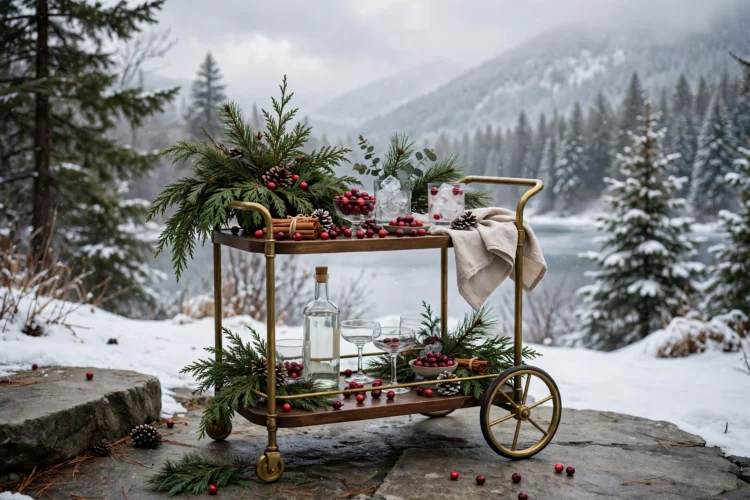
Bar cart decor swaps with the seasons, and the cart never looks stale when the top tier changes. Citrus and light syrups in summer, cinnamon sticks and dark bottles in autumn, a small evergreen sprig and a bowl of cranberries in winter. The swap takes five minutes and gives the cart a reason to be noticed again.
Store the off-season bottles in a cabinet so the cart never holds more than it needs. One seasonal change at a time is enough; a full redecoration every month turns a useful cart into a chore.
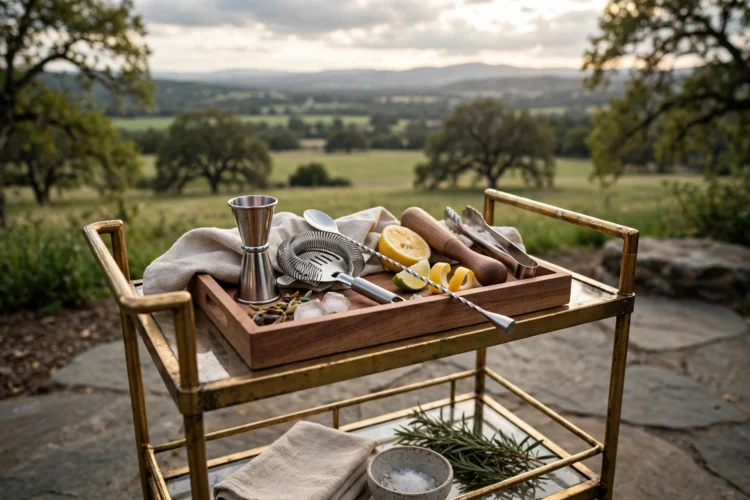
Bar tools disappear into clutter faster than anything on a cart. Corral them on a small tray, a jigger, a bottle opener, a stirrer, and a cloth, and the tray becomes the cart’s command center. The tray also catches spills, so the shelf below stays clean.
Hang the tools you use most on the cart’s side rail if it has one. A rail keeps the jigger and opener visible and reachable, and it frees the tray for glasses. Keep the tool count low: the tools you reach for weekly earn a place, the rest live in a kitchen drawer.
A bar cart looks best in warm light, and the right lamp turns it into a focal point after dark. A small cordless lamp on the top tier, or a picture light on the wall above, pools warm light on the bottles and makes the glassware glow. Avoid overhead fluorescents, which flatten everything on the cart.
If the cart sits near the dining table, match its metal finish to the fixture above the table. A dining room chandelier in brass pairs naturally with a brass cart, and the shared finish ties two separate pieces into one composed corner.
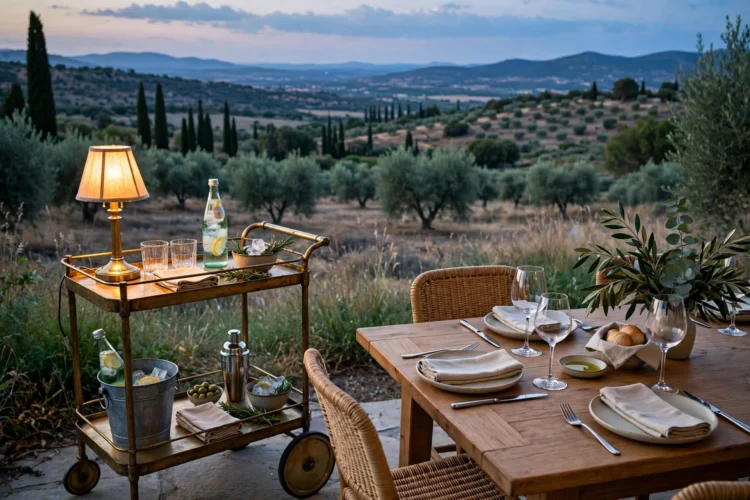
The best bar cart idea is a habit: after every use, spend one minute putting bottles back, rinsing glasses, and wiping the shelves. A cart that gets a minute of care stays ready for guests, while a cart left messy becomes a shelf nobody touches.
Give every bottle a fixed spot on the cart, and the one-minute reset becomes automatic. A kitchen island nearby can hold the overflow bottles that do not fit the cart, so the cart keeps only what it uses and nothing it stores. A tidy cart gets used; a cluttered cart gets ignored.
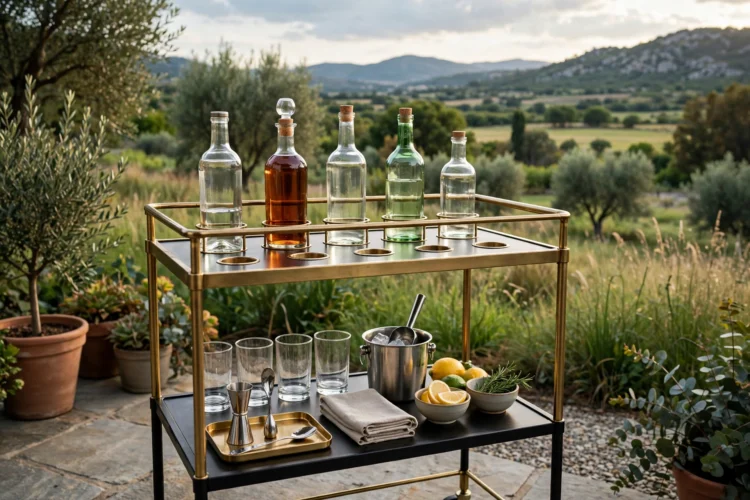
Start with the three-tier formula, add one plant and one tray, and put the cart where people actually gather. A bar cart does not need a big budget or a big room. It needs a clear formula, a few good bottles, and a spot where it can do its job every day.