Physical Address
304 North Cardinal St.
Dorchester Center, MA 02124
Physical Address
304 North Cardinal St.
Dorchester Center, MA 02124

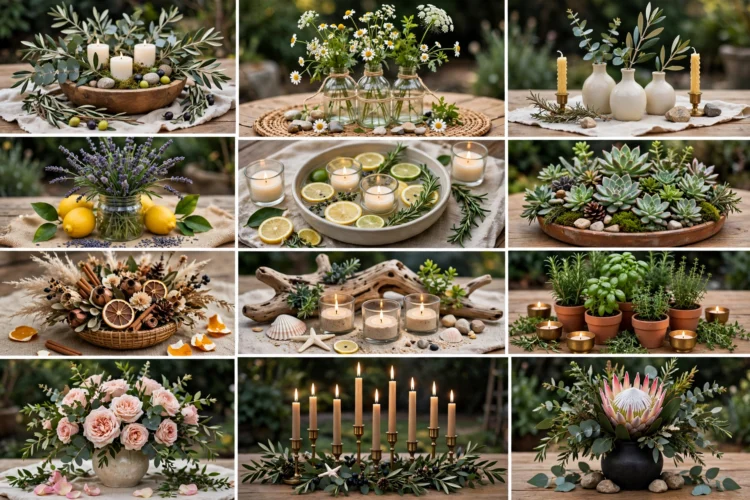
Twelve centrepiece looks that leave room for plates, glasses, and conversation, from a simple greenery runner for weeknights to a full garland for party nights.
Good dining table centerpiece ideas solve two problems at once. The table should look cared for, and there should still be room for plates, glasses, and elbows. A centrepiece that blocks the view across the table or crowds out the food fails at both jobs. The twelve looks below keep that balance. Some take two minutes. Some are worth saving for a party. All of them leave the table usable, which is the whole point.
An everyday table centerpiece has to survive daily life. It gets moved for homework, nudged aside for a laptop, and wiped around after breakfast. So the best everyday pieces are low, stable, and easy to lift with one hand. A long wooden board with a row of small plants does the job. So does a single wide bowl that holds whatever is in season. The trick is to pick one base and let it stay there, then change only the small things on top of it.
Lay a length of faux eucalyptus or olive branches down the centre of the table and let the ends trail slightly past the middle. A low centerpiece for dining table seating keeps every face visible, and a runner does that better than any tall vase. It reads as a runner but costs less than fabric and needs no ironing. On a round dining table, curve the greenery into a loose ring instead of a straight line so it follows the shape of the table. Shake the dust off once a week and it looks fresh for months.
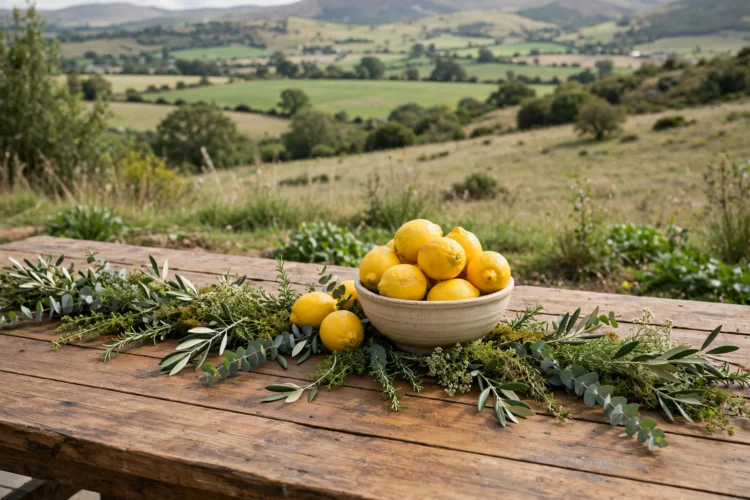
A wide, shallow bowl of lemons, apples, or limes is the oldest centrepiece there is, and it still works because it looks generous without trying hard. Keep the bowl low so people can see over it. Refill it from the fruit bowl in the kitchen rather than buying fruit just for display, and nothing goes to waste. A bowl of green apples on a dark wood table gives the whole room a lift.
A tray turns a loose pile of objects into one deliberate arrangement. It also makes clearing the table a one-handed job: lift the tray, wipe the table, put the tray back. Choose a tray that is about a third of the table length so it leaves room for place settings at both ends. Wood warms up a pale table. A metal tray with a raised edge suits a busier household because nothing slides off.
Three small bud vases on a tray, each holding one stem, look more considered than a single big bouquet and cost far less. Use stems from the garden, a bunch of supermarket flowers split three ways, or even herbs like rosemary and mint. When one stem fades, you replace one stem, not the whole arrangement. The tray keeps water rings off the wood.

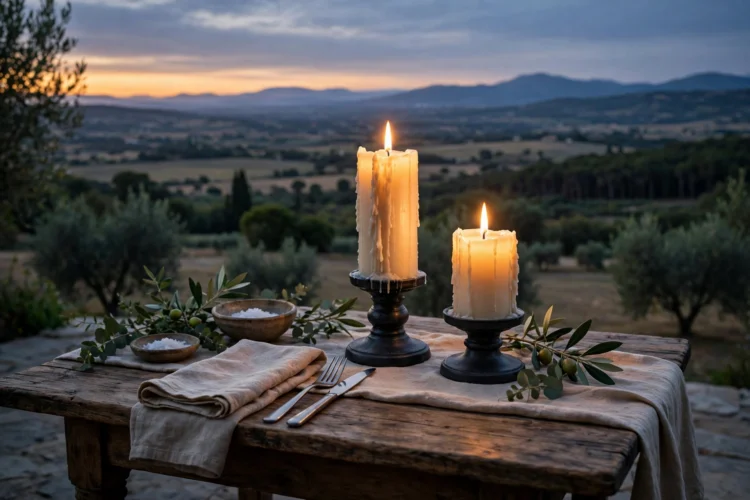
Candles make an ordinary Tuesday dinner feel like a small occasion, and they cost almost nothing. The rule is simple: keep the flames low and away from anything that can catch. A pair of short pillar candles in glass holders plus one taller taper in a sturdy holder gives the table depth without blocking anyone’s view. Light them when you sit down, not an hour before, and blow them out before you leave the table.
Place the candles toward the centre of the table and keep them clear of the greenery runner or paper napkins. Battery candles work well in houses with small children or pets, and the better ones flicker convincingly. Either way, the point is the same: a little warm light makes the food look better and the evening feel slower.
A tall vase with a few bare branches sounds plain until you see it on a table. The height draws the eye up and makes the room feel taller, and the branches change with the seasons without any effort. In spring, use blossom. In summer, use leafy stems. In autumn, use branches with berries or coloured leaves. In winter, use bare twigs or pine. One vase, four looks a year, and nothing to throw away each week.
Pick a vase with a heavy base so it cannot tip when someone reaches across the table. A vase this tall belongs on a longer table, so if your table extends for guests, check that the vase still leaves room for serving dishes. These extendable dining table ideas show how a longer table changes what fits in the middle, and a tall vase is one of the first things to move when the leaves go in.

A stack of two or three books under a small potted plant makes the dining table feel like part of the house rather than a showroom. Use books you actually like, cookbooks or art books, with the largest at the bottom. The plant on top can be a real herb you cook with, such as basil or thyme, which gives the arrangement a purpose beyond looking nice. A terracotta pot adds warmth that a glossy ceramic pot cannot.
Keep the stack short. Two books and a plant is a centrepiece. Five books and a plant is a storage problem. Wipe the books when you dust the table, and move the plant to a sunny windowsill every few days if it starts to look tired. This is the easiest idea on the list to change, because it uses things you already own.

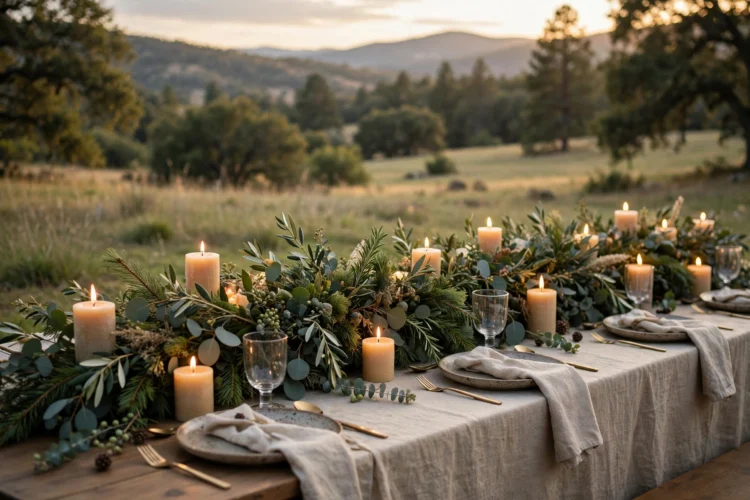
A dining table centerpiece for parties calls for more presence than an everyday one, and the simplest way to get it is to build a long line down the centre of the table instead of one object in the middle. Start with a runner, then add greenery, then candles, then a few small objects spaced along the length. The eye travels down the table, and every guest gets something pretty in front of them. This works best on a rectangular table where the line has room to run.
A fabric runner in a plain colour gives the garland something to sit on and stops it sliding on a polished table. Lay the runner first, then the garland, then tuck in candles and a few small ornaments or fruit. Keep the garland low and flat so it reads as a band of green rather than a wall. Guests should be able to see the person opposite them and reach the serving dishes without leaning over it.
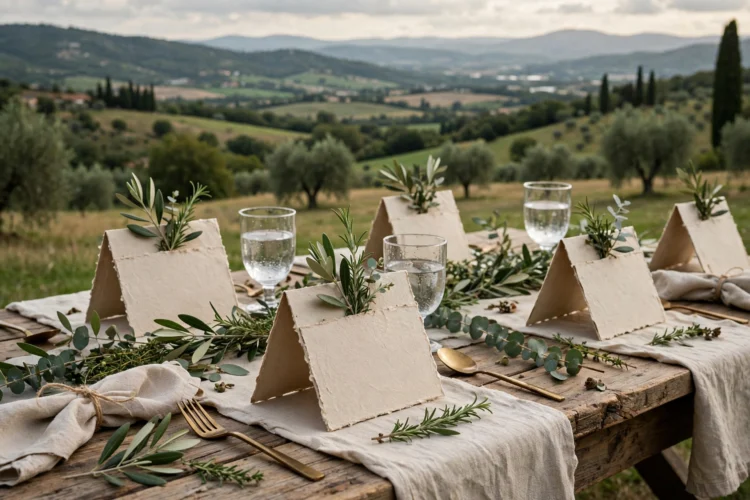
Place cards solve the seating question and decorate the table at the same time, which is why hosts have used them for a century. A folded card with a handwritten name costs nothing and tells guests they were expected. Tie the card to a small sprig of greenery, tuck it into a napkin fold, or lean it against a small favour such as a wrapped chocolate or a tiny potted succulent. Guests take the favour home, and the table never looks bare.
Keep the cards simple and legible. A name in clear handwriting beats fancy calligraphy nobody can read. If children are coming, give them a card too, with a small drawing or a joke instead of a formal name. A glass dining table shows place cards especially well, because the light passes through the table and the cards stand out against the surface.
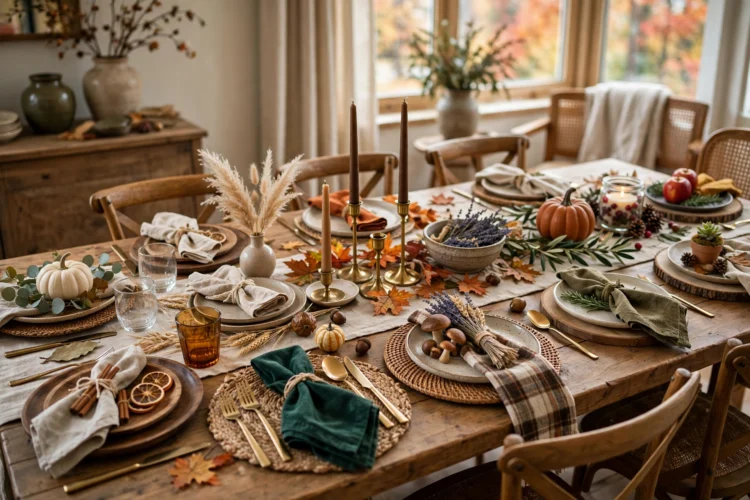
The cheapest way to keep a centrepiece fresh is to change it four times a year instead of every week. Spring gets blossom and pale candles. Summer gets green leaves and a bowl of citrus. Autumn gets dried leaves, small pumpkins, and amber glass. Winter gets pine, pinecones, and white candles. Each seasonal table centerpiece uses the same base, a tray or a board, and only the small pieces change. Store each season’s pieces in one labelled box, and the swap takes ten minutes. The table always looks intentional, and you never have to think of a new idea on a busy week.
This approach also keeps spending down. Buying one seasonal set a year costs less than buying fresh flowers every weekend, and the pieces last for years. When the season changes, check what you have before buying anything new. Most households already own half of the next season’s centrepiece in a cupboard somewhere. Finish the look with the room’s overhead light kept low, and these dining room chandelier ideas show how the right fixture makes even a simple seasonal centrepiece look planned.