Physical Address
304 North Cardinal St.
Dorchester Center, MA 02124
Physical Address
304 North Cardinal St.
Dorchester Center, MA 02124

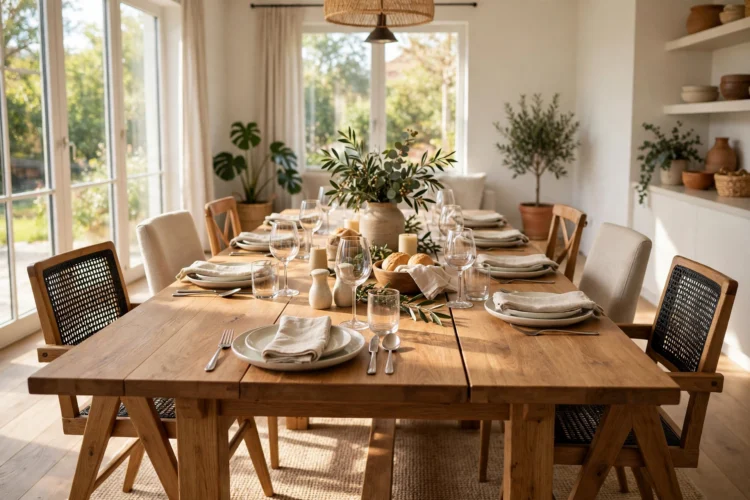
An extendable dining table gives you a compact table for everyday meals and a full-size table for holidays. These 12 ideas cover the mechanisms, bases, and finishes that make the switch easy.
An extendable dining table solves the oldest dining room problem: a table big enough for holidays eats up the room on ordinary Tuesdays. The right one seats four for weeknight dinners, then stretches to seat ten when family visits, and the change takes less than a minute once you know the mechanism. This guide walks through 12 extendable dining table ideas, from butterfly leaves that hide inside the table to drop-leaf sides that fold flat against the wall. For each idea, you will see how it works, who it suits, and what to check before you buy, so the table you pick still feels right after the guests leave.
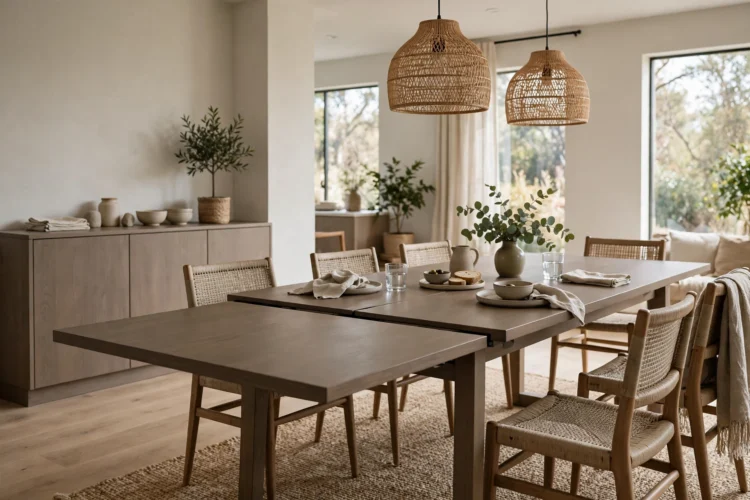
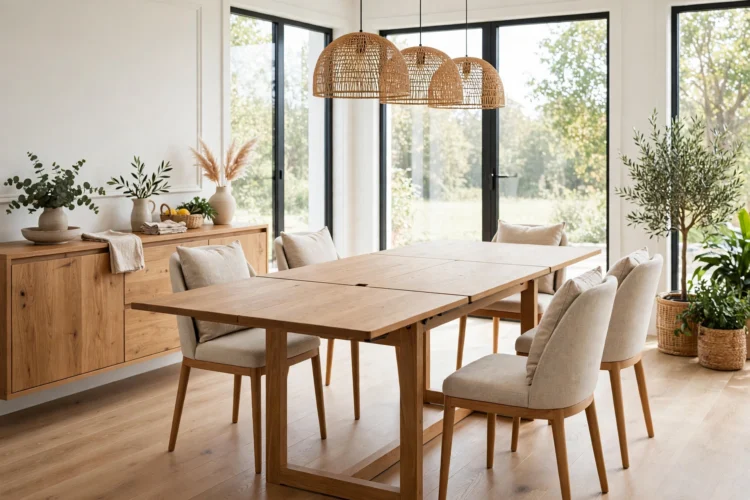
A butterfly-leaf table hides its extra leaves inside the tabletop. Pull the two halves apart and the leaves fold up from the center, then push the halves back together and the table locks into its full length. No loose boards to store in a closet, and nothing to lose between holidays. Look for a smooth extendable table mechanism with metal runners rather than wood-on-wood tracks, which can stick after a few years of use. A butterfly leaf dining table with this mechanism works best in rooms with at least 90 cm of clearance on each end, so chairs can pull out even when the table is fully open.
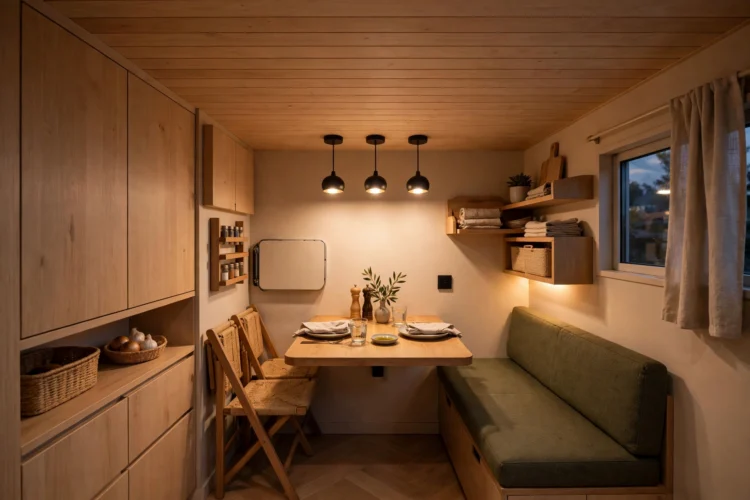
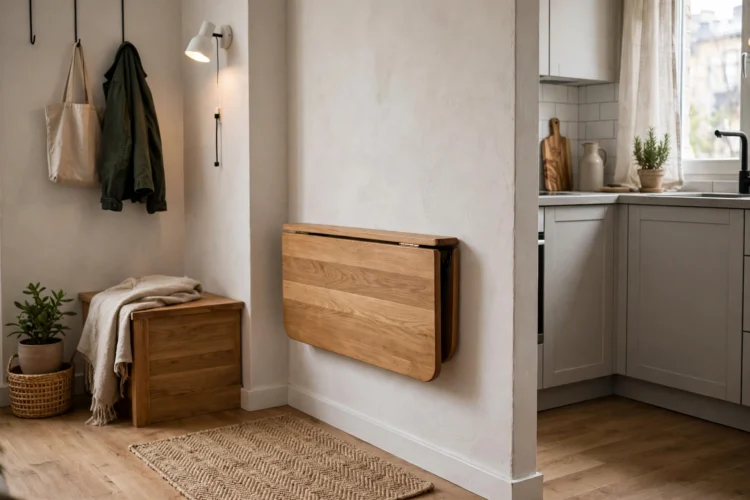
Drop-leaf tables keep one or both sides folded down until you need them. With both leaves down, the table reads as a slim console against the wall. Lift one side for a family of four, lift both for six. This drop leaf dining table is the most forgiving extendable table for a small apartment, because the footprint changes with the guest list instead of staying fixed. Check that the support arms swing out fully and lock, and that the hinge screws sit flush so plates do not wobble. Pair it with stackable chairs so extra seats store out of sight. For renters, an expandable dining table for small spaces like this one moves easily and needs no wall fixings.
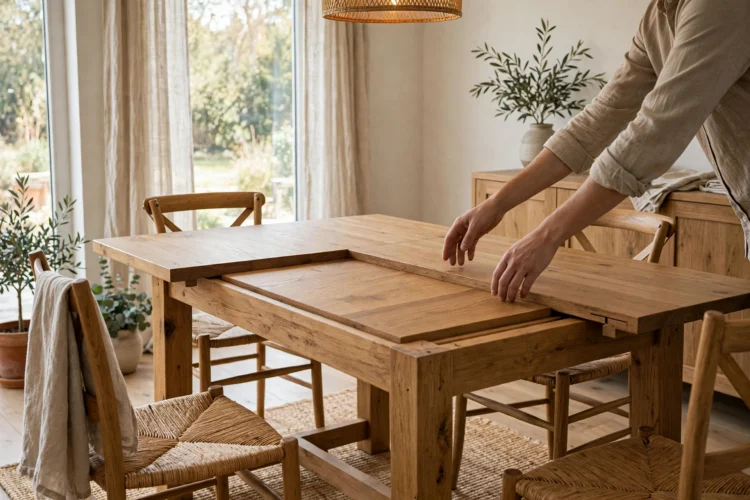
Removable leaves give you the widest range of sizes. A table that seats six can take one leaf for eight or two leaves for ten, and you add only what the occasion needs. The trade-off is storage: each leaf needs a flat spot in a closet or under a bed, and a good storage bag keeps the finish free of scratches. When you shop, pull the table apart in the store and feel how the halves align. A well-made extension table closes with no visible seam and no ridge under your palm.
Gateleg tables date back centuries, and the design still earns its place in small dining rooms. The legs swing out like gates to support the leaves, then swing back so the whole table folds to the width of its center panel. A gateleg works as a hallway console on weekdays and a dinner table on weekends, which makes it a strong pick for rooms that serve two jobs. Look for sturdy hinges and legs that lock open with a firm click, not a loose wobble. A gateleg is also one of the lightest extendable designs, so one person can move it without help.
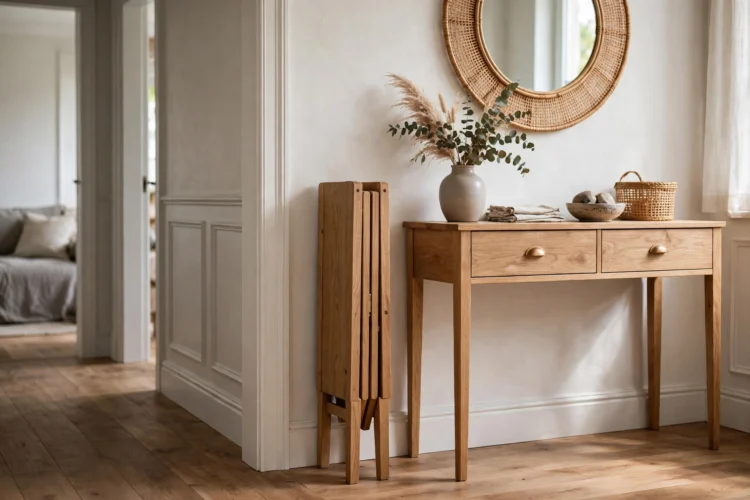
Four legs crowd the corners of an extended table and steal knee space from the guests at the ends. A pedestal base fixes that. One or two center columns carry the top, so every seat gets full legroom and chairs slide in without bumping a leg. This matters most when the table is at full stretch, because that is when the most people sit at it. Check the base weight and footprint before buying: a heavy top on a light base tips when someone leans on the end. A wide, weighted pedestal stays steady even with elbows on the table.
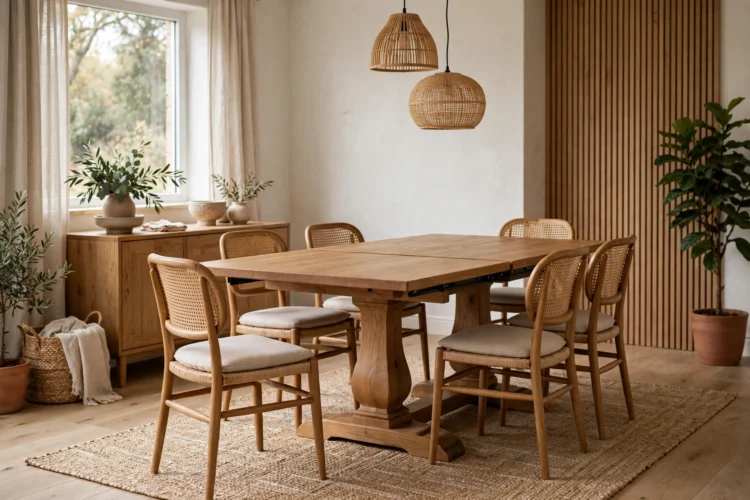
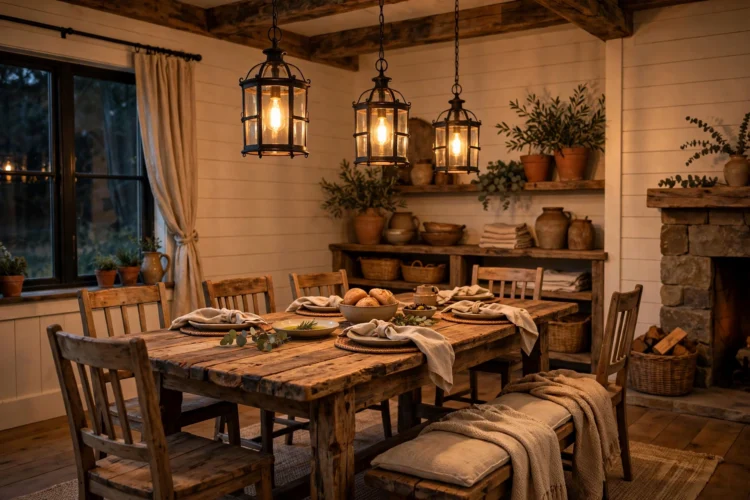
A trestle base pairs two end supports with a long stretcher bar, and the top slides apart on hidden rails. The look suits farmhouse and rustic rooms, and the construction is simple enough that the mechanism rarely fails. Trestle tables often extend further than pedestal designs, sometimes by more than a meter, which is useful for long holiday tables. The stretcher can limit foot room at the center seats, so test it with chairs pulled in before you commit. A farmhouse dining table with a trestle base pairs naturally with a bench on one side and chairs on the other.
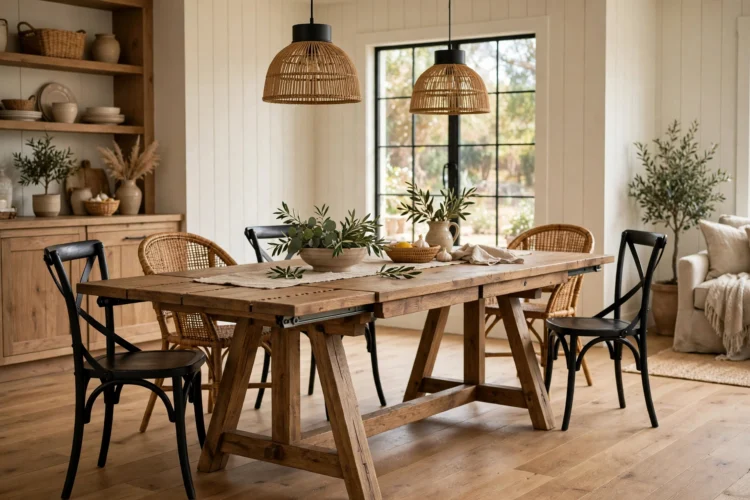
An oval top gives you the seating of a rectangle with the easy flow of a round table. Corners disappear, so people move around the table without catching a hip, and the curved ends make it simpler to squeeze in one more chair. Oval extendable tables usually hide a butterfly leaf or a center leaf, and the curve of the top hides the seam better than a straight edge does. This shape suits long, narrow dining rooms where a rectangular table would feel like a corridor wall.
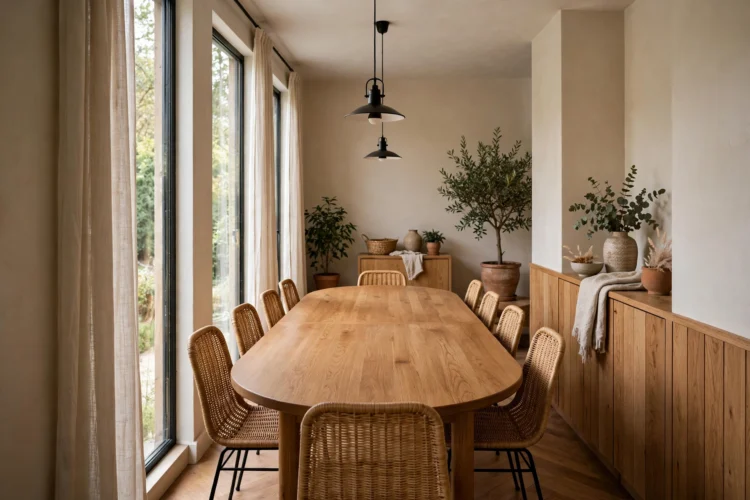
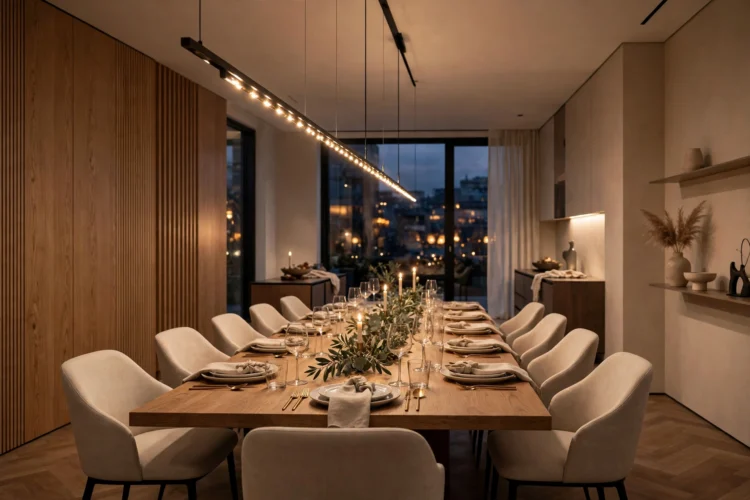
When the guest list hits double figures, a rectangular extendable dining table is the most practical shape. Straight sides seat people shoulder to shoulder without wasted gaps, and the table lines up neatly against a wall or a sideboard. Choose a model with two leaves rather than one, so you can open it halfway for eight and fully for ten. Measure the room with the table fully open and add at least 75 cm behind each chair, or guests will be trapped against the wall every time someone needs the bathroom.
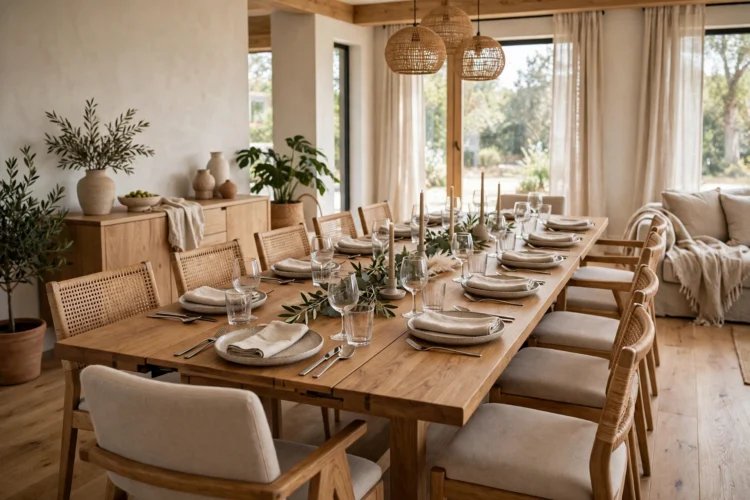
Self-storing leaves solve the one real annoyance of extension tables: where the leaves live between uses. The leaves fold into a compartment under the tabletop, so nothing leaves the room and nothing gets scratched in storage. The mechanism adds weight and cost, but it pays for itself the first time you extend the table in under a minute with no trip to the closet. Test the fold a few times in the store. If it takes two people and a diagram, it will not get used.
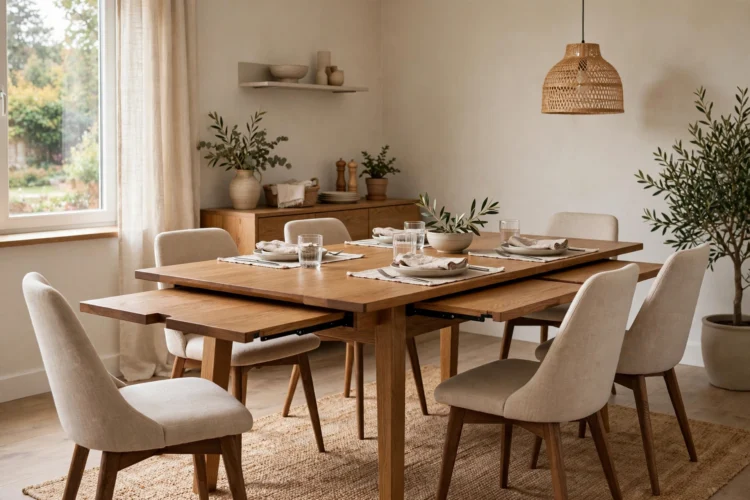
A bench on one side of an extendable table changes the math of seating. Two adults fit where two chairs would go, and three kids fit easily, which is handy when the table grows for a birthday dinner. Benches also slide fully under the table, so the room feels open when the table is closed. Choose a bench with a flat, firm top at the same height as your chairs, and check that the bench legs clear the table base when it slides in. For casual family meals, a kitchen island with seating shows the same idea at work in the kitchen.
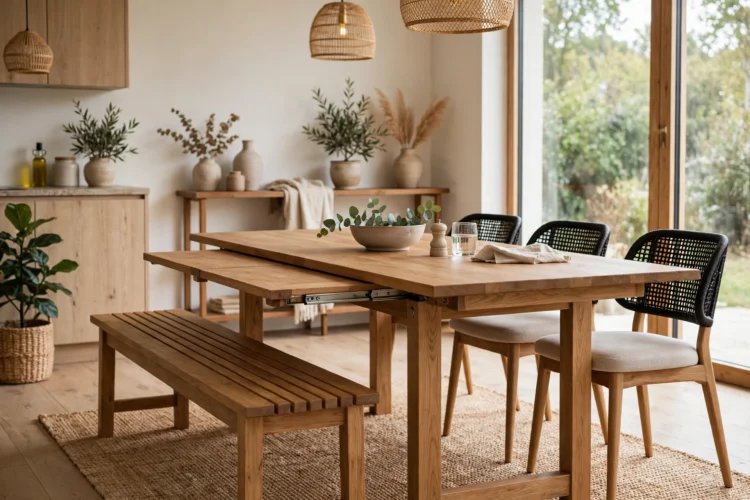
A round-to-oval table starts as a four-seat circle for everyday meals, then stretches into an oval that seats six or eight. It is the best of both shapes: the round form keeps conversation easy at small gatherings, and the oval form adds capacity without a new table. The seam sits at the center of the oval, where a tablecloth or a runner covers it. For more small-room shapes, see these round dining table ideas and compare the footprint before you buy.
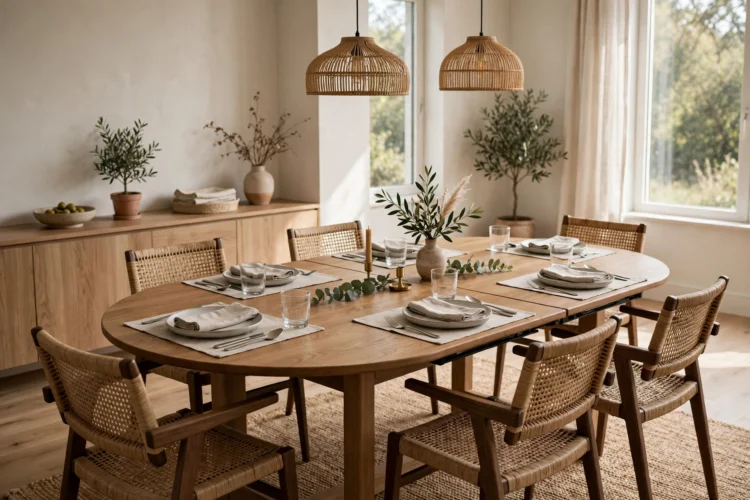
The mechanism gets the attention, but the finish decides how the table ages. A hard-wearing lacquer or a catalyzed varnish shrugs off hot plates, red wine, and homework glue, while a soft oil finish shows every ring within a month. If you love wood grain, choose a matte lacquer that protects without hiding the timber. Test a hidden corner with a damp cloth: if the finish clouds, it will not survive daily family use. Hang pendant lights low over the center of the table to mark the dining zone even when the table is closed to its smallest size.