Physical Address
304 North Cardinal St.
Dorchester Center, MA 02124
Physical Address
304 North Cardinal St.
Dorchester Center, MA 02124

A dining room chandelier only works when its size and hang height suit the ceiling above it. These ten ideas cover eight-foot rooms, tall ceilings, and everything in between.
A dining room chandelier sets the tone for every meal, but the fixture that looks perfect in a showroom can feel wrong at home when the ceiling height does not match. A chandelier hung too low crowds the table. One hung too high floats away and leaves the room feeling unfinished. The fix is simple: match the fixture to the ceiling first, then pick the style. These ten dining room chandelier ideas cover eight-foot ceilings, nine and ten-foot rooms, and dramatic vaulted spaces, with sizing rules you can measure before you buy.
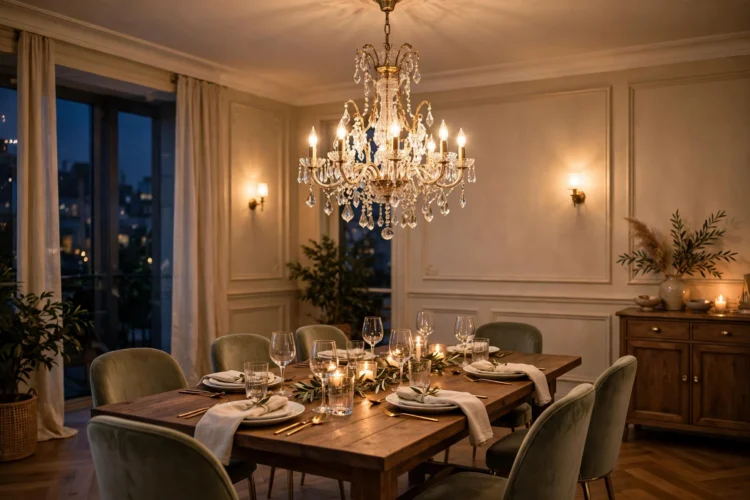
Crystal suits a standard eight-foot ceiling when the fixture stays compact. Look for a chandelier about 24 to 30 inches wide for a table that seats six, and hang it so the bottom sits 30 to 36 inches above the tabletop. That gap keeps sightlines open across the table while the crystals still catch the light. Choose a fixture with a short chain or a fixed rod rather than a long drop, since every extra inch eats into headroom.
Keep the arms slim and the crystal drops short so the piece reads elegant instead of heavy. A two-tier crystal design can work if the lower tier stays above the 30-inch line. Pair it with a dimmer so the sparkle softens at dinner and brightens for homework or board games.
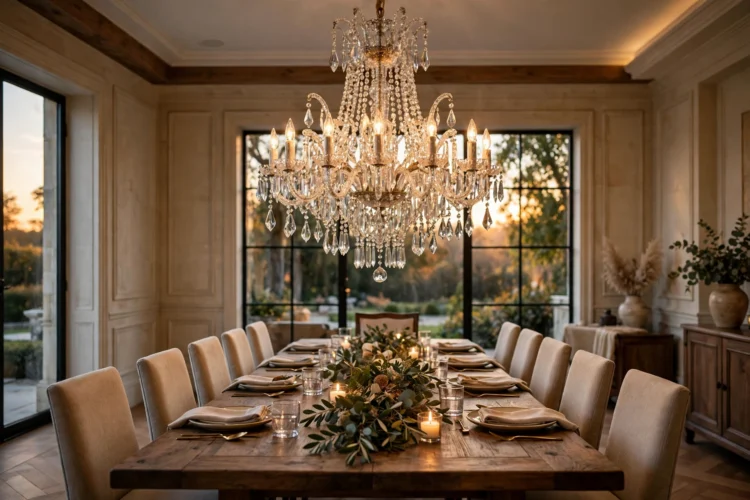
A drum chandelier spreads light sideways through fabric, which makes it a strong pick for low ceilings. The shade hides the bulbs from view at seated eye level, so nobody gets glare while eating. Pick a drum 24 to 36 inches wide, about half to two-thirds the width of the table, and hang it 30 inches above the table surface.
Linen drums warm up a room and suit casual dining rooms. A metal drum with a white interior throws more light down onto the table, which helps when the room doubles as a workspace. If your kitchen already uses drum pendants, carry the same shape into the dining room for a pulled-together look, and see how pendant lights over a kitchen island use the same sizing logic.
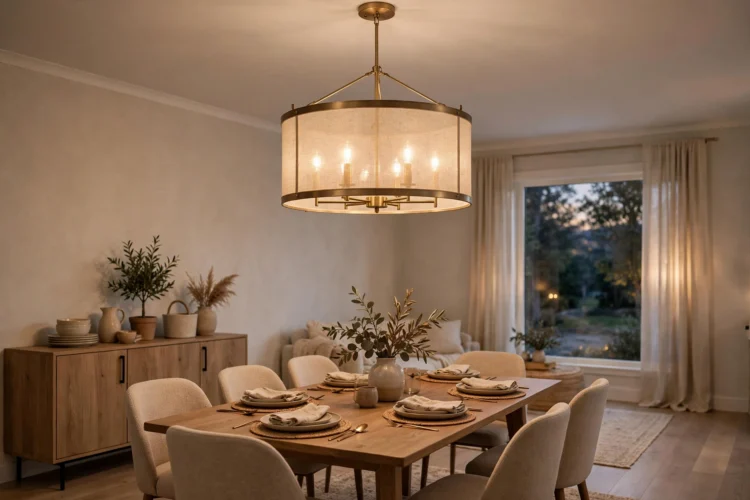
A double-height dining room swallows a normal chandelier. Go big, with a fixture 36 to 48 inches wide, or use a multi-tier design that fills vertical space. The rule of thumb: add the room length and width in feet, and that number in inches is a good starting diameter. A 14 by 18 foot room points to a 32-inch fixture at minimum, and tall ceilings push that number higher.
Hang the bottom of the fixture 36 to 40 inches above the table so it anchors the room without blocking conversation. A tiered chandelier with several levels of light draws the eye upward and makes the tall ceiling feel intentional instead of empty. Choose warm bulbs so the extra height does not turn the room cold.
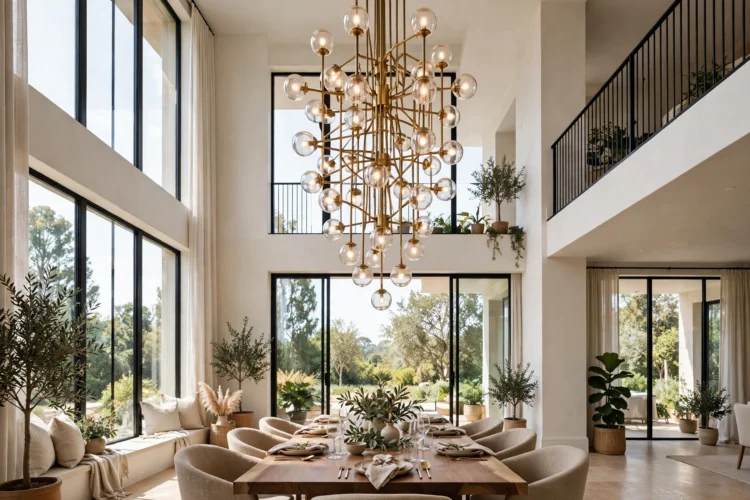
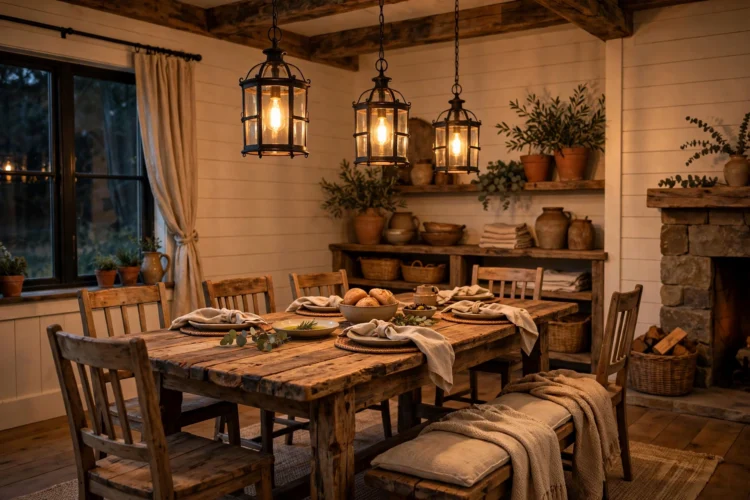
Matte black metal gives a farmhouse dining room structure without the fuss of crystal. A black chandelier reads as a silhouette, so it works best when the arms are open and the bulbs are visible. Candle-style bulbs add warmth, and an Edison bulb shape keeps the farmhouse feel honest.
Size it like any other dining room chandelier: about two-thirds the width of the table, hung 30 to 36 inches above the surface. Black metal pairs well with a wood table and linen chairs, and it forgives a low ceiling because the open frame lets the eye pass through. If the room already has black hardware on cabinets or doors, the chandelier ties those details together.
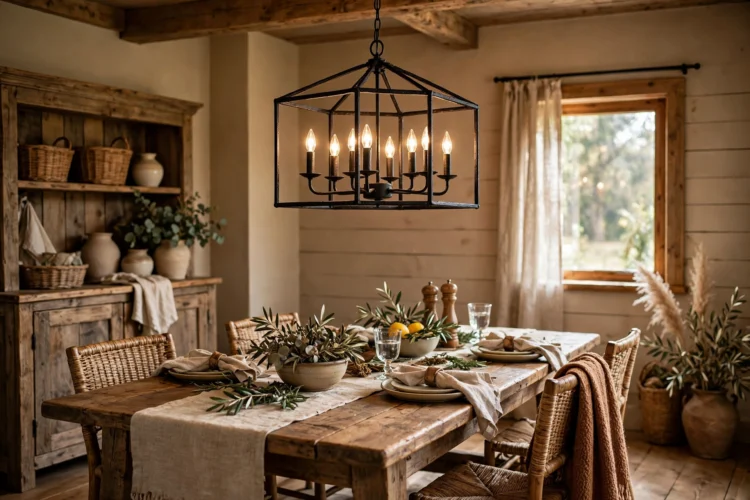
A round table calls for a round or radial chandelier, and gold finishes make the pairing feel warm. The diameter rule still applies: pick a fixture about half to two-thirds the table diameter. A 48-inch round table takes a 24 to 30-inch chandelier, centered exactly over the middle of the table.
Brass and aged gold suit wood tones, while polished gold works with glass and lacquer. Hang it 30 to 34 inches above the table so the glow pools in the center where plates sit. A gold chandelier also bounces light onto the ceiling, which lifts a room with a flat eight-foot ceiling. Keep the rest of the metals in the room close in tone so the gold looks deliberate.
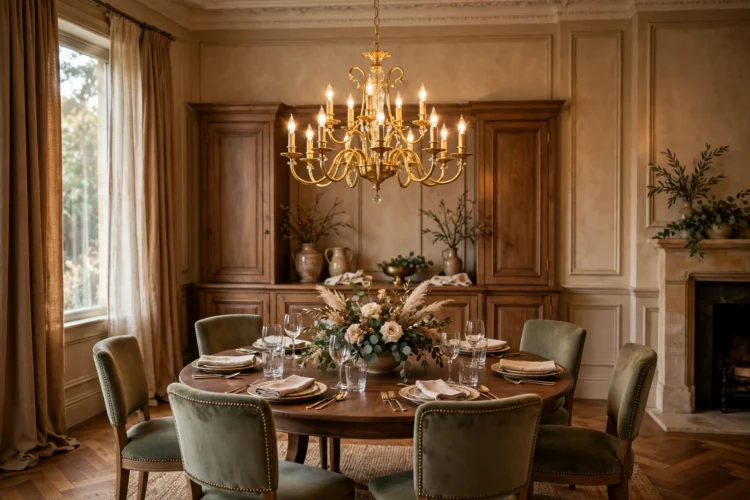
Glass globes suit modern dining rooms because they disappear visually. The clear glass keeps sightlines open, which matters in a room with a low ceiling or a table pushed near a window. A cluster of three to five globes on varied drops gives the fixture presence without bulk.
Hang the lowest globe 30 inches above the table and let the others rise from there. Clear glass shows the bulb, so pick a bulb shape you like looking at, such as a globe or tubular LED. Smoked glass softens the glare and suits rooms with dark wood or black chairs. For more ways to keep a ceiling feeling open, look at recessed lighting ideas for clean ceilings and how they pair with a statement fixture.
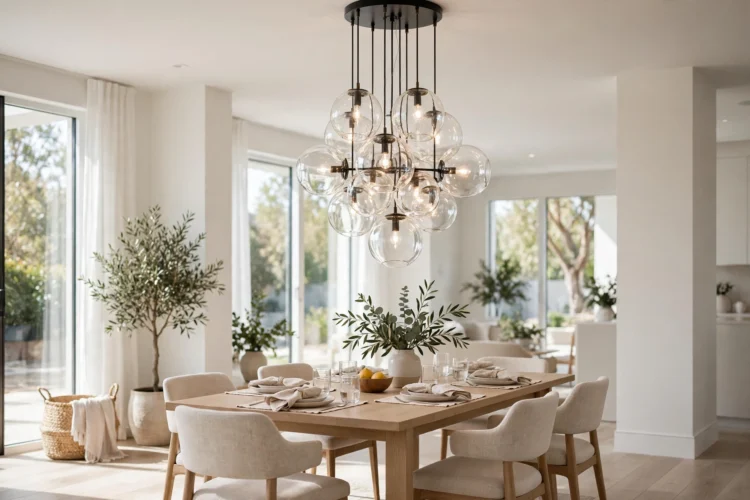
A wood beam chandelier brings the warmth of a beam into the room without any construction. The beam shape suits long rectangular tables, since it spreads light along the table length instead of pooling in one spot. Pick a beam about two-thirds the table length and hang it 30 to 36 inches above the surface.
Reclaimed-look wood pairs with black iron brackets and candle bulbs for a farmhouse feel. A smoother walnut beam with brass details leans more refined and suits a transitional dining room. Keep the beam slim, about 6 to 8 inches deep, so it does not block views across the table. The wood tone should echo the table or the floor, not fight it.
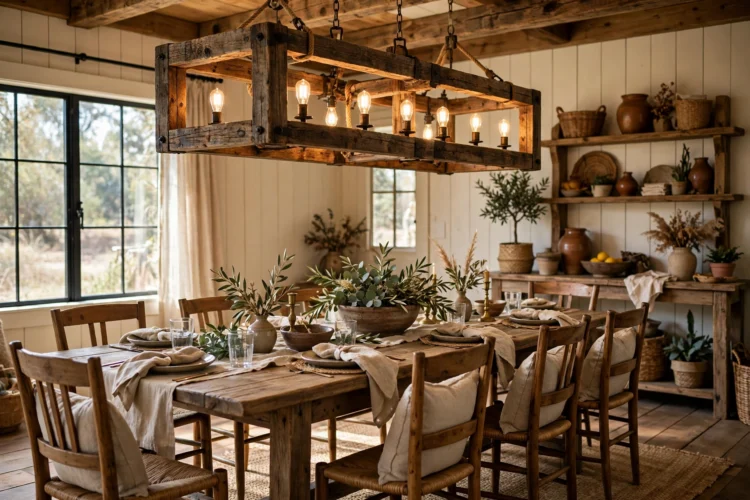
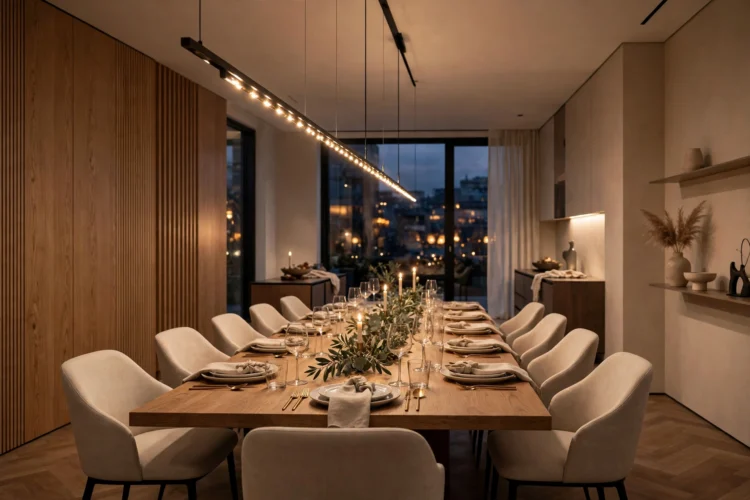
Narrow dining rooms need a fixture that follows the table, and a slim linear chandelier does exactly that. A bar-style fixture 36 to 48 inches long lights a six-seat table evenly, while a round chandelier would leave the ends dark. Hang it 30 to 36 inches above the tabletop.
Linear fixtures suit ceilings from eight to ten feet because the low profile keeps the room feeling open. Choose a finish that matches the chairs or the table legs, such as black metal, brass, or brushed nickel. A linear chandelier with glass shades on each socket adds sparkle without the weight of a full crystal piece.
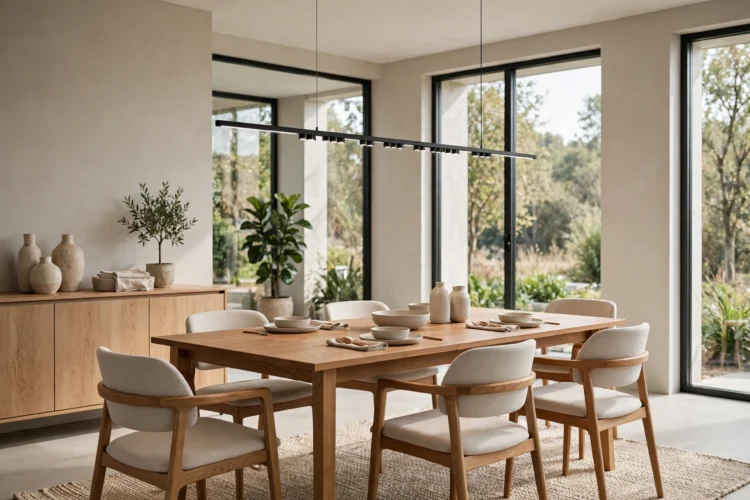
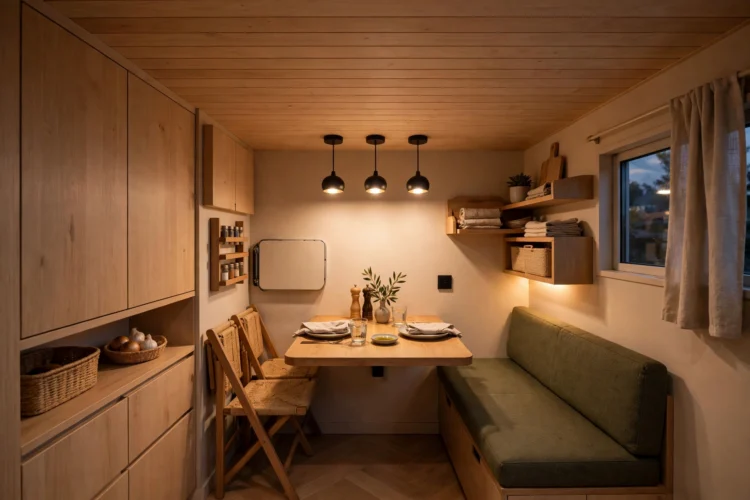
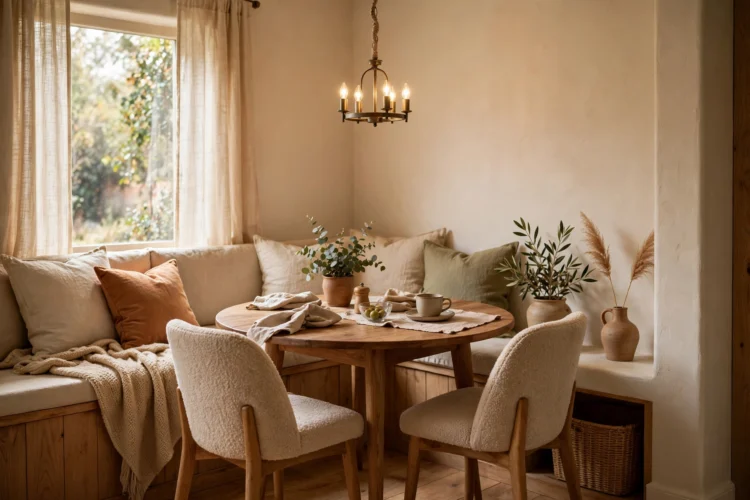
A dining nook does not need a grand fixture. A small chandelier 18 to 24 inches wide gives a breakfast nook or a four-seat table the same finished feeling as a full dining room. The same hang-height rule applies: 30 inches above the table keeps the fixture in the conversation zone without crowding heads.
Pick a shape that mirrors the table. A round nook table takes a round chandelier, while a square table suits a square or four-arm fixture. A mini chandelier with a fabric shade softens a nook tucked into a kitchen corner. If the nook sits near the kitchen, match the chandelier finish to the kitchen pendants so the two spaces read as one room.
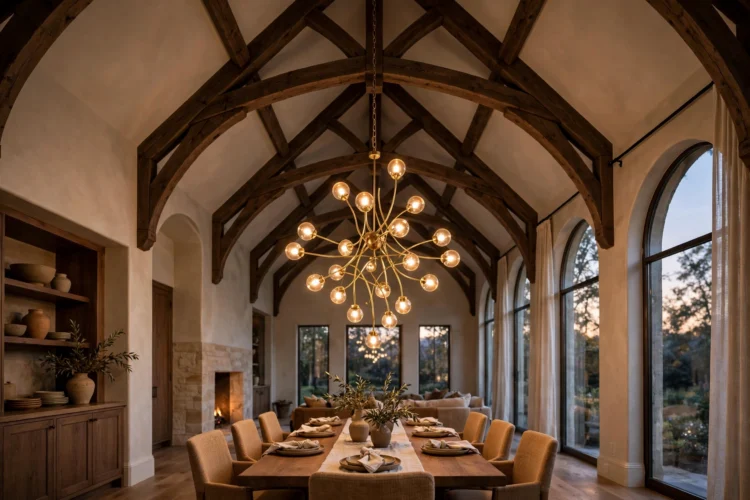
A vaulted ceiling is the one place to go dramatic. A large chandelier with a long drop, a cascade of glass, or a multi-arm iron design fills the vertical space and gives the room a focal point. Size it generously: a fixture 36 inches or wider suits most vaulted dining rooms, and a longer drop is fine because the ceiling gives you room.
Hang the bottom 36 to 40 inches above the table, and use a chain or rod long enough to reach the peak without a visible gap. A dimmer is essential here, since a big fixture on full brightness can overpower the room. The same layering thinking applies across the house, and kitchen lighting ideas beyond the basic flush mount show how a statement piece plus softer layers work together. When the ceiling slopes, center the chandelier over the table, not over the highest point of the vault.
Start with the ceiling height, then the table size, then the style. Measure the table, check the hang height, and pick a dining room chandelier that fits those numbers. The right fixture makes the room feel finished at every meal, from a quick breakfast to a long dinner with friends.