Physical Address
304 North Cardinal St.
Dorchester Center, MA 02124
Physical Address
304 North Cardinal St.
Dorchester Center, MA 02124

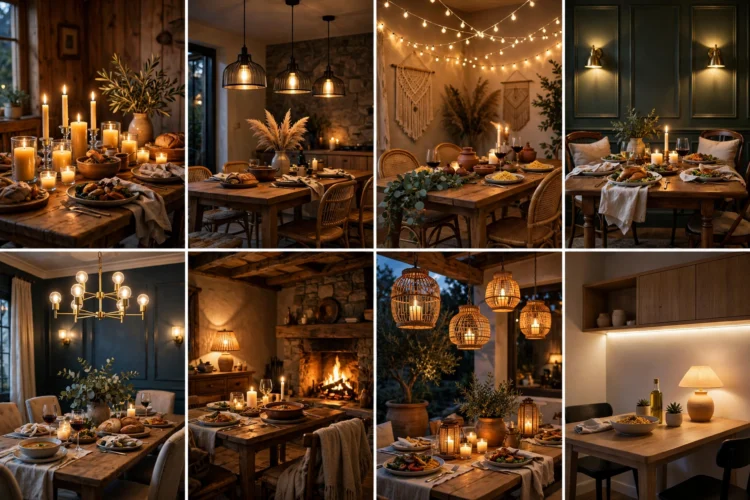
Eight lighting ideas that make weeknight dinners feel special, from hanging the pendant at the right height to layering candlelight over a dimmer.
The light in a dining room decides how dinner feels. Bright white light makes a meal feel like a canteen. Warm, low light makes the same meal feel like an evening out, even if the food came from the same pan as last night. These dining room lighting ideas work with the room you already have. No rewiring, no renovation, just better placement, warmer bulbs, and a few small additions that layer together. The goal is simple: light the table, soften the edges, and let the evening slow down.
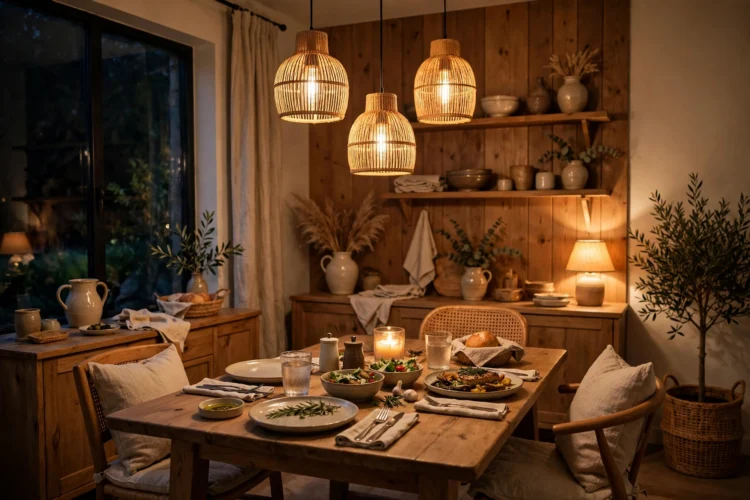
A pendant hung too high lights the ceiling. A pendant hung too low blocks the view across the table. The sweet spot is about 75 to 90 centimetres above the table surface, low enough that the light pools on the plates and high enough that people can see each other. Measure from the table, not from the floor, because table heights vary. Getting the pendant light over dining table height right matters more than the style of the pendant itself. If the pendant has a chain, adjusting it is a ten-minute job with a stepladder.
One pendant suits a small or round table. A long table needs two small pendants spaced evenly, or one long linear fixture that follows the shape of the table. The light should cover the table from end to end without leaving dark corners at the far places. These dining room pendant ideas show how different pendant shapes sit above different tables, and the right height matters more than the right style. A cheap pendant at the right height beats an expensive one hung too high.

A dimmer is the single best lighting upgrade for a dining room, and it costs less than a takeaway dinner. With dining room dimmer lighting, the same light works for homework at full brightness and for dinner at half brightness. The room changes character with one slide of a switch. Most dimmers fit a standard switch box, and an electrician can install one in under an hour. If the house is rented, ask the landlord first, because a dimmer is a small change to the wiring.
Check that the bulbs are dimmable before you buy the dimmer. Not all LED bulbs dim smoothly, and the wrong ones flicker or buzz at low settings. The packaging says whether a bulb is dimmable, and it is worth checking before you open the box. Set the dimmer to about half brightness for dinner and leave it there. The table will look warmer, the food will look better, and the room will feel smaller and more intimate.

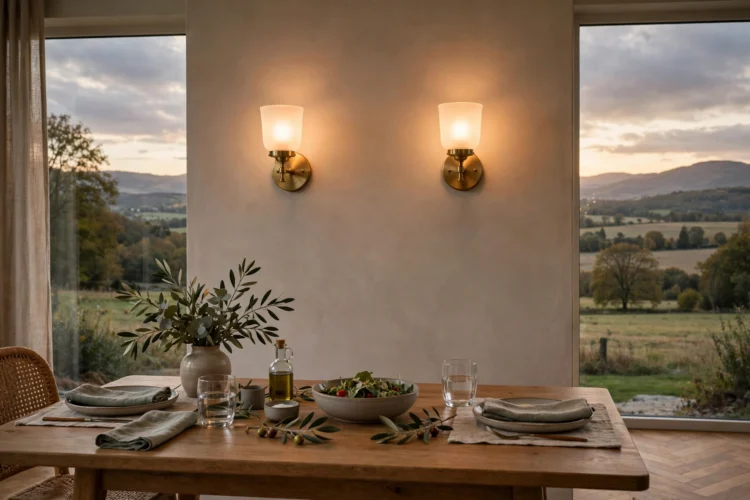
Overhead light alone makes a room feel flat. Wall lights add a second layer that softens the edges of the room and makes the walls glow. A pair of small wall lights on opposite walls, or one on each side of a sideboard, fills in the shadows that the pendant leaves behind. The light bounces off the wall instead of shining straight down, so it feels gentle rather than harsh. This is the layer most dining rooms are missing.
Choose wall lights with a warm bulb and a shade that hides the bulb from view. A bare bulb on a wall is a glare, not a glow. If the walls have no wiring for wall lights, plug-in wall lights or a pair of battery candles on the sideboard do a similar job without any installation. The dining room lighting ideas beyond the chandelier include wall light options that suit rooms where the ceiling fixture is already fixed and cannot change.
Bulb colour matters more than bulb brightness. Daylight white bulbs, the ones labelled 5000K or higher, make a dining room look like an office. Warm white bulbs, labelled 2700K, make the same room look like a restaurant. The difference is printed on the box, and it costs nothing to choose the warm one. Swap every bulb in the dining room to warm white and the room changes in one evening. This is the cheapest idea on this list, and it is the one people notice first.
Check the colour temperature on every bulb you buy for the dining room, including the ones in the wall lights and the sideboard lamp. A room with one daylight bulb and three warm bulbs looks wrong, because the eye catches the cold one first. Keep the spare bulbs in a drawer labelled with their colour, so nobody swaps a warm bulb for a daylight one by accident. Warm light also flatters skin tones, which is why restaurants use it and offices do not.
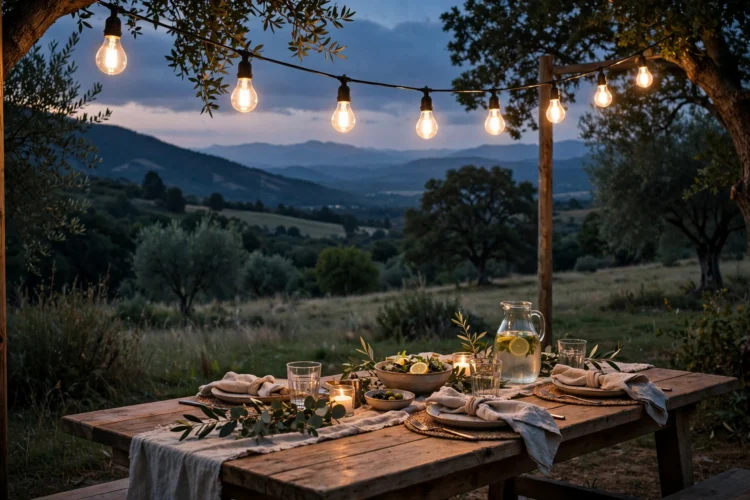
Candles are not a replacement for electric light. They are a layer on top of it. Dim the overhead light to half, then light two or three candles down the centre of the table. The candles add a warm, flickering light at table level, which is the level where faces are. That is layered dining room lighting in its simplest form: a dim overhead light plus a few candles gives the table a glow that neither light can produce alone. This is the oldest lighting trick there is, and it still works.
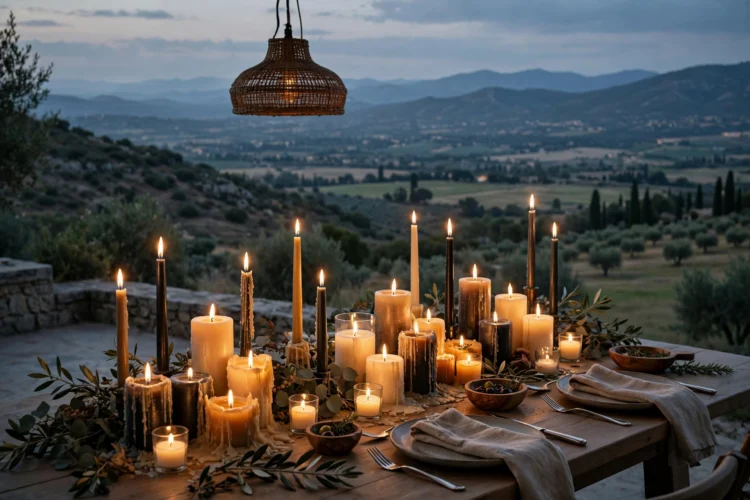
Use unscented candles so the smell of the food stays in charge. Pillar candles in glass holders are the safest choice, because the flame sits inside the glass and cannot catch the table runner. Battery candles work in houses with children or pets, and the better ones flicker in a way that is hard to tell from a real flame at arm’s length. Light the candles when you sit down, not an hour before, and blow them out before you leave the table. A rustic dining room lighting scheme with wood and warm metal suits candlelight especially well, because the materials catch the flame and glow with it.
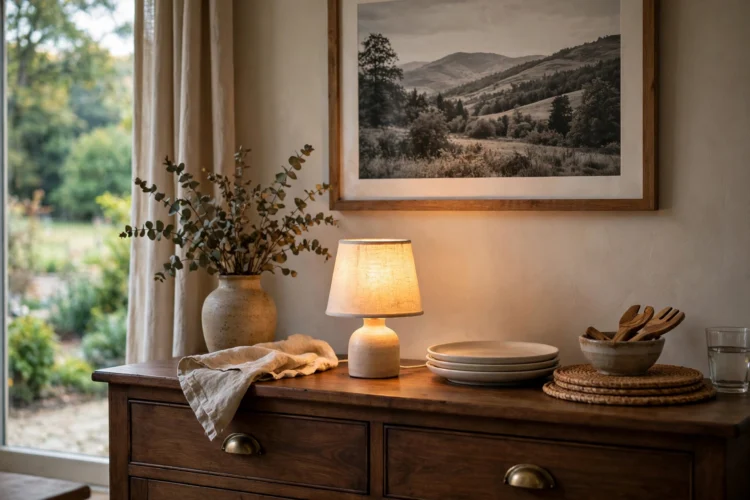
A small lamp on the sideboard adds depth to the room by putting light at a different height from the pendant. The pendant lights the table from above. The sideboard lamp lights the wall behind it from the side. Together they make the room feel three-dimensional instead of flat. Choose a lamp with a fabric shade, which softens the light, and a warm bulb, which keeps the colour consistent with the rest of the room.
Keep the lamp low and small. A tall lamp on a sideboard competes with the pendant and crowds the serving dishes. A short lamp, no taller than a wine bottle, is the right scale. If the sideboard holds serving dishes during dinner, put the lamp at one end where it will not be in the way. The lamp stays on through the meal and into the evening, so the room never goes dark when the candles go out. These kitchen chandelier ideas show how a second light source at a different height changes a room, and the same idea works in the dining room.
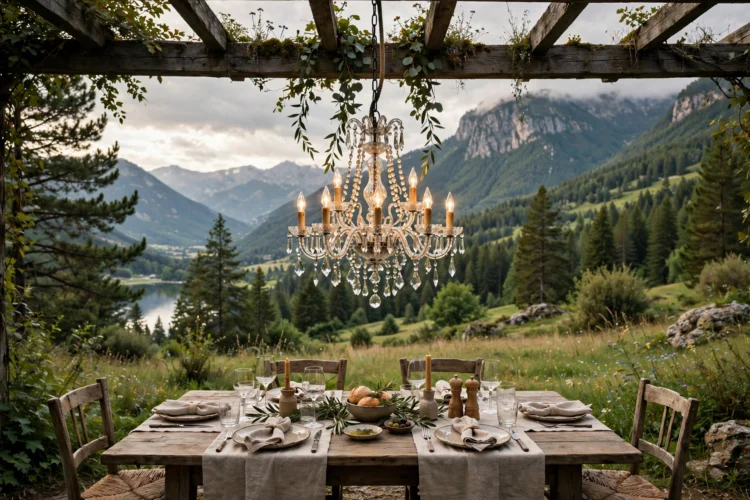
Every dining room needs one light that the eye lands on first, and a chandelier is the natural choice. The chandelier hangs over the table, so it is the first thing a guest sees when they walk in. Choose one that suits the size of the table, not the size of the room. A chandelier that is about half to two thirds of the table width looks right. Wider than the table, and it crowds the room. Narrower than a third, and it looks lost.
Hang the chandelier at the same height as a pendant, about 75 to 90 centimetres above the table, and put it on a dimmer so it can drop to a soft glow for dinner. A chandelier with exposed bulbs needs dimmable bulbs, or the glare will be uncomfortable at eye level. The chandelier is the room’s focal point, so keep the rest of the lighting quiet. One strong fixture and a few soft layers around it is the whole formula.
The real test of dining room lighting is a Tuesday. If the room only feels good on a party night, the lighting is not doing its job. The cozy dining room lighting in this article passes the Tuesday test because it is simple enough to use every night. Dim the overhead light, light two candles, and switch on the sideboard lamp. That is three seconds of effort, and the room changes completely. The family eats slower, talks longer, and the evening feels like it matters.
Start with the cheapest ideas first. Warm bulbs, then a dimmer, then candles. Add the wall lights or the sideboard lamp when you are ready. The pendant height is free to fix, and it makes the biggest difference of all. Layer the changes one at a time, and the dining room will feel like a different room within a week. The table is where the family gathers every night, so it deserves light that makes those nights feel warm. Finish the look with a pendant that suits the table, and these pendant light ideas show how the right fixture shape changes the light over any table in the house.