Physical Address
304 North Cardinal St.
Dorchester Center, MA 02124
Physical Address
304 North Cardinal St.
Dorchester Center, MA 02124

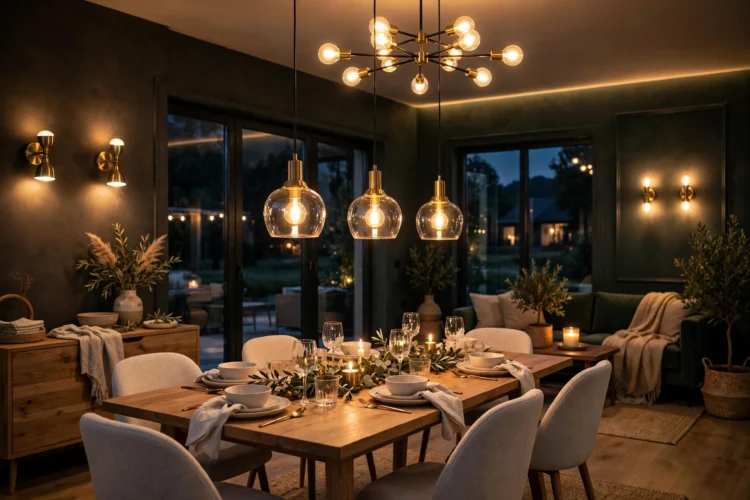
A chandelier is only one way to light a dining room. These twelve ideas layer pendants, sconces, and dimmers so the same room works for homework, weeknight dinners, and dinner parties.
A dining room works hardest at night, and one overhead fixture rarely covers every job. Homework needs bright, even light. A weeknight dinner wants something softer. A dinner party calls for a warm glow that flatters everyone at the table. The answer is layered dining room lighting ideas that mix several sources instead of leaning on a single chandelier. These twelve ideas show how pendants, sconces, dimmers, and daylight work together so the room shifts with the occasion.
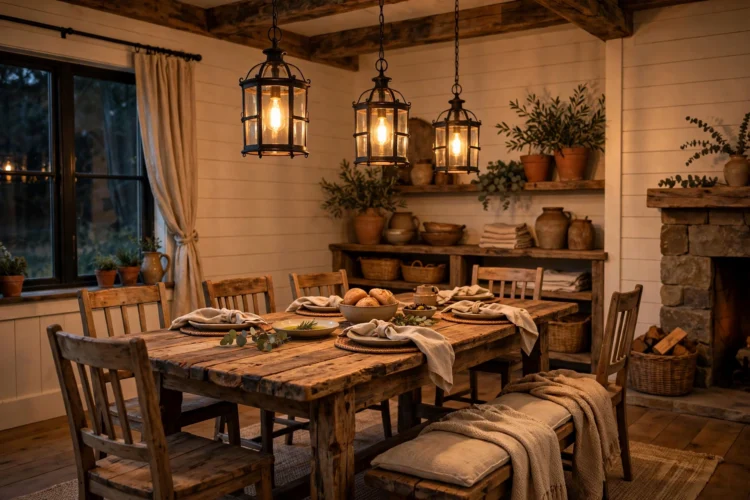
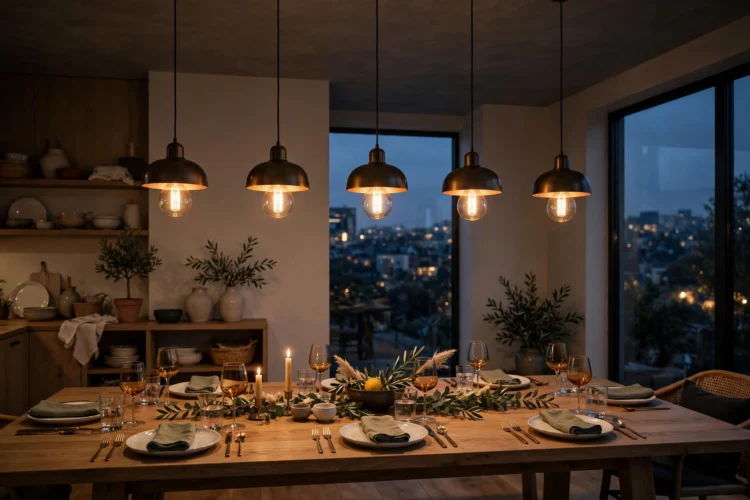
Three small dining pendant lights in a row spread light evenly along a rectangular table, which a single central fixture cannot do. Space the pendants 24 to 30 inches apart, center the row over the table, and hang them 30 to 36 inches above the surface. Glass pendants keep sightlines open, while metal shades focus light down onto the plates.
Pendants suit rooms where a chandelier feels too formal. Pick a shade shape that echoes the table, such as a dome over a round table or a cone over a long one. The same sizing thinking works in the kitchen, and pendant lights over a kitchen island show how spacing changes with the surface below.
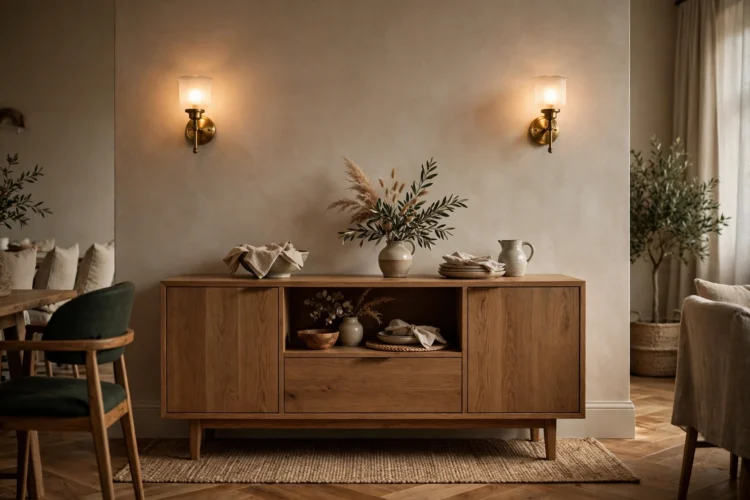
Dining room sconces add a second layer of light at eye level, which softens the room in a way ceiling fixtures cannot. Mount a pair on the wall above the sideboard or buffet, about 60 inches from the floor, so the glow washes the wall and the serving dishes. Sconces with a fabric shade throw a warm, diffused light that suits evening meals.
Use sconces to balance a room where the table sits under a single pendant. The wall light fills the corners and keeps the far side of the room from going dark. Plug-in sconces work when wiring is not an option, and battery-operated picture lights offer the same effect with no electrician.
A dimmer is the cheapest way to make one room serve many moods. Dimmable dining lights let you run the fixtures bright for homework and board games, then drop them low for dinner. Put the main fixture and the sconces on separate dimmers so each layer adjusts on its own.
Check that the bulbs are marked dimmable before you install the switch, since non-dimmable LEDs flicker or buzz. Warm white bulbs at 2700K suit dining rooms best, and a dimmer lets that warmth deepen as the light drops. If the room has several fixtures, a single smart dimmer can control them together from a phone or a wall switch.
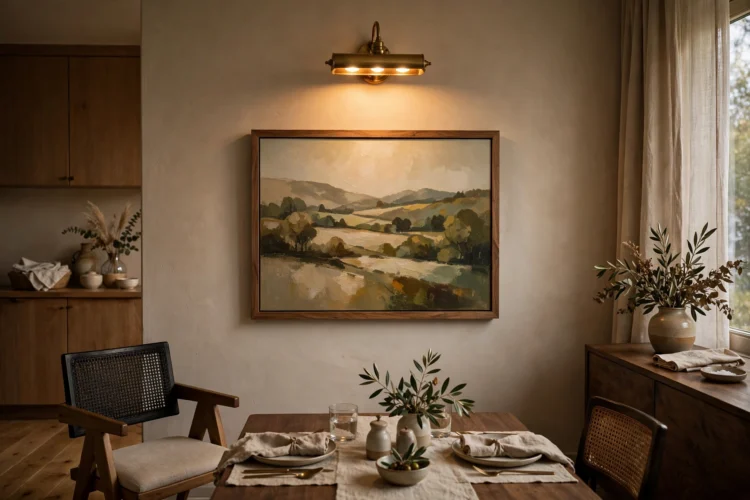
A picture light over a framed print or a mirror adds a quiet layer of light that makes the dining room feel finished. Mount it 6 to 9 inches above the frame, centered, so the beam washes the art without glare. Battery picture lights now last months on a charge, so this works even on a wall with no wiring.
The art light also gives the room a glow when the main fixture is off, which suits a late glass of wine or a slow breakfast. Pick a finish that matches the other metals in the room, such as brass with a brass chandelier or black with black pendants.
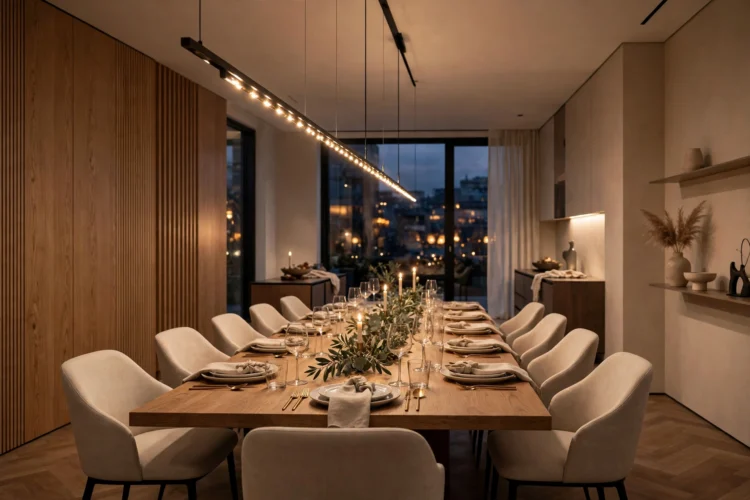
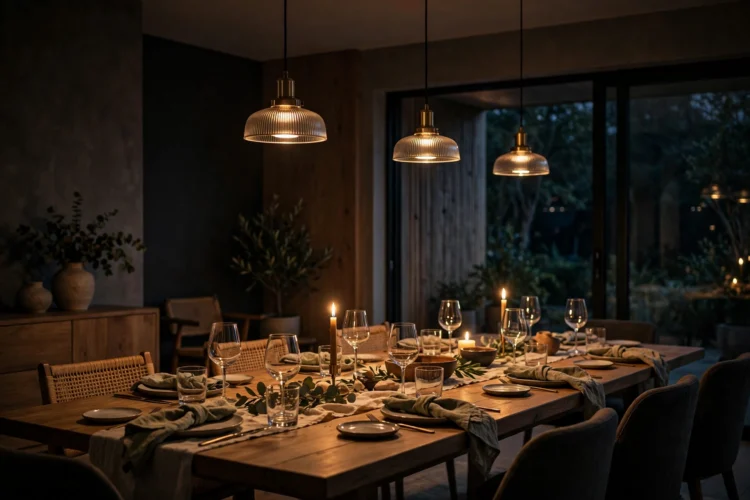
Candles are the oldest dining room lighting idea, and they still work. A row of taper candles down the center of the table, or a cluster of pillar candles in glass hurricanes, gives a warm point of light that flatters faces and food. Keep flames clear of the pendant above and away from anything flammable.
Use candles as a layer, not the only light. A dimmed pendant plus candles gives the table a glow while the rest of the room stays visible. Flameless LED candles offer the same flicker for households with kids or pets, and they pair well with a dimmer set low.
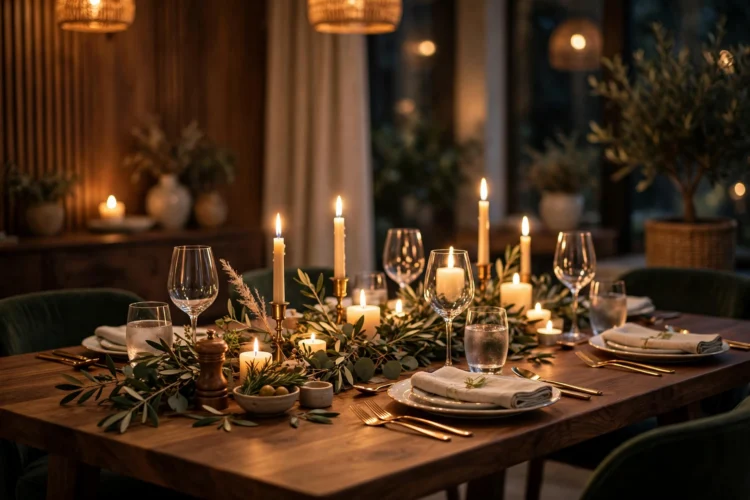
A floor lamp in the corner of a dining room fills a dark spot that ceiling fixtures miss. An arc lamp that curves over the table edge adds drama, while a slim torchiere bounces light off the ceiling for a soft overall glow. Place the lamp where nobody will trip over the cord, ideally behind a sideboard or a plant.
A floor lamp also lets renters add a lighting layer without touching the wiring. Pick a shade that matches the dining chairs or the table wood, and use a warm bulb so the corner light blends with the rest of the room.
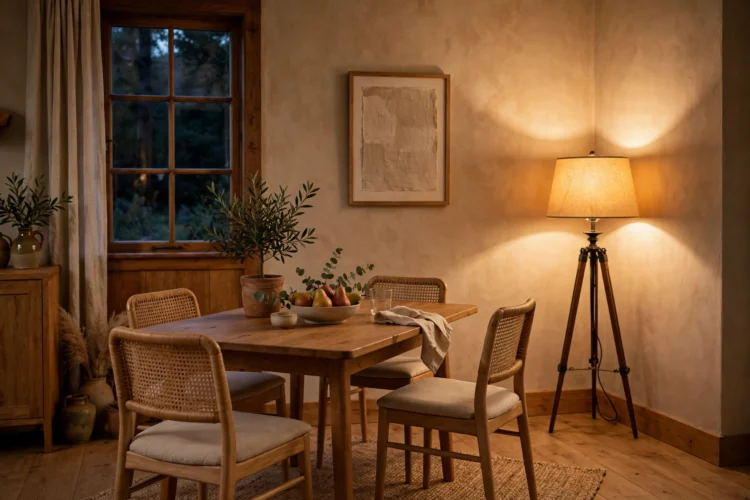
Recessed lights give a dining room even, shadow-free light without any fixture hanging into the room. Space them 4 to 6 feet apart in a grid, and keep them off the center line of the table so the light does not hit diners straight on the head. A dimmer is essential, since recessed lights on full brightness feel like an office.
Pair recessed lights with a pendant or a chandelier so the room has a focal point. The recessed layer handles the general brightness, and the pendant handles the mood. For a full breakdown of spacing and placement, see recessed lighting ideas for clean ceilings, which use the same rules.
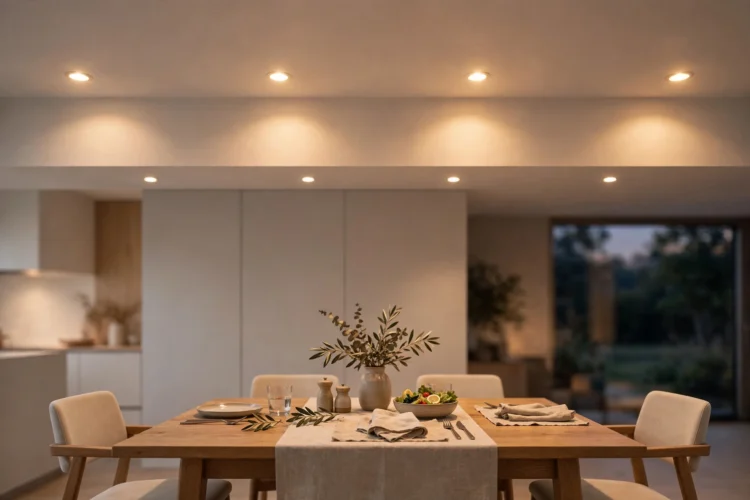
The best dining room lighting during the day is the window. Sheer curtains diffuse harsh sun into a soft glow, while a mirror opposite the window doubles the daylight. Keep the table near the window when the floor plan allows, and choose a light tabletop that reflects daylight instead of absorbing it.
For evening meals, the window becomes a dark panel, so the artificial layers take over. A sheer curtain still helps at night by softening the contrast between the lit room and the dark glass. This layering of daylight and lamps is what makes a dining room feel good at every hour.
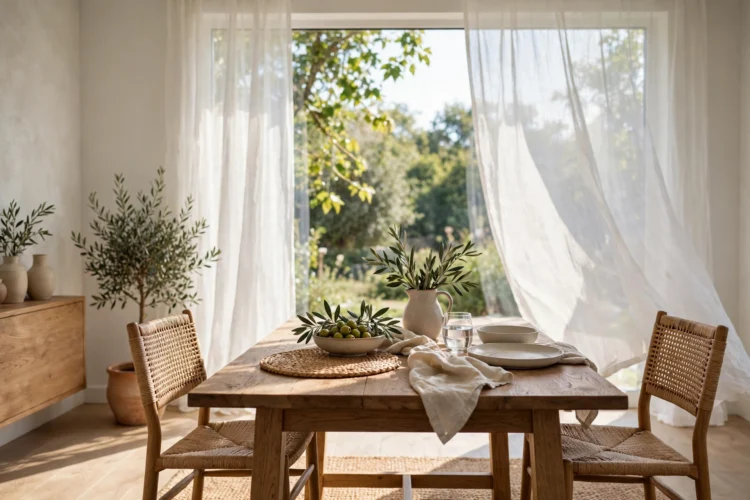
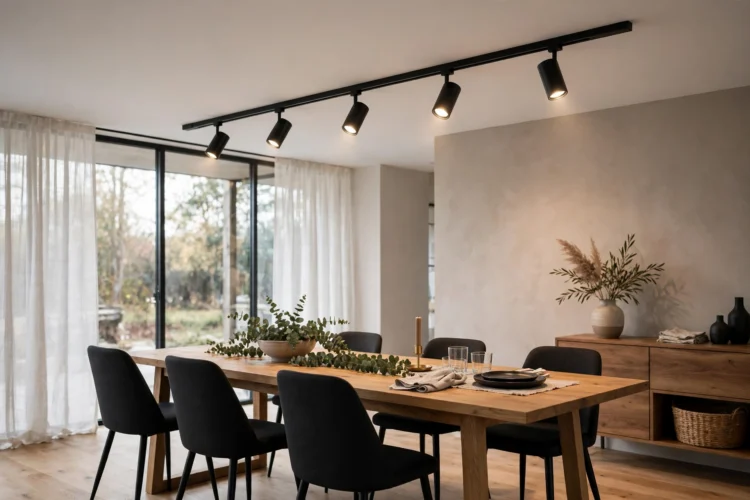
Track lighting suits a dining room that changes layout often. The heads pivot, so you can aim one at the table, one at the sideboard, and one at the art on the wall. A single track on the ceiling replaces several fixed fixtures and works well in a room with a sloped or low ceiling.
Choose a track finish that blends into the ceiling, such as white on a white ceiling, so the heads disappear and only the light shows. Use warm bulbs and a dimmer so the track reads as a dining room layer rather than a gallery fixture.
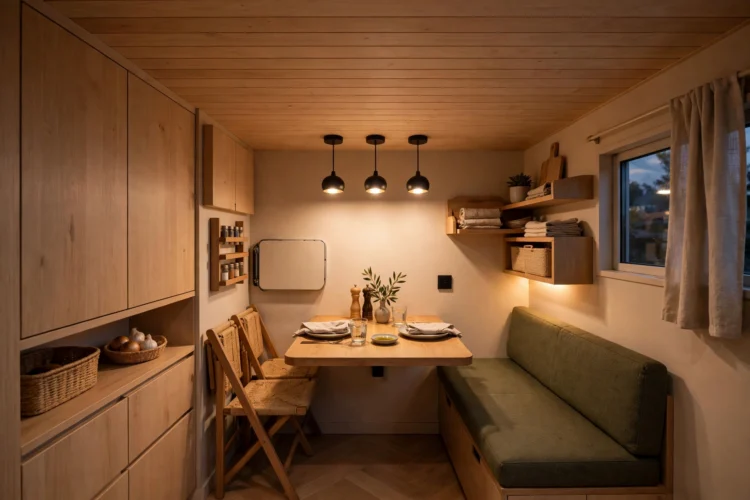
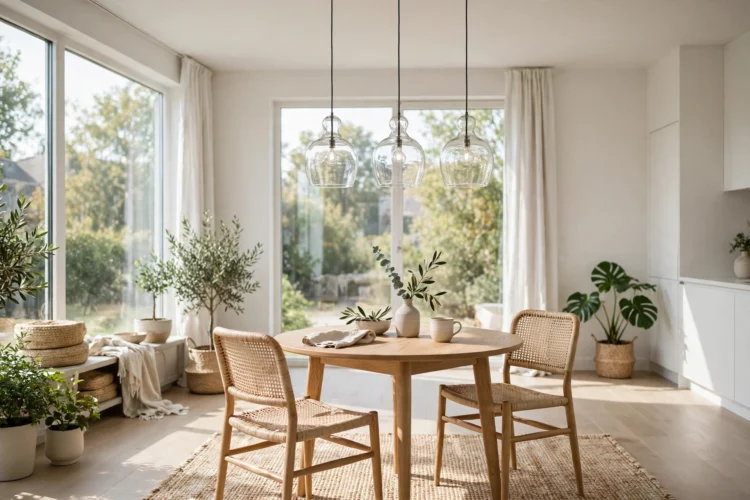
A small dining table needs a light that does not overwhelm it. A single glass pendant, or a pair of small glass pendants, gives a four-seat table a focal point while keeping the room feeling open. Glass disappears visually, so the fixture suits a tight room or a table tucked into a kitchen corner.
Hang the pendant 30 inches above the table and pick a bulb shape you like, since the glass shows it. Clear glass suits modern rooms, while seeded glass adds texture for a farmhouse table. If the table sits near the kitchen, match the pendant finish to the kitchen fixtures so the spaces connect, as in kitchen lighting ideas beyond the basic flush mount.
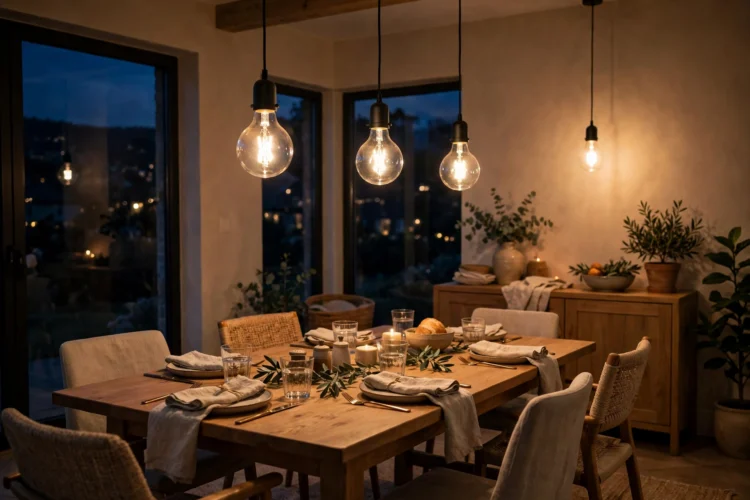
Smart bulbs let a dining room change color temperature through the day. Set them to a cooler white for homework in the afternoon, then warm them to 2700K for dinner. A single voice command or a phone tap shifts the whole room without touching a switch.
Smart bulbs work in almost any fixture, from pendants to sconces, so you can upgrade the light without buying new hardware. Group the dining room bulbs together in the app so one command dims them all at once. Keep one physical switch or remote handy for guests who do not know the system.
The best dining rooms combine three layers: a main fixture over the table, a wall or corner layer such as sconces, and a low layer such as candles or a picture light. Each layer sits on its own dimmer, so the room can be bright for a family project and soft for a dinner party. No single layer carries the whole job.
Start with the main fixture, add one wall layer, then add one low layer. Test the combination at night before you commit, since a room that looks good in daylight can feel flat after dark. For more inspiration on mixing fixture types, look at kitchen chandelier ideas for over the island and how they balance a statement piece with supporting light. The goal is a room that feels right at every hour, not just at one setting.
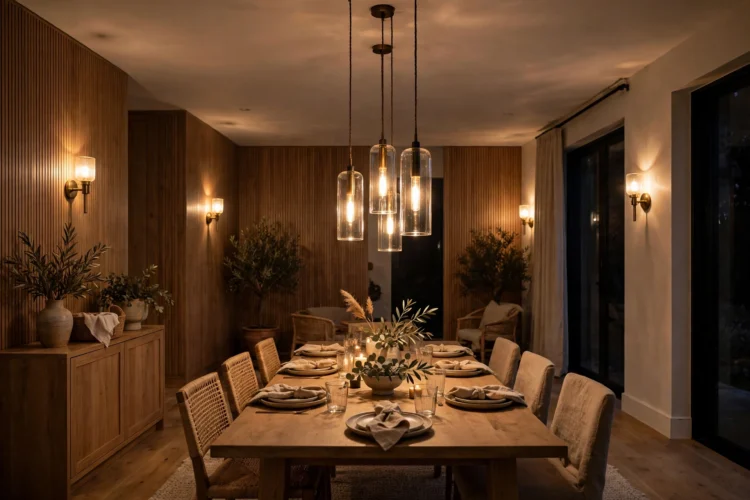
Skip the idea that one chandelier must do everything. Mix a main fixture with sconces, a dimmer, and a low glow, and the dining room will handle homework, weeknight meals, and dinner parties with the same ease. Start with one layer, test it at night, then add the next.