Physical Address
304 North Cardinal St.
Dorchester Center, MA 02124
Physical Address
304 North Cardinal St.
Dorchester Center, MA 02124

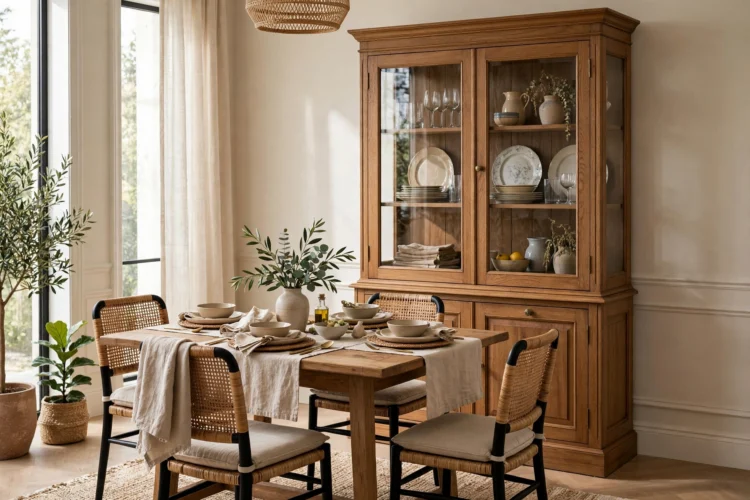
Eight china cabinet ideas that make a hutch earn its floor space, from painted interiors and mixed display to after-dinner bar duty.
Good china cabinet ideas do more than store plates. A hutch or china cabinet takes up real floor space, so it should earn that space with more than a row of dishes behind glass. The best cabinets work harder: they show off a few favorite pieces, hide the rest, pour drinks after dinner, or hold linens the kitchen cannot fit. This guide shares eight china cabinet ideas that turn a single piece of furniture into the hardest working spot in the dining room. Keep the cabinet you already own, change how you use it, and let it prove it belongs in the room.
Paint is the fastest way to change a china cabinet, and it costs less than any other idea on this list. A deep green, navy, or warm charcoal exterior makes a dated oak hutch look deliberate, while a painted interior in a pale color bounces light onto the dishes. The cabinet keeps its shape and gains a second life.
Sand lightly, prime well, and paint the interior a shade lighter than the outside so plates and glasses stand out. Leave the hardware alone if it suits the new color, or swap it for simple knobs that match the dining table. Two coats and a weekend turn a piece you considered selling into the best-looking furniture in the room. Pick a satin or semi-gloss finish for the outside, since it wipes clean after sticky fingers and dusty shelves, while a matte finish shows every mark. If the cabinet has carved details, a small brush reaches the grooves better than a roller, and a foam roller keeps the flat doors smooth. Let each coat dry fully before the next one, or the paint stays soft and chips the first time a plate slides against it.
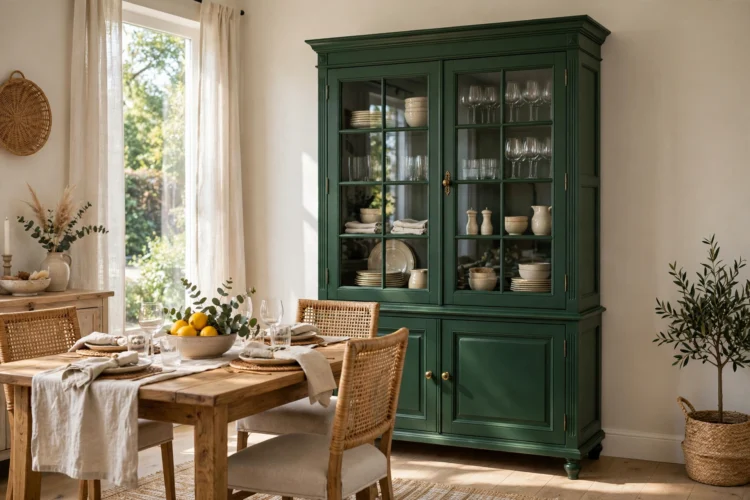
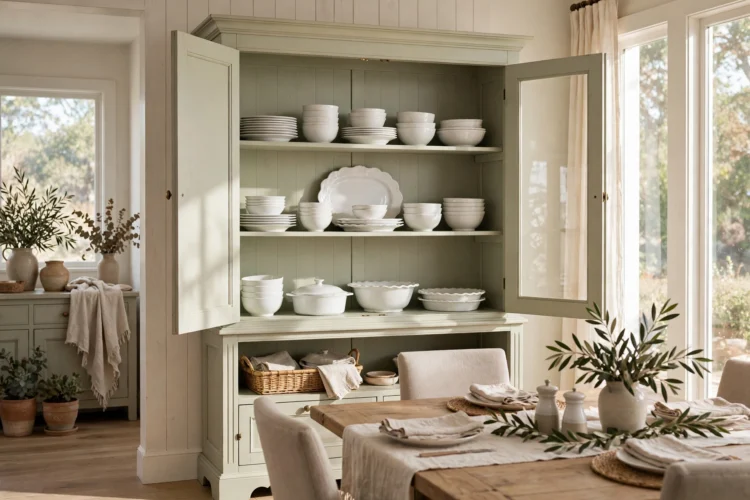
The inside of a china cabinet does more visual work than the outside, because that is where eyes land. A soft sage, dusty blue, or warm cream interior makes white plates glow and clear glass catch the light. Dark interiors do the opposite job well, and they make gold-rimmed china and brass pieces look richer.
Test the color with a single shelf first. Paint one shelf, load it with dishes, and live with it for a week before you commit to the whole cabinet. Removable wallpaper on the back panel gives the same effect without paint, and you can peel it off when tastes change. A painted sample board held against the dishes helps too, because the color that looks right on the wall can look different behind glass.
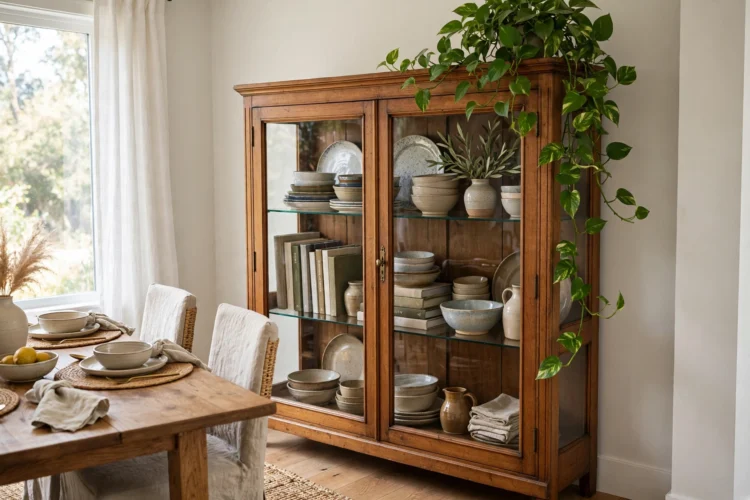
A cabinet full of matching dishes reads like a museum shelf, and nobody relaxes next to a museum. Mix the display instead. Stand plates on the top shelf, stack bowls on the middle shelf, lean a cookbook against the side, and tuck a small trailing plant into the corner. The mix makes the cabinet look used and loved rather than staged.
Leave breathing room on every shelf. A shelf packed edge to edge looks like storage, while a shelf with one gap looks like a display. Rotate the pieces with the seasons if you enjoy that, or leave the arrangement alone once it works. A plate wall nearby can carry the pieces that do not fit inside, and it turns spare china into art.
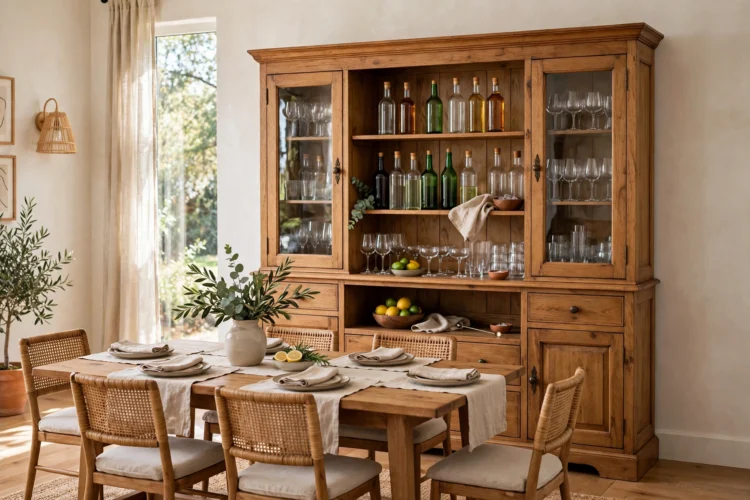
A china cabinet makes a natural drinks cabinet because it already has glass doors, shelves, and a lock. Move the everyday dishes to the kitchen, then give the cabinet a new job: bottles on one shelf, glasses on the next, and a small tray for mixing on the shelf below. The doors close, the bottles stay dust-free, and the bar disappears when dinner ends.
Add a strip of battery lights under the top shelf so the glasses glow when the doors open. A china cabinet bar stays tidy when you keep the setup simple, with one bottle of each type you actually drink, and the cabinet stays a bar instead of a liquor store. If the cabinet sits far from the table, a bar cart can ferry drinks the last few steps without a second trip.
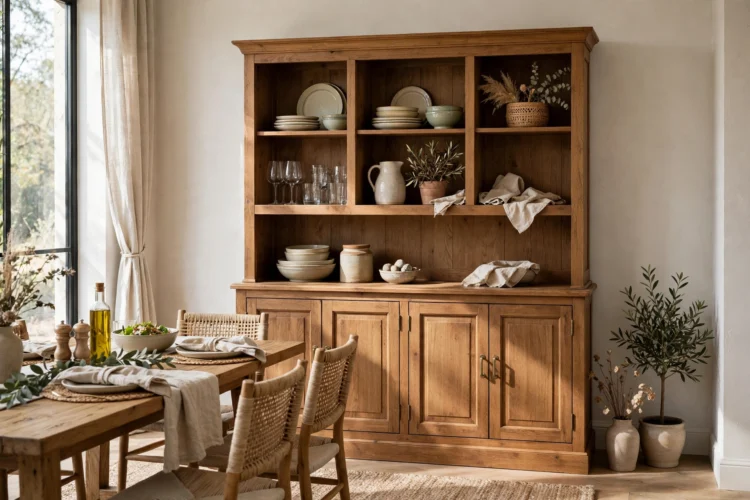
Many hutches split into two parts, and that split is the whole trick. Keep the top open for display and let the closed base do the heavy work. The base swallows tablecloths, placemats, and the serving dishes that never look good on a shelf. Guests see the pretty part, and the rest stays behind doors.
If the base has drawers, give the top drawer to cutlery and napkin rings so setting the table takes one trip. Line the drawers with washable fabric so crumbs and drips wipe out in seconds. This split is the reason hutches outlast open shelving in busy dining rooms. Of all the hutch decorating ideas here, the split top and base is the one that survives busy family life.
Glass doors show every fingerprint and every crowded shelf. Swap the glass for fabric panels and the cabinet turns quiet and soft. Linen panels in a color pulled from the dining room rug hide the clutter inside while the wooden frame keeps the cabinet looking like furniture.
Mount the fabric on a simple frame that drops into the door opening, so you can swap it back to glass later. Choose a washable fabric, because dining rooms collect dust and cooking smells. The panels also soften the sound in a room full of hard surfaces, which is a small bonus nobody plans for. Vacuum the panels with a brush head once a month so dust does not settle into the weave.
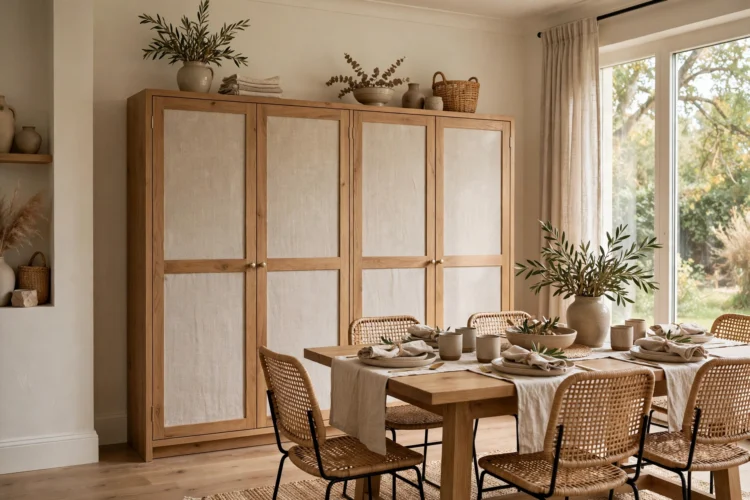
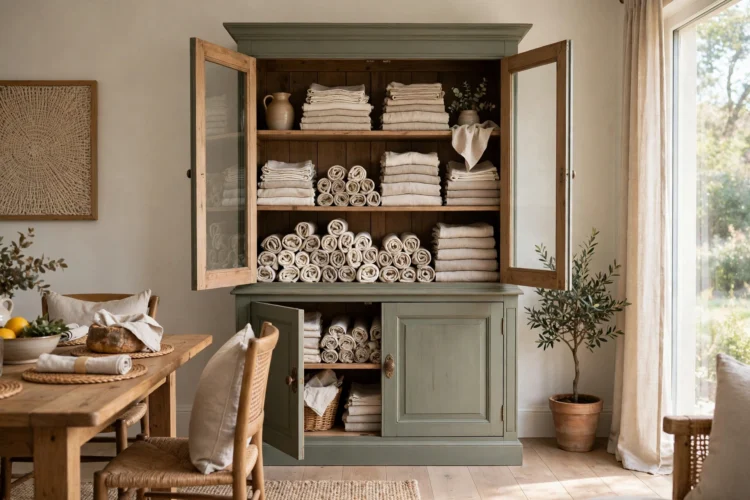
Table linens need a home, and the kitchen rarely has room for them. Give the whole hutch to linens instead of dishes. Fold tablecloths by size on the shelves, roll napkins into the drawers, and keep runners in a basket on the bottom shelf. Everything for setting the table lives in one place, at the table.
Cedar blocks or lavender sachets inside the cabinet keep linens fresh without perfume that drifts into food. Label the shelves by size if the household shares the ironing, so the right cloth comes out on the first try. The dishes move to the kitchen, and the dining room gains a linen closet that looks like furniture.
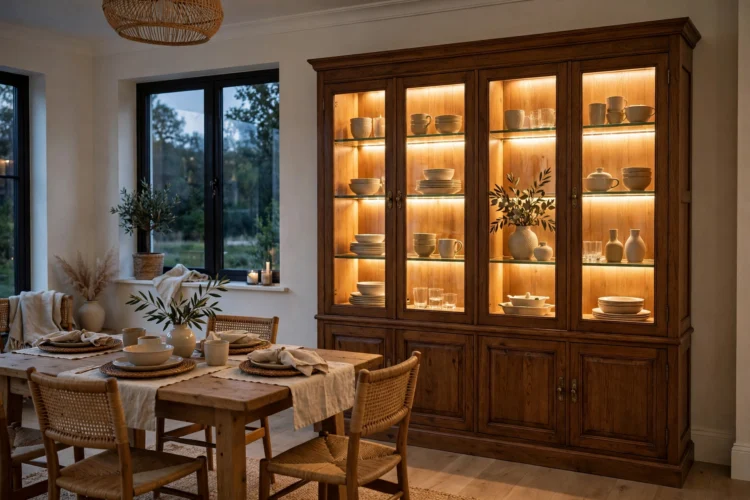
A dark cabinet swallows dishes and makes the whole wall look heavy. Light fixes it. A slim LED strip under each shelf, or a single puck light on the top shelf, turns the cabinet into a soft glow in the evening. The dishes look better, the room feels warmer, and the cabinet reads as a feature instead of a storage box. The glow also helps at breakfast, when the cabinet lights make a dark winter morning feel warmer.
Battery lights with a remote cost little and need no electrician, which suits a rented home or a cabinet you might move. Warm white light flatters wood and china, while cool white makes both look grey. Finish the top of the cabinet with a simple arrangement, and borrow a few sideboard styling ideas to keep the surface above the cabinet calm. A motion sensor strip that switches on when the door opens saves batteries and feels like a small luxury every evening. Stick the strip toward the front edge of the shelf so the light falls on the dishes instead of the back panel, and keep the battery pack hidden behind a stack of bowls. Replace the batteries twice a year, the same week you check the smoke alarm batteries, and the glow never fades mid-dinner.
A china cabinet earns its floor space when it does more than hold plates. Paint it, mix the display, give it bar duty, or turn it into a linen closet, and the piece stops being furniture you walk around. It becomes the part of the dining room you reach for every day. Start with the change that costs least, usually paint or light, and let the cabinet show you what it can do before you spend more.