Physical Address
304 North Cardinal St.
Dorchester Center, MA 02124
Physical Address
304 North Cardinal St.
Dorchester Center, MA 02124

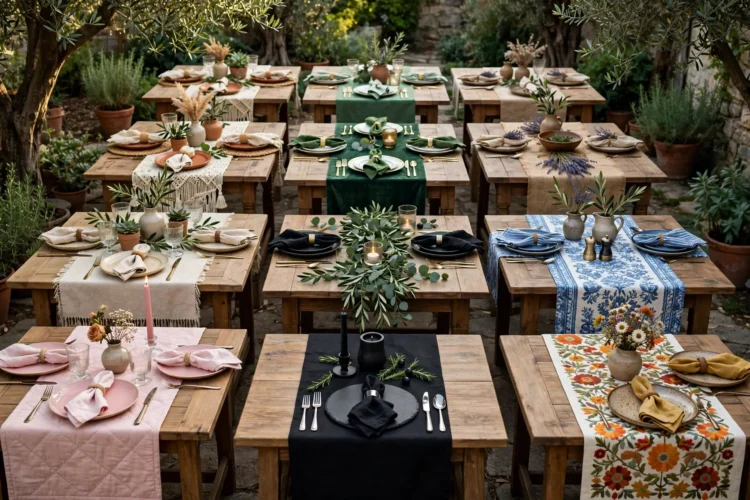
One strip of fabric can change the whole table. These nine runner ideas cover lengths, off-center placements, and material swaps for every season.
These table runner ideas start from a simple fact: a runner is the cheapest way to change a table without buying new dishes. One strip of fabric sets the color, the texture, and the mood, and you can swap it in five minutes before guests arrive. The trick is getting the length right, choosing a material that suits how you actually eat, and placing it with intent instead of just laying it down the middle and hoping.
A good table runner length leaves an overhang of about six to twelve inches at each end, so the runner looks finished instead of cut short. Measure your table, add the overhang, and write the number down before you shop, because guessing is how runners end up too short. The nine ideas below cover classic placement, off-center looks, layering, and seasonal swaps that work with the plates and chairs you already own.
Table runner length decides whether the whole table looks polished or slightly off. For a standard dining table, the runner should run the full length of the tabletop plus six to twelve inches of overhang at each end. A runner that stops at the table edge looks unfinished, while one that hangs to the floor gets caught on chairs and pulled during dinner.
Measure from end to end, then add twelve to twenty-four inches total for the overhang and divide it evenly. If your table extends with leaves, measure it in the size you use most, and keep a longer runner for holiday seating. A linen table runner in a neutral color forgives a slightly short overhang better than a bold pattern does, because the eye reads texture before it reads length. When in doubt, go longer: a generous overhang always looks more deliberate than a stingy one.
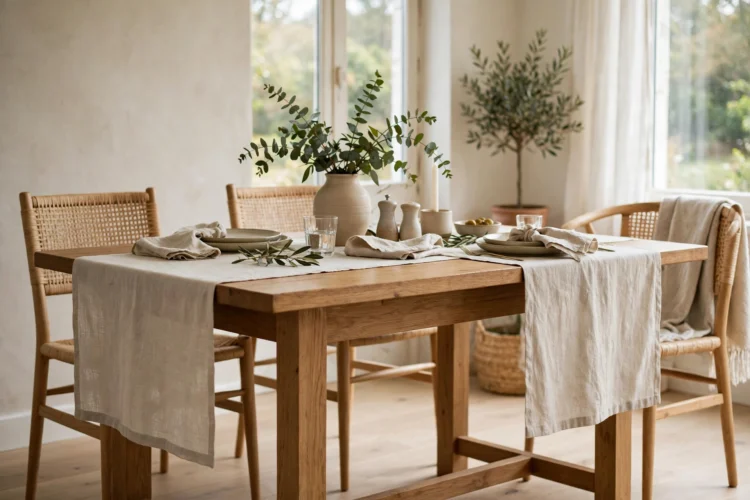
A linen table runner is the workhorse of the dining room. Linen wrinkles a little, and that is part of its charm, because the soft creases read as relaxed and lived in rather than sloppy. Choose a natural flax, soft white, or warm oatmeal tone for everyday use, and let the dishes and food carry the color.
Wash linen runners on a gentle cycle and hang them to dry, then iron lightly while still damp if you want a crisp look, or leave the wrinkles for a casual dinner. Keep a spare neutral runner folded in the sideboard so you can swap a stained one in seconds. A linen runner also protects the tabletop from hot serving dishes, which matters more than most hosts admit. Pair it with a live edge wood table and the contrast is striking; these live-edge dining table ideas show how wood grain and soft linen balance each other.
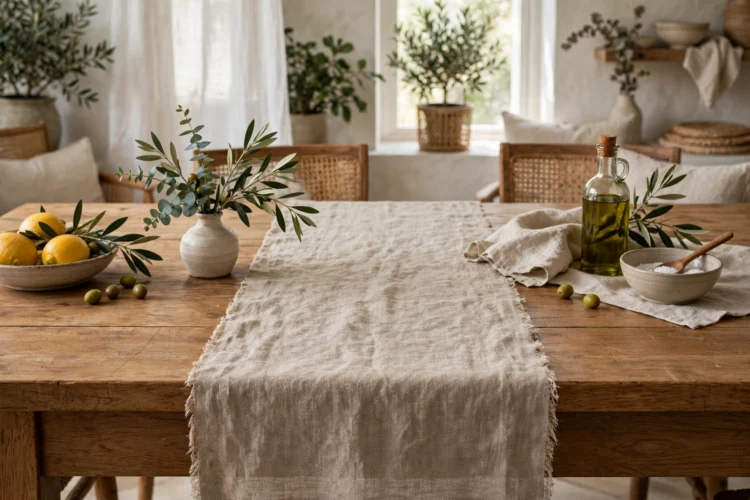
An off-center runner breaks the symmetry of a long table and gives it a modern, styled feel. Shift the runner a few inches to one side so it sits under the plates on one side and leaves bare wood on the other, or run it across the width of the table under two opposite place settings instead of down the middle. The shift should look deliberate, so keep the offset consistent and align the runner with the table edge.
This placement works best on a rectangular table with a simple centerpiece, because a busy centerpiece plus an off-center runner competes for attention. Use a solid color or a subtle stripe, and keep the plates and glasses in their usual spots so guests never wonder where to sit. An off-center runner also suits a narrow table where a centered runner would leave almost no bare wood visible. Step back after placing it and check the balance from the doorway, since that is the view guests get first.
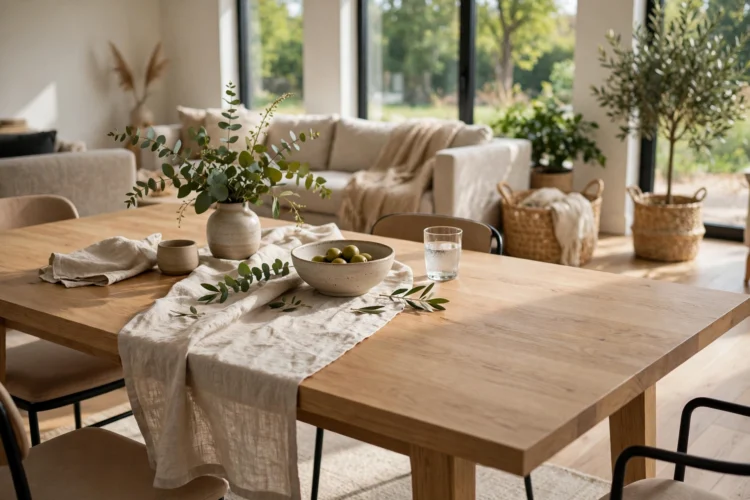
Crossed runners create a grid that suits family style meals, where dishes pass hand to hand and the table feels gathered rather than staged. Lay one runner down the length of the table and a second one across the width, crossing at the center. The cross marks the middle of the table and gives the centerpiece a natural frame.
Use two runners in the same fabric family but different tones, or one patterned runner with one plain one, so the cross reads as layered rather than clashing. Keep the overlap flat and smooth, and tuck the crossing point under a low bowl or tray so it stays put during dinner. This look works well for a Thanksgiving table too; these Thanksgiving table setting ideas use layered textiles to build warmth without new dishes. Remove one runner if the table feels crowded, because the cross should add structure, not clutter.
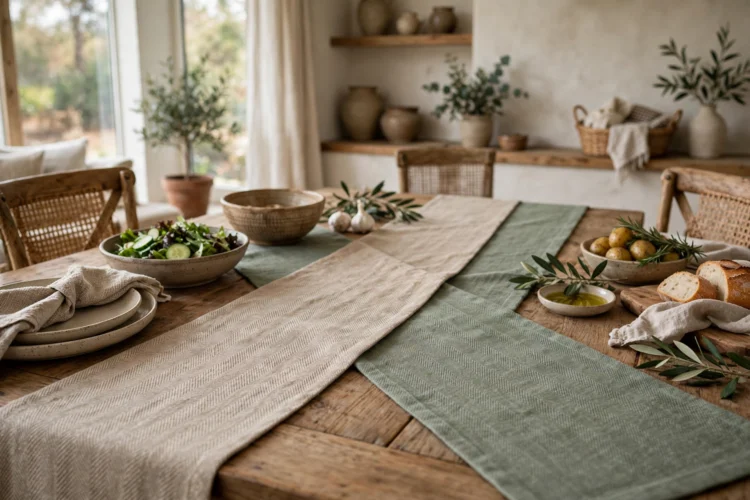
Layering a runner over a tablecloth gives a plain cloth a second life. Start with a solid tablecloth in a neutral tone, then add a runner in a pattern, a stronger color, or a different texture down the center. The cloth softens the table edges and hides an old tabletop, while the runner adds the personality.
Keep the runner narrower than half the table width so the cloth shows on both sides, and match the overhang of the runner to the drop of the cloth so the two layers look related. A patterned runner over a white cloth suits spring, while a deep green or burgundy runner over a cream cloth suits autumn and winter. Iron both layers before guests arrive, because wrinkles multiply when two fabrics stack. This is also the easiest way to dress a pedestal table, and these pedestal dining table ideas show how a layered top works on a smaller footprint.
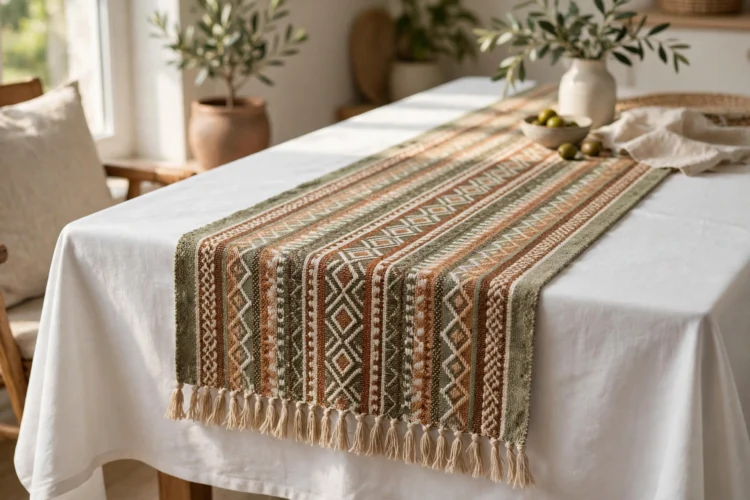
A seasonal table runner is the lowest effort way to mark the seasons at home. Keep four runners, one per season, and swap them when the light changes: fresh green or floral for spring, airy white or pale blue for summer, warm rust or ochre for autumn, and deep green or red for winter. The swap takes five minutes and the table feels new every time.
Store the off-season runners folded flat in a drawer with a cedar block or lavender sachet to keep them fresh. Choose washable fabrics for the runners you use most, and save delicate embroidery for the holiday runner that only appears once a year. A seasonal runner does not need matching napkins or placemats; one strong seasonal color plus your everyday dishes is enough. For spring, pair a floral runner with fresh stems and these spring table setting ideas to complete the look without buying a new set of plates.
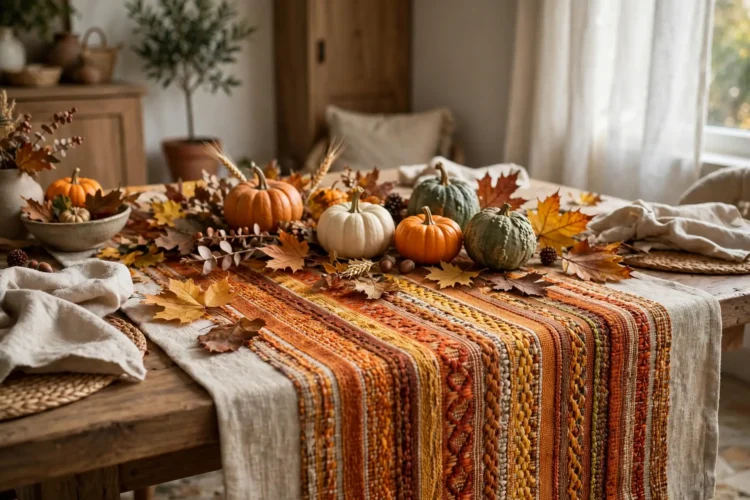
A runner defines a small table by giving the eye a clear center line. On a round or square table for four, a short runner across the middle marks the shared space and keeps the centerpiece from drifting. Choose a runner that covers about a third of the table width, so plates still have plenty of bare wood around them.
On a small table, skip the long overhang and let the runner end just past the table edge, or use a runner that stops at the edge entirely and reads more like a placemat strip. A bold pattern works here because the area is small and the pattern never overwhelms the room. Keep the centerpiece to one low item, a small vase or a bowl of fruit, so the runner and the centerpiece share the middle without fighting. A defined center also helps when the table doubles as a workspace during the day.
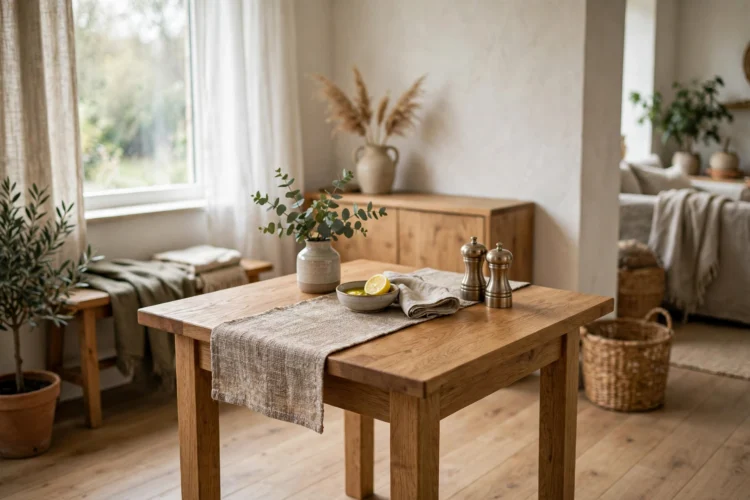
The prettiest runner in the store is useless if you are afraid to use it. For real family dinners, pick a runner you can wash without worry: cotton, cotton linen blend, or a treated fabric that shrugs off red sauce and coffee. Dark patterns and textured weaves hide small stains between washes, while a pale silk runner belongs on a table where nobody under ten eats.
Check the care label before you buy, and wash the runner after a messy meal instead of letting stains set overnight. Keep a stain stick in the kitchen drawer and treat spots right after dinner, while the fabric is still damp. A washable runner also lets you use the dining table for homework, crafts, and board games without covering it in plastic. When the runner looks tired after many washes, dye it a deeper color or cut it down for a smaller table instead of throwing it away.
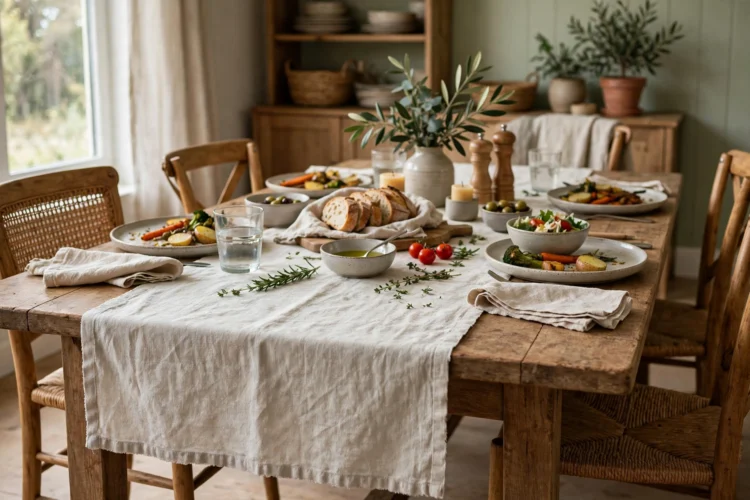
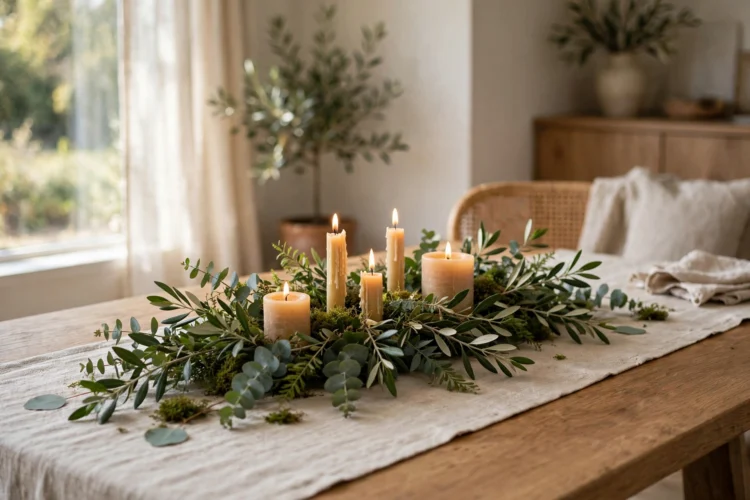
A runner looks best with a centerpiece that sits on it, not beside it. Place a low tray, a wooden board, or a row of small vases directly on the runner, and let the fabric frame the arrangement. The runner becomes the base of the display, which makes even a simple bowl of lemons look styled.
Keep the centerpiece low enough for conversation and narrow enough that plates fit on both sides. Three small items in a row, a candle, a vase, and a small bowl, fill a long runner without crowding it. Change the items with the season and keep the runner the same, and the table will feel fresh all year. A sideboard behind the table holds the extra pieces; these sideboard styling ideas show how to keep that surface ready for the next swap. Step back, check the whole table from the doorway, and remove one item if anything feels crowded.