Physical Address
304 North Cardinal St.
Dorchester Center, MA 02124
Physical Address
304 North Cardinal St.
Dorchester Center, MA 02124

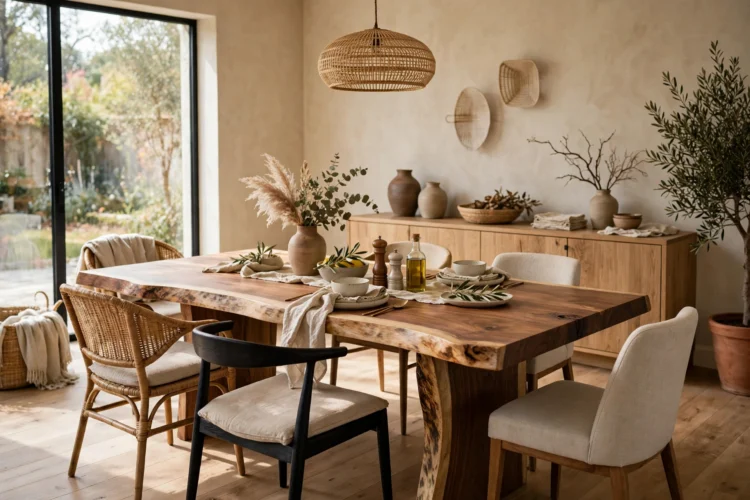
The slab is the star, so every other choice should stay quiet. These nine ideas cover slab selection, finishes, bases, and the styling restraint a live edge table needs.
A live edge dining table puts the tree on display. Live edge dining table ideas start with the slab itself: one cut of wood with the natural edge left intact, so the grain, knots, and curves of the tree become the decoration. No two slabs match, which is the point, and the table becomes the piece guests remember after dinner ends. This guide walks through nine live edge dining table ideas, from picking a slab and a finish to choosing a base and keeping the chairs and lighting quiet enough to let the wood lead. Buy the slab with the room in mind, and the rest of the room gets easier.
Slab selection decides everything else, so start there and take your time. Look for a slab with grain that moves across the whole piece rather than running straight, and check both faces for cracks that run through the full thickness. A slab between 36 and 42 inches wide seats people on both sides without reaching across a canyon, and a length of 72 inches seats six with elbow room.
Ask the seller how the slab was dried, because wood that still holds moisture will crack as it dries in your home. Kiln-dried slabs cost more and move less, while air-dried slabs need a moisture reading before you commit. A live edge slab table with a stable slab needs no apology and no cover, so the drying question is worth asking twice.
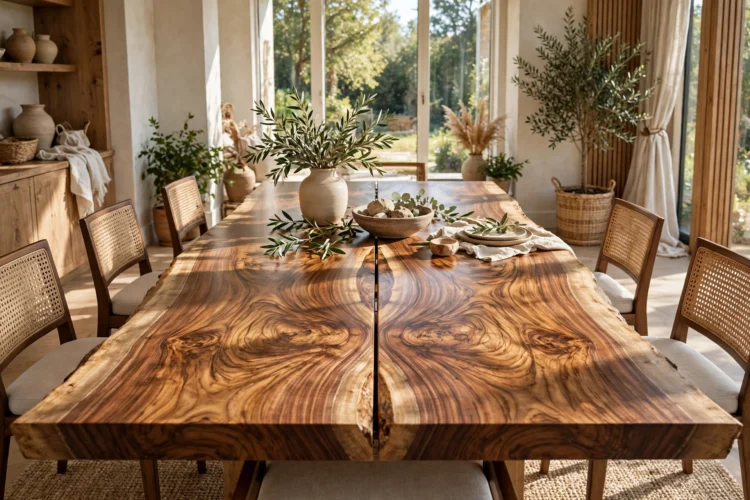
A book-matched top comes from one slab sliced down the middle and opened like a book, so the grain mirrors itself along the center seam. The result looks planned rather than random, and the matching grain gives a large table a sense of order that a single wide slab sometimes lacks.
Book matching also solves the width problem: two narrower slabs cost less than one very wide one and waste less of the tree. The seam needs a skilled glue-up to stay flat, so ask the maker how the joint is reinforced and whether the finish bridges the seam or leaves it visible.
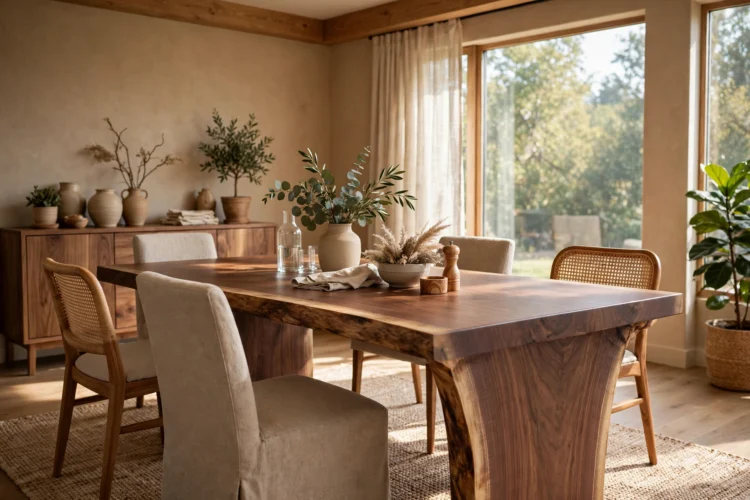
Walnut is the classic live edge choice because its grain runs from honey brown to near black in one piece, and it darkens gracefully with age. A walnut live edge table with a waterfall edge, where the wood continues down one side, turns the table into a sculptural piece that anchors a whole dining room.
Keep the rest of the room warm but plain: pale walls, simple chairs, and a rug in a single muted tone. Walnut pairs badly with busy patterns, so let the slab carry the pattern and keep everything else quiet.
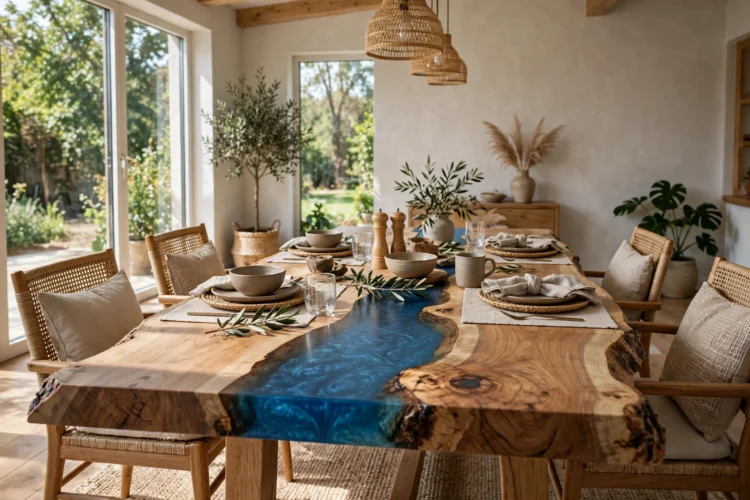
A river table fills the gap between two live edges with colored resin, so the wood looks like banks around a stream. Clear resin shows the edges best, while deep blue or black resin turns the table into a bolder statement. The pour must be free of bubbles and level with the wood, which takes a maker who has done it many times.
Resin scratches more easily than wood, so a river dining table belongs in a dining room rather than a workshop or a kids craft zone. Use placemats under hot dishes and coasters under glasses, and the resin will hold its shine for years.
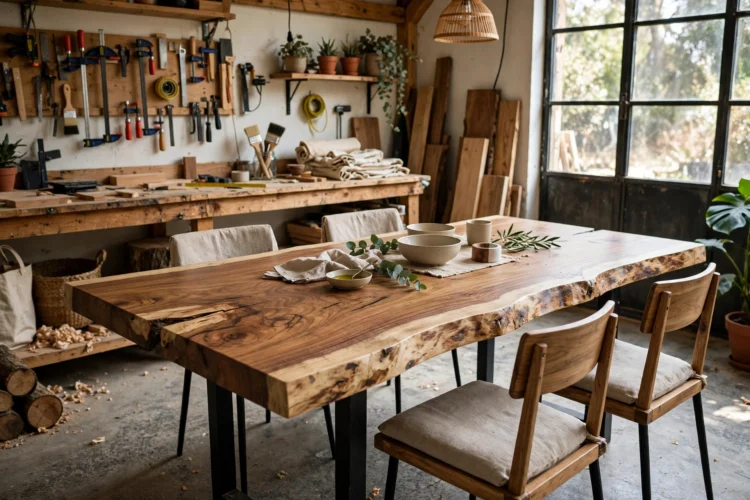
Oak brings a lighter, more open grain than walnut, and it suits rooms that already have pale floors or white walls. A raw oak slab on black steel legs gives the table a modern edge: the steel frame reads as a clean line under the rough natural edge, and the contrast makes both materials look better.
A steel live edge table base should bolt to the slab through slotted holes, which let the wood expand and contract with the seasons without cracking. If the base is welded solid with no give, the slab will fight it and lose, so check the mounting before you pay.
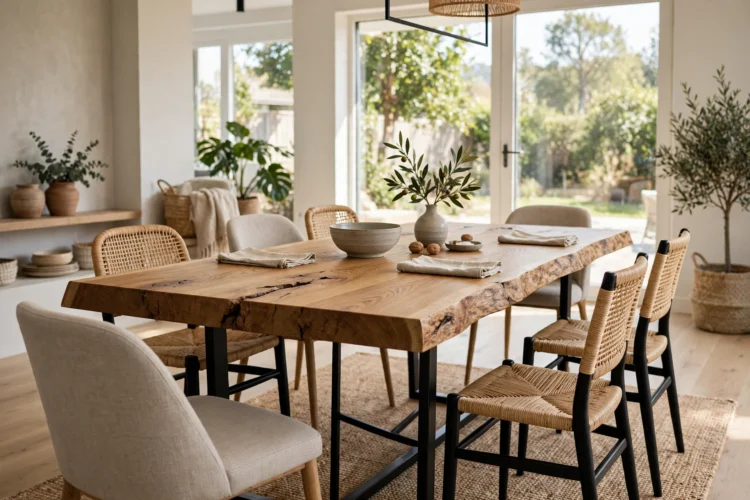
A bench on one side of a live edge table seats more people than chairs and slides fully under the top when dinner ends. Match the bench wood to the table species but let the bench edge stay simpler, so the table keeps its status as the main piece and the bench reads as support rather than competition.
A bench works best on the side that faces the wall or the room, where people slide in from one end. Keep chairs on the other side for guests who need a backrest, and the mix of seating keeps the table from looking like a matched set from a showroom.
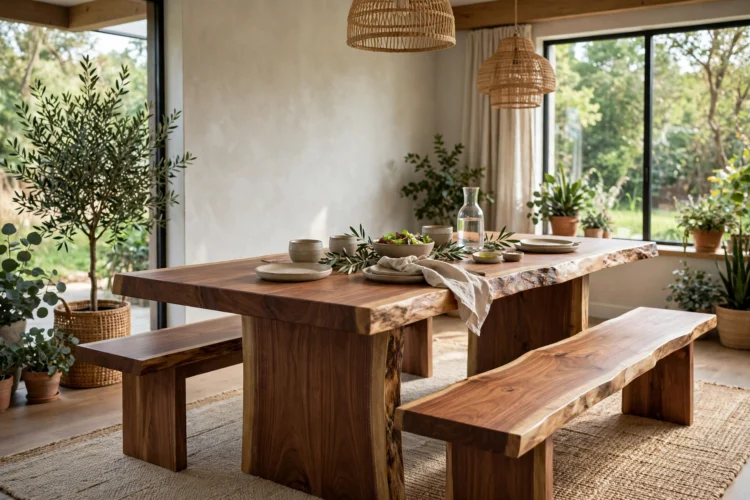
A matte oil finish soaks into the wood instead of sitting on top of it, so the table feels like wood under your hands and the grain stays visible. Oil finishes are easy to repair: a scratched spot gets a light sand and a fresh coat, while a lacquered top needs a full refinish for the same damage.
Oil needs reapplying once or twice a year in a busy dining room, which sounds like work until you compare it to living with a scratch you cannot fix. Wipe spills fast, skip silicone sprays, and the oil finish will deepen in color as the years pass.
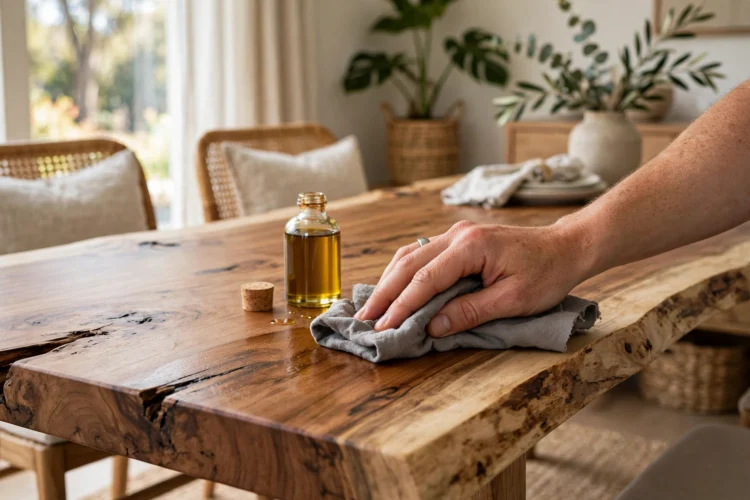
A statement slab needs quiet lighting, and one large pendant hung low over the center of the table does the job better than a chandelier with arms and crystals. The pendant pools light on the wood, shows off the grain at dinner, and leaves the sightlines across the table open.
Hang the pendant 30 to 36 inches above the tabletop so it lights plates without blocking faces. For rooms that want more glow, these dining room lighting ideas cover layers beyond the main fixture, and a dining room chandelier still works if the slab itself is plain and pale.
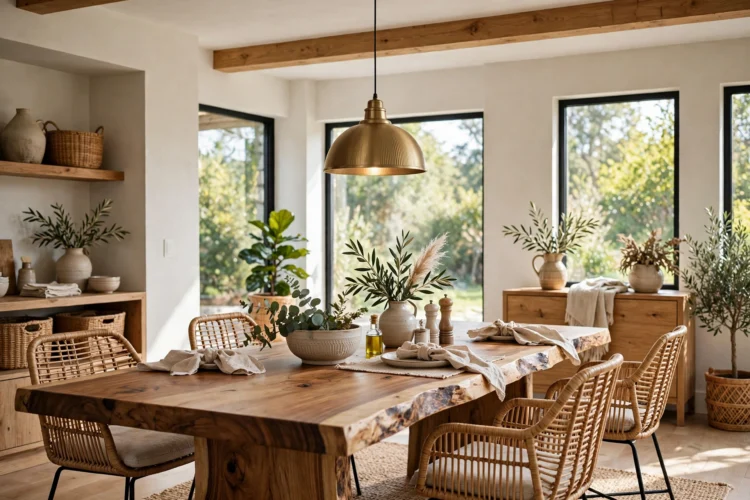
The rug under a live edge table should be large enough that chairs stay on it when pulled out, which means at least 24 inches of rug beyond the table on every side. Pick a flat weave in one quiet color, since a bold pattern under the table will fight the grain above it.
Chairs should be simple too: solid wood or plain upholstery in a single tone, with no carved backs competing with the live edge. If you want a table that grows with your guest list, these extendable dining table ideas show how a second slab section can stretch the table, and these dining room rug ideas help you size the rug so chair legs never catch the edge.
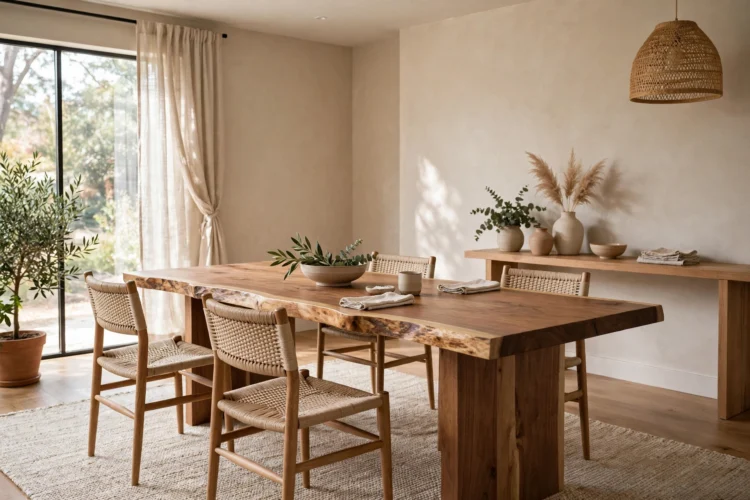
A live edge table rewards restraint. Pick a dry slab with grain you love, finish it so hands can feel the wood, and keep the base, chairs, and lighting simple enough to stay out of its way. The tree did the decorating already; the rest of the room only needs to stay quiet and let it show.