Physical Address
304 North Cardinal St.
Dorchester Center, MA 02124
Physical Address
304 North Cardinal St.
Dorchester Center, MA 02124

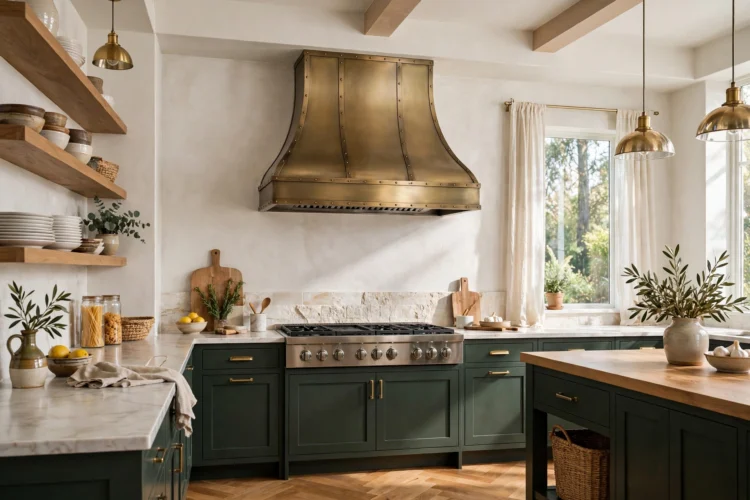
Eleven range hood styles, from smooth plaster and warm wood to bold color and hidden cabinets, with sizing and venting notes for each one.
A range hood covers a vent, but the best kitchen range hood ideas treat it as the focal point of the room. It sits at eye level, above the busiest spot in the kitchen, so its shape and finish set the tone for everything around it. A plaster hood softens a modern kitchen. A wood-clad hood warms a white one. A metal hood sharpens a rustic one. This list covers eleven styles, from quiet and built-in to bold and sculptural, with sizing and venting notes for each. Pick the style that fits your cooking habits first, then match the finish to your cabinets.
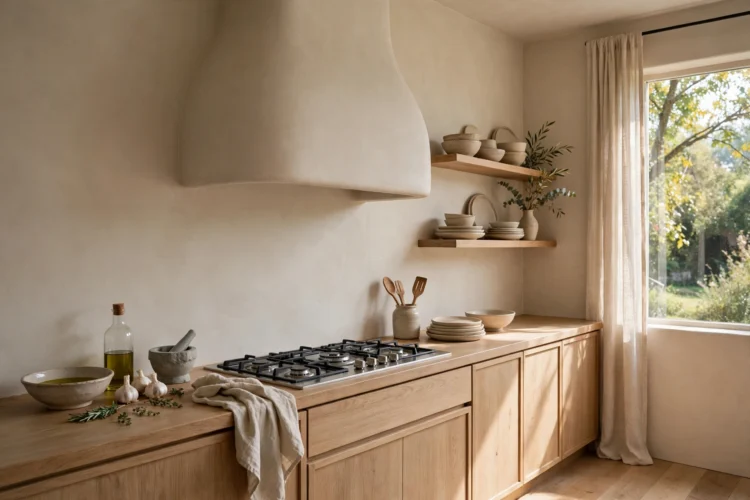
A plaster hood looks like part of the architecture rather than an appliance. The smooth, curved surface can be painted the same color as the wall, so the hood reads as a soft shape above the range instead of a metal box. It suits kitchens with plain cabinet fronts and warm, matte finishes. Ask your builder about the vent path before you commit, because a plaster hood hides the duct inside its shape, and the duct needs a straight run up or out. Keep the plaster sealed, since cooking steam and grease settle on it over time.
Size the hood a few inches wider than the range so steam from the front burners gets caught. A hood that is too narrow lets steam escape around the sides and leaves a film on nearby cabinets. Pair a plaster hood with simple hardware and quiet colors, and let its curved silhouette do the talking. It works well in kitchens inspired by white kitchen ideas that never look sterile, where texture matters more than color.
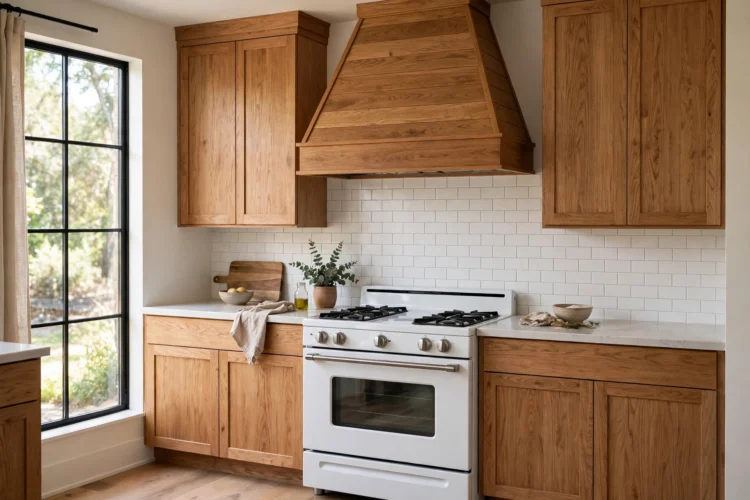
A wood range hood brings warmth to a kitchen that might otherwise feel cold. Light oak suits Scandinavian and modern kitchens, while walnut suits traditional rooms with dark floors. The wood can match the island, the floor, or a nearby beam, which ties the hood into the rest of the room. Keep the wood finish sealed against steam, and wipe it down regularly, because grease settles on horizontal surfaces first. A wood hood with a simple flat front feels calm, while one with trim and paneling feels more formal.
Choose a wood tone that already appears somewhere in the kitchen, so the hood looks planned rather than added. If your cabinets are white and your floors are oak, an oak hood bridges the two. Leave a small gap between the hood and the cabinets on each side, so the wood can move slightly with changes in humidity. This style pairs naturally with traditional kitchen ideas that never go out of style, where wood and classic proportions do the heavy lifting.
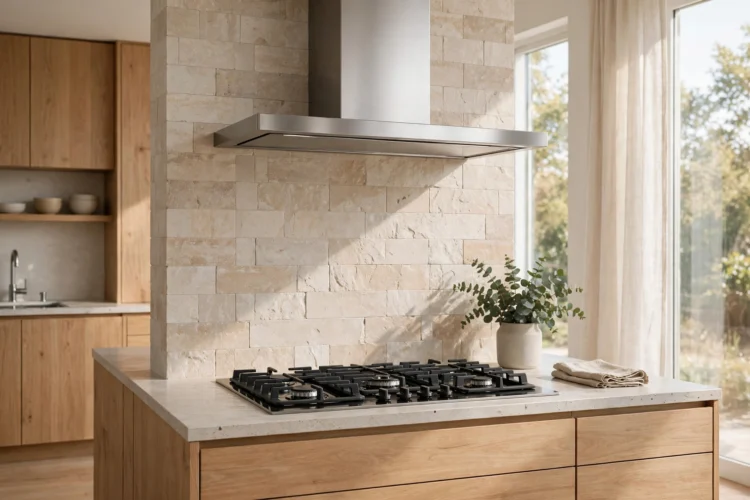
A slim stainless hood suits kitchens where the cabinets do the talking and the hood should stay quiet. The thin profile sits close to the wall, the surface wipes clean, and the finish matches most modern appliances. It works best over a standard-width range in a kitchen with flat-front cabinets and little trim. Check the fan noise rating before you buy, because slim hoods can sound louder than deep ones when the fan runs at full speed. A variable speed control helps, since most daily cooking needs only the low setting.
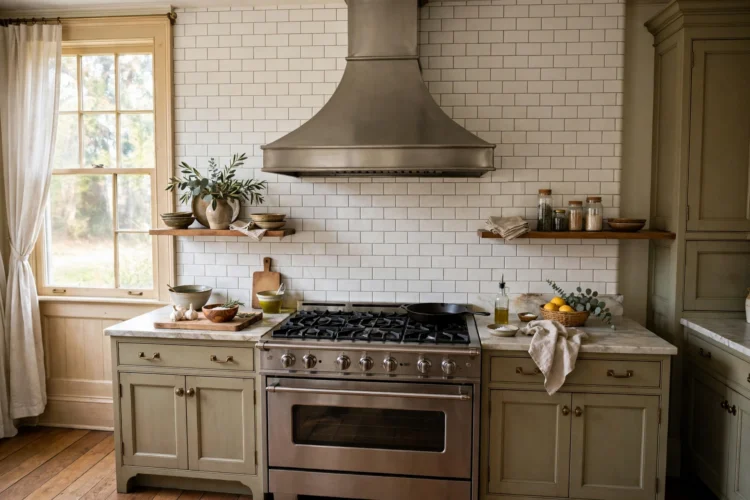
A chimney hood has a wide canopy at the bottom and a narrow stack rising to the ceiling, a shape that has suited kitchens for decades. It reads as purposeful and a little formal, which makes it a good fit for classic and transitional kitchens. The canopy should extend a few inches past the range on each side, and the stack should reach the ceiling without a gap, or be trimmed neatly where it meets the ceiling. A chimney hood in white painted metal feels softer than one in polished steel, and it blends with painted cabinets.
Venting matters more than looks here. A chimney hood can vent outside through the stack, which is the most effective option, or recirculate through filters, which is simpler but less powerful. If you cook with a wok or sear meat often, outside venting is worth the extra work. Clean the grease filters monthly by soaking them in hot soapy water. A chimney hood also pairs well with transitional kitchen ideas that bridge classic and modern, where one classic shape anchors a mostly modern room.
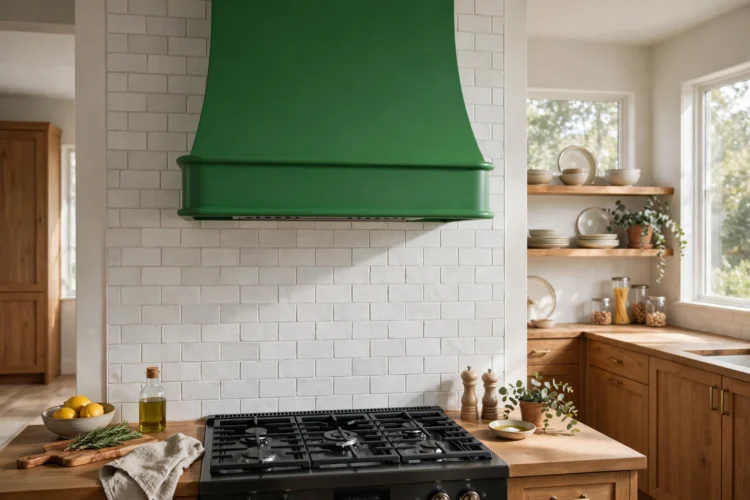
A statement range hood turns the vent into the room’s artwork. Deep green, navy, or matte black paint on a simple hood shape gives a plain kitchen a clear focal point without changing the cabinets. The trick is to keep everything else quiet: plain cabinet fronts, a simple backsplash, and hardware in one finish. When the hood carries the color, the rest of the kitchen can stay calm, and the room feels designed rather than decorated.
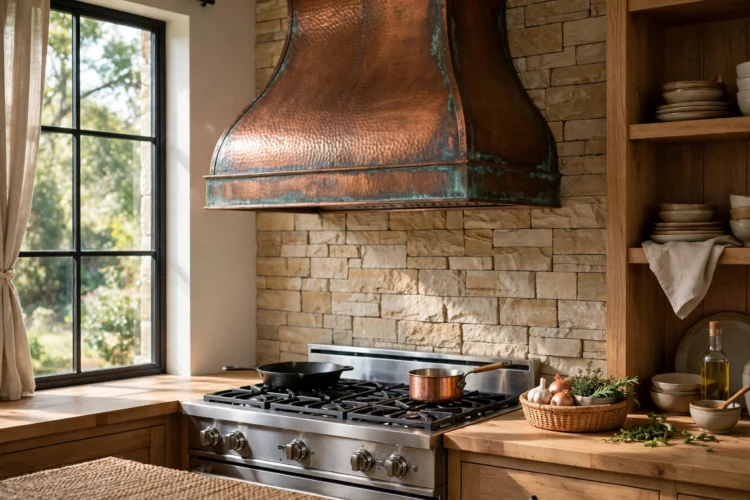
Copper brings warmth and age to a kitchen in a way no other metal does. A new copper hood shines brightly, then slowly develops a darker patina as it meets steam and air. Some owners love that change and let it happen. Others polish the hood back to bright copper every few months. Decide which camp you are in before you buy, because a patina you fight will always feel like a chore. A hammered copper surface hides fingerprints and small marks better than a smooth one.
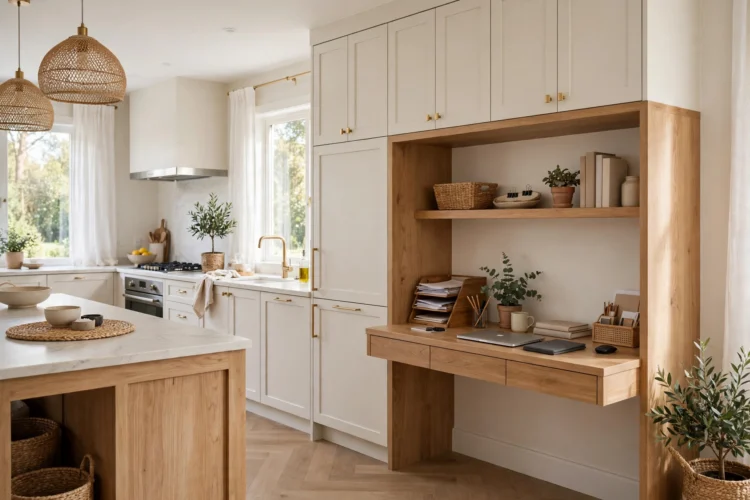
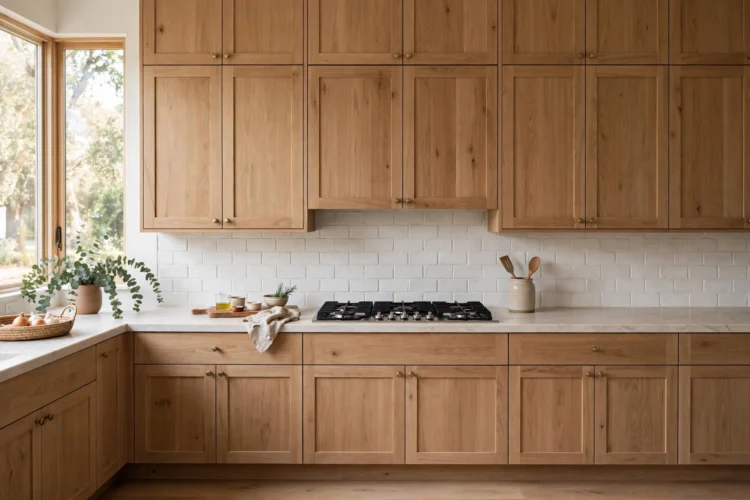
A hidden hood suits cooks who want clean lines and no visible appliance above the range. The fan unit sits inside a cabinet or a false front, and only a slim vent or a pull-out visor shows when it runs. This works well in small kitchens and in rooms where the cabinets run to the ceiling. The cabinet front should match the surrounding doors exactly, including the grain direction, or the hiding trick fails. A pull-out hood is the simplest version: slide it out to cook, slide it back when you are done.
Hidden hoods vent less powerfully than large chimney hoods, so they suit light to medium cooking rather than heavy frying. Check the airflow rating and the duct path before you choose one, and make sure the cabinet is deep enough for the unit plus the duct. The payoff is a kitchen that looks like furniture, with no metal shape breaking the run of cabinets. It is one of the quietest range hood styles, and it keeps the focus on the backsplash or the window instead.
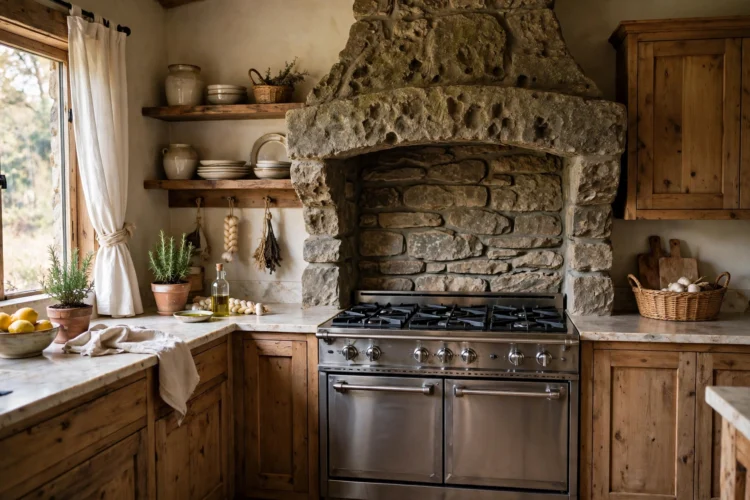
A stone or concrete hood feels solid and grounded, like it was built with the house. The rough texture suits farmhouse, Mediterranean, and rustic kitchens, especially rooms with exposed beams or stone floors. A concrete hood can be cast in a simple tapered shape and sealed against grease, while a stone hood is usually built from stacked slabs or a stone veneer. Both are heavy, so the wall and ceiling need proper support, and the shape should be planned early in a remodel.
Small kitchens need hoods that work hard without taking over the room. A slim under-cabinet hood, a pull-out visor hood, or a shallow wall-mount hood all fit the bill. The key is proportion: the hood should cover the range but leave sightlines open across the room. A deep, sculptural hood in a small kitchen crowds the cook and makes the room feel smaller. A shallow hood with a light finish, such as white or pale wood, keeps the wall feeling open.
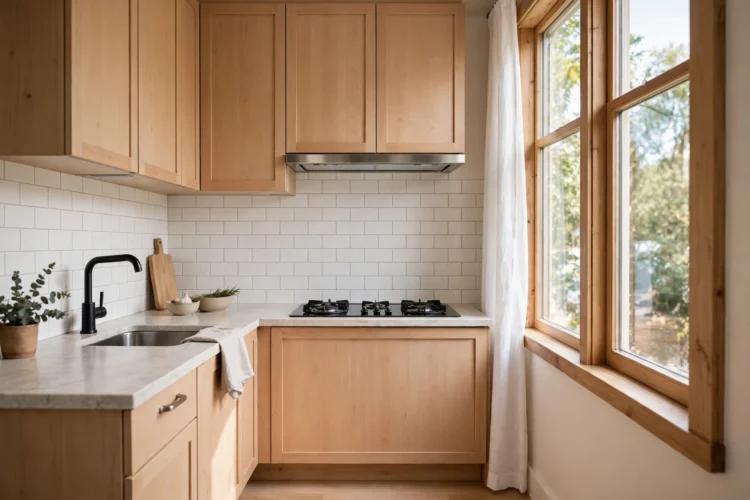
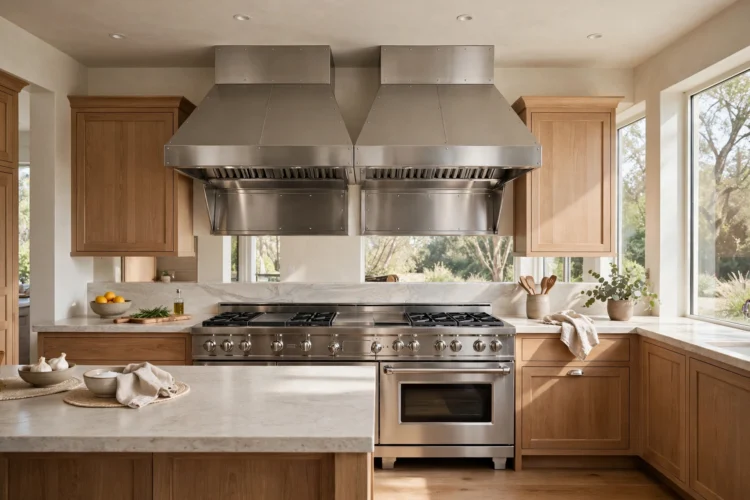
A wide range with two ovens or six burners needs a wide hood, and a double hood answers with presence. The shape can be one long canopy or two matching hoods side by side, which suits very wide cooktops and large kitchens. The fan should be strong enough to cover the whole cooking surface, so check the airflow rating for the full width, not just one half. A double hood also gives the kitchen a sense of symmetry, especially when the range sits on a long wall with cabinets on both sides.
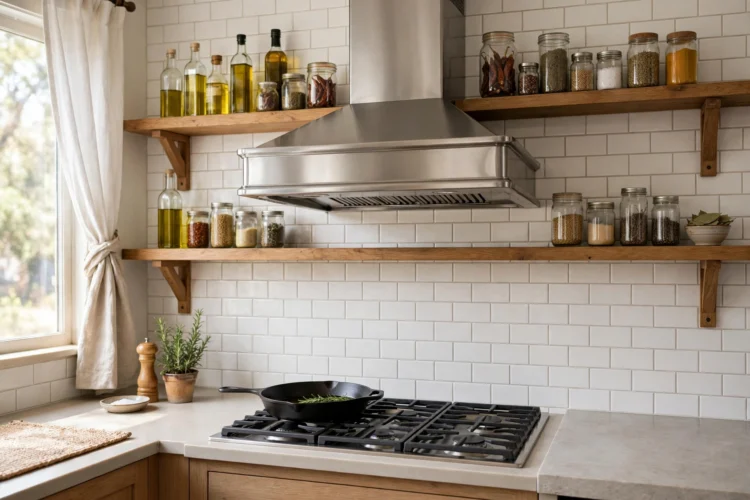
A hood with open shelving on the sides turns dead space into display space. Short shelves flanking the hood hold everyday items such as oils, spices, and small bowls within reach of the cook. The shelves should be shallow, so they do not crowd the cooktop, and the items on them should be heat-safe and easy to wipe clean. Wood shelves add warmth, while metal brackets add a sharper, more industrial note. Keep the shelves short and the items few, so the hood stays the star.
This style works best when the shelves match the hood material or the cabinets. A plaster hood with wood shelves feels warm and handmade, while a metal hood with matching metal shelves feels crisp and modern. Avoid glass jars directly beside a hot cooktop, and keep paper and cloth away from open flames. The shelves also give you a place to repeat a color or material from elsewhere in the kitchen, which ties the cooking zone into the rest of the room. For more ways to use the wall around the range, see these industrial kitchen ideas with steel, brick, and edge that treat the cooking wall as a feature.
Start with how you cook, not how the hood looks in a photo. Heavy frying needs strong outside venting and a hood wider than the range. Light cooking gives you room to choose a hidden or slim style. Once the size and venting are right, pick the finish that repeats something already in your kitchen, and the hood will look like it belongs there.