Physical Address
304 North Cardinal St.
Dorchester Center, MA 02124
Physical Address
304 North Cardinal St.
Dorchester Center, MA 02124

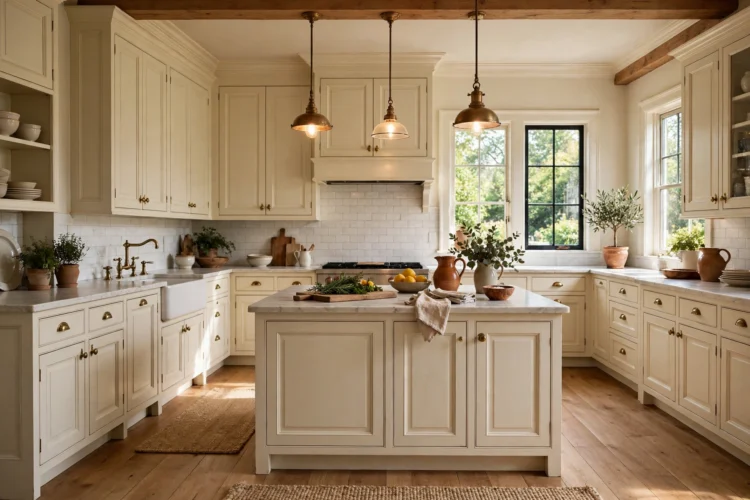
Classic kitchens last because every choice earns its place. These 12 traditional kitchen ideas use raised panels, warm wood, and neutral stone to stay fresh for decades.
Traditional kitchen ideas work because they put comfort and craft first. A kitchen built on raised-panel doors, honest wood, and neutral stone does not need a new look every few years. It ages well, suits most homes, and still feels right when you sell. This list gathers 12 choices that have survived many trend cycles, with practical notes on how to use each one without making the room feel dated or heavy.
Use these ideas as a full plan or pick three that fix your biggest problem. A classic kitchen does not need every detail at once. It needs a clear palette, good proportions, and materials that improve with daily use. Start with the cabinets and counters, then let hardware, lighting, and textiles follow the same calm direction.
Raised panel kitchen cabinets give a kitchen its classic backbone. The center panel sits proud of the frame, which catches light and adds shadow in a way flat doors cannot match. Painted white, cream, or soft gray, they suit a wide range of homes. In a large kitchen, use them on every door for a unified look. In a small one, keep them on the main run and use simpler panels on a pantry wall to save visual weight.
Wood species matters less than finish and proportion. Maple paints smoothly, while oak shows grain that suits a warmer room. Keep the rail width consistent across doors and drawers so the whole wall reads as one piece of furniture. For more cabinet direction, see these shaker cabinet kitchen ideas and compare panel styles before you order.
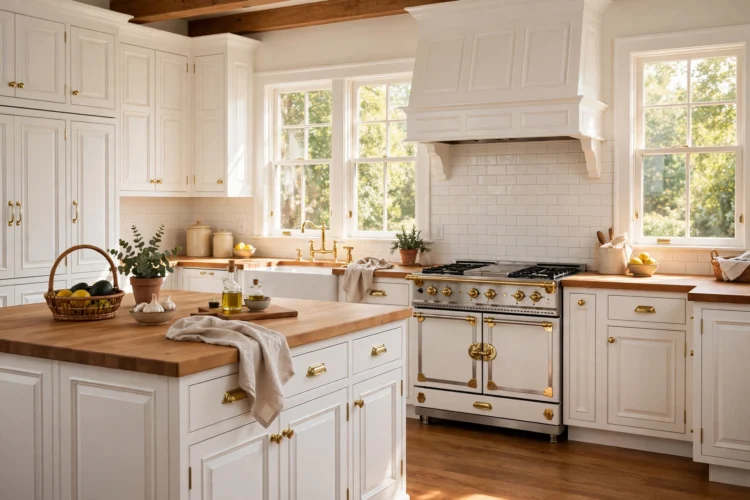
Hardware is the jewelry of a traditional kitchen, and classic kitchen hardware earns its keep every day. Bin pulls on drawers, knobs on doors, and a matching latch on a pantry door give hands a clear place to grip. Brass warms a white kitchen. Oil-rubbed bronze suits darker wood and adds depth without shine. Nickel works when you want a cooler, quieter finish.
Pick one main finish and one accent at most. Mixed metals can work, but three finishes in one small room often look accidental. Test the pull in your hand before you buy a full set. A knob that looks right can feel sharp or loose after a week of cooking. Match the screw length to your door thickness so nothing wobbles or scratches the finish.
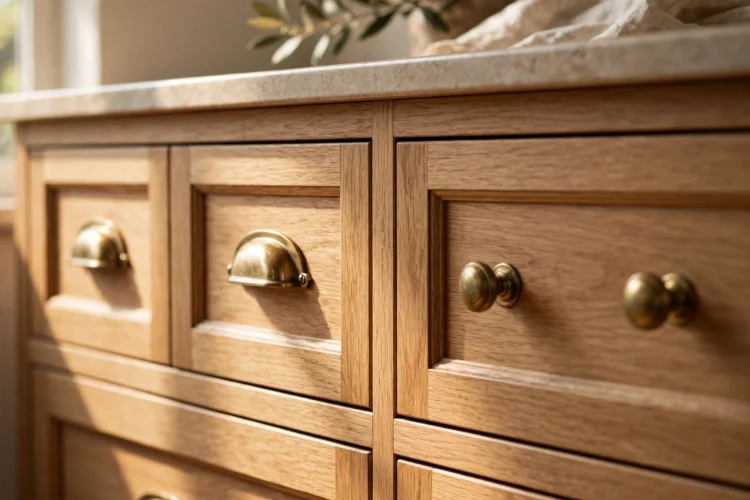
Neutral stone countertops keep a traditional kitchen calm. White marble with soft gray veining, warm limestone tones, and quiet quartz that mimics stone all fit the style. The goal is a surface that supports the cabinets instead of competing with them. A honed finish hides small marks better than a high polish, which helps in a busy family kitchen.
Choose the edge profile with care. A simple eased edge suits most rooms. An ogee edge adds formality and fits a larger, more dressed-up kitchen. Seal natural stone on the schedule your installer suggests, and wipe up acidic spills promptly. For stone inspiration, browse these marble countertop ideas for a timeless kitchen before you pick a slab.
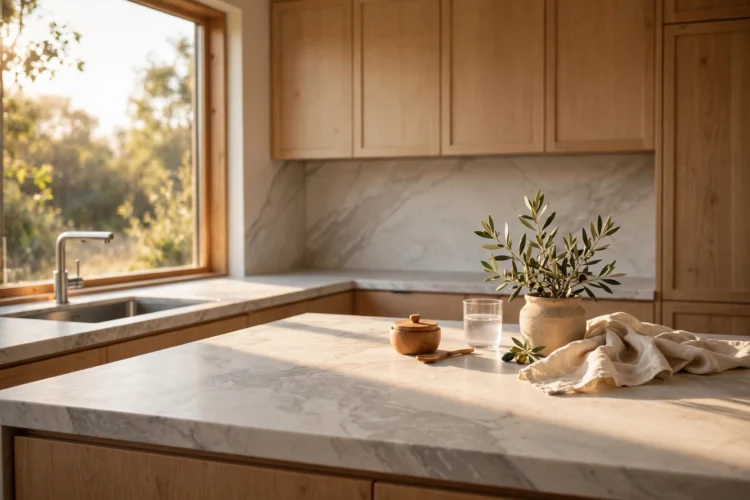
A farmhouse sink puts the work zone front and center. The apron front reaches the edge of the cabinet, so you can stand close without leaning over a counter lip. A single deep basin handles stock pots and sheet pans with ease. Fireclay and cast iron both suit the style, and each holds up well when installed correctly.
Pair the sink with a bridge faucet or a gooseneck faucet in the same finish as your hardware. Add a cutting board that fits across the basin and a drying rack that sits inside it. Those two add-ons turn the sink into extra prep space. If you want more sink styles, these farmhouse sink ideas for classic kitchen charm show how the apron front works in different room sizes.
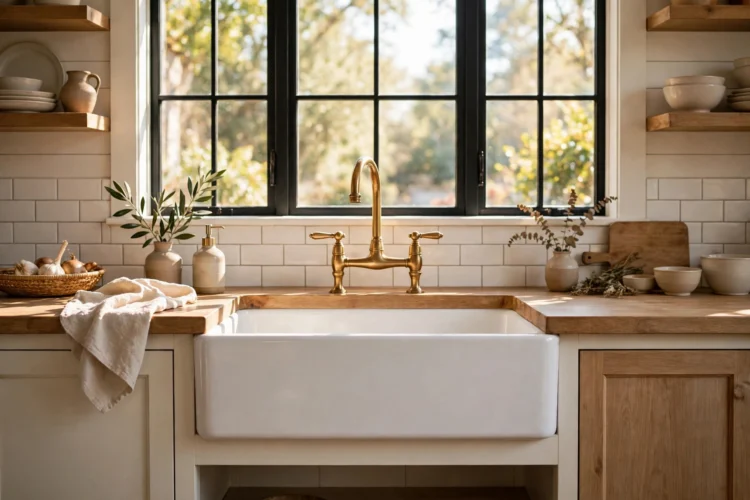
Subway tile has lasted in kitchens because it is simple, washable, and easy to repair. A handmade-look tile with slight variation in glaze adds warmth that a flat factory tile lacks. White and cream are safe choices. A pale sage or dusty blue backsplash adds color without breaking the classic palette.
Lay the tile in a brick pattern for a familiar look, or stack it in straight rows for a calmer wall. Keep grout lines narrow and choose a grout color close to the tile so the wall reads as one surface. Run the tile to the underside of the upper cabinets, and add a small shelf rail if you want a place for a cutting board or a small plant.
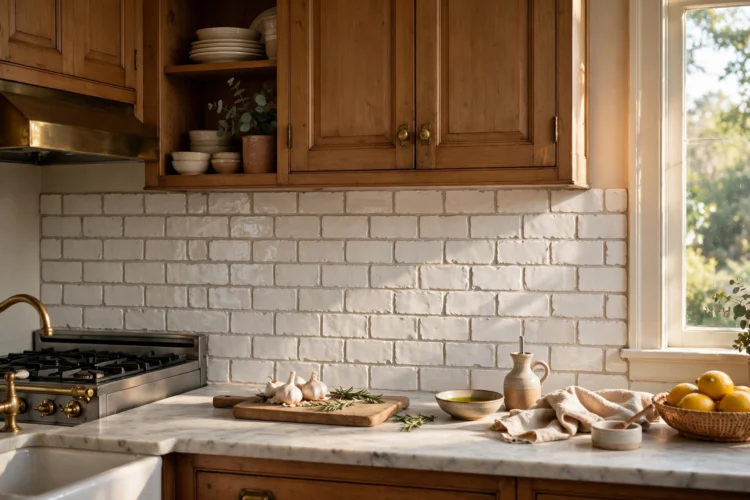
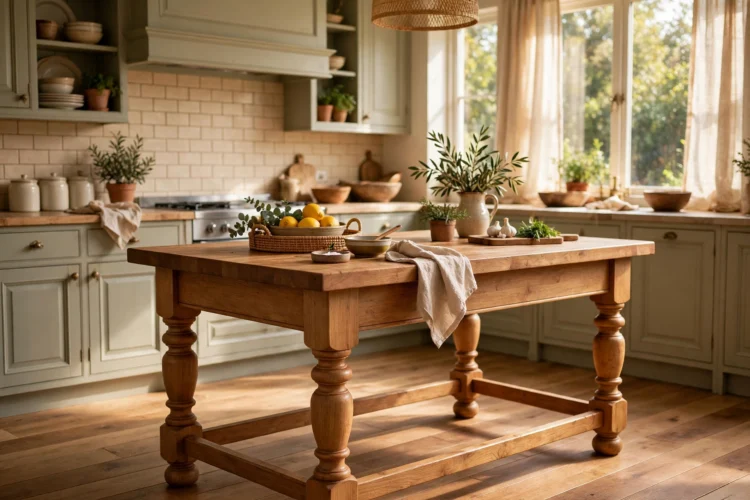
A furniture-style island makes a kitchen feel like a room, not a work zone. Turned legs, a beaded apron, and a slightly different paint color set it apart from the perimeter cabinets. A butcher block top warms the island and gives you a forgiving surface for chopping and rolling dough. Stone on the island and wood on the perimeter also works well.
Leave at least 42 inches of clearance on the working sides so two people can pass with a hot pan. Add seating on one side only, so the cook keeps a clear path to the stove. Use the island base for deep drawers that hold pots, mixing bowls, and baking sheets close to where you use them.
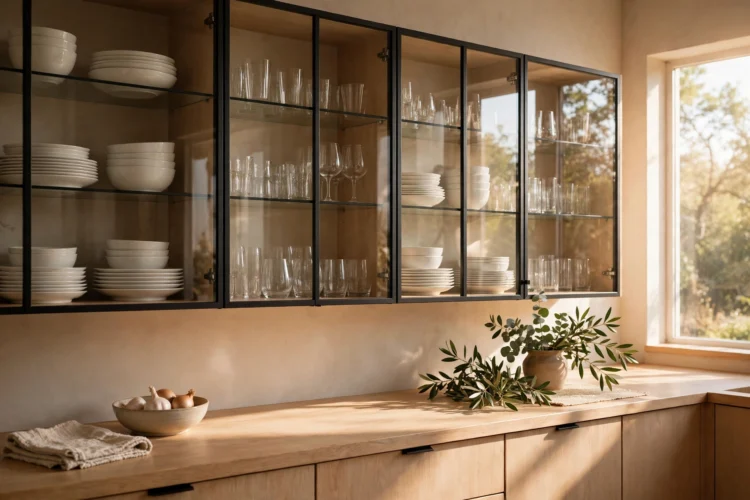
Glass-front cabinets break up a long wall of solid doors and let light move through the room. Use them for a short run near the dining area, where you can display white dishes, glassware, and a few pieces you actually use. Clear glass suits a tidy household. Seeded or reeded glass hides clutter while still giving the cabinet a lighter feel.
Keep the inside of the cabinet painted a shade lighter than the outside so dishes stand out. Add a small interior light on a dimmer for evening meals. Limit each shelf to one row of dishes with space around it. A crowded glass cabinet looks messy fast, so edit the contents to the pieces you reach for most.
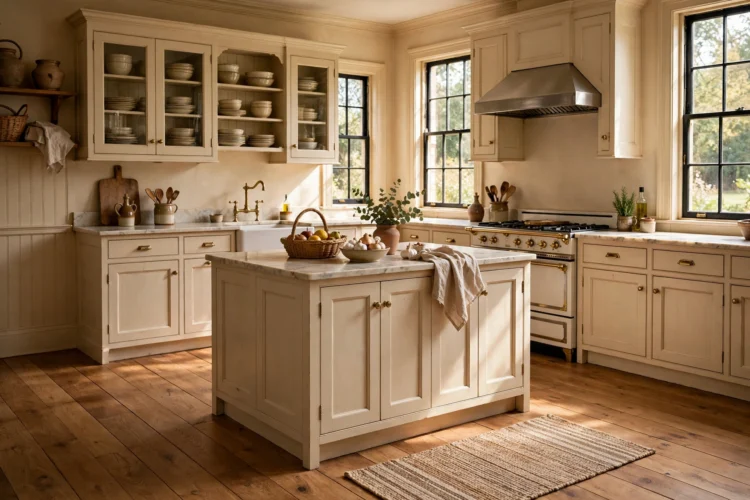
Warm wood floors ground a traditional kitchen. Wide planks in oak or hickory add grain and color that tile cannot copy. A medium tone hides crumbs better than a very dark or very pale floor. A matte or satin finish shows fewer scuffs than a high gloss, which matters in a room where chairs drag and pans drop.
Run the planks in the same direction as the longest wall to stretch the room. If you have an open plan, carry the same floor into the dining area so the two spaces read as one. Add a washable runner in front of the sink and stove. It softens the floor underfoot and protects the finish where water lands most.
Layered lighting keeps a traditional kitchen useful at every hour. A chandelier or a pair of lantern pendants over the island gives the room a focal point. Recessed lights handle general work light. Under-cabinet strips light the counters where you chop and read recipes. Each layer should sit on its own dimmer so you can shift from bright prep light to soft evening light.
Choose warm bulbs, around 2700K, so wood and brass look their best. Hang pendants 30 to 36 inches above the island counter so they light the work surface without blocking sight lines. For more lighting plans, see these kitchen lighting ideas beyond the basic flush mount and map the layers before you buy fixtures.
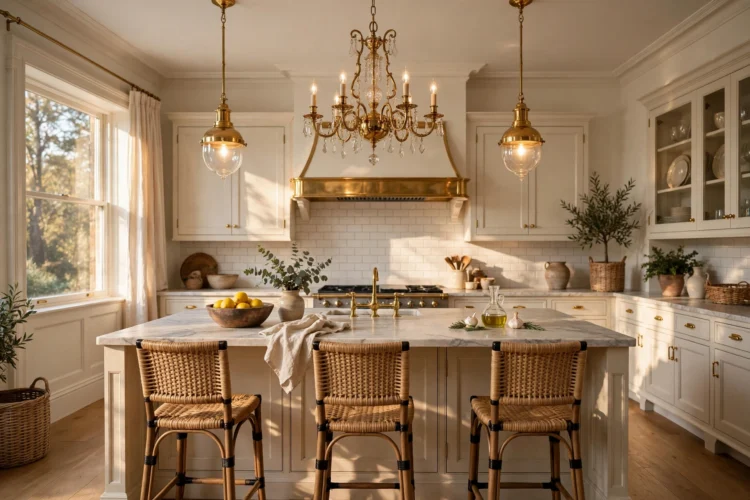
Symmetry gives a traditional kitchen its calm. A range centered on a wall, with matching cabinets on each side, reads as settled and planned. A sink centered under a window does the same. You do not need perfect mirror symmetry everywhere. One strong axis, repeated in the island and the lighting, is enough to hold the room together.
When the room fights symmetry, use balance instead. A tall pantry on one side can balance a window on the other if the heights and colors match. Keep the heaviest visual weight low, near the floor, and let the upper wall stay lighter. A timeless kitchen design like this feels orderly even when the counters hold a few everyday items.
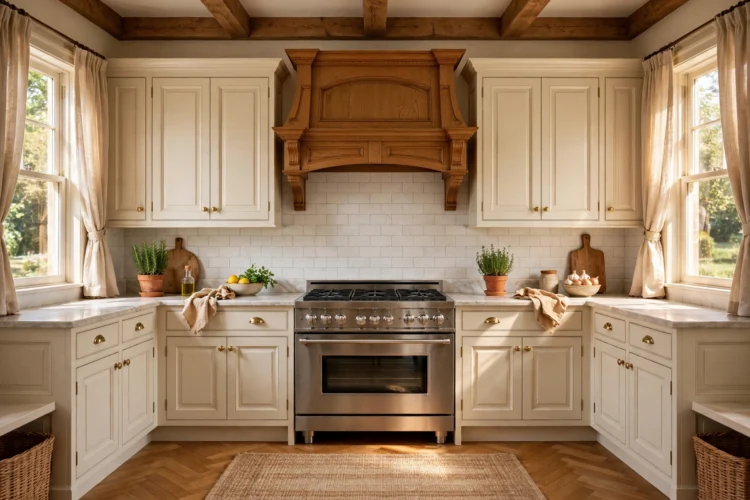
Beadboard and paneling add texture without pattern. A beadboard backsplash, a paneled island back, or wainscoting on a dining wall gives the eye something to rest on. Paint it the same color as the cabinets for a seamless look, or one shade lighter for a soft contrast. The narrow vertical lines also make a low ceiling feel a touch taller.
Use moisture-resistant boards near the sink and stove, and seal the paint well. On an island, run the beadboard vertically so spills wipe down easily. On a wall, a chair rail at 36 inches gives the paneling a clear top edge and a place to hang a small picture rail or a plate ledge.
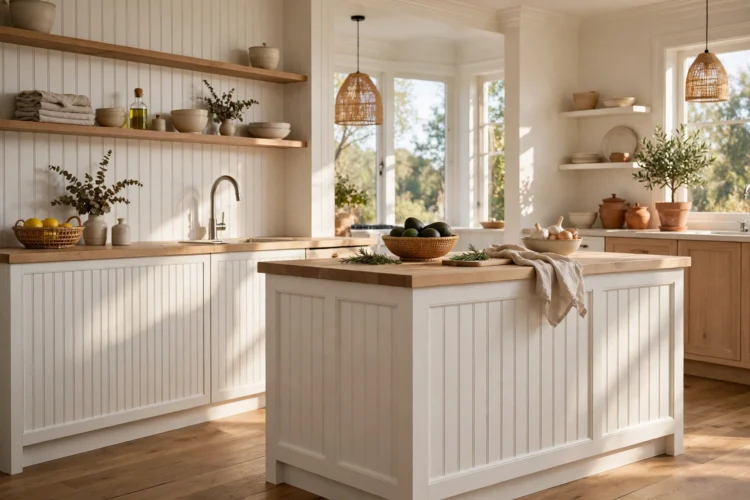
Textiles finish a traditional kitchen. A linen cafe curtain softens a window without blocking light. A cotton runner adds color underfoot. Cloth napkins, a simple tablecloth on a nearby table, and a few tea towels in the same palette tie the room together. Natural fibers suit the style best, since they age with a soft, lived-in look.
Pick a palette of three colors and repeat it across the textiles. A check, a stripe, and a solid in the same family give variety without chaos. Wash the runner often, since kitchen floors collect grease and crumbs. Keep a spare set of towels so the room always looks cared for, even on a busy cooking day.
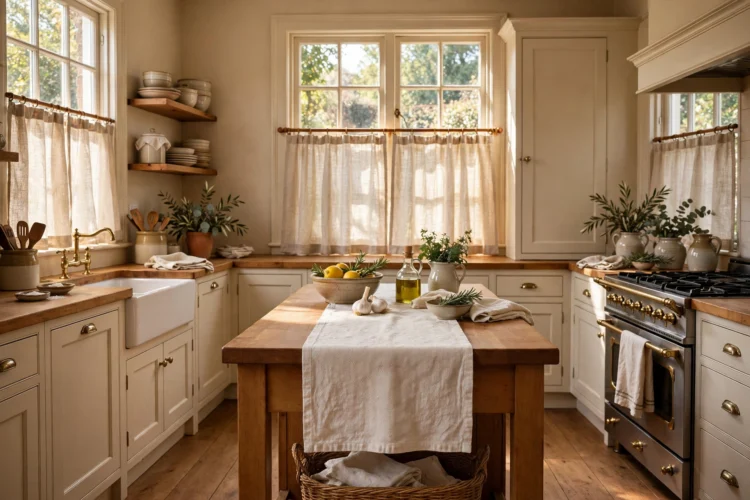
A traditional kitchen lasts when each choice supports the next. Raised panels, classic hardware, neutral stone, and warm wood form a base that accepts small updates without a full remodel. Swap the textiles, change a light fixture, or repaint one accent piece when you want a fresh feel. The bones stay the same, and that is the point. Pick the three ideas that fix your kitchen today, and let the rest wait until the room asks for them.