Physical Address
304 North Cardinal St.
Dorchester Center, MA 02124
Physical Address
304 North Cardinal St.
Dorchester Center, MA 02124

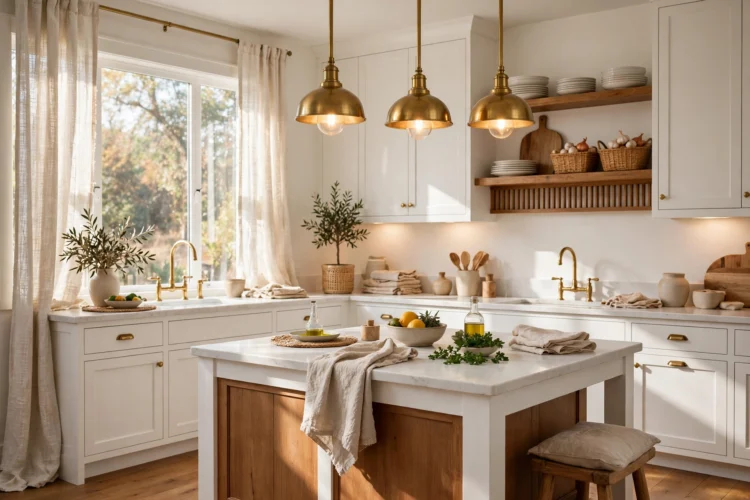
An all-white kitchen can feel warm instead of clinical. These 14 ideas use undertone, wood, brass, and texture to keep white inviting.
These white kitchen ideas prove an all-white kitchen can feel warm instead of clinical. The difference sits in the details: the undertone of the paint, the grain of the wood, the metal on the hardware, and the texture on every surface. Get those right and white reads calm and bright, not cold and empty. Get them wrong and the room feels like a showroom nobody cooks in. The 14 ideas below build warmth layer by layer, from paint and cabinets to lighting and styling. Most of them cost little and none of them need a full remodel. Pick the two or three that fit your kitchen and start there.
Not all whites match. Some lean blue and read cold under daylight, some lean yellow and turn creamy by evening, and some sit in the middle and shift with the light. Warm white paint with a soft yellow or pink base suits most kitchens because it keeps the room bright without the chill. Benjamin Moore White Dove and Sherwin-Williams Alabaster are two widely used warm whites, and both pair well with wood and brass. Before you commit, paint large swatches on two walls and watch them at morning, noon, and night. The right white should look clean at 8 a.m. and soft at 8 p.m.
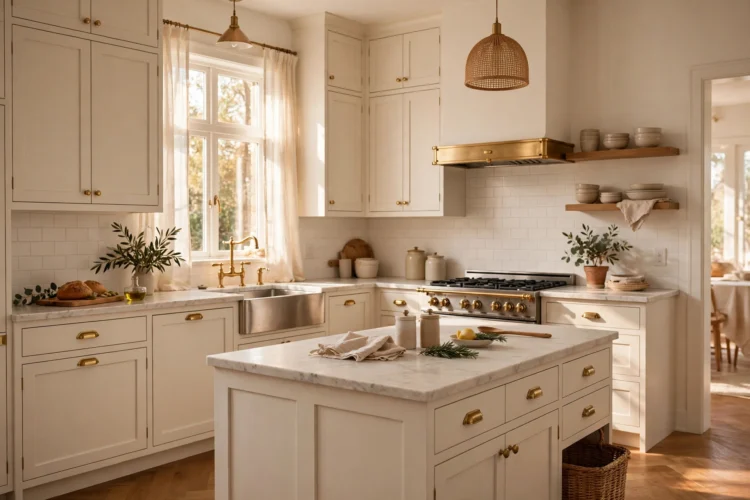
A white kitchen falls apart when the cabinets lean pink, the counters lean gray, and the backsplash leans blue. Each surface looks fine alone, but together they fight. Pick one undertone family and hold it across cabinets, counters, tile, and trim. Warm whites pair with warm whites, cool with cool. Hold samples side by side in daylight, not under store lights, and check them against the floor too. If your floor has warm oak tones, a warm white keeps the whole room in agreement. One shared undertone does more for a white kitchen than any single fixture.
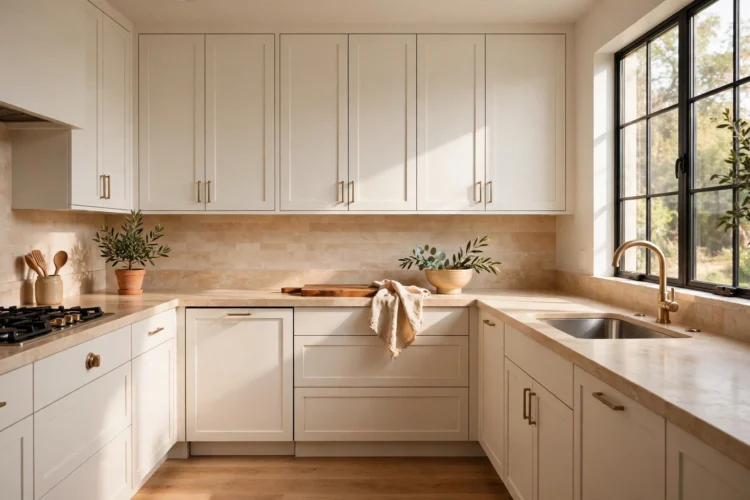
Wood is the fastest way to warm a white kitchen. A butcher block island top, open oak shelves, or a walnut range hood breaks the white into zones and gives the eye somewhere to rest. Pale oak keeps the room light, while walnut or smoked oak adds weight and contrast. Even small touches help: a wooden stool, a cutting board left on the counter, or a timber-framed window. The grain adds pattern without color, so the kitchen stays calm. Use wood in at least two spots so it reads as a choice, not an accident.
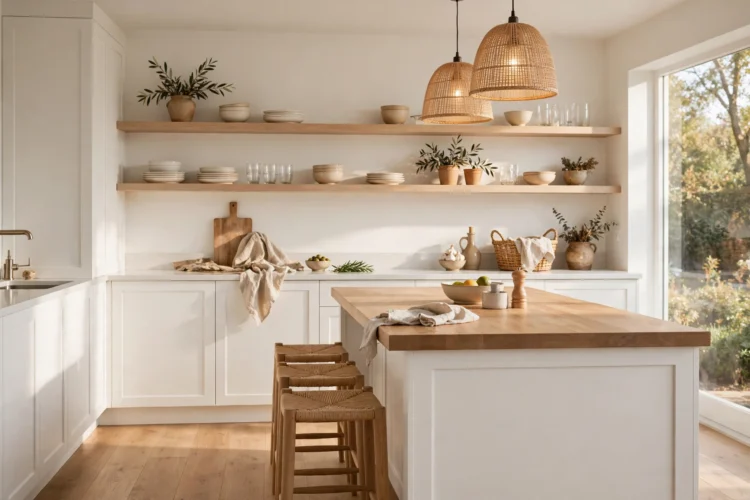
Brass hardware, faucets, and light fixtures add a warm metallic note that white kitchens need. Unlacquered brass ages and darkens a little over time, which suits a kitchen that gets used every day. Brushed brass stays more even and reads a touch more formal. Keep the finish consistent across knobs, pulls, and the faucet so the metal feels planned. Brass pairs well with white kitchen cabinets because the warm metal stops the white from feeling flat. Two or three brass pieces per zone is enough; the whole room does not need to shine.
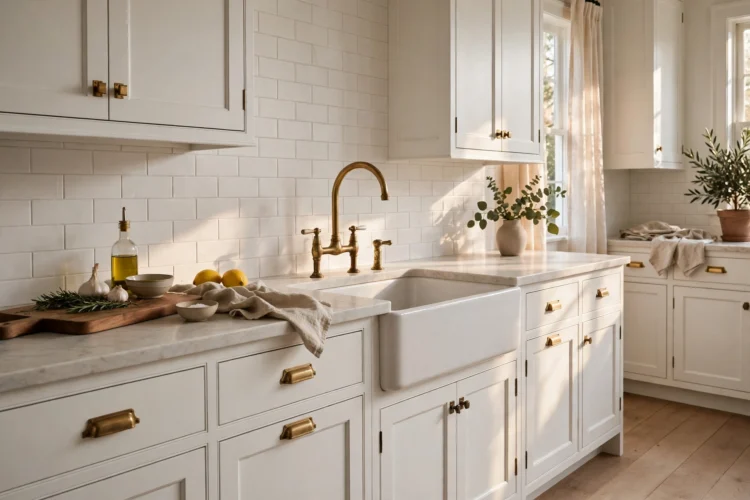
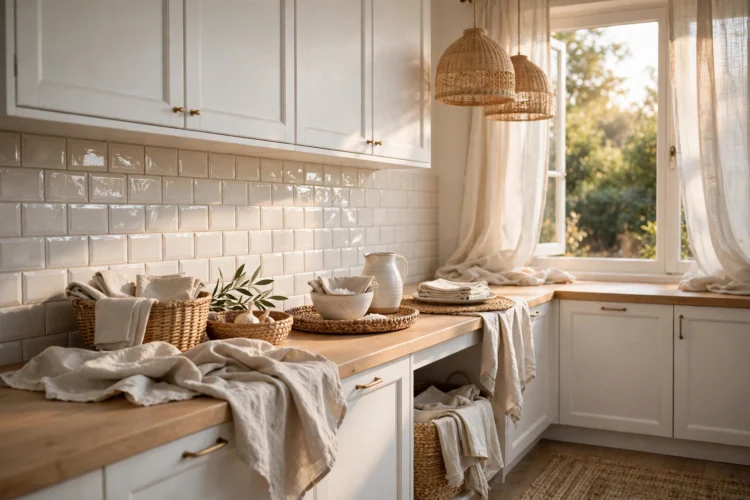
When color stays quiet, texture does the work. White kitchen texture comes from the mix of surfaces: a honed stone counter next to glazed tile, linen curtains beside smooth lacquered cabinets, a woven runner underfoot. Each surface catches light differently, so the room gains depth without gaining color. Try a fluted island panel, a handmade-look tile with a wavy glaze, or a rattan pendant shade. Three or four distinct textures in one kitchen is the sweet spot. Fewer and the room reads flat; more and it starts to feel busy.
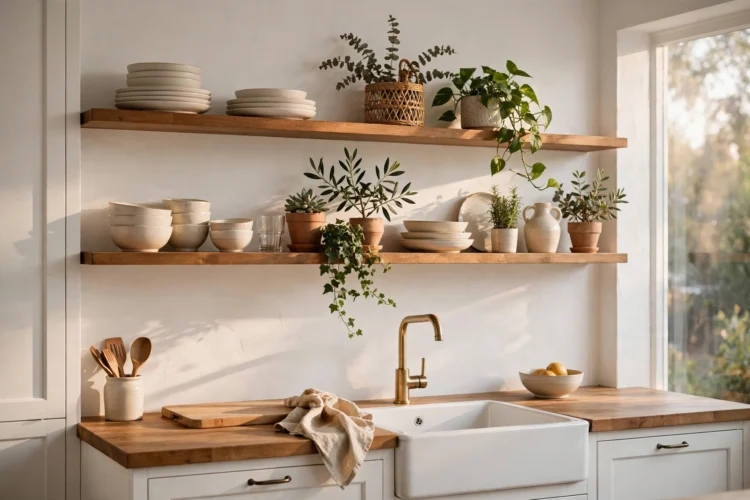
A run of open shelves breaks up a wall of white cabinets and shows the kitchen is used. Stack everyday dishes, a few wooden boards, and one or two plants. Keep the shelves to one wall so the kitchen still has closed storage for the clutter. The dishes themselves add soft color: cream stoneware, pale blue bowls, a terracotta pot. Change the display with the seasons and the kitchen never looks staged. Open shelving works best near the sink or stove, where the things on it get reached for daily.
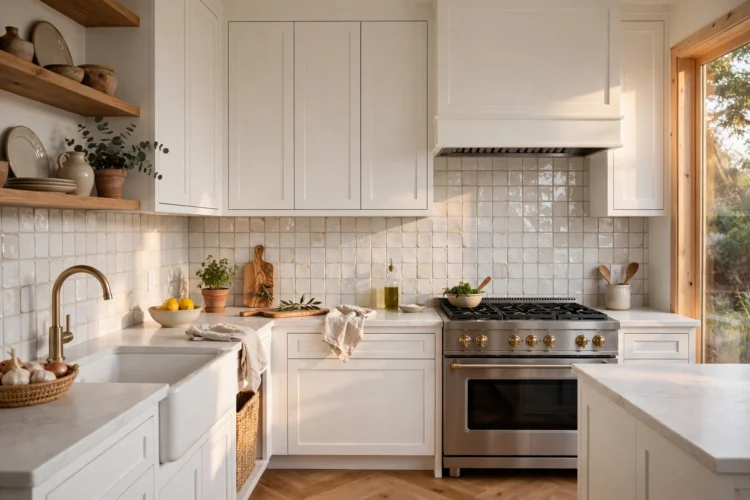
A flat white backsplash on white cabinets disappears. Pick a tile with movement: a handmade-look glaze, a soft crackle finish, or a subtle pattern that shows at close range. Zellige-style tiles catch the light unevenly, which adds life to a plain wall. If you like subway tile, lay it in a herringbone or vertical stack instead of the usual brick pattern. The shift in layout costs nothing extra and changes the whole wall. For more pattern options, see these kitchen backsplash ideas from subway to statement tile.
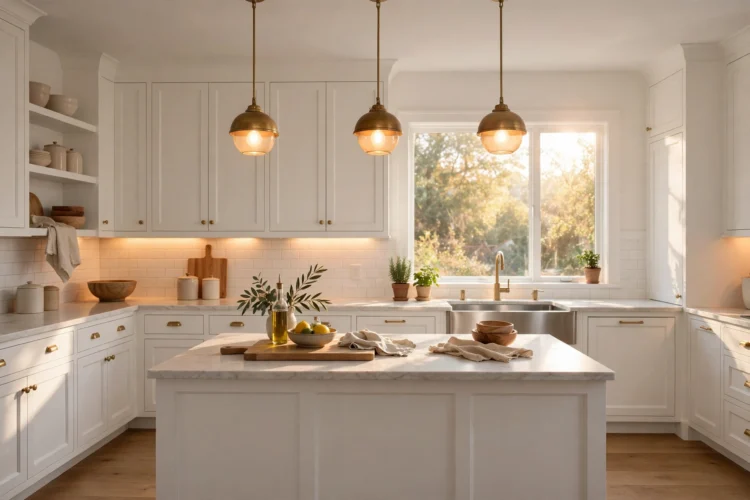
Cool white bulbs make a white kitchen feel like an office. Choose bulbs around 2700K to 3000K for a warm glow, and put the main lights on a dimmer so the room can shift from cooking bright to evening soft. Under-cabinet lights stop the counters from falling into shadow and make the backsplash glow after dark. A pendant with a linen or rattan shade spreads light gently instead of throwing hard spots. White kitchen lighting works best in layers, so mix ceiling, task, and accent light. For fixture styles that suit this look, browse these kitchen lighting ideas beyond the basic flush mount.
Paint the island a soft wood tone or top it with butcher block while the rest of the kitchen stays white. The contrast anchors the room and gives the white cabinets something to play against. A walnut island base with white uppers feels grounded, and a stone waterfall edge on the island adds weight without color. Keep the island finish in the same undertone family as the cabinets so the pair feels related. If a new island top is on your list, these white countertop ideas that brighten any kitchen show how pale stone can brighten a kitchen without cooling it down.
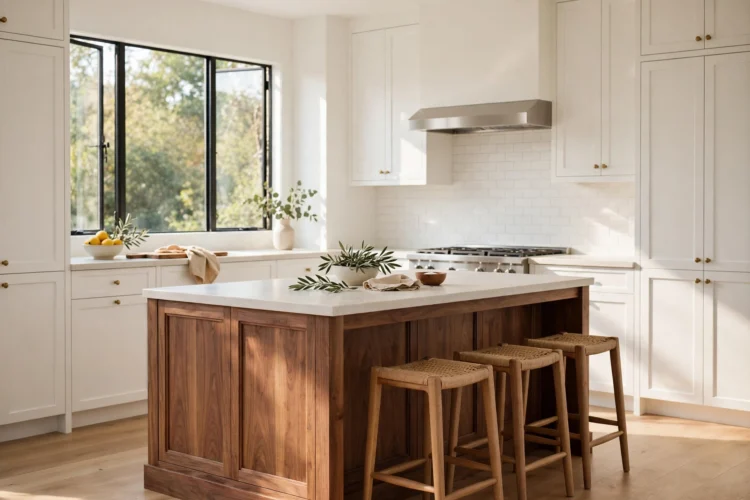
A glossy white floor bounces light and noise in equal measure. Warmer floors fix both. Pale oak planks, a soft terracotta tile, or a large woven rug under the island add warmth at ankle level, where the eye lands every time you walk in. If you keep existing tile, a washable runner in a muted pattern does the same job for less. The floor should sit one or two shades warmer than the cabinets so the room reads layered from the ground up.
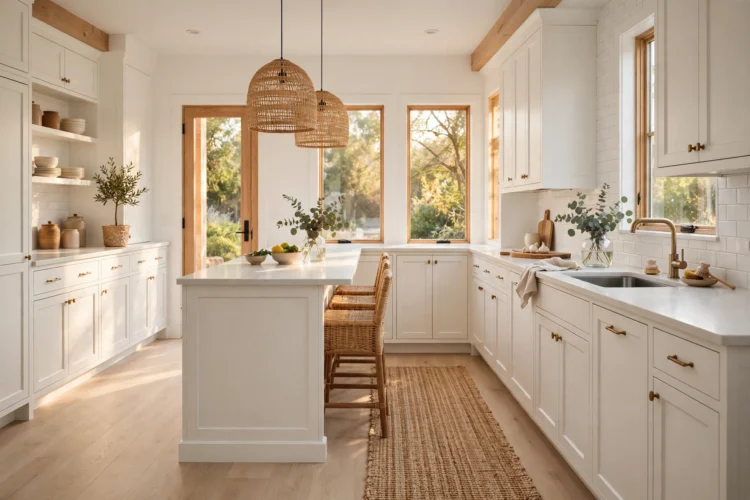
Plants are the easiest color a white kitchen can take. A potted herb by the window, a trailing pothos on top of the cabinets, or a small olive tree in a corner adds green that changes with the seasons. Herbs earn their spot twice because you cook with them. Keep pots simple: terracotta, cream ceramic, or plain wood. One large plant beats five small ones scattered around, and it gives the room a living focal point that white alone cannot provide.
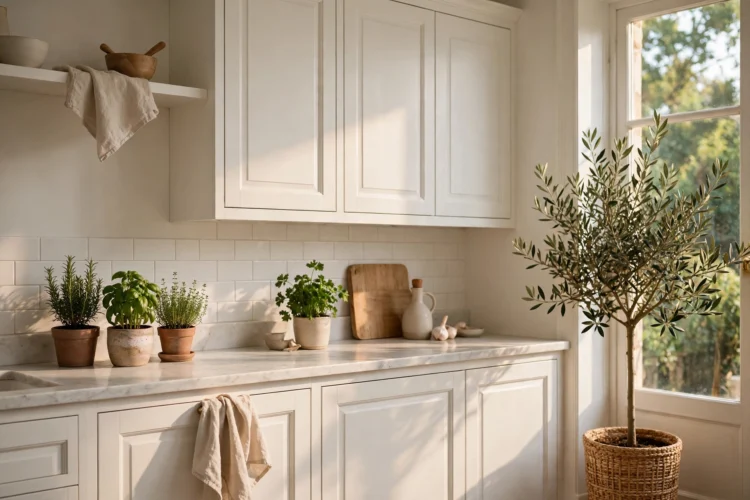
Cabinet hardware is jewelry for a white kitchen, and the finish sets the temperature. Warm brass, aged bronze, or matte black with a soft edge all work; polished chrome and nickel can push the room back toward cold. Knobs on doors and pulls on drawers is a classic split, and the scale matters: a small knob on a wide drawer looks lost. If a full hardware swap is on your list, these kitchen cabinet hardware ideas to refresh without renovating show how to update a kitchen without a remodel.
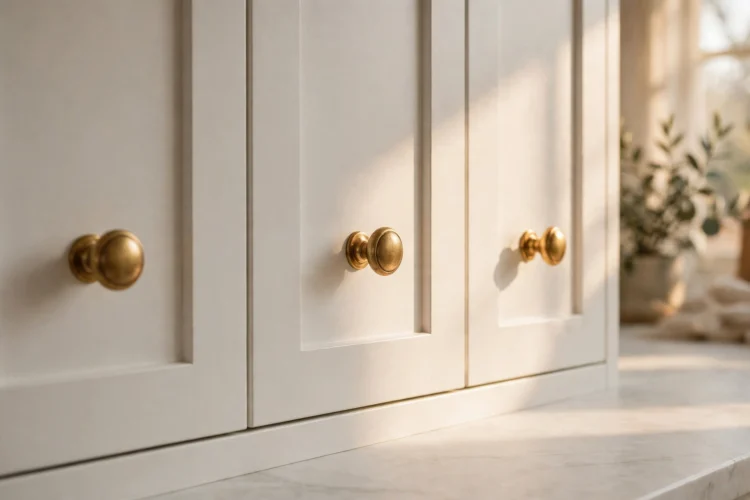
Empty white counters look like a showroom. A few honest objects make the kitchen feel used: a wooden board leaning by the stove, a ceramic crock holding spoons, a bowl of lemons, a small stack of cookbooks. Keep it to three or four groupings so the counters still work. The objects add warm tones and natural shapes that white surfaces lack. Clear one stretch of counter completely for prep, and let the rest carry the few things you reach for every day.
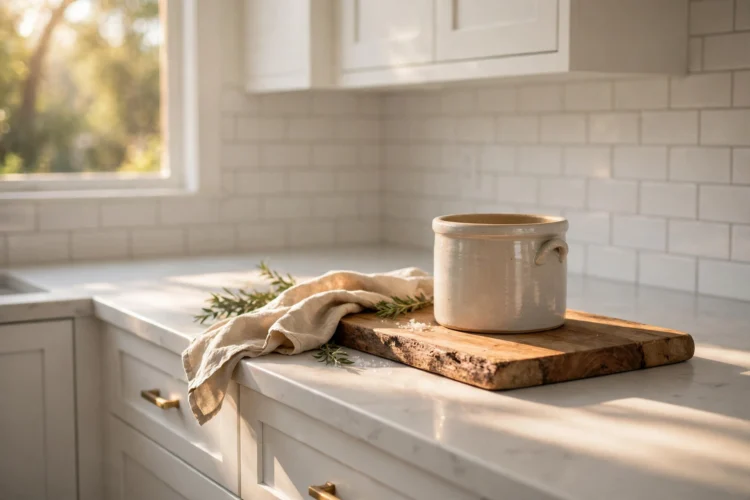
Every white kitchen needs one spot that invites you to stay. A window seat with a cushion, two stools at the island with a sheepskin draped over one, or a small breakfast table with a linen cloth. The cozy corner gives the room a purpose beyond cooking and proves white can feel lived in. Add one soft textile and one warm light, a candle or a small lamp, and the corner does the work of warming the whole room.
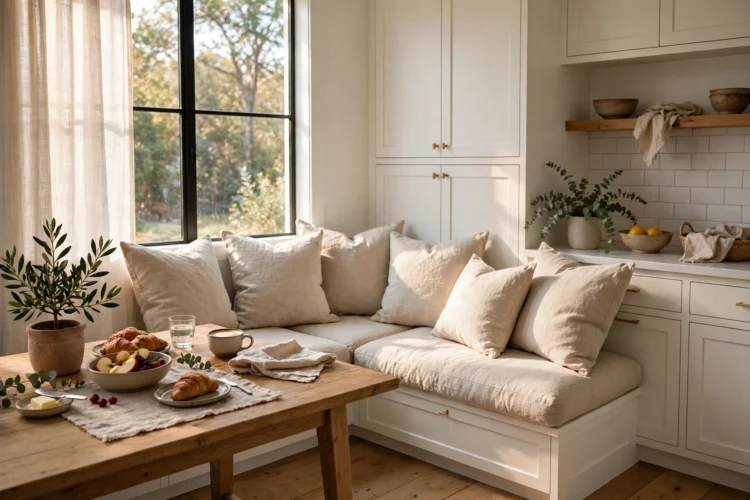
A white kitchen stays warm when every surface shares an undertone and every material adds something the paint cannot. Start with the white itself, then add wood, brass, and texture one layer at a time. The room will still read bright and clean, but it will feel like a kitchen people gather in, not one they photograph and leave.