Physical Address
304 North Cardinal St.
Dorchester Center, MA 02124
Physical Address
304 North Cardinal St.
Dorchester Center, MA 02124

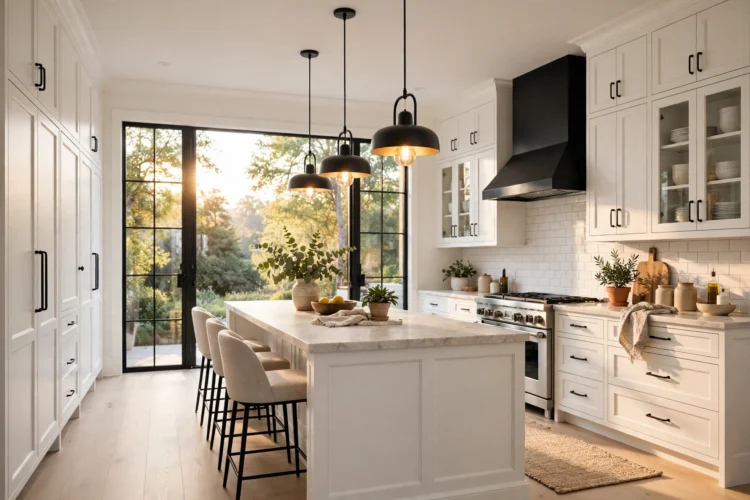
Transitional kitchens mix classic warmth with modern ease. These 10 transitional kitchen ideas show the formula, from shaker doors with sleek hardware to classic tile under clean lighting.
Transitional kitchen ideas solve a common household split. One person loves classic wood and paneled doors. The other wants clean lines and modern ease. A transitional kitchen gives both sides a win by mixing the two styles with a clear formula. Classic shapes carry the room, modern details keep it fresh, and a calm palette holds the mix together.
The trick is ratio, not randomness. Keep about two thirds of the room classic and one third modern, or the reverse if your home leans newer. Repeat each style at least twice so nothing looks like a mistake. The 10 ideas below show where to put the classic pieces and where to let modern details do the work.
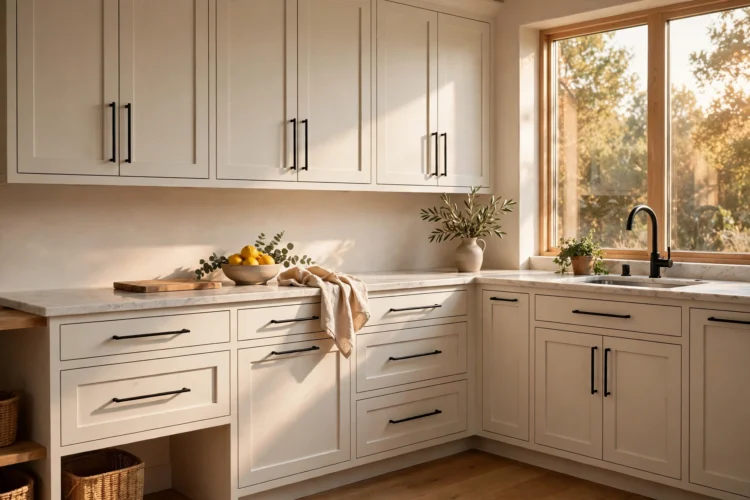
Shaker kitchen cabinets are the natural starting point for a transitional room. The simple five-piece door reads as classic without ornament, and it pairs well with almost any hardware. Swap a traditional knob for a long slim bar pull in matte black or brushed nickel, and the same door suddenly feels current. The cabinet stays timeless while the hardware sets the tone.
Keep the door style consistent across the room. Mix the hardware only by function, such as bar pulls on drawers and knobs on doors, not by finish. For more cabinet direction, see these shaker cabinet kitchen ideas and note how the same door changes with paint color and hardware.
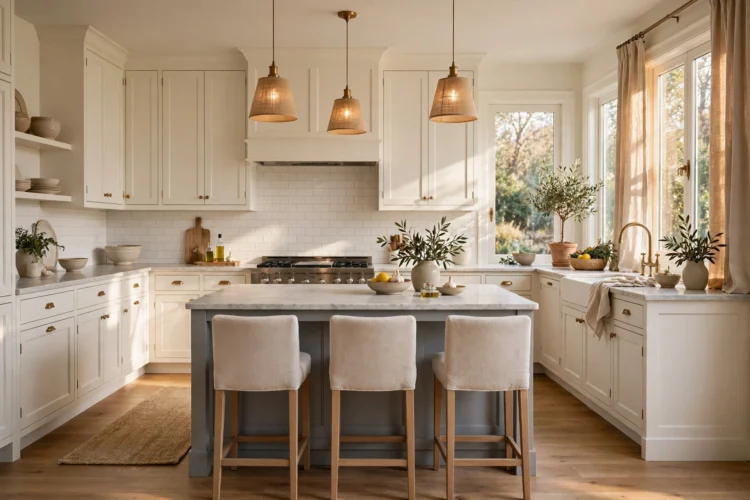
A calm palette lets classic and modern pieces share one room. Warm white cabinets, a soft gray island, and a wood floor give the eye a steady base. Add one accent color, such as deep green or navy, on the island or a single wall of cabinets. Keep the rest quiet so the accent reads as a choice, not a clash.
Test paint colors in the room at morning and evening light. A white that looks clean at noon can turn pink or yellow under warm bulbs. Paint a large board, lean it against the cabinets, and live with it for two days before you commit. The palette should feel restful, since the kitchen hosts cooking, homework, and morning coffee in one space.
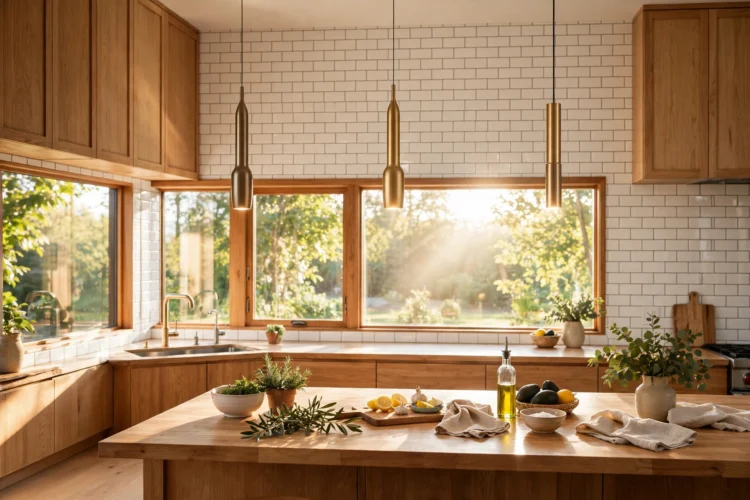
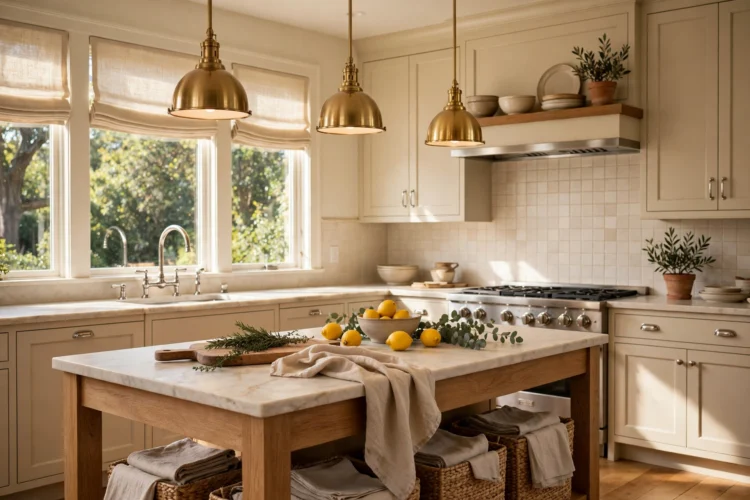
Classic tile under sleek lighting is the clearest transitional move. A subway tile backsplash or a soft marble-look tile gives the wall a familiar pattern. Above it, hang slim pendants with clean lines and no ornament. The tile says classic, the light says modern, and the two meet at the counter where you work every day.
Keep the tile grout close to the tile color so the pattern stays soft. Choose pendants in a finish that matches your hardware, and hang them 30 to 36 inches above the island. If the island is long, use two or three pendants in a row with even spacing. The repetition keeps the modern lighting from feeling like a single odd piece.
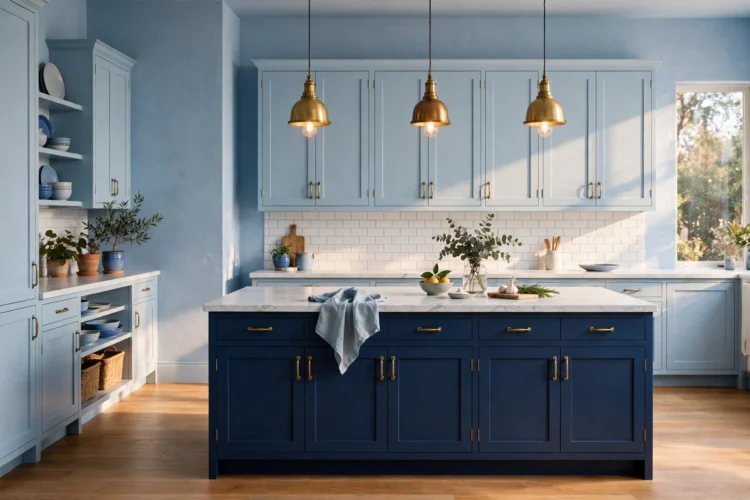
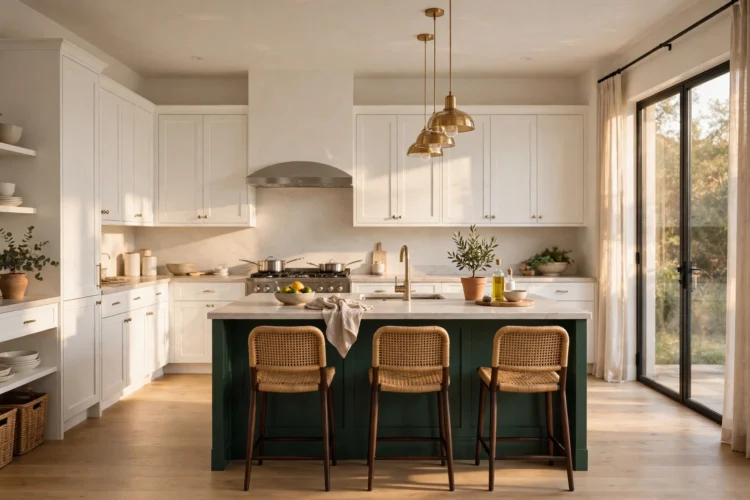
Two tone kitchen cabinets let you put classic on one side and modern on the other. Paint the perimeter cabinets warm white and the island a deep color, or use wood on the lower cabinets and white above. The split adds depth without a full remodel. It also lets a bold color live in one place while the rest of the room stays calm.
Balance the tones by repeating the darker color once more, such as on a pantry wall or a range hood. That second touch keeps the island from looking stranded. For color pairings that work, browse these two-tone kitchen cabinet ideas for a custom look and pick a pair that suits your floor and countertop.
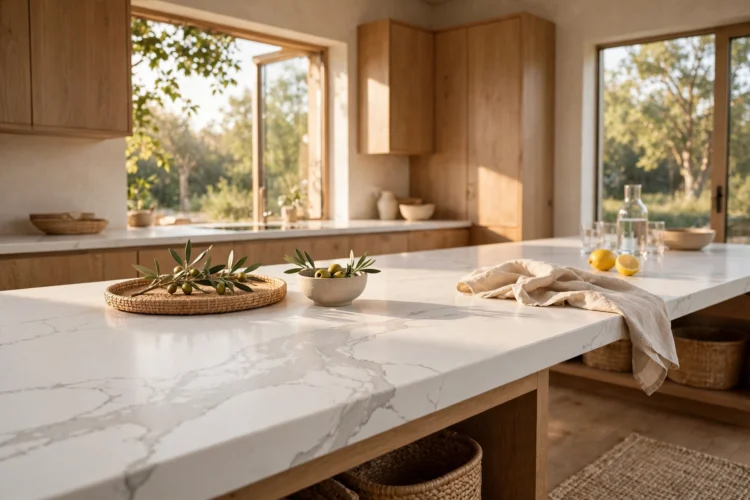
Quartz counters suit a transitional kitchen because they copy the look of stone while behaving like a modern surface. A white quartz with soft gray veining reads as marble from a distance, yet it resists stains and needs no sealing. That mix of classic looks and low upkeep fits households that cook daily and host often.
Choose a veining pattern that stays quiet. Bold, high-contrast veins pull the eye and fight the calm palette. An eased edge keeps the counter modern, while a slightly thicker edge adds presence on an island. See these quartz countertop ideas that look like real stone to compare veining styles before you visit a slab yard.
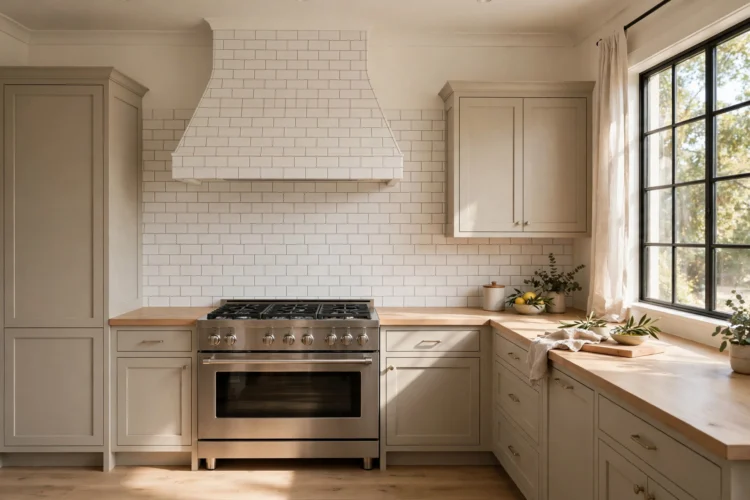
The range wall sets the style of the whole room, so keep it clean. A simple plaster or tiled hood, a single shelf, and a backsplash that runs to the ceiling give the wall a classic shape with modern restraint. Skip heavy corbels and ornate trim here. The hood should read as architecture, not furniture.
Place the range where the cook can see the room, not a blank wall. Add a pot filler only if you actually use large pots for pasta and stock. Keep a small tray near the stove for oil, salt, and pepper so the counter stays clear. A modern classic kitchen works when the busiest wall looks calm even during a big cooking session.
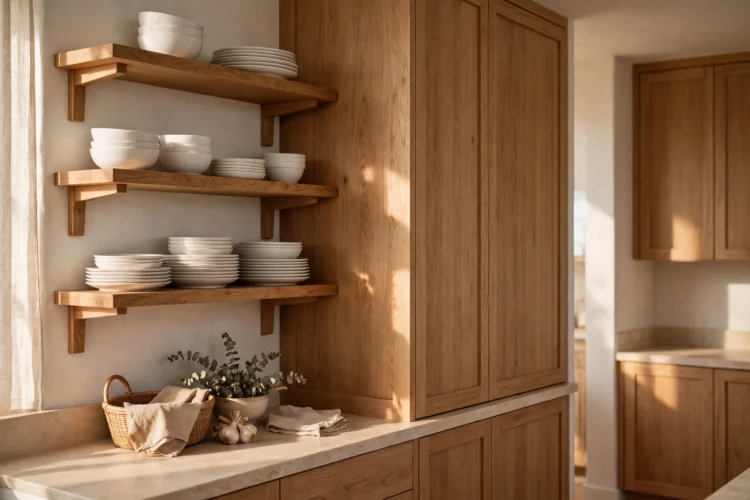
Open shelving brings a modern, airy feel to a transitional kitchen, but only in small doses. One or two shelves near the dining side, holding white dishes and glassware, lighten a wall of cabinets. A full wall of open shelves turns into a dusting chore and a daily styling task, so keep the rest closed.
Style each shelf with one row of items and space around them. Group by color and use, such as everyday bowls on one shelf and glasses on another. For styling help, see these open shelving kitchen ideas instead of upper cabinets and copy the spacing, not just the dishes.
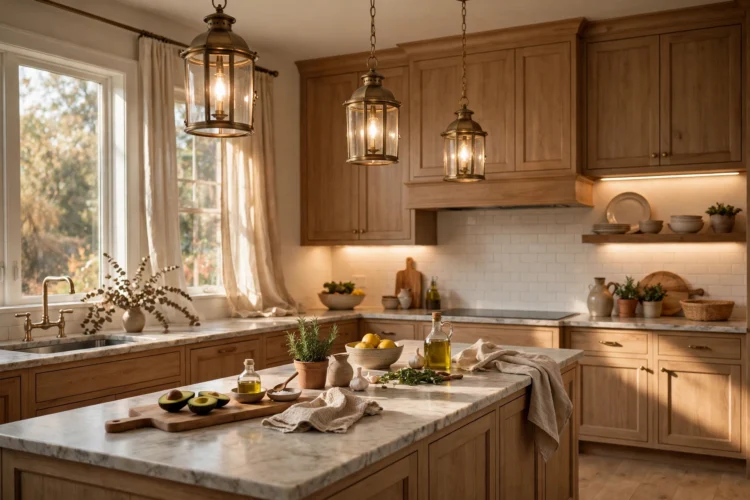
Transitional kitchen lighting layers classic shapes with modern control. A lantern pendant over the island gives a familiar silhouette. Recessed lights and under-cabinet strips handle the work light. Put each layer on its own dimmer so the room shifts from bright prep light to soft dinner light with one touch.
Warm bulbs near 2700K keep wood and stone looking their best. Cool bulbs make the same room feel like an office, so avoid them here. Add a small sconce over a sink window for a classic touch that also lights the dishwashing zone. The layers should feel planned, with no dark corner left over the counters.
Mixed metals work in a transitional kitchen when you limit them to two finishes. Brushed nickel faucets with matte black hardware is a common pair. Warm brass pendants with stainless appliances is another. Pick the two finishes, then repeat each one at least twice so the mix looks deliberate.
Keep the faucet, the hardware, and the lighting in the same conversation. If the faucet is chrome, the pendants can carry the second finish. Avoid a third metal on the range hood or the pot filler, since a small room shows every extra finish. When in doubt, match the faucet to the sink and let the hardware carry the contrast.
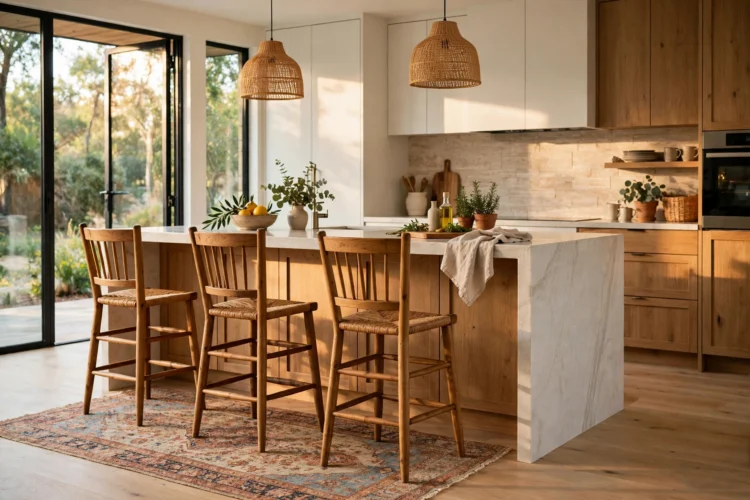
Furniture softens the modern edges of a transitional kitchen. A wooden stool with a woven seat, a small antique side table near the dining area, or a vintage rug runner adds warmth that new cabinets cannot provide. One or two older pieces give the room a collected feel, as if the kitchen grew over time rather than arriving in one delivery.
Choose pieces that can handle kitchen life. A stool should wipe clean. A rug should wash or shake out easily. Place the older piece where it gets seen but not splashed, such as the dining side of the island. The mix works best when the furniture looks used and loved, not staged and fragile.
A transitional kitchen succeeds when the mix feels calm, not busy. Shaker doors, a quiet palette, classic tile, and modern hardware give you a room that pleases both tastes in the house. Start with the cabinets and the counters, then add lighting and metals in the same two finishes. If a choice feels loud, simplify it. The best transitional rooms look easy because every piece earns its place twice, once for style and once for daily use.