Physical Address
304 North Cardinal St.
Dorchester Center, MA 02124
Physical Address
304 North Cardinal St.
Dorchester Center, MA 02124

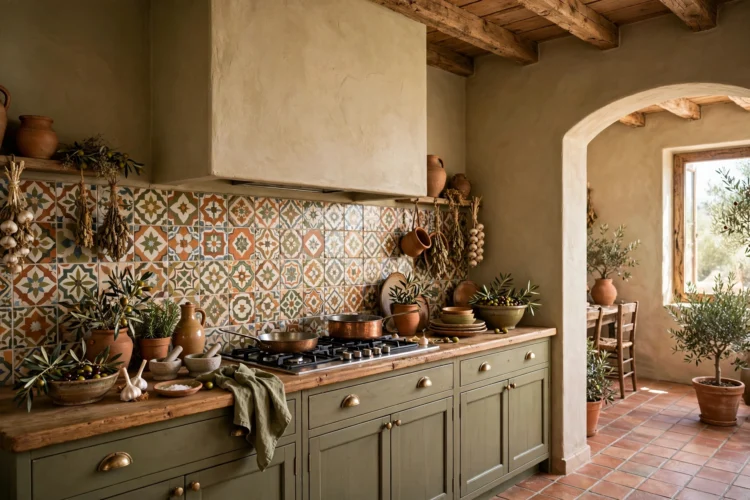
Patterned tile, terracotta floors, and olive cabinets bring Mediterranean warmth to a standard kitchen. Here are 11 ideas that adapt the look at home.
Mediterranean kitchen ideas bring the sun into the room: patterned tile, warm stone, terracotta floors, and olive tones that feel like a holiday without leaving home. The look draws on Spanish, Greek, and Italian kitchens, but it adapts well to standard US cabinetry and layouts. You do not need arched doorways or a villa to use it. The eleven ideas below work with ordinary cabinet boxes and standard appliances, and each one adds a layer of warmth that survives daily cooking.
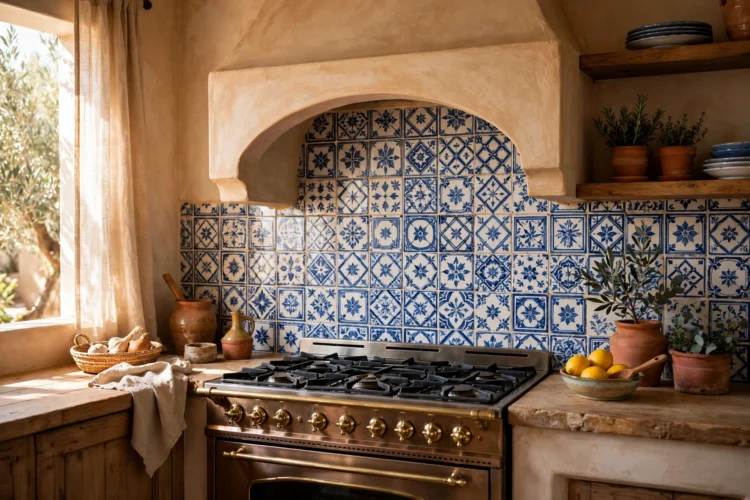
Patterned tile is the signature of a Mediterranean kitchen. A cement-look tile in blue and white, a terracotta and cream pattern, or a hand-painted style backsplash gives the room its character in one move. The pattern does the decorating, so the cabinets can stay simple and the counters can stay clear.
Use the pattern in one strong spot, such as the backsplash behind the range or the floor in front of the island, and keep the rest of the surfaces plain. A busy pattern on the backsplash and another on the floor will fight each other. Order a few sample tiles and look at them in your kitchen light, since strong patterns change a lot between a showroom and a north-facing room.
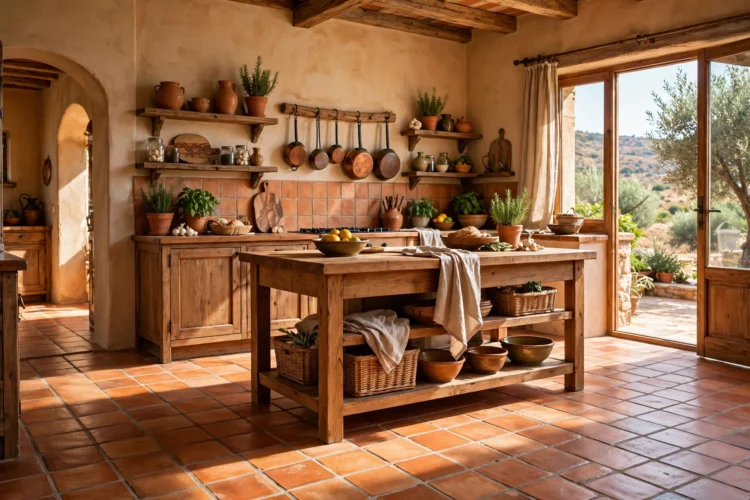
Terracotta floors are the warm base of a Mediterranean kitchen. The orange-brown clay tone grounds the room, hides crumbs better than a pale floor, and feels warm underfoot in the morning. Large format terracotta-look porcelain gives the same color with less sealing and easier cleaning than real clay tile.
If a full terracotta floor feels too strong, use it in a smaller area such as the entry to the kitchen or a rug-sized inset in front of the range. Keep the grout a warm sand color so the joints blend instead of drawing a grid. Seal real terracotta properly and re-seal it once a year so cooking spills do not stain.
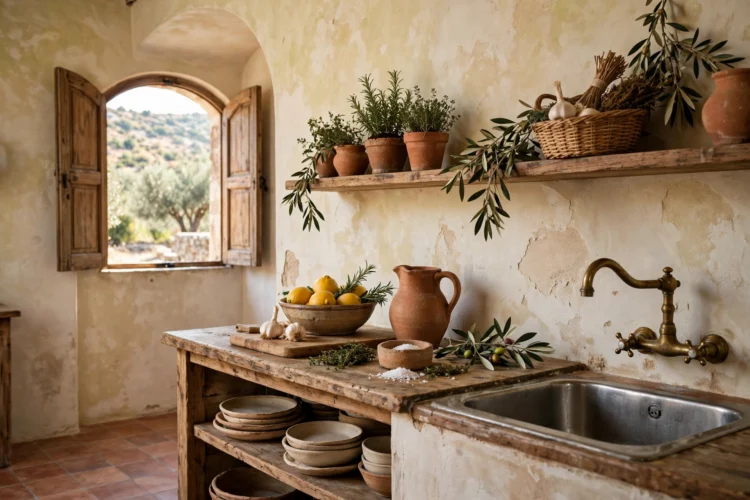
Flat painted drywall looks too smooth for a Mediterranean kitchen. A plaster or limewash finish adds the soft texture and subtle color variation of an old villa wall. The finish catches light differently across the day, so a plain cream wall suddenly has depth and movement.
Limewash works well on a single feature wall or above the backsplash, where the texture shows without overwhelming the room. Apply it in thin layers with a wide brush and let each layer dry before the next. The result should look slightly uneven, since that variation is the whole point of the finish.
Olive green and deep green cabinets are the Mediterranean answer to white kitchens. The green reads as a natural color, so it pairs easily with terracotta, wood, and brass, and it hides cooking marks better than a pale finish. A soft olive on the island with warm white wall cabinets gives the room a focal point without painting the whole kitchen dark.
Test the green in your own light before committing, since olive shifts toward gray in cool light and toward yellow in warm light. A calm cohesive color palette helps here: one green, one warm white, one wood tone, and one metal keep the room settled even when the cabinet color is bold.
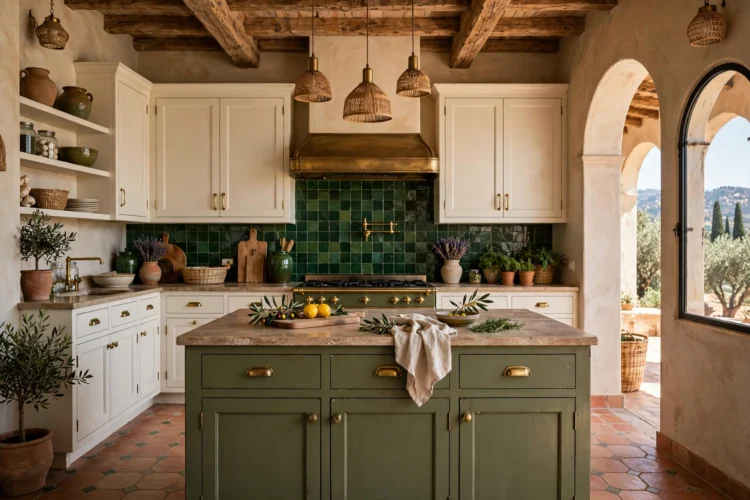
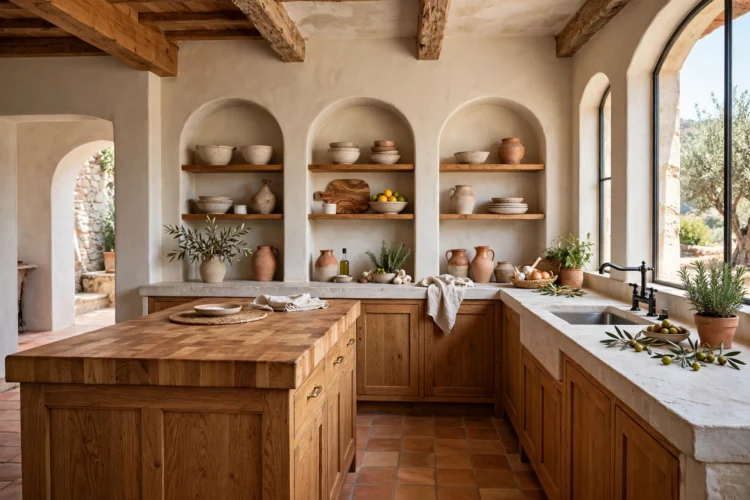
Arches are the shape that says Mediterranean more than any color or tile. A full arched doorway is a big project, but small arches are easy: an arched niche in the backsplash, an arched opening in a pantry wall, or a curved top on a range hood. Each one softens the straight lines of standard cabinetry.
Keep the arches simple and few. One arch in the room reads as a feature; five arches read as a theme park. Match the arch curve to the room scale, a gentle curve for a small kitchen and a deeper curve for a tall one, so the shape feels built in rather than stuck on.
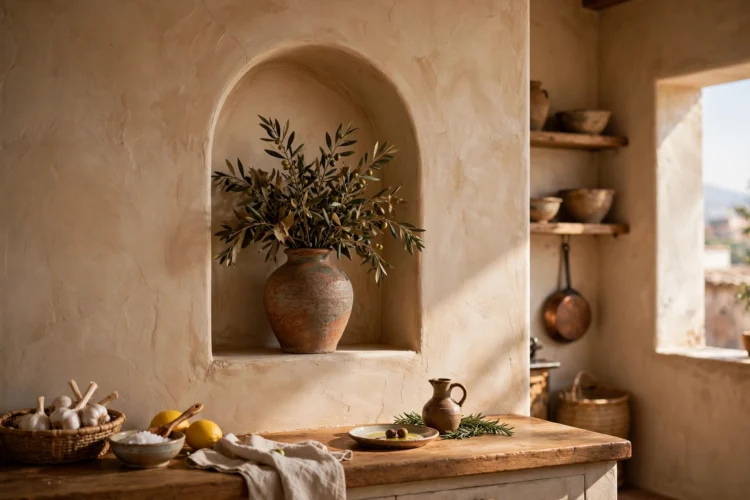
An arched niche in the wall beside the range or above the sink gives the kitchen a built-in display spot for a few ceramic pieces or a small olive branch in a vase. The niche should be shallow, about four to six inches deep, so it holds a display without stealing counter space. Paint the inside the same color as the wall so the arch shape, not a color change, does the work.
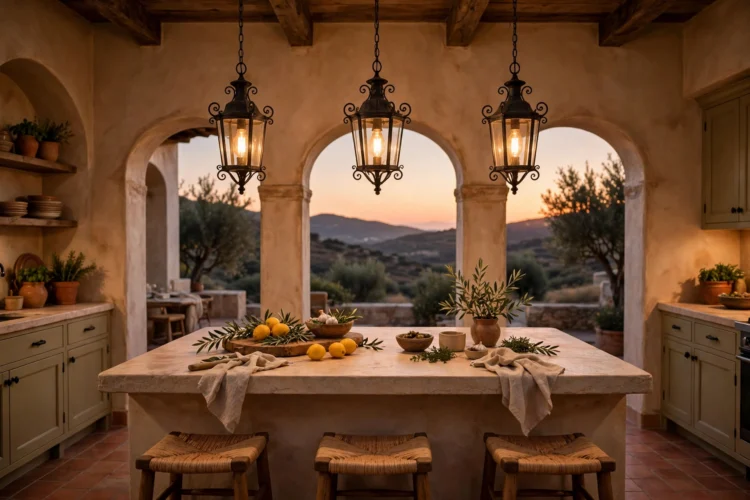
Wrought iron adds the dark, hand-forged note a Mediterranean kitchen needs against all that warm tile and plaster. A simple iron chandelier over the table, iron lantern pendants over the island, or iron cabinet pulls with a hammered finish give the room weight and age. The dark metal balances the pale walls the way a dark anchor balances a neutral room.
Keep the iron matte and simple, not ornate. A clean lantern shape or a straight bar pull suits a modern Mediterranean kitchen better than heavy scrollwork. Wall sconces for ambient evening light in iron work well on a plaster wall, casting a warm pool of light that makes the texture glow after dark.
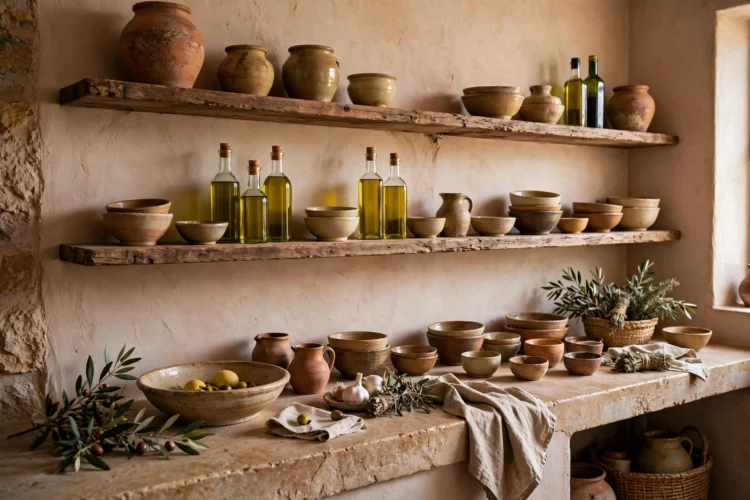
Open shelves in a Mediterranean kitchen should look like a pantry shelf in a Greek taverna: handmade pottery, glass olive oil bottles, a stack of bowls, and a jar of dried herbs. The pieces are useful, the colors are warm, and nothing on the shelf was bought as a prop. The display earns its place because the kitchen actually uses it.
Limit the shelf to one or two runs and group the pieces by color and height. Tall bottles at the back, bowls in the middle, and a small plant at the end keep the shelf tidy. Leave one stretch of shelf empty so the display can breathe, and rotate the pieces with the seasons so the shelf never looks frozen.
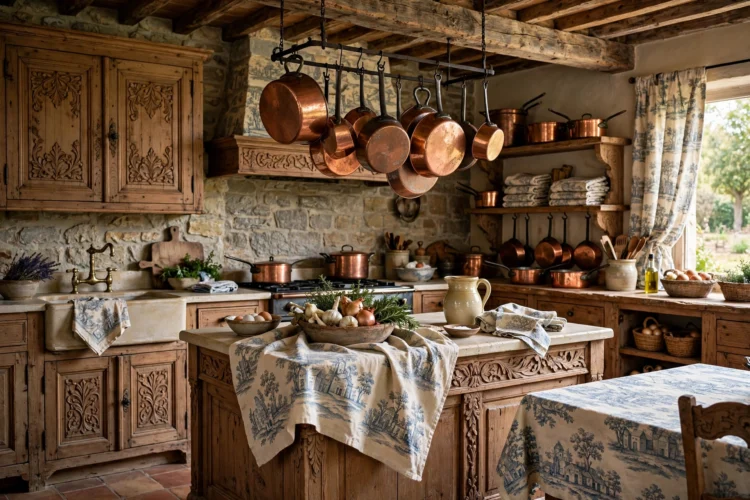
A stone or butcher block counter is the working heart of a Mediterranean kitchen. Honed limestone, travertine, or a thick butcher block top in warm oak all suit the style, and each one ages gracefully with use. The surface should look better after a year of cooking, not worse.
Use stone on the perimeter counters and wood on the island, or the other way around, so the two materials balance each other. Seal the stone properly and oil the wood every few months. A worn spot on a butcher block sands out in an afternoon, which is part of why the material suits a kitchen that gets cooked in daily.
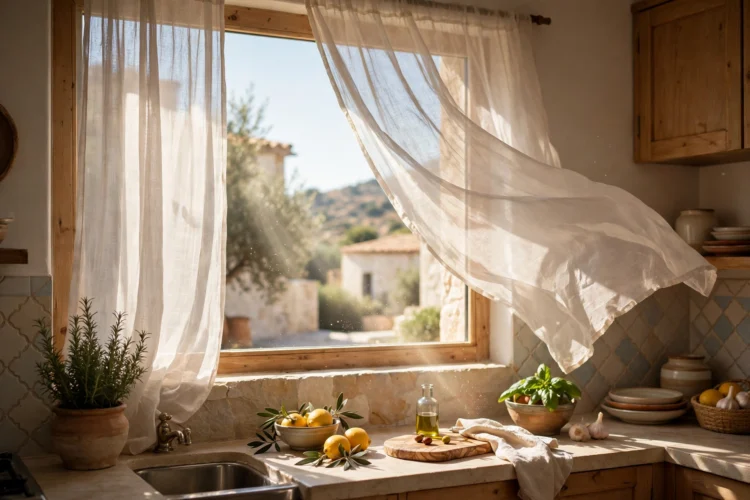
Mediterranean kitchens are built around sunlight, and heavy curtains block the very thing the style celebrates. A sheer linen panel filters the sun without stopping it, and it moves with the breeze in a way that blinds cannot. The pale fabric softens the window frame and lets the patterned tile and warm wood do the talking.
Hang the linen on a simple iron or wood rod and let it fall to the sill, not the floor, so it stays clear of cooking splashes. Change the panels with the seasons using seasonal decor swaps that refresh without redecorating, such as a lighter weave for summer and a slightly heavier linen for winter. The window stays bright all year.
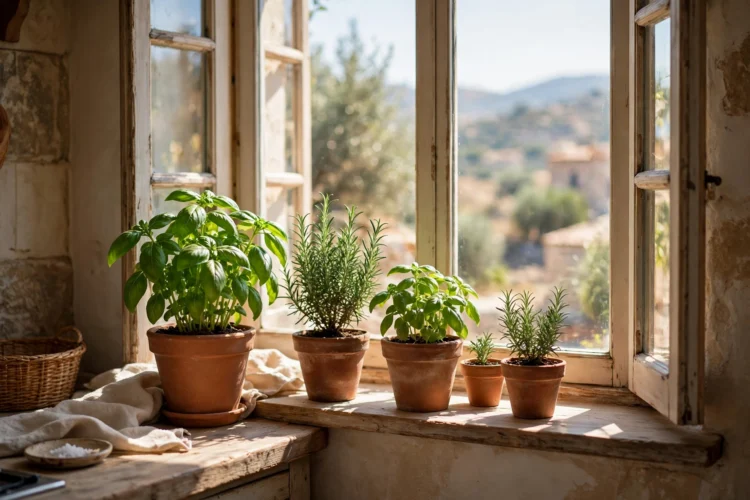
Fresh herbs are the final layer of a Mediterranean kitchen: basil, rosemary, oregano, and thyme in small terracotta pots on the windowsill. The plants smell like the food the kitchen makes, they cost little, and they give the cook a reason to reach for the sill while dinner simmers. A herb that gets used stays healthy because it gets pruned.
Give the herbs the sunniest sill in the kitchen and water them when the top inch of soil feels dry. Label the pots with a simple tag so guests can find the basil without asking. Indoor plant display ideas translate directly to a kitchen windowsill, where a row of terracotta pots turns a plain sill into the most used spot in the room.