Physical Address
304 North Cardinal St.
Dorchester Center, MA 02124
Physical Address
304 North Cardinal St.
Dorchester Center, MA 02124

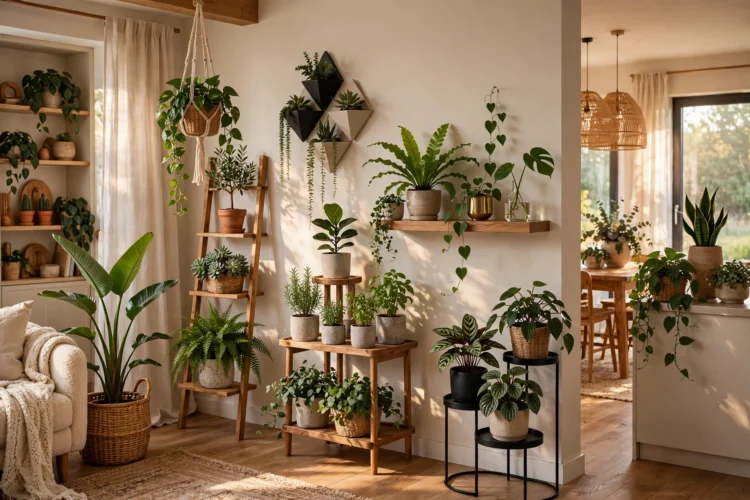
Plants belong in the design of a room, not just on the windowsill. These nine displays use stands, hanging clusters, and shelf styling to turn greenery into a layer of the decor.
Indoor plant display ideas start where the windowsill ends. A windowsill holds three small pots and then it is full, while the rest of the room stays bare, which is a waste of good greenery. Displaying houseplants as a layer of the design, like art or textiles, places them where they shape the room instead of crowding the light. The nine displays below move plants onto stands, into hanging clusters, along shelves, and into corners that need life, and each one considers light, water, and the way you actually live with the plant. Pick the display that fits your light and your patience, and the greenery will start working for the room instead of just surviving in it.
A plant stand is the simplest way to give a floor plant a stage, and it solves the most common plant problem, which is a beautiful plant sitting on the floor where nobody sees it. A stand lifts the pot 30 to 60 centimeters, puts the leaves at eye level from the sofa, and turns the plant into a piece of furniture rather than an afterthought. Choose a stand that fits the pot, not the other way around, and check that the top is wide enough to hold the pot with a centimeter to spare on each side.
Materials matter as much as height. A slim metal stand suits a modern room, a wooden tripod warms up a plain corner, and a rattan stand fits a room that already has natural textures. Indoor plant stands in metal, wood, and rattan all work, as long as the top fits the pot. If you like to build, our guide to DIY plant stand designs for indoor greenery covers eleven stands you can make in a weekend, from simple three-legged designs to tiered stands that hold a whole collection.
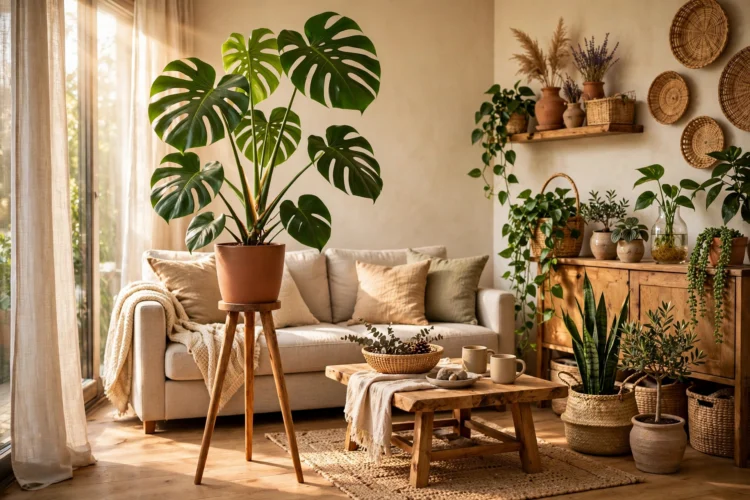
Hanging plants indoors earn their place when they hang at different heights, because a row of pots at the same level reads as a shelf that lost its shelf. Hang three planters in a cluster, one high, one in the middle, and one low, with at least 20 centimeters between them, and the group reads as a single arrangement. Trailing plants suit this display best, since their vines fill the gaps between the pots and soften the lines of the hangers. Pothos, string of pearls, and spider plants all trail well and forgive a missed watering.
Hang the cluster where it gets light without blocking it, such as beside a window rather than in front of it, or from a ceiling hook in a corner that gets bright indirect light. Check the ceiling fixing before you hang anything heavy, and use a hook rated for twice the weight of the watered pot, since wet soil is far heavier than dry. A cluster of three small pots weighs less than one large floor plant, which makes it a good choice for renters who cannot drill into walls.
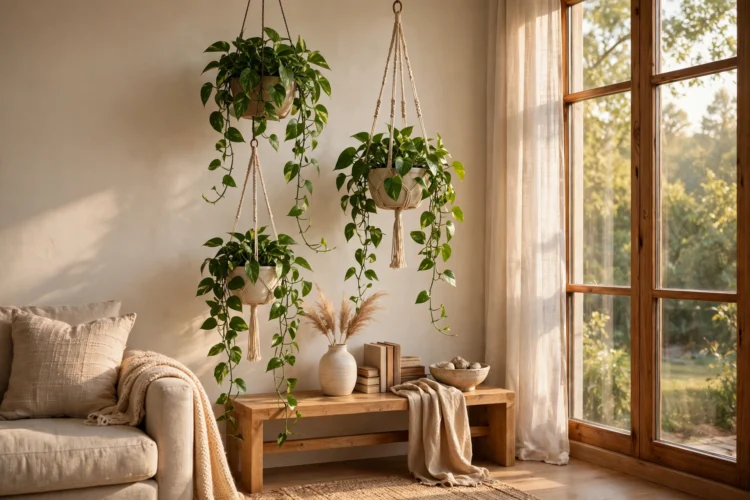
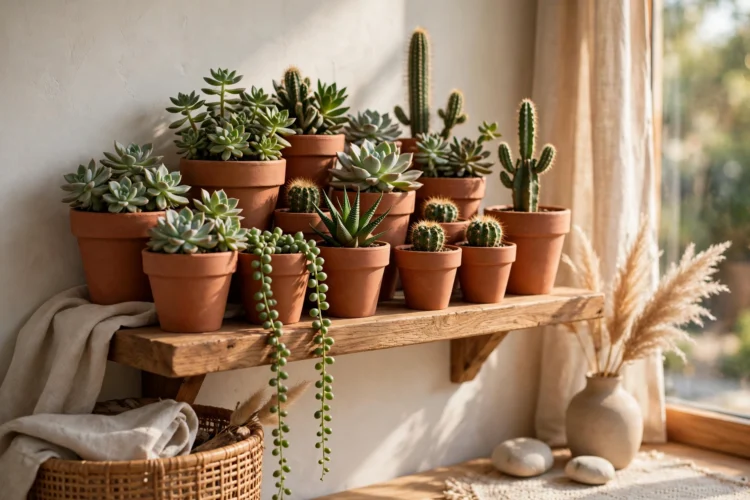
A shelf styled like a small greenhouse turns a collection into a display instead of a crowd. Group five to seven plants on one shelf, mixing heights, leaf shapes, and pot colors, and leave a gap of open shelf between groups so the eye can rest. The tallest plant goes at the back or at one end, the trailers hang over the front edge, and the smallest pots fill the middle. The shelf itself should be deep enough for the pots, about 25 to 30 centimeters, so nothing sits half off the edge.
Light decides which shelf works. A shelf near a bright window suits sun lovers like succulents, while a shelf across the room suits low-light plants like snake plants and ZZ plants. Style the shelf with a book or a stone between the pots to break up the green, and plant shelf styling includes rotating the plants a quarter turn every two weeks so they grow evenly. For shelf ideas that hold plants alongside books and objects, our living room bookshelf styling ideas that look collected show how to mix greenery with the rest of the shelf.
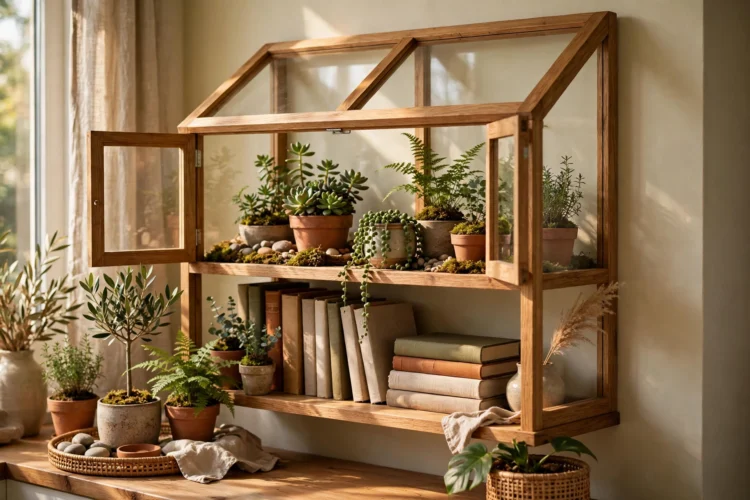
A ladder shelf leans against the wall and gives each plant its own rung, which suits trailing plants that need room to spill. The top rung holds a small upright plant, the middle rungs hold the trailers, and the bottom rung holds a large pot or a watering can and a pair of snips. Because the shelf leans, it needs a wall behind it and a floor that stays dry, so keep it out of the direct splash zone of a sink. The open frame lets light reach every rung, which is why plants on a ladder shelf grow more evenly than plants crowded on a flat shelf.
A ladder shelf also works as a room divider in a studio, since you can see through it and the plants soften the line between two zones. Keep the heaviest pots on the lowest rung, where the shelf is most stable, and anchor the top to the wall with a small bracket if you have kids or pets. If a leaning shelf does not suit the room, our roundup of floating shelf styles you can build yourself offers a wall-mounted alternative that holds plants just as well. The shelf itself becomes part of the display, so choose one in a finish that matches the room, and let the wood or metal show between the pots instead of hiding it behind a wall of green.
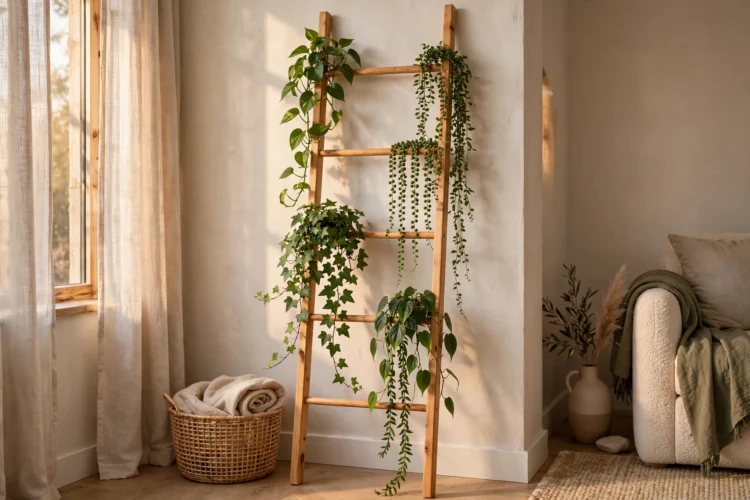
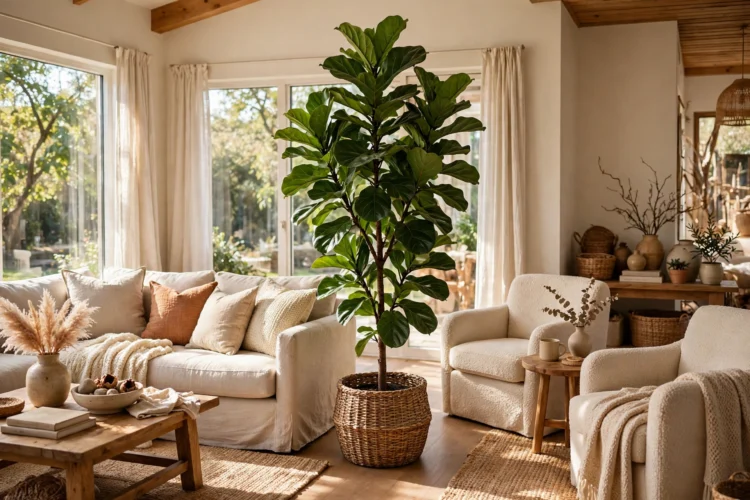
A big plant divides a room more gently than any piece of furniture, and it does the job while adding life to a space that felt flat. A tall fiddle leaf fig, a monstera, or a group of three snake plants in a long planter marks the edge of a seating area without blocking the light or the conversation. The divider works best when the plants sit in a planter that matches the room, such as a low concrete trough or a woven basket, so the base reads as furniture and the leaves read as a screen.
Place the divider where it gets enough light to stay healthy, which usually means within a few meters of a window, and rotate the planter every month so the plants do not lean toward the light. A plant divider suits an open-plan living room, a studio, and a home office that shares space with a bedroom. For more ways to use greenery as a divider, our guide to plant room divider ideas with living greenery covers eight arrangements, from a single tall plant to a full shelf of greenery that still lets light through.
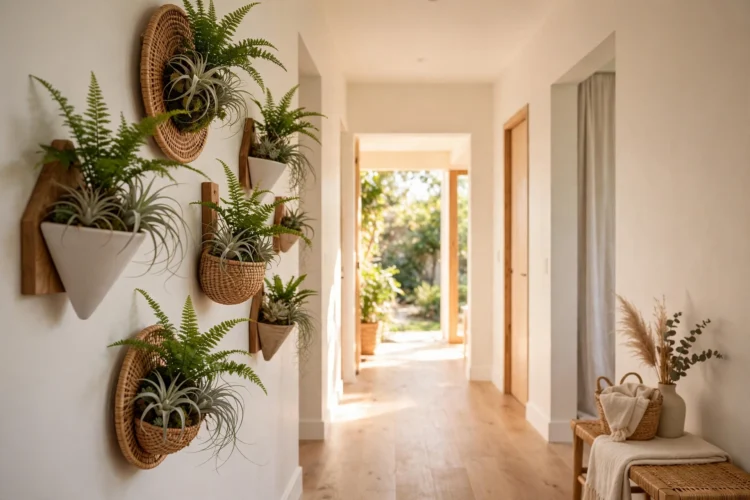
Wall-mounted planters suit small rooms because they put greenery on the wall instead of the floor, and the floor stays free for living. A row of three wall planters beside a desk, or a single large planter above a side table, adds life to a wall that would otherwise stay blank. Choose planters with a built-in water reservoir or a removable inner pot, since a wall planter that leaks will mark the wall below it. Small plants suit wall planters best, like air plants, small ferns, and trailing pothos cuttings that root in water.
Mount the planters at a height you can reach without a step stool, and keep them away from radiators and air conditioning vents, which dry the soil fast. A wall of planters also works in a bathroom, where the humidity suits ferns and the plants enjoy the steam from the shower. The display reads as intentional when the planters match, so buy a set in one finish rather than mixing styles.
The prettiest plant display fails if the plants in it need different amounts of water, because one plant drowns while the next one dries out. Group plants by water needs instead of by looks, and the display becomes easy to care for. Succulents and cacti share a shelf, since both want a deep soak and then a long dry spell. Ferns and calatheas share a shelf too, since both want steady moisture and humidity. When every plant on a shelf wants the same care, watering becomes one job instead of five.
This grouping also helps the plants look better, because plants with the same needs usually come from the same kind of habitat, and their leaf shapes sit well together. A shelf of desert plants reads as a desert, and a shelf of jungle plants reads as a jungle, while a mixed shelf reads as a garden center. Water the whole group on the same day each week. The routine takes ten minutes, and the plants reward it with steady growth.
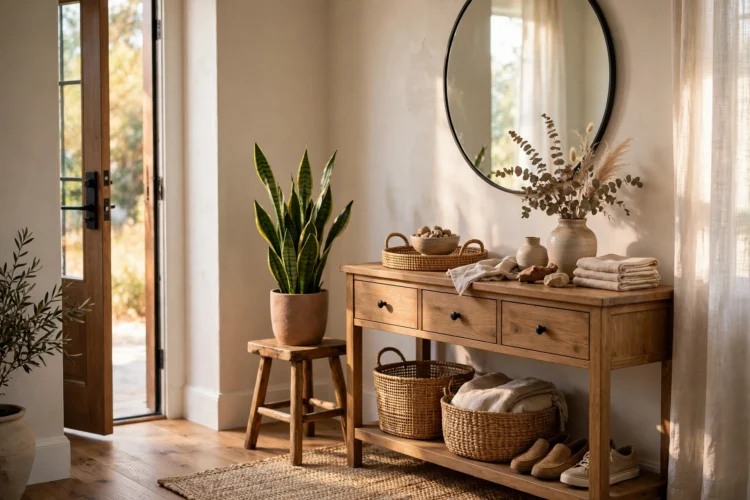
The entryway is the first room guests see, and a plant there sets the tone for the whole home. A medium plant on a small stool or a stand beside the console table greets people without blocking the door, and it survives because the entryway usually gets light from the front door or a sidelight. Choose a plant that tolerates a draft, like a snake plant or a ZZ plant, since the front door opens and closes all day. A plant in the entryway also hides the clutter of keys, mail, and shoes, because the eye goes to the green first.
The ninth idea is the bathroom stool, which is the smallest display in this list and one of the most effective. A small stool beside the bath holds a fern or a pothos, and the humidity from the shower keeps it happy with almost no extra watering. The stool keeps the pot off the wet floor, and it gives the bathroom a spa feel for the price of a plant and a stool you may already own. If the bathroom has no window, choose a plant that tolerates low light and move it to a brighter room for a weekend every month, which is enough to keep it growing.
Start with one display and three plants that want the same care, and let the collection grow from there. A plant that thrives in its spot will tell you it is happy by growing, and a display that works will make the whole room feel alive.