Physical Address
304 North Cardinal St.
Dorchester Center, MA 02124
Physical Address
304 North Cardinal St.
Dorchester Center, MA 02124

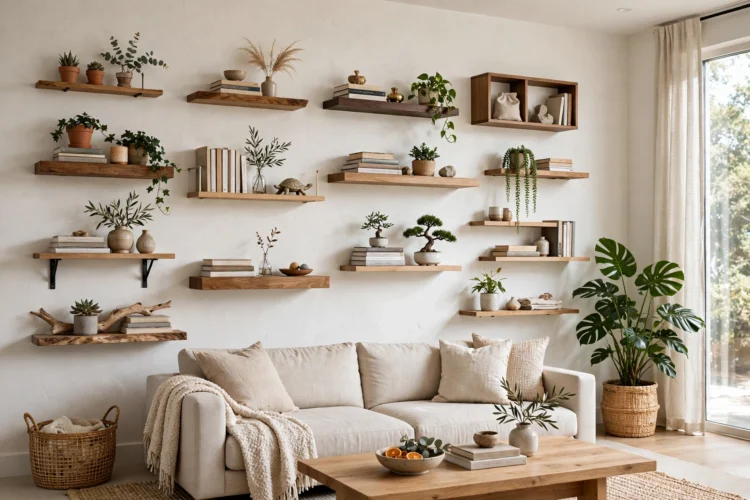
Fourteen floating shelf styles, from hidden-bracket planks to live edge slabs, with mounting guidance for each one.
A floating shelf hides its support, so the board looks like it grows out of the wall. These floating shelf styles come in more shapes than the basic plank most people picture, and each style mounts a little differently. This guide covers 14 styles, grouped into ten builds, with the mounting method and the best room for each. Before you start, find the studs: a shelf that holds books needs screws in solid wood, not just drywall anchors. A stud finder costs little and saves you from a shelf full of books landing on the floor at 2 a.m.
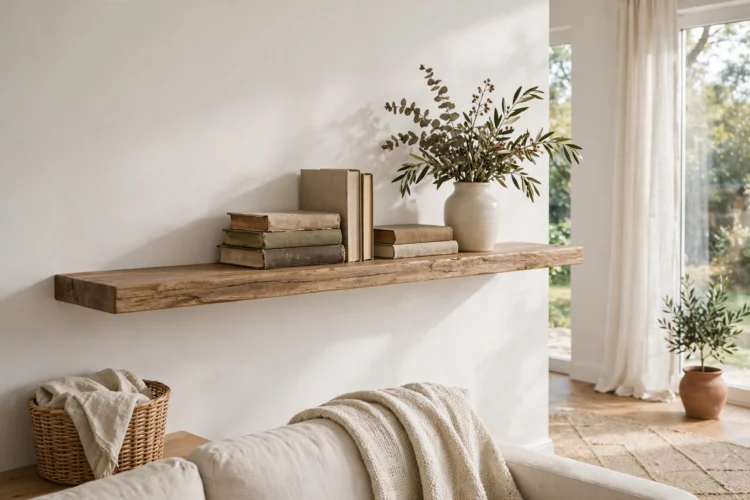
The classic floating shelf is a solid wood plank with a metal rod bracket hidden inside it. The bracket bolts to the wall, the plank slides over the rods, and a small set screw underneath locks it in place. Buy a kit that matches your plank thickness, usually 1.5 inches works well, and drill the rod holes straight with a level and a steady hand. This style suits books, plants, and framed photos in a living room or bedroom, and it holds around 20 to 30 pounds when it is fixed into two studs. Keep the span under 36 inches so the middle does not sag over time. Hidden bracket shelves work best on walls where the studs sit 16 inches apart, so measure before you buy the kit. Paint it the wall color for a shelf that almost disappears, or stain it to match your floor for a warm contrast.
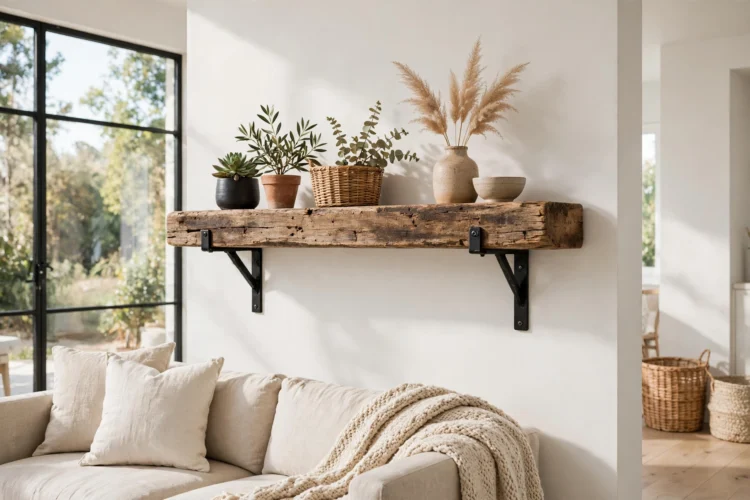
L-brackets put the support on show, and that is the point. Black steel brackets under a thick wood plank give a workshop feel that suits kitchens, home offices, and loft-style rooms. Space the brackets no more than 24 inches apart and screw them into studs with 2.5-inch wood screws. A reclaimed wood plank works well here because the rough surface and the dark steel look like they belong together. This is also the easiest of all DIY floating shelves to level, since you can see the bracket and adjust it before you set the plank on top. For a kitchen version of this look, these open shelving kitchen ideas show how bracketed shelves replace upper cabinets without a full renovation.
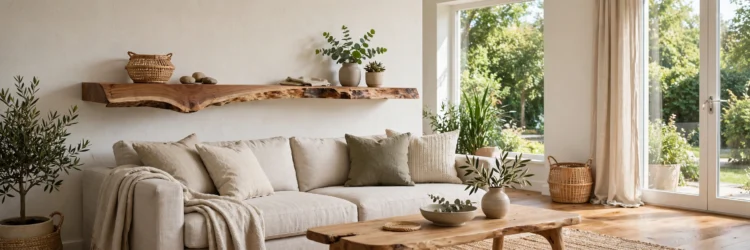
A live edge shelf keeps the natural edge of the tree, bark line and all, and it turns a shelf into a piece of furniture. Buy a kiln-dried slab, sand it smooth with 120-grit then 220-grit sandpaper, and seal it with clear oil or a matte polyurethane so the grain shows through. Mount it on a hidden rod bracket, the same as the classic plank, but choose rods rated for the slab weight, since live edge pieces run heavy. A single live edge shelf above a sofa or a bed makes a strong focal point, and two of them stacked in a bathroom hold towels and jars with a spa-like feel. A live edge floating shelf costs more than a plain plank, but the grain makes it worth the price. Seal the underside too, so humidity in a bathroom does not warp the wood over the years.
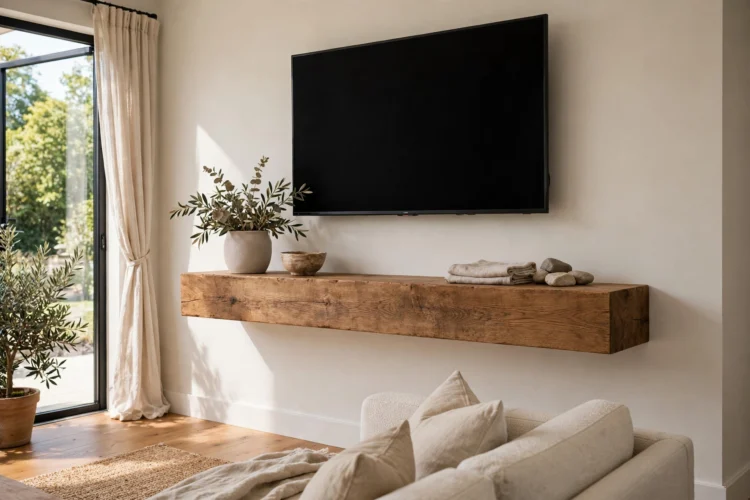
A box beam shelf is a hollow rectangle built from thin boards, and it reads as a chunky beam from across the room. Cut a top, a bottom, and two side strips, glue and nail them into a U shape, then slide the open back over a wall-mounted cleat. The hollow center hides cables, which makes this style perfect under a wall-mounted TV or beside a desk. Build it from pine for a painted finish, or from oak-veneer plywood for a stain-grade look. The box beam style also covers the thick mantel shelf variation: build it deeper, around 10 inches, and it holds a row of candles, a clock, and a vase without looking crowded. Keep the depth under 12 inches so the shelf does not overpower a small room.
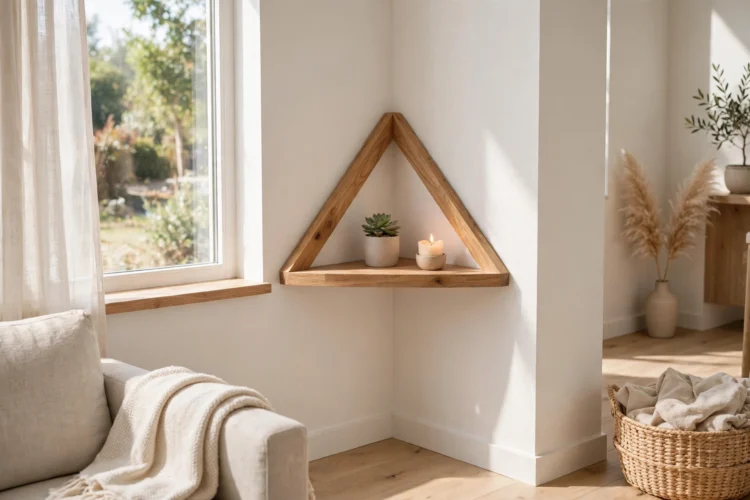
Corners waste space in most rooms, and a corner floating shelf puts that space to work. Cut a triangular or quarter-circle board, or buy a pre-cut corner shelf, and mount it with a hidden bracket on each wall so the two walls share the load. A small corner shelf holds a plant, a candle, and a book in a bathroom or a reading nook. Stack three of them up the corner and you get a vertical display that takes zero floor space. The trick is measuring both walls: mark the height on each wall with a level, then check that the two marks line up before you drill. A corner shelf in a pantry works just as well, and these pantry shelving ideas for every budget show how to pair corner shelves with straight runs for a full storage wall.
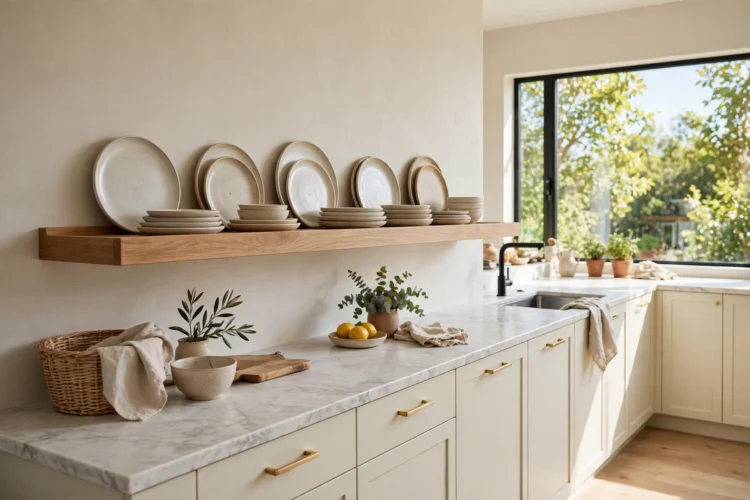
A lip shelf adds a thin raised edge along the front, which keeps plates, books, and jars from sliding off. Build it like a classic plank, then glue a half-inch strip along the front edge and sand it flush. This small detail matters in a kitchen, where a shelf full of plates sits above a counter, and in a kids room, where books lean at angles. The lip also gives the shelf a finished, furniture-like edge that a plain plank lacks. Paint the lip a contrasting color for a graphic look, or keep it the same stain so it reads as one solid piece. The picture ledge is a close cousin of this style: a deeper lip and a groove near the back let framed prints lean safely, which makes it the best floating shelf for rotating art and photos.
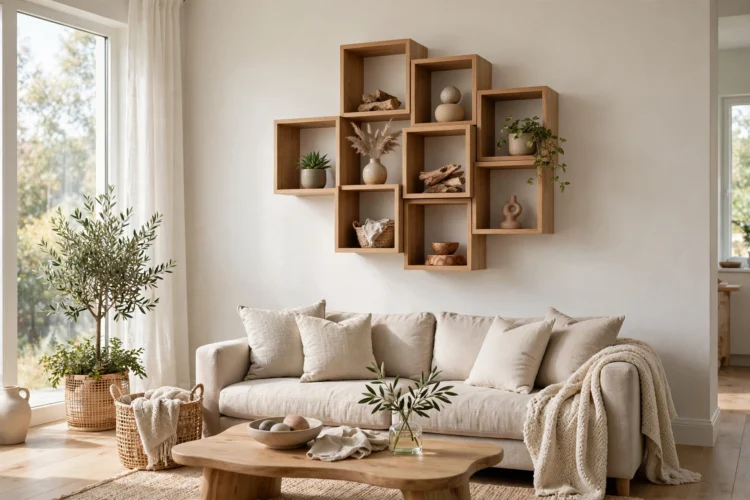
A cube shelf is a square box mounted on the wall, open at the front, and it works as a shelf and a small display case at once. Build one from four boards joined at the corners, or buy a set of three cubes in different sizes and arrange them in a cluster. Cubes hold plants, small sculptures, and kids toys, and they look best in odd numbers with space between them. Mount each cube with a French cleat or two keyhole brackets so it sits flat against the wall. The cubby variation divides one long box into two or three compartments, which suits a hallway for keys, mail, and sunglasses. Space the cubes unevenly on purpose: a straight row looks like a bookcase, while a scattered cluster looks like a design choice.
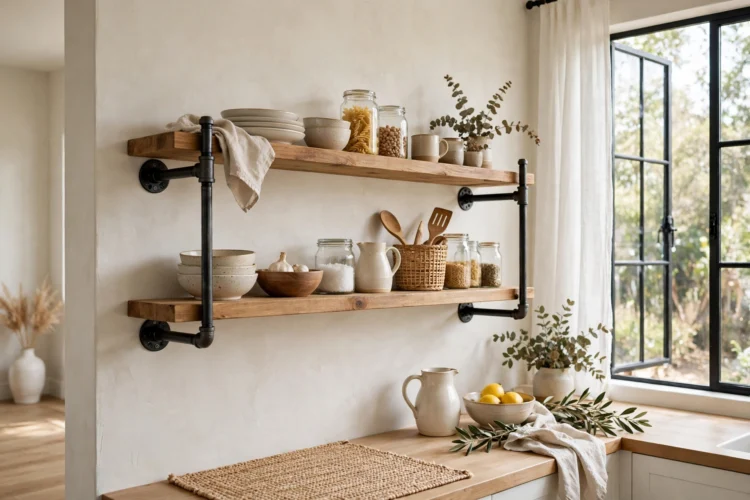
Black pipe fittings and wood planks make a shelf that looks straight out of a factory loft. Buy threaded pipe flanges, short pipe lengths, and elbow fittings from the plumbing aisle, and screw the flanges into studs. The pipes form a frame under the plank, and the plank simply rests on top, so you can lift it off to clean or restain it. This style holds heavy loads, which makes it a good choice for a kitchen shelf full of cast iron pans or a garage shelf for paint cans. The raw steel and wood pairing also suits a bathroom, where it holds folded towels and jars. For more storage that hides the everyday clutter, these bathroom storage ideas pair well with a pipe shelf above the toilet or beside the vanity.
A shelf with a light strip underneath does two jobs: it displays what sits on top and lights the surface below. Mount a slim LED strip under the front edge of a classic plank shelf, run the cable through a small hole in the back, and plug it into a switched outlet or a battery pack hidden behind a book. Warm white light at 2700K flatters wood and makes a kitchen counter glow, while cool white suits a desk or a workbench. This style works beautifully in a kitchen, where the shelf lights the counter for evening cooking, and in a bedroom, where it acts as a soft reading light. Add a dimmer switch and the same shelf serves as a night light. The LED strip variation also covers the backlit shelf, where the strip sits behind the plank and washes the wall with light.
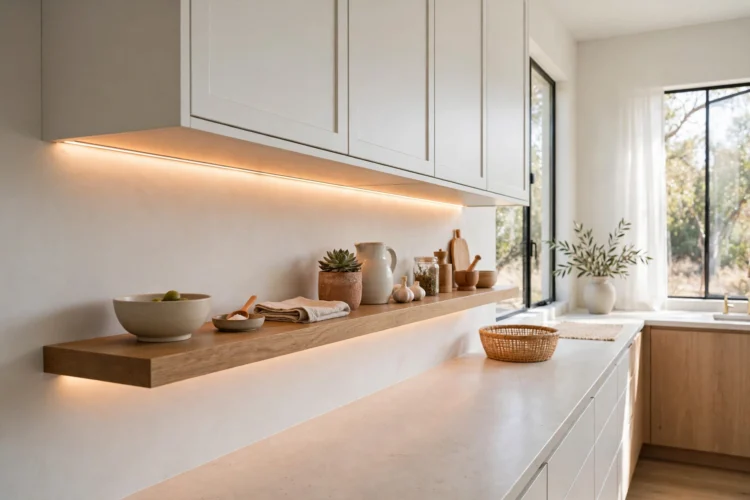
A slim shelf, only 4 to 6 inches deep, fits where a standard shelf would block a walkway. Mount one above a toilet, beside a door, or in a narrow hallway, and it holds a candle, a small plant, and a book without sticking out into the room. The same slim profile works in a kitchen as a spice shelf: line up jars in a single row where you can read every label. Mounting is the same hidden-bracket method, but with shorter rods and lighter loads, so a single stud plus a good wall anchor is enough. Stack two slim shelves 12 inches apart in a bathroom for a layered look that holds more than one deep shelf ever could. For more ideas that free up counter space, these wall-mounted kitchen storage ideas show how slim shelves fit into a busy kitchen.
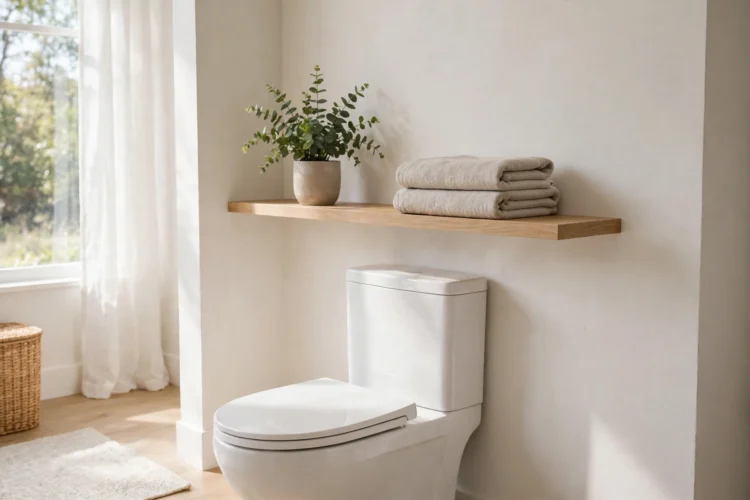
Pick the style that matches the room and the load. A hidden-bracket plank suits a calm living room, a pipe shelf suits a heavy kitchen load, and a slim shelf suits a tight hallway. Measure twice, find the studs, and let the shelf do its quiet job of holding things up without showing how. Floating shelf mounting stays the same across styles: find the studs, level the bracket, and drive the screws in straight.