Physical Address
304 North Cardinal St.
Dorchester Center, MA 02124
Physical Address
304 North Cardinal St.
Dorchester Center, MA 02124

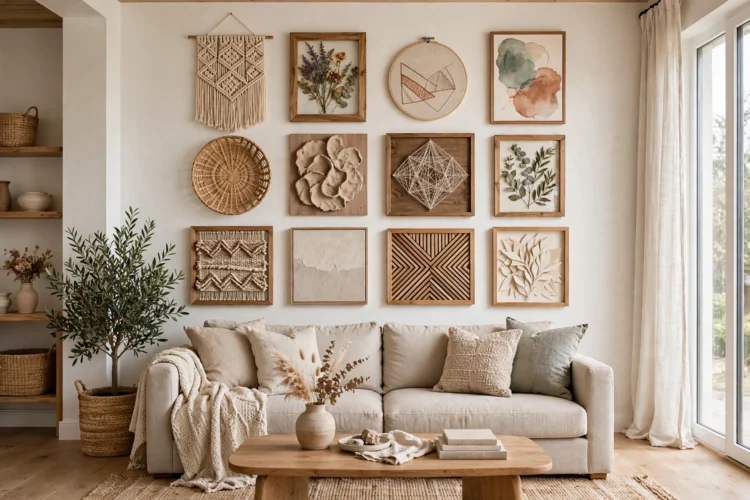
Homemade wall art only looks crafty when the technique is an afterthought. These twelve ideas use layered paper, textured plaster, and confident framing so the finished piece reads as intentional.
Blank walls are the cheapest decorating problem in the house, and store-bought art is the most expensive way to solve it. These DIY wall art ideas work because each one commits to a real technique instead of a shortcut: layered paper, textured plaster, honest framing, and a limited palette. The result looks gallery-worthy because the making shows, in a good way. Pick one technique, buy the few supplies it needs, and give one wall an afternoon.
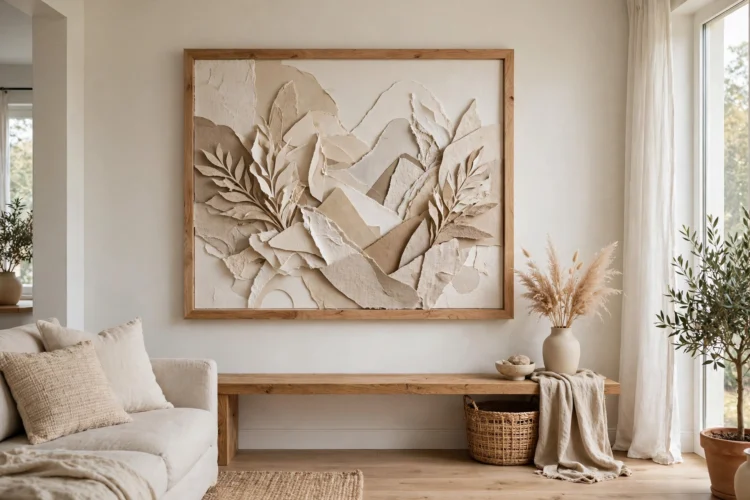
A layered paper collage looks intentional when the palette stays small and the shapes stay bold. Cut torn or straight-edged shapes from three or four papers in one color family, layer them with foam adhesive dots so the edges cast a small shadow, and mount the whole piece on a rigid board. Arches, half circles, and organic blobs read more modern than random scraps, and a thin frame with a wide mat gives the collage the same breathing room a gallery print gets. Use heavyweight paper so the layers hold their shape, and keep the composition to one focal shape instead of filling every corner. The gallery wall ideas here show how a collage like this anchors a larger display without competing with the photos around it.
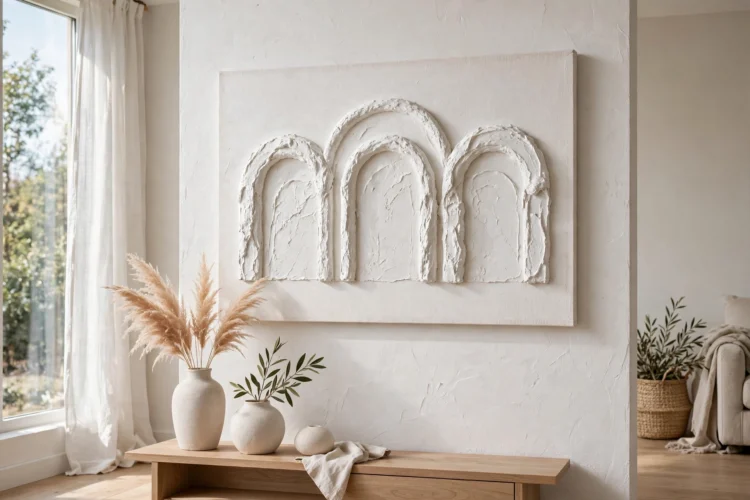
Textured plaster art is the fastest route to a piece that looks bought, because the material does most of the work. Spread joint compound or plaster onto a stretched canvas with a palette knife, build up arches or waves in thick strokes, and let it dry fully before you paint it. One color, usually warm white or a soft clay tone, keeps the focus on the shadows and the texture instead of the paint job. Seal it with a clear matte coat so the surface survives dusting, and hang it where side light hits it, since raking light is what makes the texture visible. A large canvas works best, because the texture needs room to breathe.
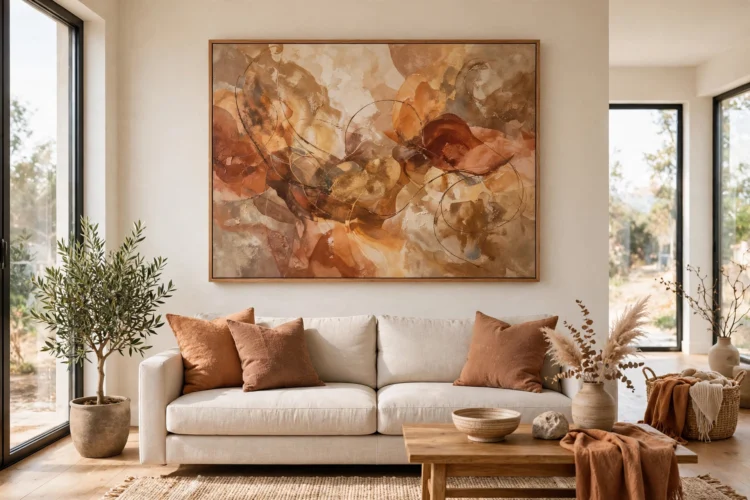
An abstract painting looks confident when you limit yourself to three colors and one big gesture. Pick a palette from the room, for example terracotta, cream, and charcoal, and paint large shapes with a wide brush or a palette knife, leaving plenty of negative space. Work on a canvas at least 24 inches wide so the shapes have room, and step back every few minutes to check the balance. Stop early, since the most common mistake is adding one more shape that the piece did not need. A simple wood frame finishes it, and the painting hangs above a sofa or a bed without apologizing for being homemade wall art.
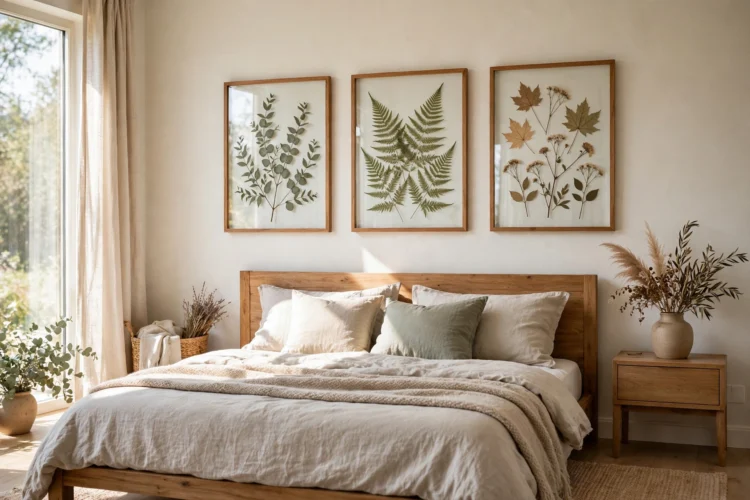
Pressed leaves and flowers look delicate and expensive in the right frame, and the technique is almost free. Press leaves between sheets of paper under a heavy book for a week, then arrange one or two stems on a white backing board inside a floating glass frame. A single stem per frame looks more gallery-like than a crowded arrangement, so make a set of three or four in matching frames and hang them in a row. Ferns, eucalyptus, and olive branches press well and keep their shape, while thick flowers tend to brown. The bedroom accent wall ideas pair well with a botanical row, since the soft green tones warm up a painted wall.
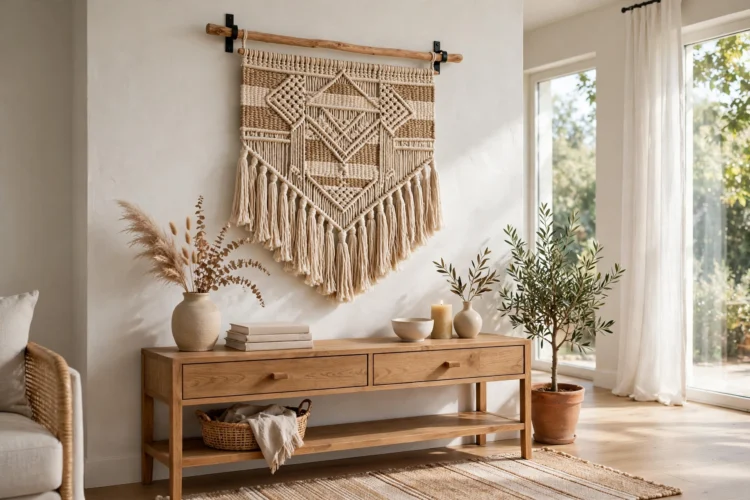
A woven wall hanging adds texture that paint and paper cannot, and a simple loom is just a wooden dowel and some warp string. Weave rows of chunky yarn in two or three colors, add tassels at the bottom edge, and let the piece hang slightly uneven, since perfect symmetry is not the point. Natural wool and cotton in cream, rust, and sage suit most rooms, and a dowel stained to match the furniture ties the hanging to the rest of the space. Hang it above a console table or a bed where its softness contrasts with hard furniture. The wood panel accent wall ideas show how a woven piece softens a hard paneled wall without covering it up.
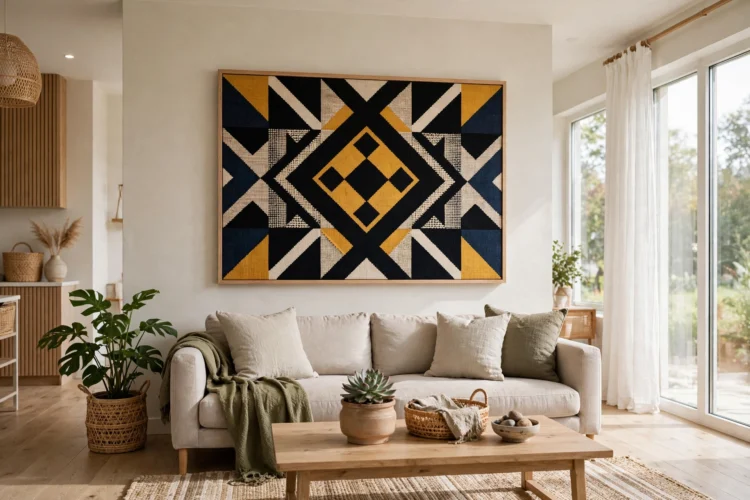
A beautiful fabric stretched in a frame is art with almost no skill required, and the pattern does the work. Choose a fabric with a bold geometric or botanical print, stretch it tight over a canvas frame or mount it on foam board, and hang it like a painting. Vintage scarves, African wax prints, and block-printed cottons all work, and the textile texture reads richer than a flat print. Use a frame without glass so the fabric texture stays visible, and keep the rest of the wall bare so the pattern has room. This is the best option when you love a pattern but cannot commit to it on a whole wall.
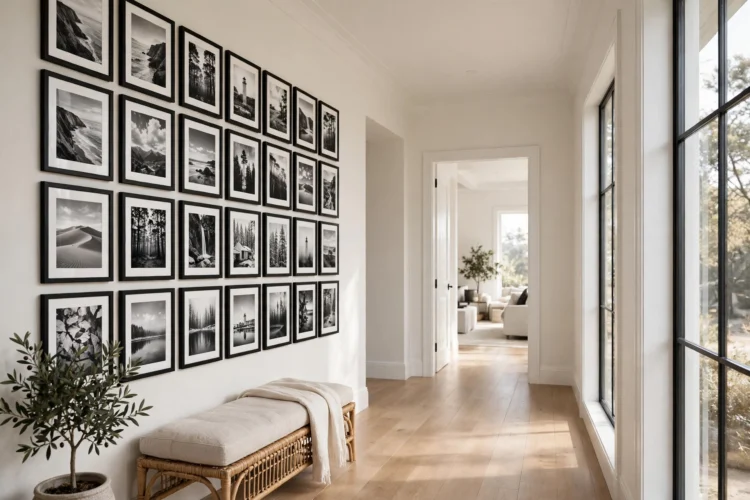
A grid of photographs looks gallery-worthy when the frames match and the photos share a tone. Print nine or twelve photos in black and white, mount them in identical thin black frames, and hang them in a tight grid with even spacing, about 2 inches between frames. Black and white unifies photos from different places and years, and the grid structure does the rest. Use a paper template on the wall to mark the nail positions before you hang anything, since this kind of gallery wall art only works when the spacing is exact. The TV wall ideas here show how a photo grid can share a wall with a screen without looking cluttered.
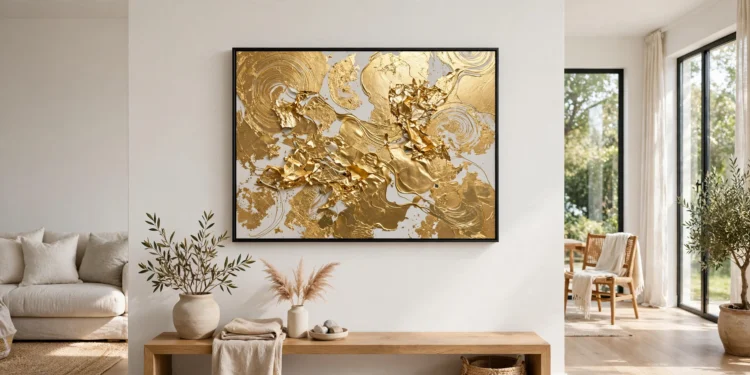
Gold leaf turns a simple canvas into a piece that catches the eye from across the room, and the technique is simpler than it looks. Paint a canvas in a deep color like charcoal or navy, apply adhesive size in a loose pattern of strokes or shapes, and press gold leaf sheets onto the tacky areas with a soft brush. Seal it with a clear coat so the leaf stays put, and frame it thin and black so the gold stays the star. A little imperfection in the leaf is fine, since the cracks and gaps are part of the look. Hang it where it catches natural light, and the gold will glow without any extra effort.
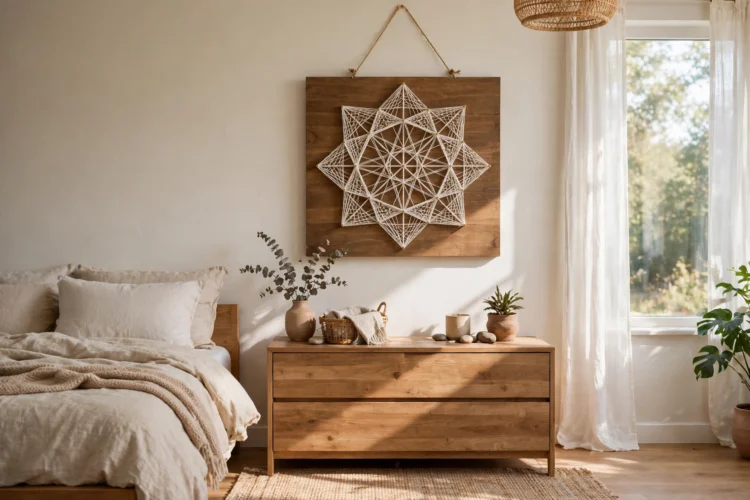
String art looks modern when the shape is simple and the string color is limited to one or two tones. Hammer small nails in the outline of a shape, a mountain range, a wave, or a simple arch, onto a stained wood board, then wind string between the nails in straight lines until the shape fills in. Keep the nail spacing even and the string tension steady, since loose string is what makes string art look messy. A board about 18 inches wide suits a bedroom or a hallway, and a natural wood stain keeps the piece warm. This is a good project for a rainy afternoon, since most of the work is winding string while you listen to something.
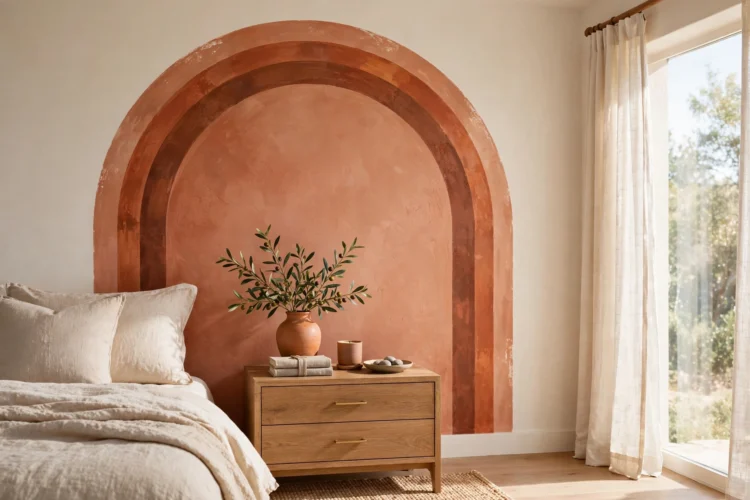
A painted arch on the wall is the boldest idea on this list, and it needs nothing but paint and a steady hand. Mark the arch with a pencil and a string compass, paint it in a warm tone like terracotta or sage, and let it dry before you push furniture against it. The arch frames a bed, a desk, or a reading chair, and it gives the room a focal point without a single nail hole. Keep the color in the same family as the bedding or the cushions so the arch feels connected to the room. The bedroom wall molding ideas offer a more permanent version of the same trick, if you decide the arch deserves to stay.
Good wall art is not about talent. It is about committing to one technique, limiting the palette, and framing the result like it belongs in a gallery. Pick the idea that fits your room, make one piece, and hang it before you talk yourself out of it.