Physical Address
304 North Cardinal St.
Dorchester Center, MA 02124
Physical Address
304 North Cardinal St.
Dorchester Center, MA 02124

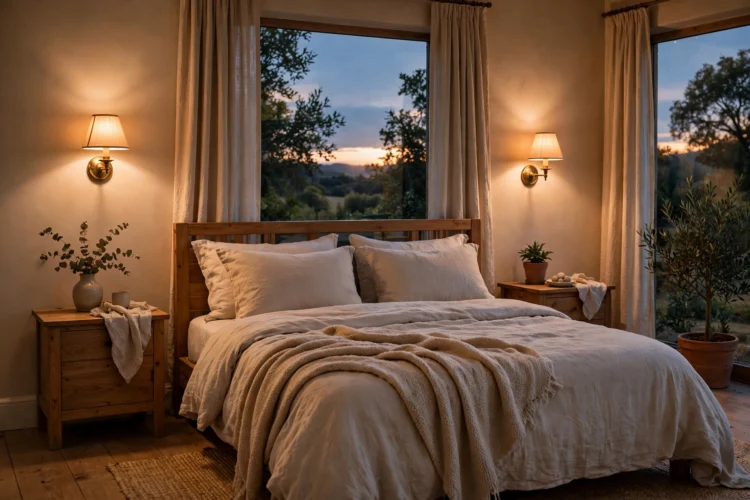
Wall sconces turn flat evening light into something warm. Placed well, they glow without glare and make every room feel calmer after dark.
Wall sconce ideas solve the oldest evening problem in a home: the ceiling light is too bright, and the dark corners feel too dark. A sconce puts light at eye level, where it washes the wall instead of shining down on heads. The result is a soft glow that makes a room feel calm after dark. Sconces work beside beds, along hallways, flanking mirrors, and on either side of a fireplace. They come as plug-in models that need no wiring and hardwired models that sit flush and clean. These 12 ideas cover placement, style, and the small details that keep sconce light warm instead of harsh.
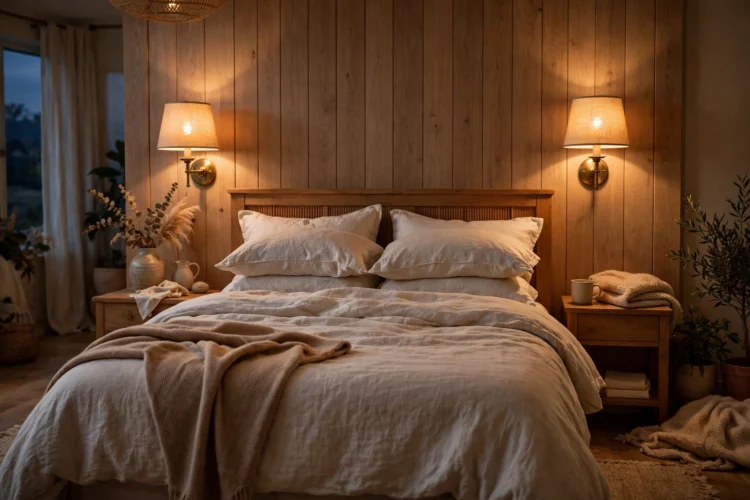
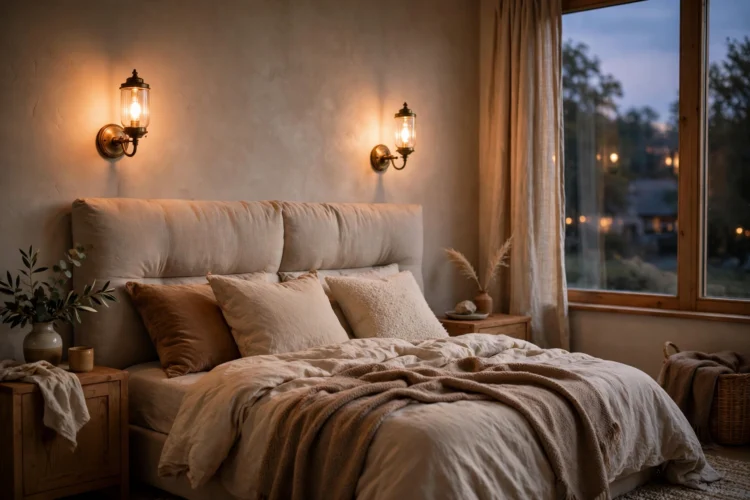
Bedside sconces free the nightstand and end the glare of a table lamp in your eyes. Mount one sconce on each side of the bed, about 60 inches from the floor, so the light falls on the book, not on your face. Choose a shade that points the light down and out, and pick a warm bulb around 2700K so the light feels like candlelight, not office light. A swing-arm sconce lets each sleeper aim the light without waking the other. For more bedroom lighting options, these bedroom lighting ideas cover sconces, pendants, and the mix that suits small rooms.
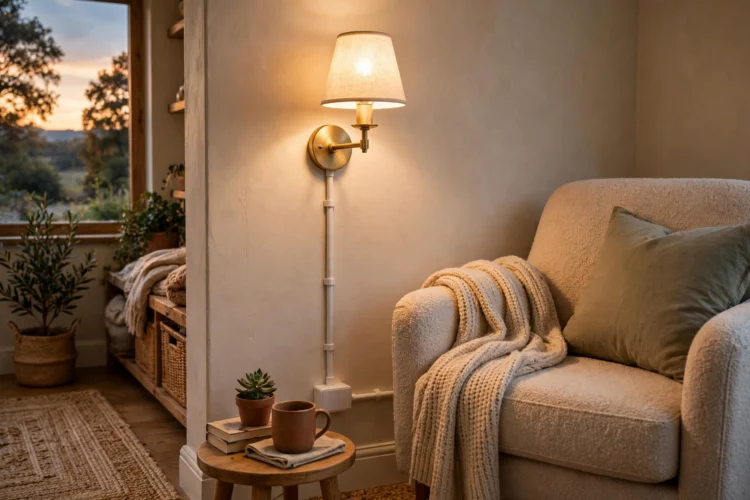
Plug-in wall sconces need no electrician and no holes in the wall beyond two screws. They hang from a small bracket, plug into a nearby outlet, and the cord runs down the wall, hidden behind a cord cover painted to match. This makes them the best choice for renters and for rooms where running new wire would cost too much. Place plug-in sconces where an outlet already sits nearby: beside a reading chair, above a console table, or flanking a mirror. Battery-operated models go further and need no outlet at all, though the light is dimmer and the batteries need changing every few months.
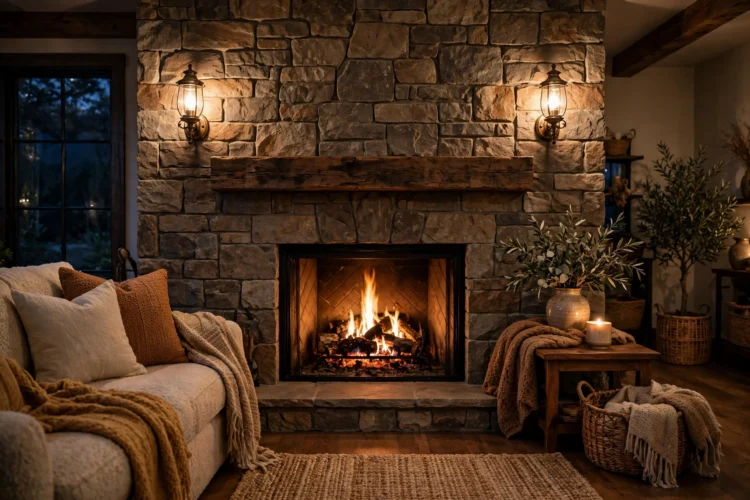
Two sconces on either side of a fireplace frame the fire and spread its glow across the room. Mount them at the same height, about 66 inches from the floor, so the pair reads as one unit. The fireplace already gives the room a focal point, and the sconces extend that warmth outward instead of leaving the side walls dark. Choose shades that match the mantel style: simple linen shades for a classic mantel, and black metal shades for a modern one. When the fire is unlit in summer, the sconces keep the fireplace wall from going dark. Ambient lighting ideas like this one work because the light comes from the edges of the room, not from above.
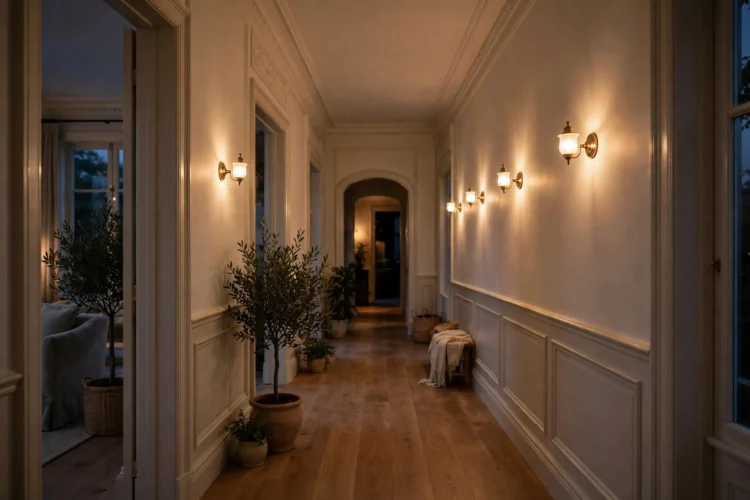
Hallways get too much light from ceiling fixtures and too little from anywhere else. A row of small sconces down one wall turns a hallway into a gallery instead of a tunnel. Space them 8 to 10 feet apart and keep them at the same height, about 66 inches from the floor. The pools of light on the wall guide the eye forward and make the hallway feel wider. Use low-wattage bulbs so the hallway stays soft at night. If the hallway has art, mount the sconces above the frames so the light falls on the pictures. This is one of the simplest wall sconce ideas because it needs no furniture changes at all.
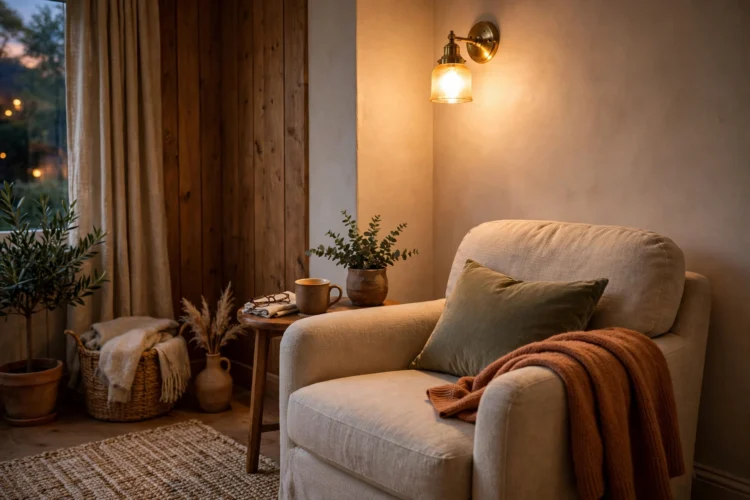
Living room corners go dark first in the evening, and a sconce fixes that without adding a floor lamp that eats floor space. Mount one sconce in the corner above a reading chair or beside a bookshelf, and the corner becomes a reading spot instead of dead space. Sconce lighting living room corners works best with a shade that throws light both up and down, so the wall glows above and the chair gets reading light below. Pair the sconce with a dimmer switch so the same corner works for reading and for watching television. For the full layered look, these living room lighting layers show how sconces, floor lamps, and ceiling lights work together from floor to ceiling.
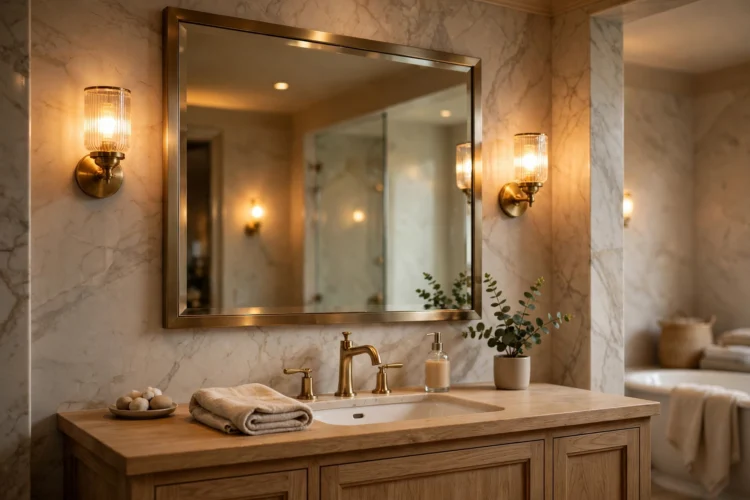
Two sconces flanking a bathroom mirror give even light on both sides of the face, which overhead lights cannot do. Mount them at eye level, about 60 to 65 inches from the floor, and about 28 to 30 inches apart for a single sink. The light should hit the face from the sides, not from above, so shadows do not fall under the eyes. Choose damp-rated fixtures for bathrooms, and use frosted shades to soften the bulb. A sconce pair also makes a small bathroom feel wider because the light reaches both side walls. Avoid one sconce above the mirror, since that recreates the same harsh top light you are trying to replace.
When nightstands are small or missing, mount sconces directly above the headboard instead. Two small sconces above the headboard wash the wall with light and free the nightstand for a book and a glass of water. Bedroom wall sconce lighting like this suits small bedrooms because it removes the lamp entirely. Mount the sconces about 12 inches above the headboard and 12 inches in from each edge so the light spreads evenly. Choose shades that point down so the light does not shine into the eyes of someone lying down. A dimmer on the wall switch makes the pair work for both reading and winding down.
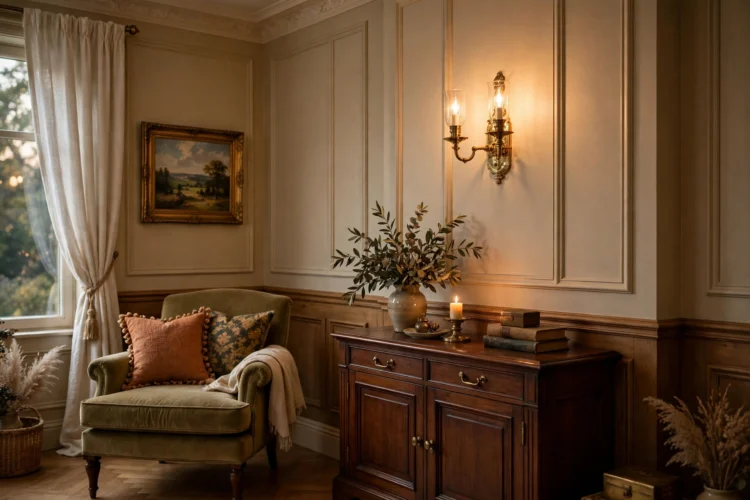
Sconces stay on the wall for years, so choose a style that fits the room, not the trend of the month. A brass sconce suits a warm traditional room, a black metal sconce suits a modern one, and a rattan shade suits a relaxed coastal space. The sconce should match the other metal finishes in the room, such as curtain rods and cabinet handles, so it feels like part of the house. In kitchens, sconces over open shelves add warmth to a hardworking room, and these kitchen sconce ideas show where they work best. In dining rooms, a pair of sconces on the long wall softens the chandelier, and these dining room lighting ideas cover the mix beyond the chandelier.
Start with one room and one pair of sconces instead of rewiring the whole house. The bedroom is the best first room because the change is obvious the first night: no more harsh ceiling light when you read, and no more dark corners when you get up. Mount the pair, fit warm bulbs, and add a dimmer if the switch allows it. Live with that light for a week before buying sconces for the hallway or the living room. You will learn which brightness you actually like at night, and that answer shapes every other purchase. If a plug-in sconce works in the bedroom, the same model may work beside the sofa or above the console table. Buy the second pair only after the first one proves itself. Good evening light is built one room at a time, and the first room teaches you what the rest of the house needs.