Physical Address
304 North Cardinal St.
Dorchester Center, MA 02124
Physical Address
304 North Cardinal St.
Dorchester Center, MA 02124

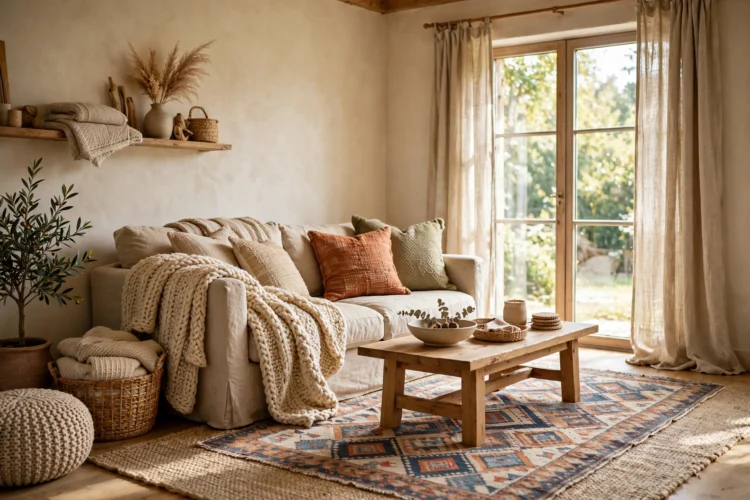
Rugs, throws, and curtains do more than decorate. Layered well, they soften hard surfaces, add warmth, and pull a room together.
Textile layering ideas work because a room needs soft surfaces to feel lived in. Hard floors, bare walls, and flat furniture reflect sound and light, and the result feels cold even when the colors are right. Layering textiles in home decor fixes that by adding rugs underfoot, throws over arms and backs, and curtains at the windows. Each layer adds texture, and together they make a room feel finished. You do not need a big budget or new furniture. Start with what you have, add one layer at a time, and stop when the room feels warm instead of crowded.
The rug is the base layer, so choose it first and let everything else follow. A large, flat rug in a neutral tone anchors the seating area, and a smaller patterned rug on top adds character without overwhelming the floor. This is one of the simplest rug layering ideas because it works in rentals too: the bottom rug protects the floor and the top rug carries the pattern. Keep at least a few inches of the base rug visible on all sides so the layers read as intentional. If your room already has wall-to-wall carpet, a low-pile rug on top still adds definition. For more ways to place a rug under furniture, see these living room rug ideas that show how size and placement change a seating area.
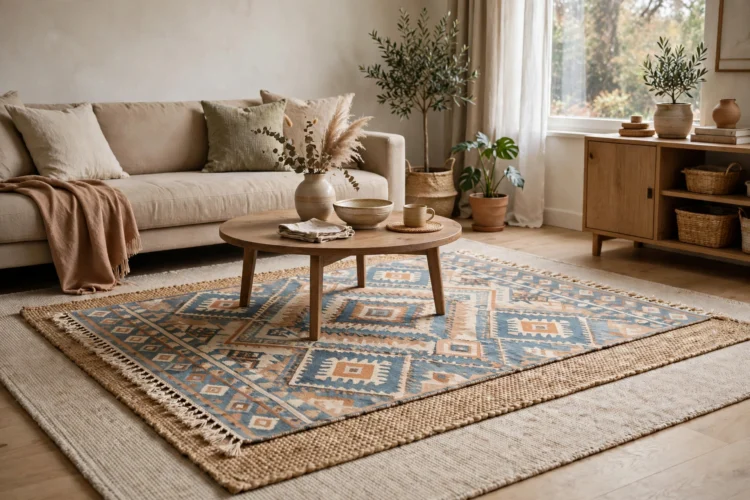
Good layering mixes heavy and light fabrics, not only matching colors. A thick wool rug next to a linen curtain and a cotton throw gives the eye three different surfaces to notice. When every textile has the same weight, the room looks flat even if the palette is perfect. Pair a chunky knit throw with a smooth velvet cushion, or a heavy drape with a sheer panel behind it. The contrast is what makes each piece stand out. Think of weight the way you think of color: one heavy piece, one medium piece, and one light piece in each seating area keeps the mix balanced.
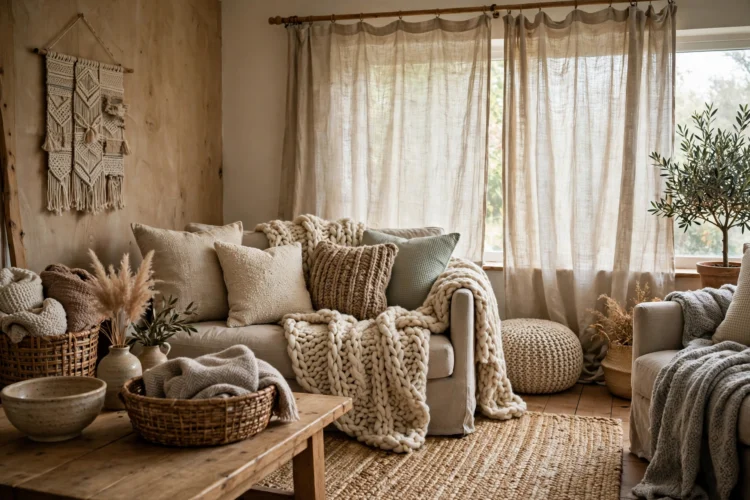
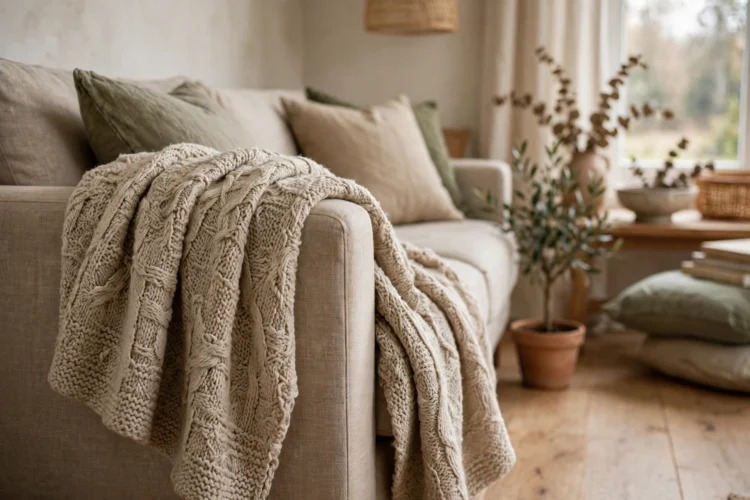
Throw blanket styling looks best when the throw looks used, not staged. Drape it over one arm of the sofa with a loose fold, or lay it across the back with one corner falling forward. A throw folded into a tight rectangle on a chair looks like a store display. Let it fall naturally and refold it only when it slides to the floor. Keep one throw per seat so nobody has to share, and choose washable fabrics for the throws that get daily use. Wool and cotton blends hold up well and still look soft after washing. The same loose approach works on beds, and these bedding layering ideas show how throws finish a bed without extra bulk.
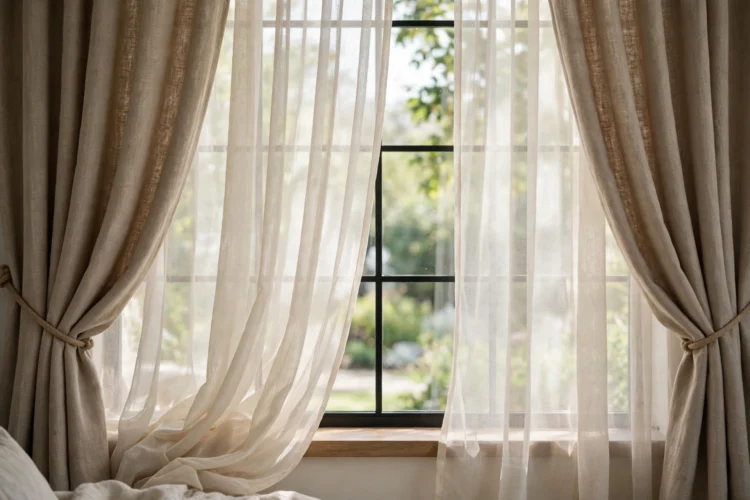
Curtain layering ideas start with two layers at the window: a sheer panel for daytime privacy and a heavier drape for evenings. The sheer softens the light and hides the view in, while the drape adds color and weight when you close it at night. Hang both on a double rod or one wide rod with rings, and let the sheers sit closest to the glass. Keep the drapes long enough to brush the floor, and pull them to the sides during the day so the window still feels open. In bedrooms, the same pairing helps with sleep, and these bedroom curtain ideas cover light control and style in one place.
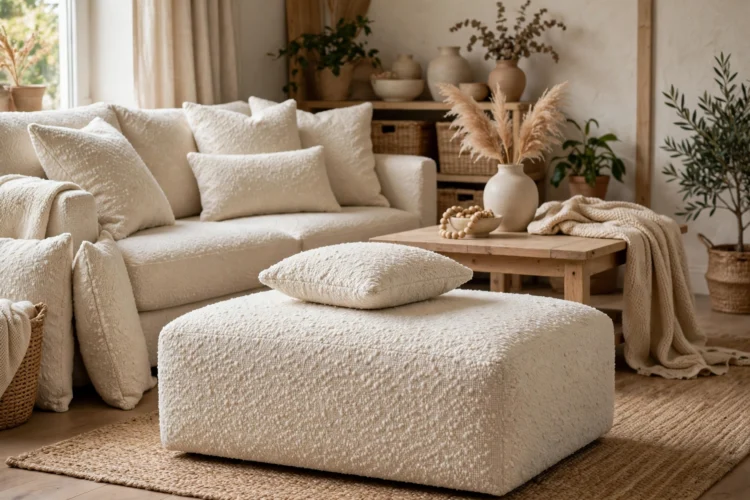
Repetition ties layers together. Pick one texture, such as bouclé, linen, or woven cotton, and repeat it in three places around the room. A bouclé cushion on the sofa, a bouclé throw on the chair, and a bouclé ottoman cover make the room feel planned without matching sets. The same trick works with color, but texture is safer because it does not demand an exact shade match. Three repeats is enough: one reads as an accident, two reads as a pair, and three reads as a choice. Spread the repeats across the room instead of clustering them on one sofa so the texture travels.
When layers compete, the room feels busy. Give pattern to one layer and keep the rest solid. A patterned rug pairs with solid throws and plain curtains. A bold floral curtain pairs with a plain rug and solid cushions. This rule keeps textile layering ideas calm, and it also makes shopping easier because you only need one statement piece per room. If you love pattern, choose a large-scale print for that one layer so it reads clearly from across the room. Small busy prints on every layer blur together and tire the eye. For window treatments that carry pattern well, these living room curtain ideas show how height and light shape the choice.
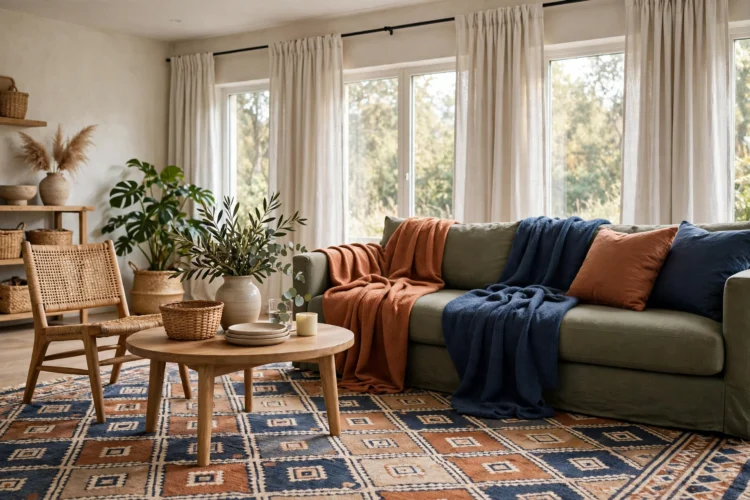
Textiles are the easiest seasonal swap in a home because nothing else has to move. In summer, use light cotton throws, linen cushions, and sheers that let air and light through. In winter, swap in wool throws, velvet cushions, and heavier drapes that hold warmth near the windows. Store the off-season set in a basket or a vacuum bag so the swap takes an afternoon, not a weekend. Keep the rug the same all year and change only the layers above it. That way the room keeps its structure while the mood shifts with the weather.

Layering works only when something stays bare. Leave one surface in each room free of textiles: a bare wood side table, an uncovered chair back, or a stretch of floor at the edge of the rug. The bare spot gives the eye a rest and makes the layered spots feel richer by contrast. When every surface carries fabric, the room feels heavy and hard to clean. Step back after each layer and ask whether the room still shows wood, metal, or glass somewhere. If it does not, remove one throw or one cushion. Mixing textile textures works best when hard materials stay visible beside them.
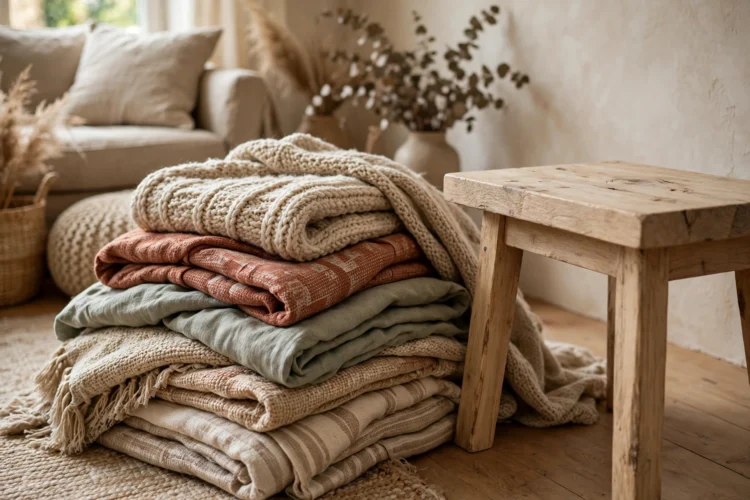
Start with the layer your room needs most. If the floor feels bare, buy the rug first and live with it for a week before adding throws. If the windows feel hard, hang the curtains first and see how the light changes at night. One layer at a time also spreads the cost, which matters when good textiles are not cheap. Measure before you buy: rug size, curtain length, and throw width all decide whether a layer looks right or looks like an afterthought. Keep the receipt and the tag until you have lived with a piece for a few days, since a throw that looks soft in the shop can feel rough on the sofa. The goal is a room that feels warm when you walk in, not a room that matches a photo. Add layers until the room feels finished, then stop and enjoy it.