Physical Address
304 North Cardinal St.
Dorchester Center, MA 02124
Physical Address
304 North Cardinal St.
Dorchester Center, MA 02124

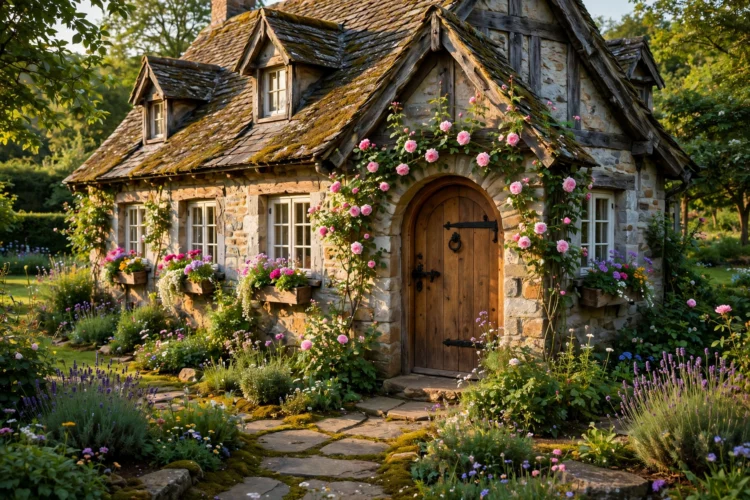
A cottage style house exterior does not need a full renovation to feel like it came out of a storybook. These 13 details add charm one small change at a time.
A cottage style house exterior does not need a full renovation to feel like it came out of a storybook. A few well-chosen cottage architecture details do most of the work. Steep rooflines, layered textures, and a garden that looks slightly untamed tell the eye this house has a history, even when it was built last year. The trick is restraint. Pick two or three details from this list, repeat them in small ways around the house, and let the rest stay quiet. Too many storybook touches at once turn charming into costume. Below are 13 details that work on new builds and older homes alike, with notes on where each one makes the biggest difference.
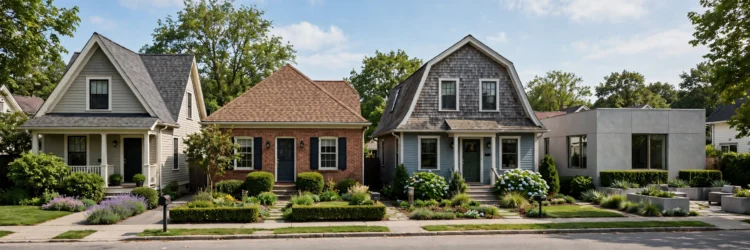
Nothing says cottage faster than a steep gable. A roof pitch that rises sharply makes a small house look taller and gives the whole facade a storybook silhouette. If your roofline is low and flat, you can still borrow the effect with a steep gable over the entry or a single front-facing gable added during a remodel. Asymmetry helps too. Cottage exteriors rarely look perfectly balanced. One gable slightly off center, a dormer tucked to one side, or a wing that steps forward all add to the hand-built feeling. Pair a steep gable with simple trim and let the shape do the talking. Keep the roof material quiet, in a muted shingle or standing seam, so the silhouette stays the star. If your taste runs cleaner than storybook, these mid-century modern exterior ideas show how a strong roofline can carry a house with almost no ornament at all.
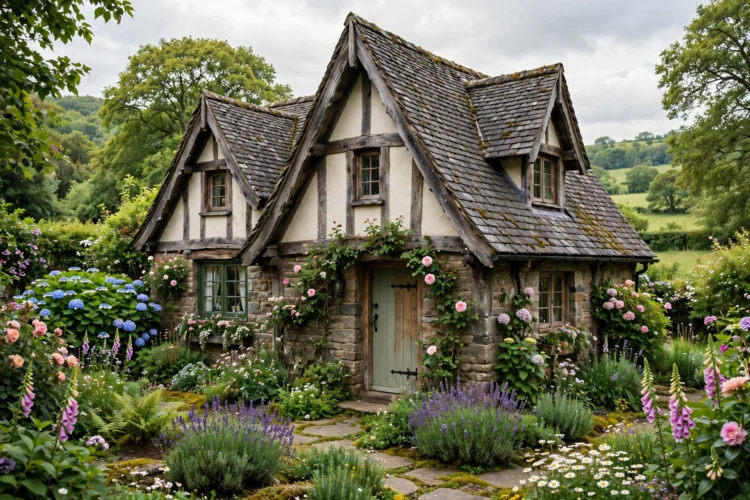
Scalloped shingles in a gable peak are one of the cheapest ways to buy cottage character. A small patch of fish-scale shingles above a window or filling a gable triangle reads as handcrafted from the street. Mix materials with care. Painted wood siding below and shingles above, or a stone base with siding on top, gives a cottage the layered look of a house built in stages. The rule is two textures, not four. A third material starts to look busy, especially on a small facade. Paint the shingles the same color as the siding for a soft look, or go one shade deeper so the pattern shows without shouting. For a broader look at layered exteriors, these modern farmhouse details worth copying show how mixed materials work on larger homes too.
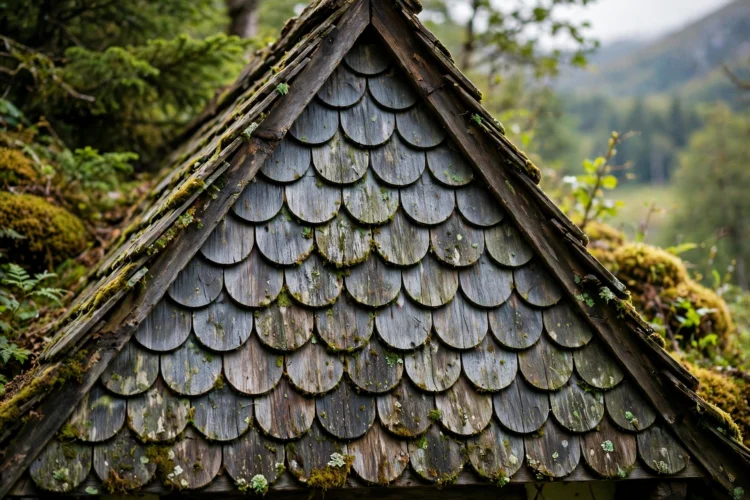
Window boxes turn plain windows into cottage windows. Build them from cedar or painted wood, sized to the window width, and mount them a few inches below the sill so water drains away from the wall. Fill them with trailing plants at the edges and upright flowers in the middle. Geraniums, petunias, and trailing lobelia are forgiving choices that bloom for months. Herbs work too, and they give the kitchen a reason to open the window. Water boxes often in summer, since shallow soil dries fast. Swap in evergreen sprigs and pinecones in winter so the boxes never sit empty. A window box costs little and changes the whole face of the house. Window boxes suit cottage kitchens especially well, and these beadboard backsplash ideas for cottage kitchens carry the same spirit indoors.
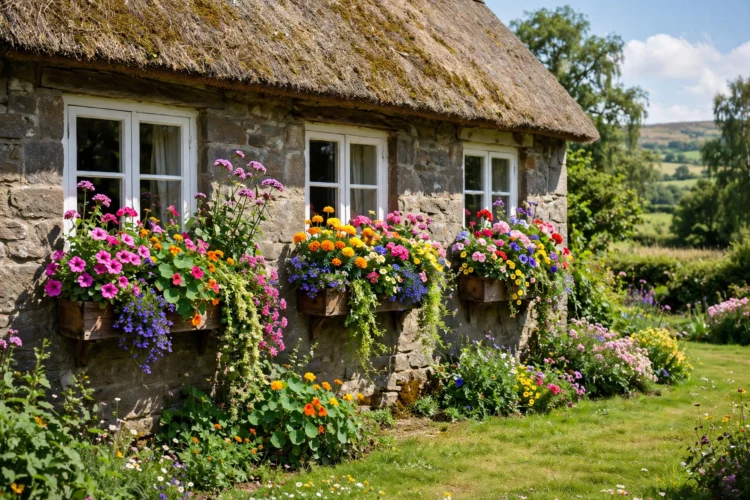
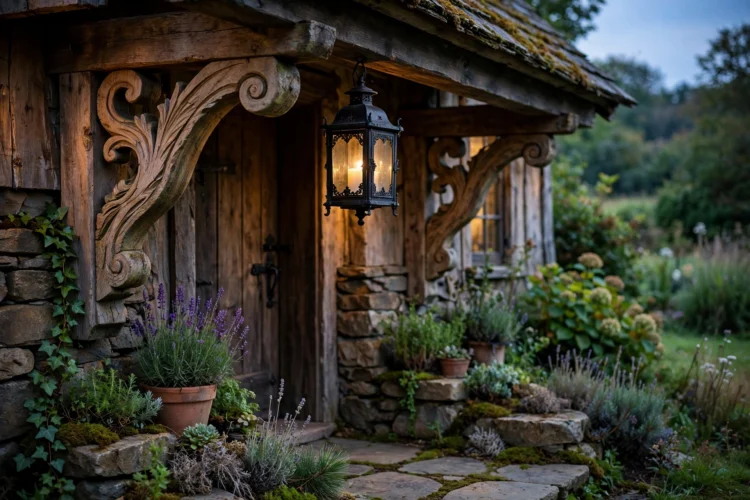
A Dutch door, split in half so the top opens while the bottom stays shut, is pure storybook. It suits a cottage entry, a mudroom door, or a kitchen door to the garden. Paint it a color with some courage: sage green, dusty blue, or deep red against cream siding. Add black iron hinges and a simple latch, and the door looks like it has been there for a century. Around the door, keep the entry simple. A stone step, a wall lantern, and a small roof overhang matter more than a grand porch. If a Dutch door does not fit your house, a stable-style handle and a deep color on a standard door gives a similar hint. The entry sets the tone for the whole house, and these craftsman house features that define the style show how one strong entry detail can anchor an entire facade.
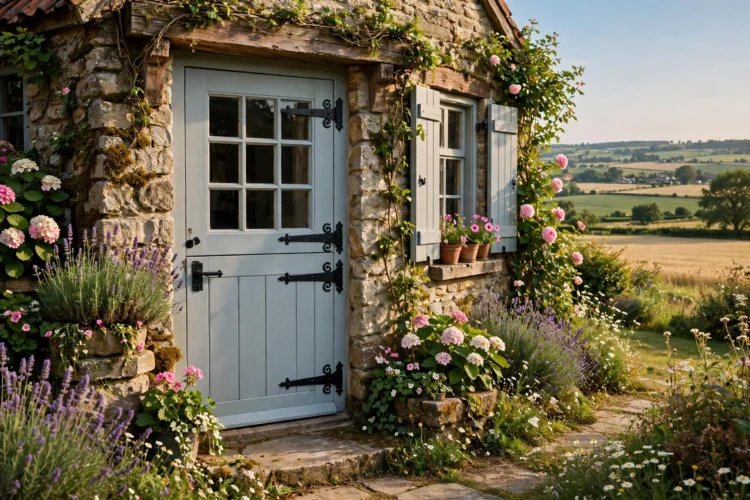
One arched window changes the geometry of a whole facade. Arches soften the straight lines of siding and trim, and they catch the eye from the street. Put the arch over the front door, in a gable peak, or as a single feature window in the living room. A small round window in the attic or gable does similar work for less money. It reads as a porthole or an attic eye, and it breaks up a large triangle of siding. Keep the rest of the windows rectangular so the special shape stays special. Too many arches turn a cottage into a theme park. One, placed with intent, is enough. Arched details pair well with old-world styling, and these Mediterranean facade details with old-world charm use the same trick on a grander scale.
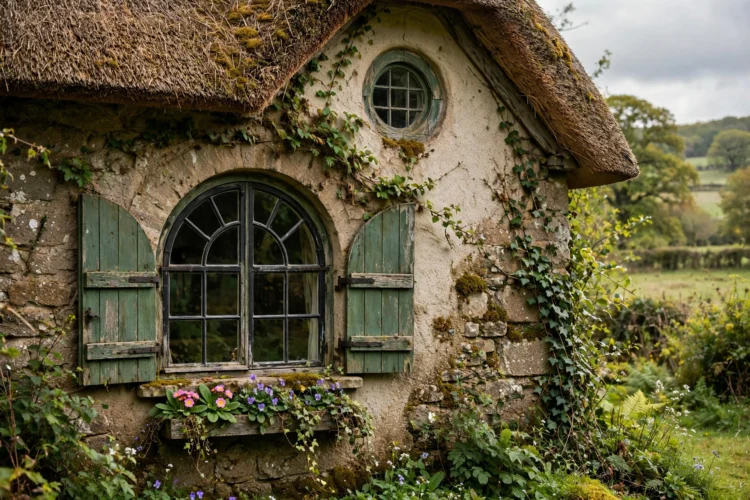
A stone chimney anchors a cottage exterior like nothing else. Real stone, or a good stone veneer, adds weight and age to a light frame house. If a full chimney is out of reach, a stone veneer on the lower half of the facade or around the entry gives the same grounding effect. Choose stone with varied sizes and warm tones, and let the mortar show. Overly uniform stone looks manufactured, which defeats the purpose. A chimney cap in a simple slab of stone or slate finishes the look. Keep plantings low around the base so the stonework stays visible from the street. Stone also ages gracefully. It weathers, softens, and looks better after a few winters than it did on installation day.
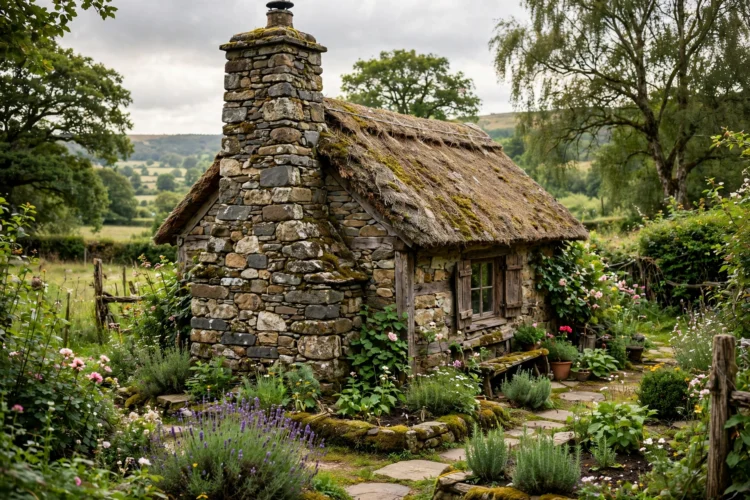
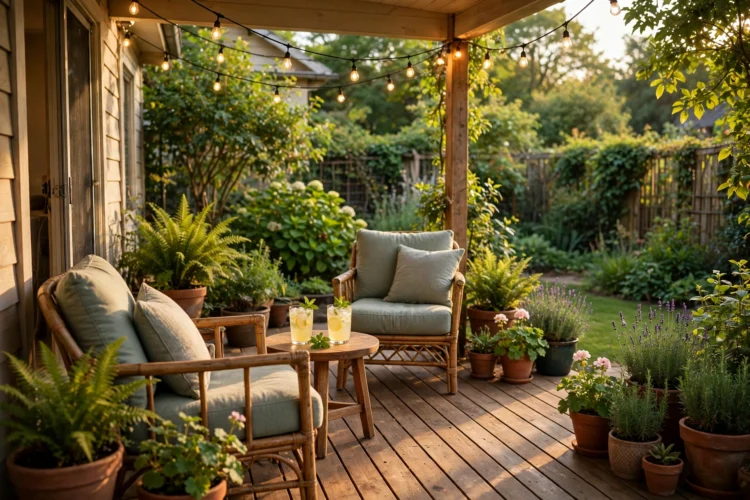
A cottage without a garden feels unfinished. Climbing roses on a trellis beside the door, or trained along a low fence, soften hard edges and add scent to the entry. Choose a repeat-flowering variety so the display lasts past spring. A winding path matters as much as the planting. Straight concrete walks read as suburban. A path of stepping stones, brick, or gravel that curves slightly toward the door slows the eye and makes the approach feel like a discovery. Edge the path with low plants like lavender or catmint so it looks settled rather than newly laid. Leave a little wildness at the edges. A cottage garden that is too tidy loses its charm. Prune the roses once a year and let the rest grow with only light guidance.
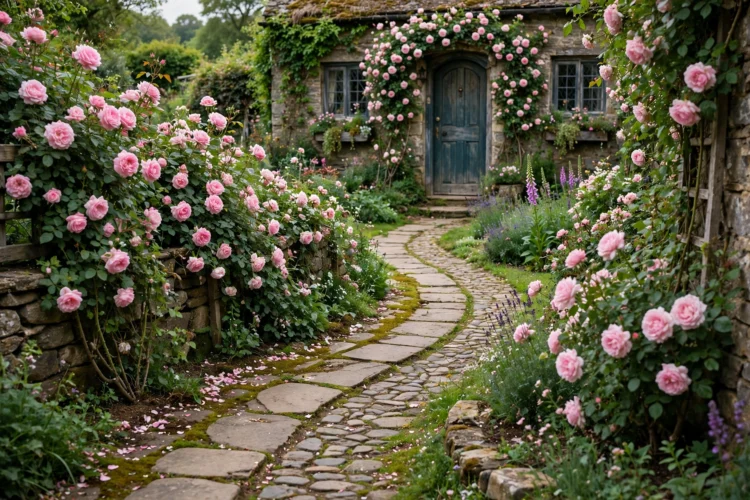
Small trim details are where a cottage exterior earns its keep. Decorative brackets under the eaves, a simple bargeboard on the gable edge, and dentil trim along a porch beam all read as handcrafted. Hardware matters too. Hand-forged hinges, a black iron door knocker, and lantern-style sconces add age that paint alone cannot. Shutters are worth doing properly or not at all. They should be sized to cover the window, mounted on real hinges, and painted to match the trim. Flat vinyl shutters screwed to the wall read as fake from the curb. One or two of these details, done well, finish the storybook look without tipping into costume. Start with the front door and the gable peak, since those are the two spots every visitor sees first.