Physical Address
304 North Cardinal St.
Dorchester Center, MA 02124
Physical Address
304 North Cardinal St.
Dorchester Center, MA 02124

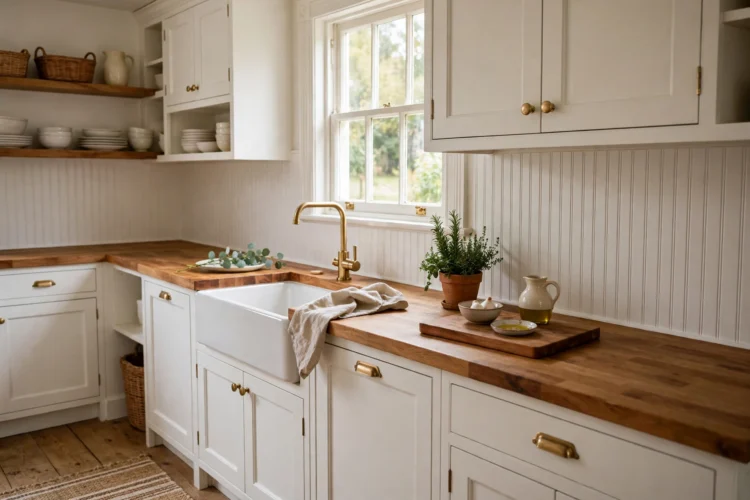
Eight beadboard backsplash ideas for cottage kitchens, from classic white and soft whitewash to sage green and deep navy, with shelves, a plate rail, a butcher-block ledge, and a farmhouse sink surround.
A beadboard backsplash gives a cottage kitchen instant character, with slim vertical grooves that catch the light and make plain walls look crafted and furniture-like. This list rounds up eight ideas, from crisp white and soft whitewash to sage green and deep navy, plus clever pairings such as full-height runs behind open shelves, a plate rail, a butcher-block ledge, and a farmhouse sink surround. For each look you get the paint finish, the palette, and the styling details that make it work in a real cooking space.
White beadboard is the cottage standard for a reason. The narrow grooves read as texture rather than pattern, so a white beadboard backsplash sits quietly beside shaker cabinets, an apron sink, or a simple range hood without competing for attention. In small kitchens it bounces light around, and in larger ones it keeps a long run of wall from feeling flat.
The finish you choose decides the mood. A fully opaque white paint looks crisp and tailored, while a whitewash lets a little wood grain show through for a softer, aged feel. Either way, pick a satin or semi-gloss sheen so the surface wipes clean; flat paint in a cooking zone shows every splatter.
Paint the beadboard a clean, bright white in satin and pair it with warm wood counters and cup pulls in aged brass. The contrast keeps the white from feeling sterile, and the grooves add just enough shadow line to interest the eye. Keep the styling simple: a wooden cutting board leaned against the wall, a crock of utensils, and not much else.
This version suits kitchens that lean traditional. White dishes on open shelves blend into the background in the best way, letting food and greenery do the talking. Because the paint is opaque, any small dings touch up easily with a dab from the same can.
Whitewash thins the white just enough for the wood beneath to whisper through. The result feels collected rather than brand new, which suits a kitchen with vintage finds, a farmhouse table, or well-worn pine floors. Try it with pale maple floating shelves and linen curtains in a natural tone.
Seal the whitewash with a clear satin topcoat so the surface still resists moisture. Keep the palette quiet: cream ceramics, clear glass, a small potted herb. The grooves catch a little extra shadow here, which is exactly what gives this finish its handmade charm.
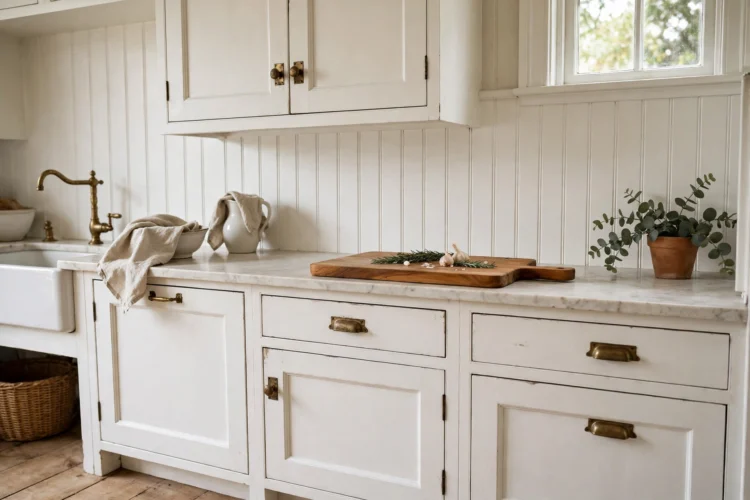
Color turns beadboard from a quiet background into the kitchen’s personality. Because the grooves break up the surface, even a strong color reads softer than it would on a flat wall, which makes beadboard a forgiving way to try a bolder paint. Pick up the shade elsewhere in the room, in a rug runner, curtains, or the inside of a glass cabinet, so it feels planned.
Two cottage-friendly colors lead the pack. Sage green feels calm and garden-like, while deep navy grounds the room and makes brass hardware glow. Both look best in satin, which gives the grooves a gentle sheen without a plastic shine.
Sage green beadboard pairs beautifully with cream or warm white cabinets and honey-toned oak shelves. The green has enough gray in it to behave like a neutral, so it works with copper pots, marble counters, or butcher block alike. Style the shelves with white ironstone and a few green glass bottles to echo the wall.
Keep the rest of the palette light so the kitchen stays airy. A natural jute runner, pale walls above, and plenty of daylight let the sage sit softly. This is a good pick if you want color that still feels restful at seven in the morning.
Deep navy beadboard brings drama without heaviness, thanks to the texture of the grooves. Pair it with warm white uppers or open oak shelves so the dark color has somewhere to breathe, and choose brass or copper hardware to warm it up. The combination reads classic coastal cottage rather than moody modern.
In a small kitchen, keep the navy to the backsplash zone and let the walls above stay light. Style with simple white dishes and one or two wooden pieces to break the dark plane. A satin sheen keeps the grooves defined even in low evening light.
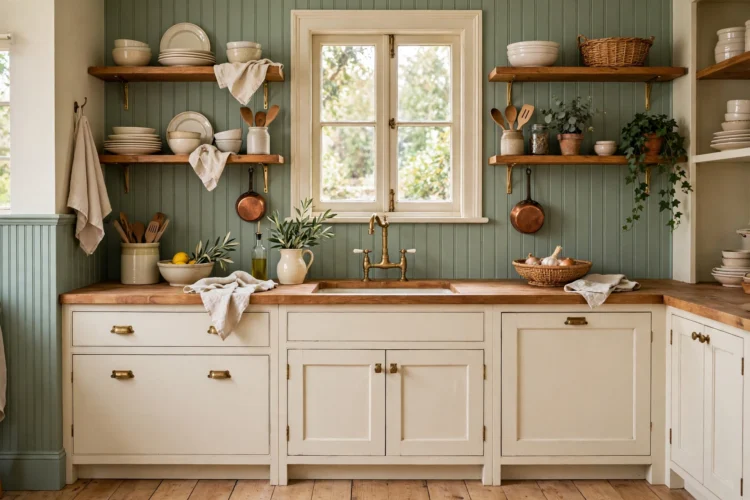
Most backsplashes stop at the bottom of the upper cabinets. Running beadboard all the way to the ceiling turns the whole wall into a feature and makes a low ceiling feel a touch taller. The vertical lines draw the eye upward, which is a neat trick in a compact cottage kitchen.
Plan the practical bits before you start. Outlets need careful cutouts, and long runs may need a slim trim piece where boards meet. Floating shelves mount right over the beadboard, and because the surface is flat, brackets sit neatly against it.
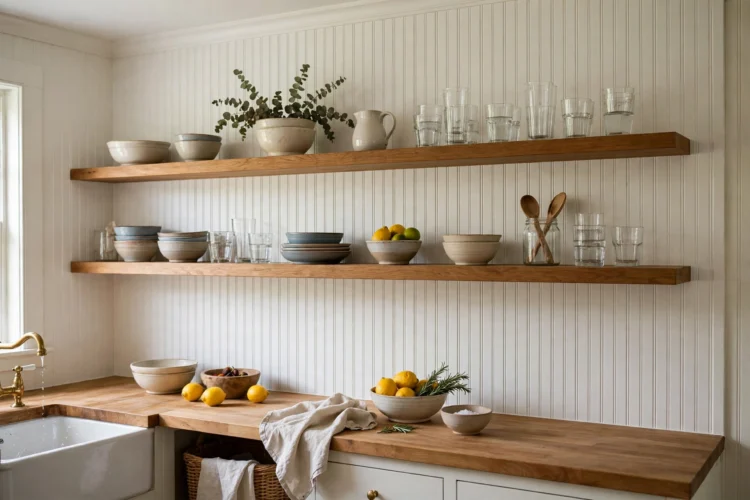
Mount two or three floating shelves in a warm wood tone over full-height white or cream beadboard. Style them with everyday pieces you actually reach for: stacked bowls, drinking glasses, a small plant, a framed print. The beadboard behind keeps the display from looking cluttered, giving each object a calm backdrop.
Keep the shelves shallow, about ten inches, so they do not crowd the counter below. Leave one shelf a little sparse; negative space is what makes the styled shelves look intentional rather than storage overflow. A slim picture ledge on the lowest shelf can hold a cookbook upright without hiding the beadboard.
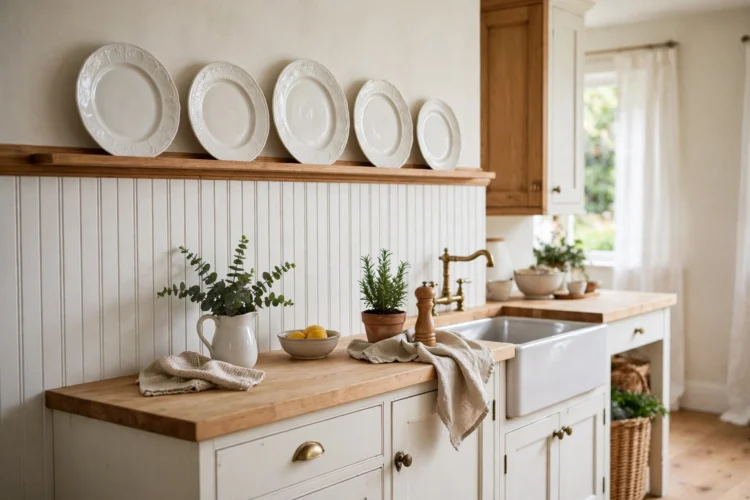
A plate rail is a shallow ledge with a groove that holds plates upright, and it is pure cottage. Set into the top of a beadboard backsplash, it turns the wall into display space for the dishes you love most. The beadboard grooves behind the plates add rhythm that a flat wall cannot match.
This works best above a counter with some breathing room, beside the range or over a sideboard-style stretch of counter. Keep the rail itself simple so the plates stay the star.
Paint the rail the same white as the beadboard for a seamless look, or use a clear-finished oak rail for contrast against painted beadboard. Line up ironstone plates, small platters, and maybe a tiny framed botanical print. Vary the plate sizes slightly; perfect uniformity looks stiff.
Reserve the rail for display and keep everyday dishes in a lower cabinet or on a shelf within reach. Dust the plates now and then, since open display collects it. The beadboard below stays practical, wiping clean with a damp cloth.
A chunky butcher-block ledge over beadboard gives you a landing zone right where you need it. It holds a cutting board, olive oil, or a small lamp, and the thick wood edge adds a crafted, furniture-like line to the wall. Against painted beadboard, the warm wood keeps the look from feeling cold.
Choose a ledge deep enough to be useful, around eight to ten inches, and seal the wood with food-safe oil if it will hold prep items. Mount it solidly into studs; a ledge that will carry a lamp or heavy crocks needs real support.
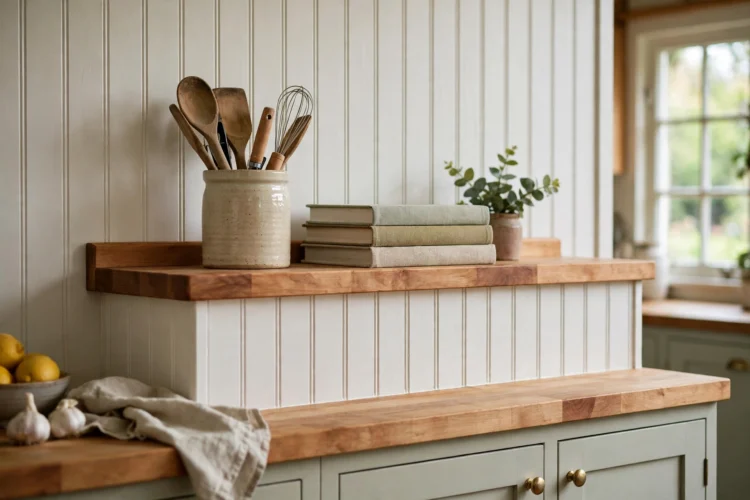
Try this over a stretch of sage green or white beadboard: a maple ledge, oiled to a soft glow, styled with a utensil crock, a small stack of cookbooks, and a trailing pothos. The wood grain plays nicely against the painted grooves, and the mix of materials is what makes cottage kitchens feel collected.
Keep the area nearest the range clear of paper and trailing plants. A heat-safe trivet lives on the ledge; cookbooks live farther down the counter. Wipe the beadboard behind the ledge regularly, since this zone catches cooking splatter first.
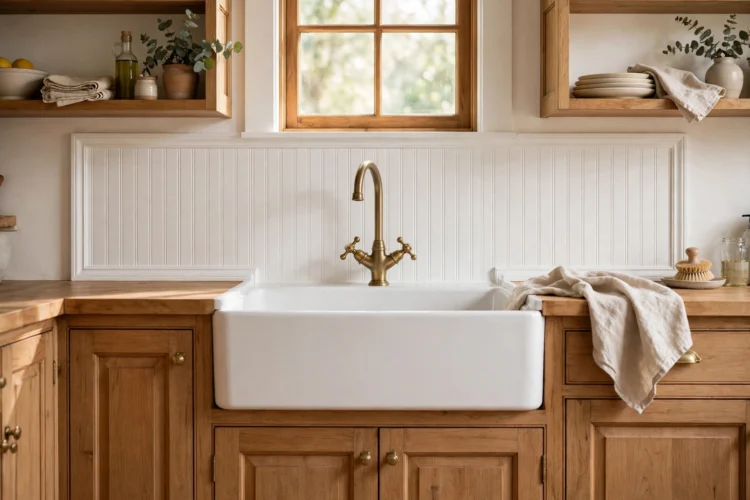
Beadboard and a farmhouse sink are a natural pair, both rooted in the unfussy cottage look. Framing the sink with beadboard, up the sides and across the wall behind it, makes the basin feel built in rather than dropped into place. A simple trim frame around the beadboard gives the whole arrangement a finished, panelled look.
Water is the one thing to respect here. Beadboard near a sink sees more splashes than anywhere else in the kitchen, so the finish and the joints matter more than the color. Get those right and the look lasts for years.
Run beadboard behind and beside the farmhouse sink, then cap the edges with a slim trim that is also sealed. Paint everything in a satin or semi-gloss finish so water beads rather than soaks in, and caulk every seam where boards meet each other, the counter, and the trim. Sealed edges around the sink are what keep moisture from creeping behind the boards.
A few habits protect the work. Wipe up standing splashes instead of letting them sit, keep the beadboard a little clear of the faucet’s direct spray path, and do not run beadboard right up against range heat on the neighboring wall; leave that stretch to a heat-tolerant surface. With sealed joints and sensible placement, a beadboard sink surround stays handsome through daily dish duty.
Start with the finish, not the color: a satin or semi-gloss paint and caulked seams decide how long any beadboard backsplash looks good, so seal the joints before you style a single shelf.