Physical Address
304 North Cardinal St.
Dorchester Center, MA 02124
Physical Address
304 North Cardinal St.
Dorchester Center, MA 02124

Renting does not mean living with beige walls and bare floors. These ten temporary upgrades change how a rental feels, and every one of them comes off cleanly when you move out.
Rental friendly DIYs solve the oldest renter problem: how to make a place feel like home when you cannot change anything permanent. The good news is that most of the upgrades that matter most are temporary anyway. A better backsplash, warmer light, and a wall that shows your taste can all go up without a drill and come down without a trace. The ten projects below are all removable in a day or less, they cost little, and none of them needs landlord approval in most leases. Check your own lease first, then pick the one that bugs you most and start there.
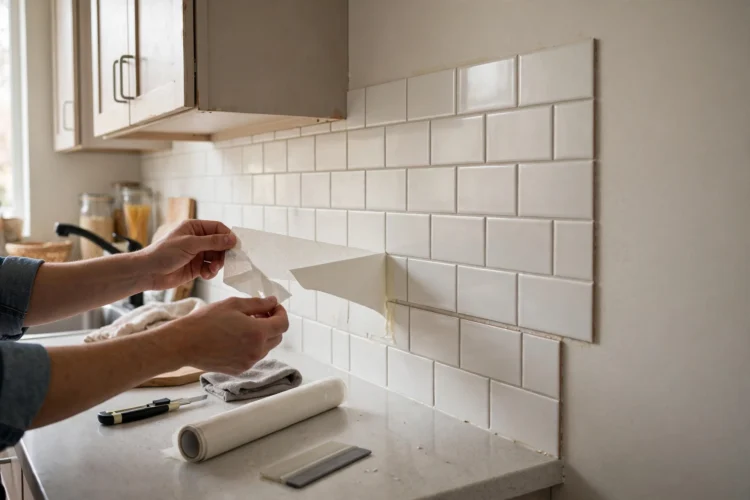
Peel and stick tile rental projects are the fastest way to fix a tired kitchen. The tiles are thin vinyl or gel sheets with a sticky back, and they press straight onto a clean, dry wall. A standard backsplash takes an afternoon, and the result looks close to real tile from normal viewing distance. Start with the wall behind the cooker or the sink, where the change is most visible, and cut the tiles with a craft knife and a metal ruler for clean edges. Wipe the wall with sugar soap first so the adhesive grips properly, and work from the middle outward so the pattern stays centered.
Removal is the part renters worry about, and it is simple: warm each tile with a hair dryer for a few seconds, then peel it slowly from a corner. Any sticky residue comes off with warm soapy water. Choose a light stone or subway pattern if you want the kitchen to feel bigger, or a bold pattern if the rest of the kitchen is plain. These peel-and-stick flooring ideas that look like real wood use the same removable logic underfoot, if the floor needs help too.
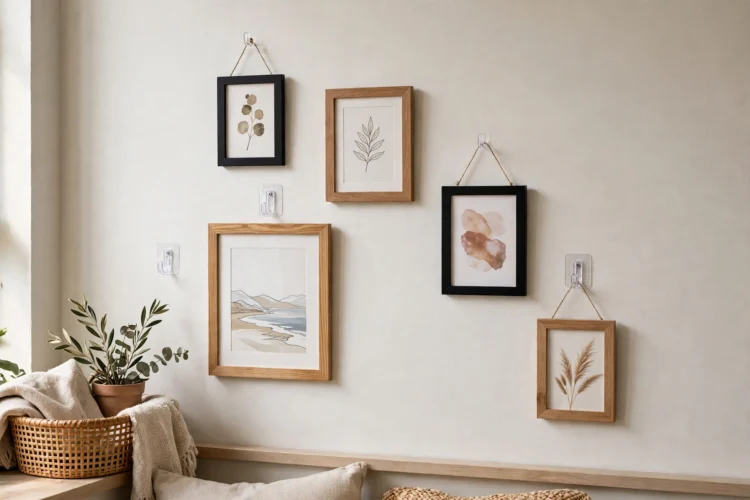
Removable wall decor renters can trust starts with adhesive strips and hooks that hold real weight without leaving holes. A gallery wall of framed prints, a woven wall hanging, or a row of small shelves all hang on strips rated for the weight, and they come off cleanly with a slow pull. The trick is to weigh each piece first and use the strip rating printed on the packet, not a guess. For anything over two kilos, use two strips spread apart so the load is shared. A level and a pencil mark keep the arrangement straight, and painter tape lets you test the layout on the wall before anything sticks.
If you want something bigger, lean a large framed poster or a mirror against the wall instead of hanging it. Leaning art looks deliberate when the frame is large, and it needs no fixings at all. A tall mirror leaned in a dark corner also bounces light around the room, which helps small rentals feel larger. The wall stays hole free, and the whole display moves with you.
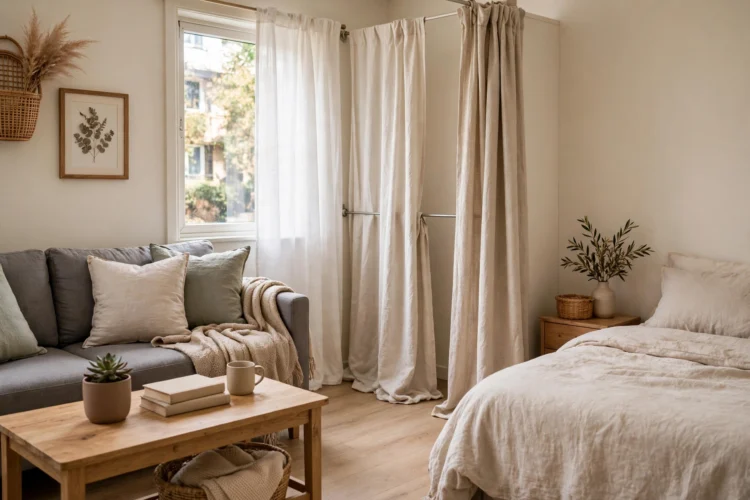
A tension rod is the renter’s quiet superpower. It wedges between two walls or inside a window frame with no screws, and it holds curtains, a shower caddy, or a row of hanging plants. In a studio, two rods and a curtain turn one room into a sleeping area and a living area in minutes. In a kitchen, a rod under the sink holds spray bottles by their triggers, which frees the shelf below for cloths and sponges. Measure the gap, buy a rod a little longer than the space, and twist it until it sits tight.
The same rod works inside a deep cupboard as a second hanging rail for short items, or across an open shelf as a support for a fabric cover that hides clutter. Choose a rod with rubber ends so it grips without marking the paint, and check it every few months, since temperature changes can loosen the fit. It is a small spend for a change you notice every day.
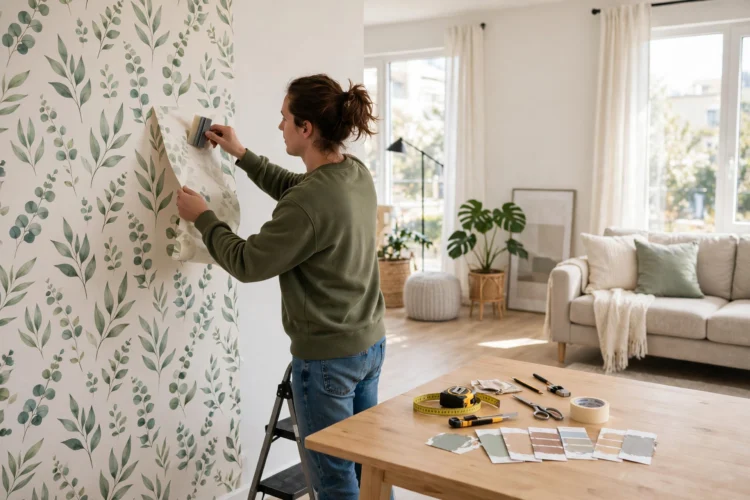
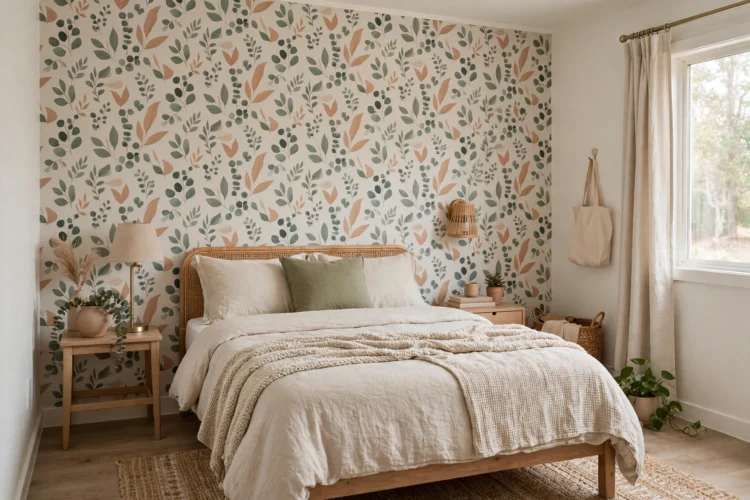
Removable wallpaper is the boldest of the temporary apartment upgrades, and it is also one of the most forgiving. The paper sticks with a light adhesive, peels off in full sheets, and leaves the paint underneath intact when it is removed slowly. One accent wall is enough: behind the bed, behind the sofa, or in a small entry nook. A large scale pattern works best on a single wall, while a small repeat suits a narrow space like a hallway.
Apply it with a partner if you can, starting at the top and smoothing downward with a plastic smoother to push out air. Overlap the seams by a millimeter or two rather than butting them tight, since the paper can shrink slightly as it settles. When moving day comes, peel from a top corner and pull down slowly at a low angle, warming stubborn spots with a hair dryer. A damp cloth takes off any faint residue. The wall underneath should look exactly as it did before, which is the whole point.
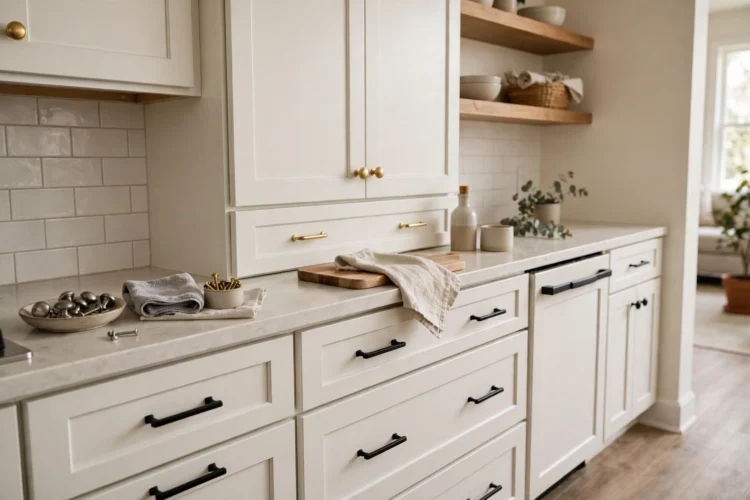
Cabinet knobs and drawer pulls are the cheapest renter friendly home upgrades that still feel like a renovation. Most rental kitchens and bathrooms have plain chrome or plastic handles, and swapping them for brass, matte black, or ceramic knobs changes the whole room in under an hour. The only tool you need is a screwdriver. Bag and label the original hardware the moment it comes off, and store it somewhere you will find it on moving day, since returning the originals is what protects your deposit.
Measure the screw spacing before you buy, since pulls come in set sizes and the wrong spacing means new holes, which defeats the purpose. If the original screws are too short for thicker new handles, take one to the hardware shop and match the length. The same trick works on wardrobes, dressers, and even the front door, where a new handle and a fresh door knocker change the first impression of the whole flat. Keep the receipt and the box, since good hardware moves with you to the next place and fits there too.
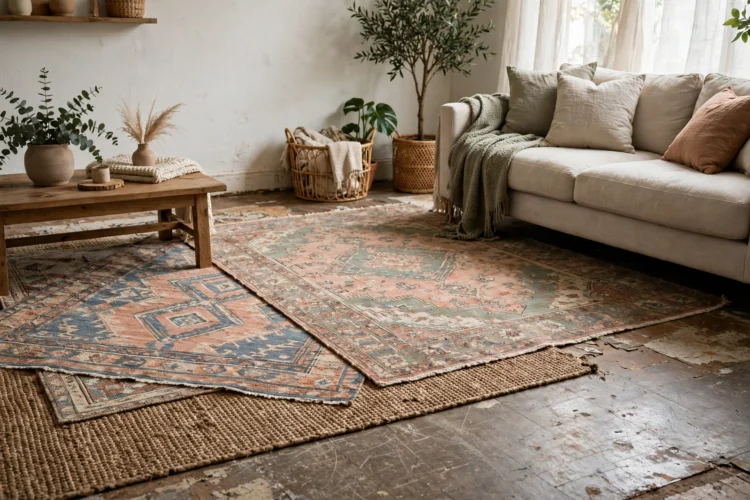
Bad rental flooring is hard to fix and easy to cover. A large rug in the living room and a runner in the hallway hide scuffs, stains, and dated lino in one move, and layering a smaller patterned rug over a plain large one adds the texture the room is missing. Choose a rug large enough that the front legs of the sofa sit on it, since a rug that is too small makes the room look smaller. A rug pad underneath stops slipping and adds the softness that thin rental carpet lacks.
In the kitchen, a washable runner in front of the sink protects the floor and adds color where the room needs it most. If the floor is cold tile, a thick wool or cotton rug changes how the room feels underfoot all winter. For more ideas on making a small rental living room work harder, these small apartment living room ideas that feel open pair well with a rug led refresh.
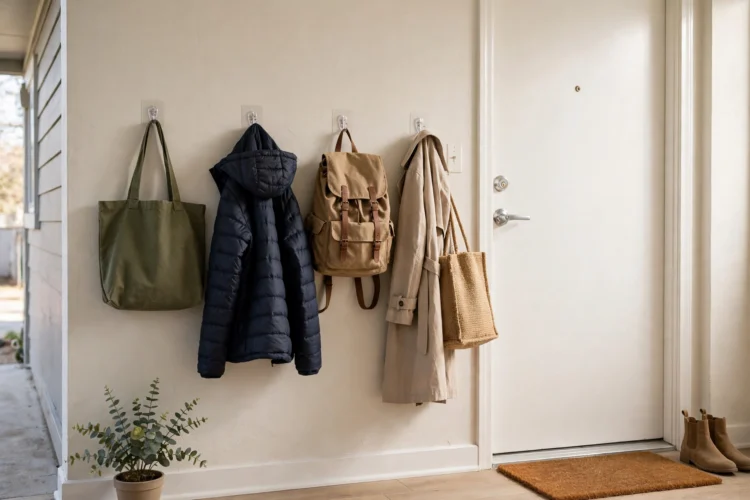
Adhesive hooks do more than hang a picture. A row of them inside the front door holds coats, bags, and dog leads. A set inside a cupboard door holds measuring cups, lids, and cleaning cloths. In the bathroom, hooks hold towels and hair tools without a single screw in the tile. The system works because each hook is rated for a weight, and the adhesive releases cleanly when you pull the tab straight down along the wall. Never pull outward, since that is what damages paint.
Plan the system before you stick anything: stand in the room, notice where things pile up, and put the hooks exactly there. A hook by the desk holds headphones, a hook in the bedroom holds tomorrow’s outfit, and a hook on the side of a bookshelf holds a tote bag. Buy a few spare strips so you can move a hook when the layout changes, and replace any strip that has been up for more than a year, since old adhesive releases less cleanly. The whole setup costs less than a takeaway dinner and saves you from living out of piles.
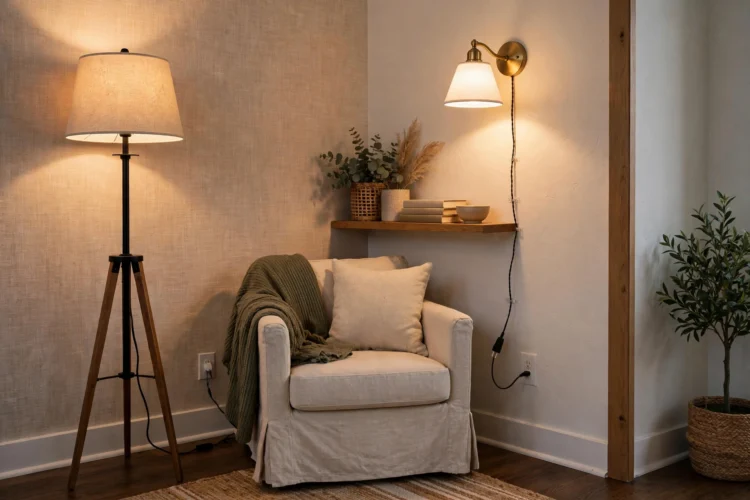
Rental lighting is usually one harsh ceiling bulb, and it is the easiest thing to fix without touching the wiring. A floor lamp in the corner, a table lamp on the sideboard, and a plug in wall light by the bed give the room three warm pools of light instead of one cold overhead glare. Battery powered LED strips under a shelf or behind the television add a glow that makes the room feel finished at night, and they stick on with adhesive that peels off cleanly. Choose warm white bulbs, around 2700 kelvin, since cool white makes a rental feel like an office.
Plug in sconces are the closest thing to real wall lights a renter can have, and they mount with adhesive or a single small hook that a dab of filler hides later. A dimmer plug between the lamp and the socket lets you lower the light for evenings without buying a new lamp. When you move, every lamp and strip packs into a box and works in the next place, which makes lighting the best value of all the temporary upgrades. If your budget is tight, start with one good floor lamp and build the rest over time. For more low cost changes that punch above their price, these small-budget home facelifts room by room are a good next read.
Pick one of these rental friendly DIY ideas and do it this weekend. Peel-and-stick tile, a rug, or a set of hooks each take an afternoon, and each one makes the rental feel more like yours the moment it is done. Keep the originals, keep the receipts, and keep a note of what you changed, so moving out is as easy as moving in. A rental is temporary, but the way it feels while you live there is not.