Physical Address
304 North Cardinal St.
Dorchester Center, MA 02124
Physical Address
304 North Cardinal St.
Dorchester Center, MA 02124


Twelve peel and stick flooring ideas that look like real wood, from herringbone layouts to mixed tones. Order samples, plan the layout, and lay the first row straight.
Peel and stick planks have come a long way from the thin tiles of a decade ago. Modern vinyl planks carry printed wood grain, beveled edges, and matte finishes that read as real wood from a normal standing distance. The material costs less than hardwood, installs without glue or nails, and suits renters who need a floor they can remove later. These peel and stick flooring ideas focus on layout and finish, because the pattern you choose decides whether the floor looks like wood or looks like a sticker. Pick a room, order samples first, and plan the layout on paper before you peel anything.
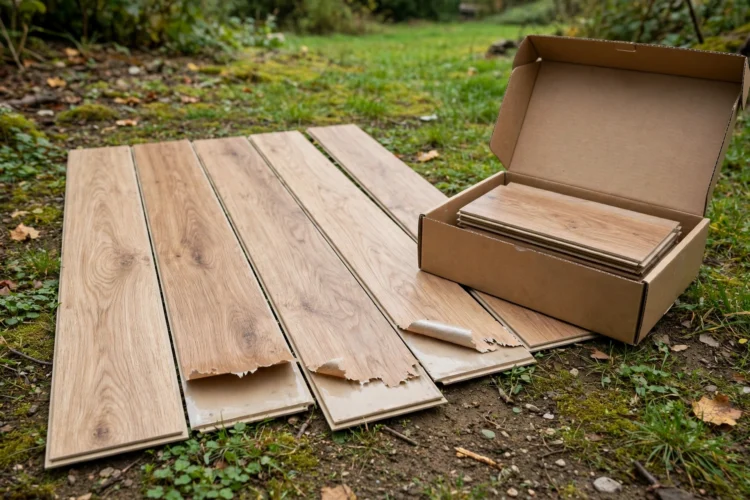
Start with plank width and tone, because both shape how the floor reads. Wide planks, around 6 or 7 inches, suit large rooms and read more like real hardwood, while narrow planks suit small rooms and busy patterns. Hold samples against your baseboards in daylight and at night, since warm undertones turn orange under yellow bulbs. Order one box more than the room needs so you can swap out planks with weak prints.
Check the wear layer before you buy. A 12 mil wear layer handles a bedroom, while a 20 mil layer suits a hallway or a kitchen where chairs drag daily. Thicker planks also hide small bumps in the subfloor better, which matters in older homes. Most peel and stick wood plank flooring comes in 36 or 48 inch lengths, so measure the room and plan the cuts before you open the boxes. Lay a few planks loose on the floor and walk on them in socks to test the feel underfoot before you commit to the whole room.
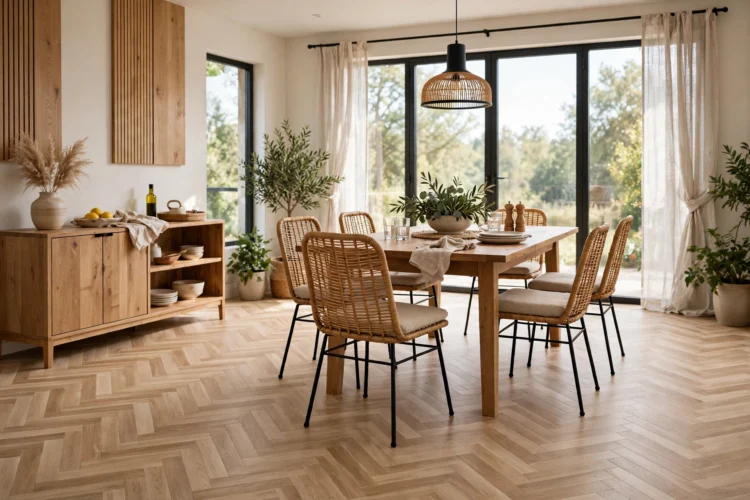
Herringbone turns plain planks into a floor that looks designed. Cut planks to equal short lengths, then lay them at right angles to form the zigzag. Start from the center of the room and work outward so the pattern stays balanced at the walls. A chalk line down the middle of the room keeps the first rows straight, and straight first rows decide whether the whole pattern holds.
Expect more cuts and more waste with herringbone, so order about 15 percent extra. The pattern suits entryways and dining rooms best, where the floor gets seen from above and the zigzag reads clearly. A rug softens the center of the pattern, and these living room rug ideas show how to size one so it frames the floor instead of hiding it. Keep the joints tight and wipe adhesive residue as you go.
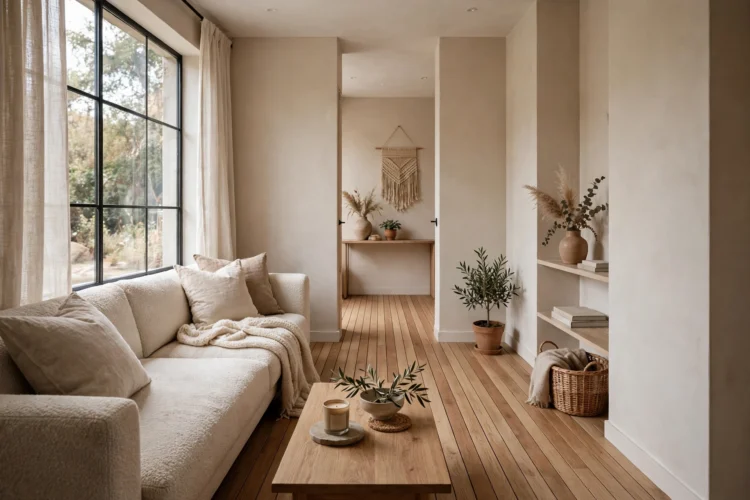
Plank direction changes how big a room feels. Run planks along the longest wall to pull the eye down the room, which helps narrow living rooms and hallways feel longer. In a square room, run them toward the main light source, usually the largest window, so the seams catch less shadow. Lay a few rows loose first and stand in the doorway to judge the direction before you stick anything down.
Stagger the end joints by at least 6 inches from row to row, and never line up two joints in adjacent rows. Random joints read like real wood floors, while a repeating stair step pattern gives the game away. This vinyl plank flooring layout rule matters more than the plank brand, so take time with the first three rows and the rest of the room follows. Cut the last plank in each row to fit, and save the offcut to start the next row.
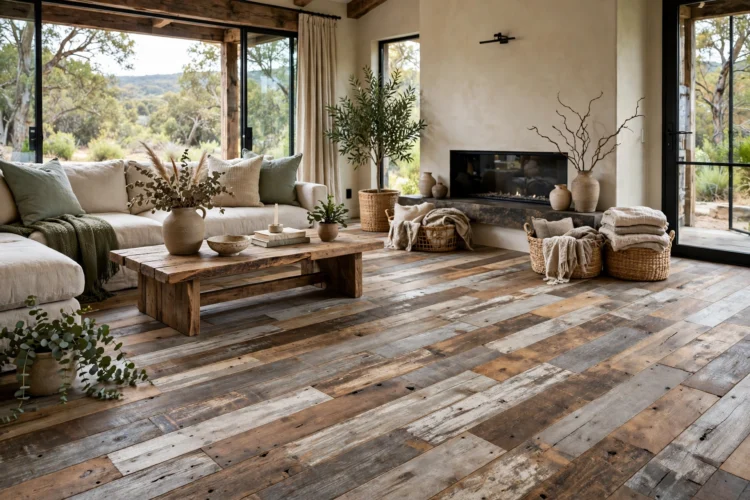
Mix two or three close tones from the same product line to fake a reclaimed floor. Pull planks from three boxes at once and shuffle them as you lay, so no single tone clusters in one corner. Keep the tones within one color family, such as warm browns or gray washed oak, or the mix reads random instead of reclaimed. One darker plank every few rows adds the variation real old floors carry.
Pair the mixed floor with simple walls and let the floor carry the room. These neutral living room ideas show how warm texture and plain walls keep a varied floor from feeling busy. Avoid a second strong pattern in the same room, such as a bold rug or busy curtains, and let the planks do the talking. Seal the edges with a matching transition strip where the floor meets tile or carpet.
Peel and stick planks handle kitchens and baths when you pick waterproof vinyl and seal the edges. Waterproof means the plank core resists swelling, not that the seams are watertight, so wipe spills fast and caulk the gap where the floor meets the tub or the sink base. A small bead of clear silicone along the perimeter keeps mop water from creeping under the edges.
Use a small scale pattern in a bath, since large planks get cut to scraps around a toilet and a vanity. Run the planks away from the door so the eye follows them into the room, and keep a few spare planks in a closet for repairs. This is one of the most rental friendly flooring ideas, because a heat gun and a scraper lift the planks off at move out time. Check your lease first, and keep the original floor photos for comparison.
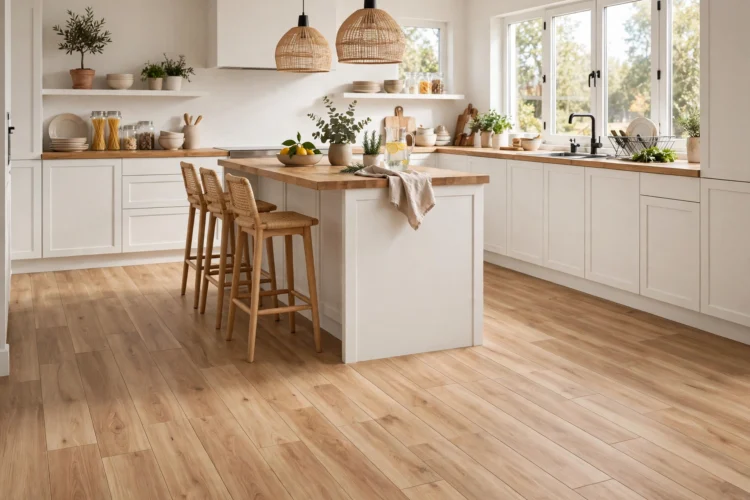
Edges decide whether a peel and stick floor looks finished or temporary. Pull the baseboards before you start if you can, lay the planks tight to the wall, then refit the baseboards over the plank ends. The baseboard hides the cut edge and the small expansion gap in one move. If you cannot pull the baseboards, use quarter round trim in a matching tone and pin it to the baseboard, never to the floor.
Fit transition strips where the new floor meets another surface, and match the strip to the plank tone. A flat T molding works between two hard floors, while a reducer strip handles the step down to carpet or tile. These small living room layout ideas help you place furniture so the transitions sit under a rug edge or a sofa leg. Walk the whole floor when you finish, press down any lifted corners, and roll the floor with a heavy roller if you have one.
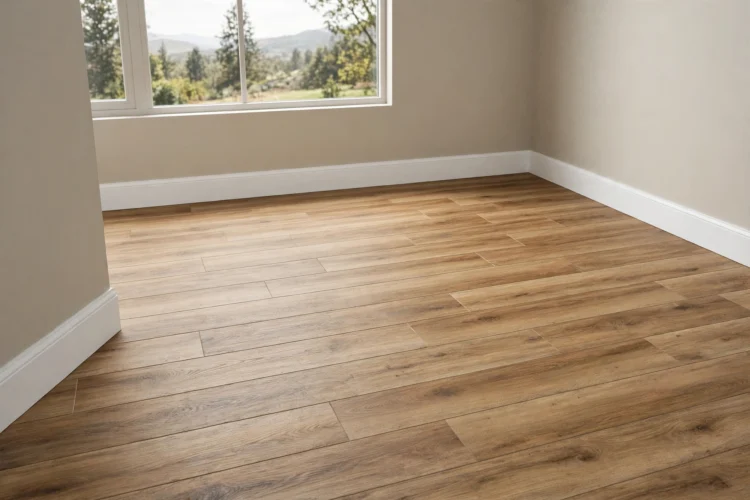
Prep the subfloor before the first plank goes down, because peel and stick adhesive bonds best to a clean, flat surface. Sweep, vacuum, and mop the floor, then let it dry fully. Fill low spots with a floor patch compound and sand high spots flat, since a bump under a thin plank shows as a ridge. A primer made for vinyl floors helps the adhesive grip on dusty concrete or old wood, and it costs less than a box of planks. Skip the install on a damp floor, and let the planks sit in the room for a day so they match the room temperature before you stick them down.
A peel and stick floor looks like real wood when the planks are good, the layout is planned, and the edges are finished with care. Order samples, test the direction on a loose lay, and buy the extra box for cuts and spares. Pick the room you walk through most, set aside a weekend, and lay the first row straight. The rest of the floor follows that first row.
