Physical Address
304 North Cardinal St.
Dorchester Center, MA 02124
Physical Address
304 North Cardinal St.
Dorchester Center, MA 02124

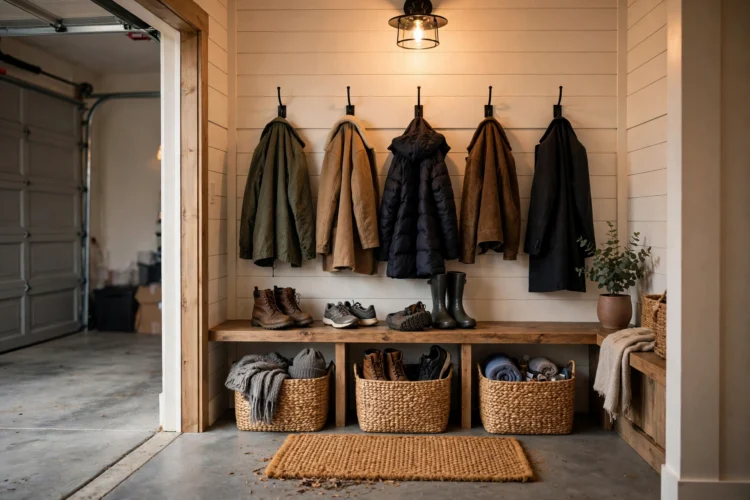
A good drop zone turns the garage door into a filter, not a funnel. These nine ideas catch shoes, bags, and pet gear before they reach your floors.
The door between the garage and the house takes more traffic than any other doorway in the home. Shoes, bags, sports gear, dog leashes, and mud all pass through it, usually in a rush. Good garage drop zone ideas turn that doorway into a filter instead of a funnel, so dirt stops at the threshold and everything has a place to land. You do not need a full mudroom build to get there. A few smart choices, placed in the right order, can change how the whole entry works.
The trick is to design for the mess you actually have. Count the shoes, look at where bags get dumped, and notice which items never make it back to their shelf. Then give each of those things a home within a few steps of the door. The nine ideas below work on their own or together, and most of them fit in a strip of wall no wider than a parked car.
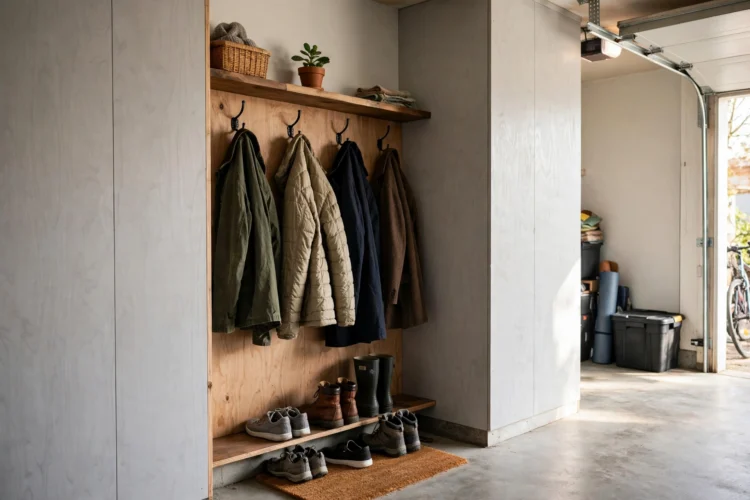
Shoes are the biggest source of dirt at the garage door, so they deserve the first and best spot. A shoe wall keeps pairs off the floor and visible, which means nobody has to dig through a pile to find the left sneaker. Slim shelves, cubbies, or a tall rack all work, as long as each person gets a clear slot. Label the slots if you have kids, and put the most worn pairs at hand height. If the entry connects straight to the kitchen, these mudroom-garage combo ideas for busy families keep coats, bags, and shoes from spreading past the door.
Leave a boot tray or a rubber mat under the lowest shelf for wet days. It catches the water and grit that shoes carry in, and you can rinse it outside in a minute. If your household runs to more than a dozen pairs, rotate the collection by season and move off season shoes to a higher shelf or a closet. A tidy garage organization system works the same way, with one home for each item and nothing stacked in a heap.
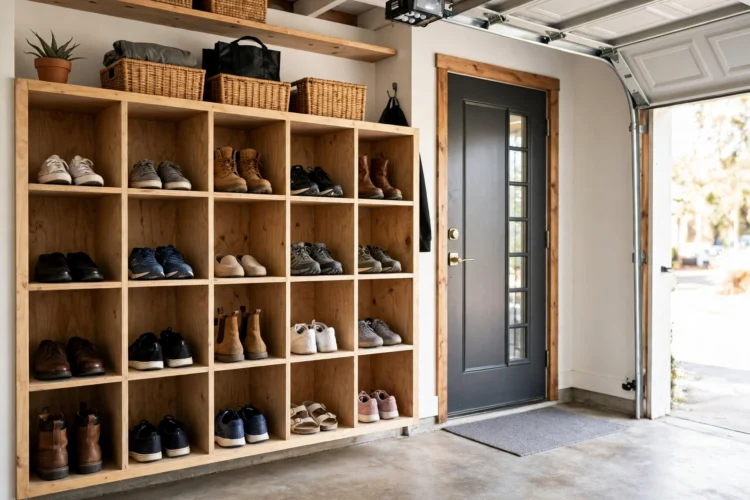
Not every garage has room for a bench and a wall of cubbies. When space is tight, the best garage drop zone ideas shrink instead of sprawl. A single narrow shelf, four hooks, and a boot tray can handle a family of four if each piece earns its place. Mount hooks at two heights so coats hang above bags and nothing drags on the floor.
Use the wall, not the floor. A slim floating shelf holds keys, sunglasses, and sunscreen without eating into the walking path. A wall mounted rack keeps shoes vertical and leaves the floor clear for the car door to swing open. Measure the swing of the car door and the house door before you drill anything, and keep at least a clear path wide enough for a laundry basket. Good garage entry organization starts with that clear path, and everything else hangs off it.
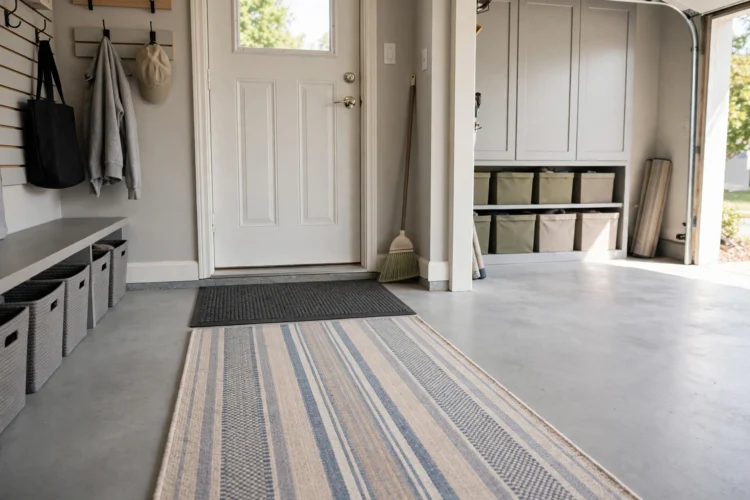
A rug at the garage door does quiet work. It traps the grit that shoes shed in the first few steps, and it gives wet feet a place to dry before they hit the hallway. Choose a rug you can wash, because a rug that cannot be cleaned just becomes a dirt trap. Low pile indoor outdoor rugs and machine washable runners are the practical picks, and dark patterns hide the dust between washes.
Size matters more than style here. The rug should be wide enough that both feet land on it and long enough for two full steps. Layer a heavy duty scraper mat outside the door and a softer rug inside, so the worst of the mud stays in the garage. Shake the rug out weekly and wash it monthly, or more often in rainy season. The habit takes five minutes and saves hours of floor cleaning inside.
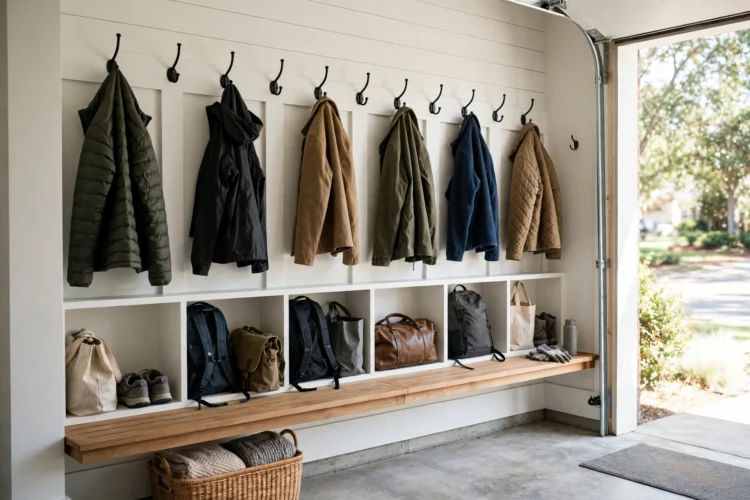
Coats and bags end up on the floor when there is nowhere obvious to hang them. A row of sturdy hooks at adult and child height fixes that in an afternoon. Space the hooks wide enough that a puffy winter coat does not swallow the hook next to it, and use hooks rated for real weight, not the decorative kind that bend under a school bag.
Cubbies above or below the hooks hold the smaller stuff: hats, gloves, lunch bags, and sports gear that would otherwise drift around the house. Open cubbies work better than closed bins here, because you can see what is inside at a glance. Assign one cubby per person and keep a small basket in each for the loose items. A similar approach powers the best garage storage wall ideas, where open bins and hooks keep gear visible and easy to grab.
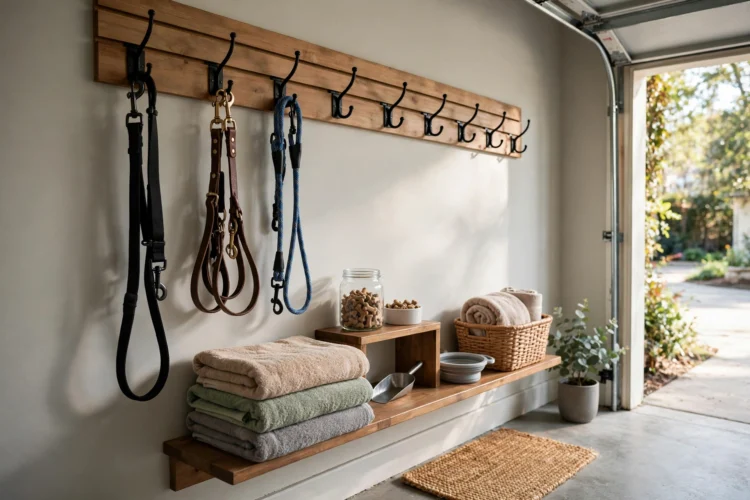
Leashes, treat jars, towels, and food bags tend to pile up near the garage door because that is where the dog comes in. A contained pet gear station gives all of it one home. Mount two hooks for leashes and harnesses, add a small shelf for treats and waste bags, and keep a stack of old towels in a basket for muddy paws. A low hook lets kids grab the leash themselves, which makes the routine stick. A drop zone only works when everything around it has a home, so pair it with garage organization systems that actually stay tidy before you buy a single hook.
If your dog gets a rinse after muddy walks, keep the wash supplies in the same spot. A handheld sprayer or a bucket and a towel by the door means the wash happens in the garage, not in the kitchen sink. A dedicated wash setup is one of the most useful pet wash station ideas for the laundry room, and the same logic applies at the garage door. Keep the floor under the station easy to mop, and choose a basket that can be hosed out.
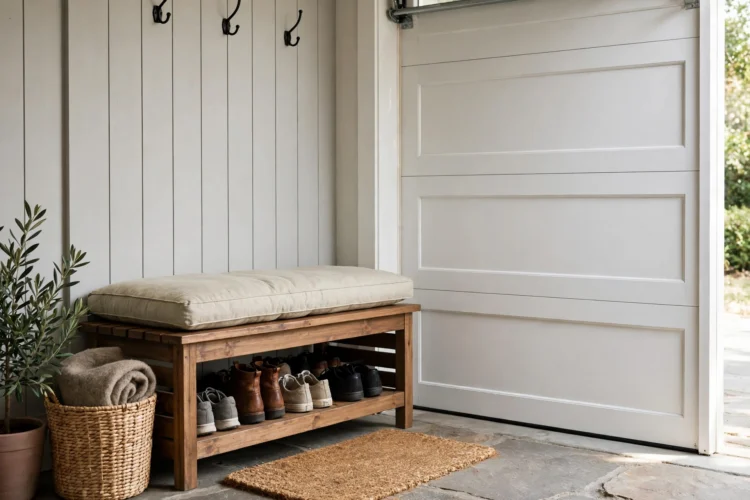
A bench makes the drop zone usable for everyone, from kids tying shoes to grandparents sitting down to pull on boots. Build or buy one with storage inside, so the seat does double duty. Lift top benches hide bulky items like sports pads and reusable grocery bags, while open shelves underneath keep everyday shoes in reach.
Keep the bench shallow enough that it does not block the walkway, and add a cushion you can wipe clean. A bench also marks the boundary between the garage and the house, which matters more than it sounds. When people sit down to change shoes, they slow down, and the dirt stays on the garage side of the line. If you are planning a bigger project, a garage mudroom combo turns the bench into the center of a full entry zone with lockers and a sink.
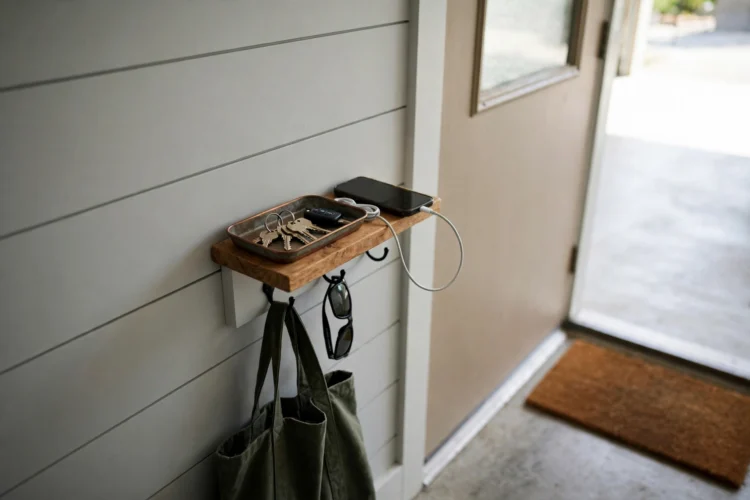
The garage door is where keys, phones, and wallets change hands, so give them a landing spot. A small shelf or a wall mounted organizer near the door stops the daily hunt for keys. Add a charging strip with two or three ports so phones top up while bags get unpacked. A shallow tray keeps the shelf from becoming a junk drawer.
Keep the charging spot visible and close to the door, not buried behind the bench. A simple rule helps: keys and wallet go in the tray the moment you walk in, every time. Kids can have their own small hook or tray too, which teaches the habit early. The goal is a drop zone that runs on routine, not on memory, and a fixed spot for the small essentials is what makes the routine possible.
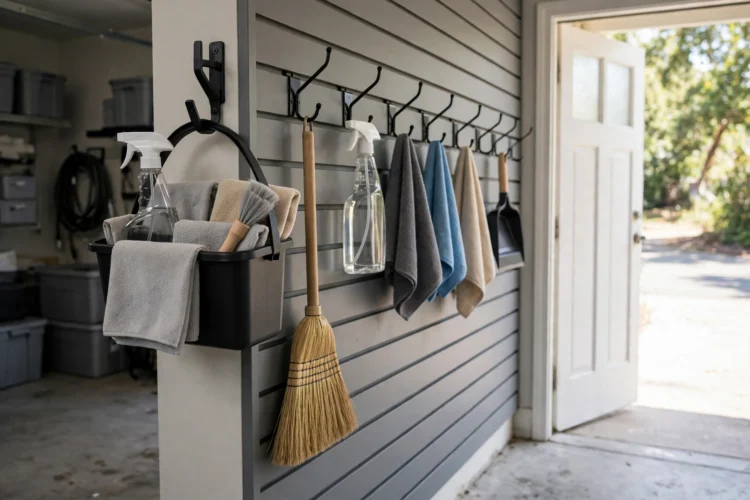
Dirt is easier to deal with at the door than after it has been tracked through the house. Keep a small cleaning caddy in the drop zone with a hand broom, a dustpan, a spray bottle of floor cleaner, and a few rags. When someone notices mud on the step, the tools are right there, and the job takes two minutes instead of waiting for a weekend clean.
Hang the broom on a hook so it does not fall behind the bench, and keep the spray bottle labeled so nobody grabs the wrong one. A small trash bin nearby handles the dustpan sweepings and the empty snack wrappers that show up in coat pockets. This is the least glamorous part of a mudroom drop zone, and it is the one that keeps the rest of it looking good.
Every drop zone slowly fills up with things nobody uses. A seasonal swap system stops the creep. Twice a year, pull everything out of the cubbies and hooks, return outgrown coats and broken gear, and put off season items in a labeled bin on a high shelf. What is left should be only what the household uses right now.
Give the swap a fixed date, such as the first weekend of spring and the first weekend of fall, so it becomes a habit instead of a chore you keep postponing. Kids outgrow shoes fast, so check their slots every few months and pass down what still fits. A drop zone that gets a regular reset stays useful for years, while one that never gets cleared turns back into the pile by the door that you started with. Mud and grit punish the floor first, so garage floor coating ideas that handle daily wear are worth sorting before you finish the zone.
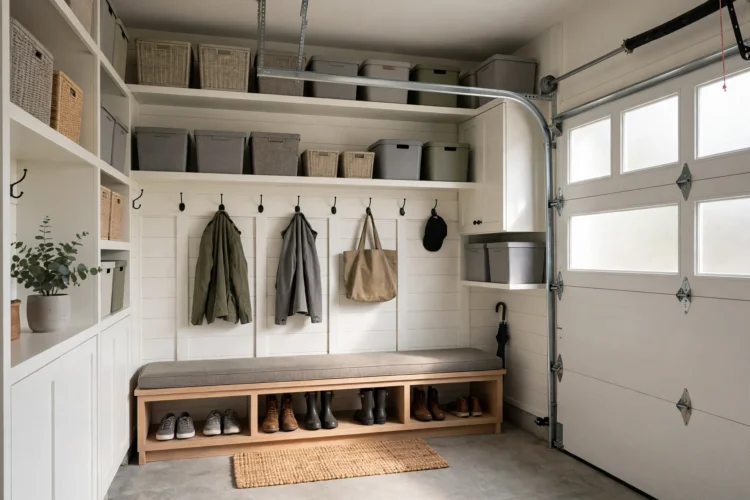
A garage drop zone does not need to be big or expensive to work. It needs a shoe spot, a hook for every coat, a rug that can be washed, and a routine that the whole household can follow. Start with the shoe wall and the rug, add hooks and a bench when you can, and let the space grow around the way your family actually comes and goes. The dirt stays in the garage, and the house stays cleaner for it.