Physical Address
304 North Cardinal St.
Dorchester Center, MA 02124
Physical Address
304 North Cardinal St.
Dorchester Center, MA 02124

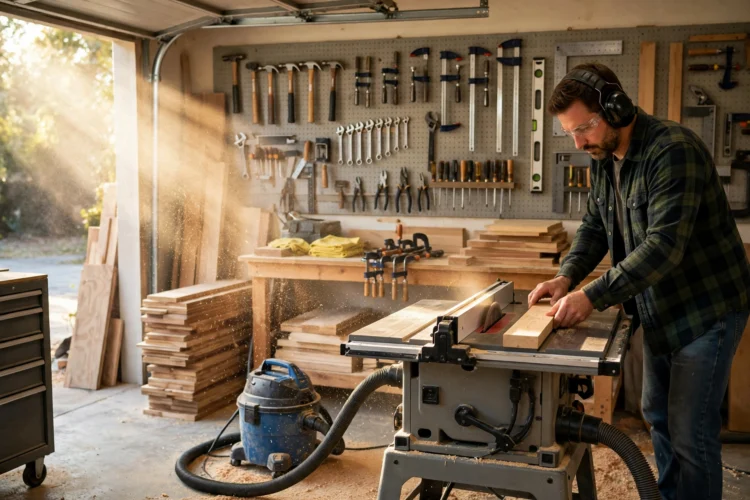
Sawdust drifts everywhere in a garage workshop. These nine ideas catch it at the tool, in the air, and at the door, so projects stay cleaner and cleanup takes minutes.
Sawdust gets everywhere in a garage workshop. It coats the car, drifts under the door into the house, and settles on every shelf you own. These garage dust collection ideas tackle the problem at the source, in the air, and at the doorway, so a Saturday project does not turn into a Sunday cleanup. Most of them cost little and use tools you already own.
The trick is layering. No single fix catches all the dust. A shop vac on the saw grabs the heavy chips, an air filter catches the fine stuff that floats, and a curtain keeps the rest out of the parking bay. Pick the two or three ideas that fit your shop and your budget, then add more as the dust proves you wrong.
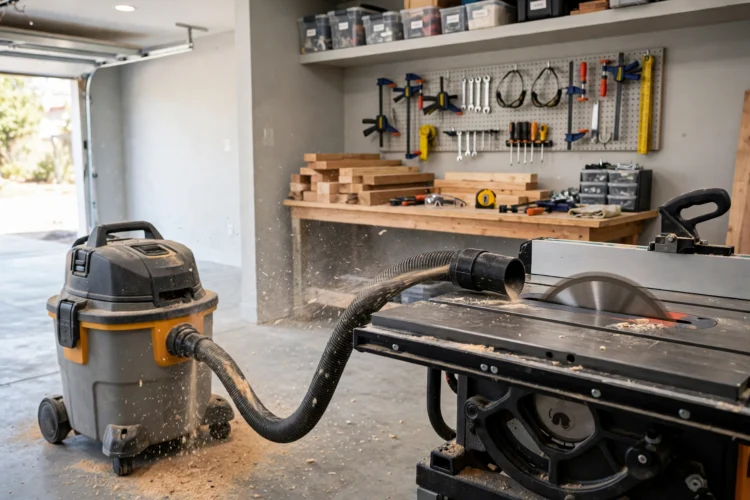
The best place to catch dust is the moment it leaves the blade. Shop vac dust collection works best hooked straight to a saw, sander, or router, where it grabs chips and fine dust before they spread across the floor. Most modern tools ship with a dust port, and a simple adapter connects it to a standard vac hose. Keep the hose short and the run straight, since every bend steals suction.
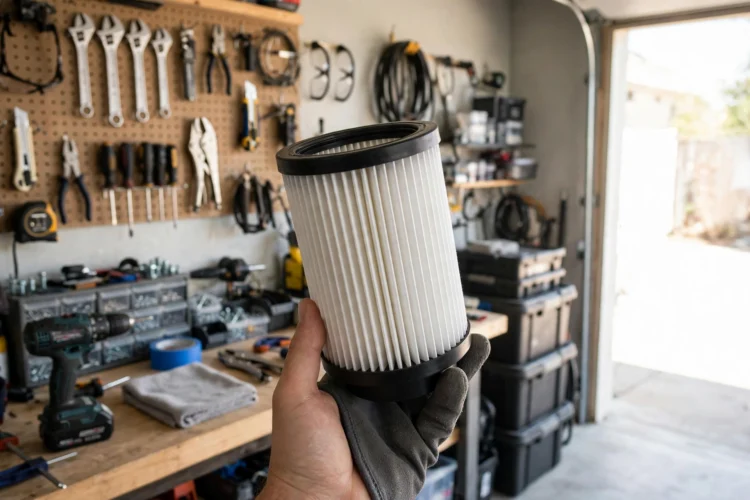
Empty the vac often. A half-full drum loses suction fast, and a clogged filter turns a good setup into a noisy fan. Knock the filter clean outside after each session and swap it when the pleats stay gray after shaking. A clean filter is the cheapest upgrade in the shop.
If your vac hose keeps popping off mid-cut, wrap the joint with a strip of self-fusing silicone tape. It seals the connection without glue, and it peels off clean when you need to move the hose to another tool.
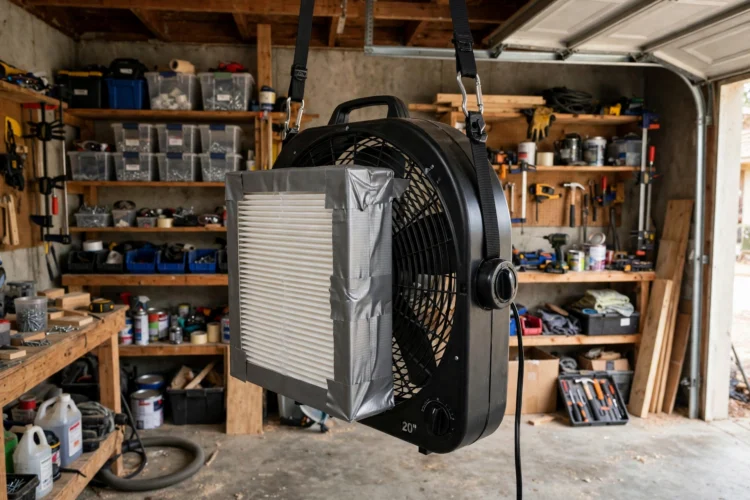
A shop vac handles dust at the tool, but fine dust hangs in the air for hours after the cut, which is where garage air filtration earns its keep. A box fan with a furnace filter taped to the intake side pulls that haze out of the air while you work. Hang it from the ceiling or set it on a shelf at head height, and let it run for twenty minutes after you stop cutting.
Use a MERV 11 or 13 pleated filter for the best balance of airflow and capture. Cheap fiberglass filters let the fine stuff straight through. When the filter turns brown, swap it. In a busy shop that can mean a new filter every few weeks, so buy them in bulk.
Two small units beat one big one in a long garage. Place one near the workbench and one near the door to the house, so dust has to pass a filter no matter which way it drifts. The setup pairs well with a tidy garage organization system that keeps tools and gear off the floor, since clear floors make it easier to see where dust settles.
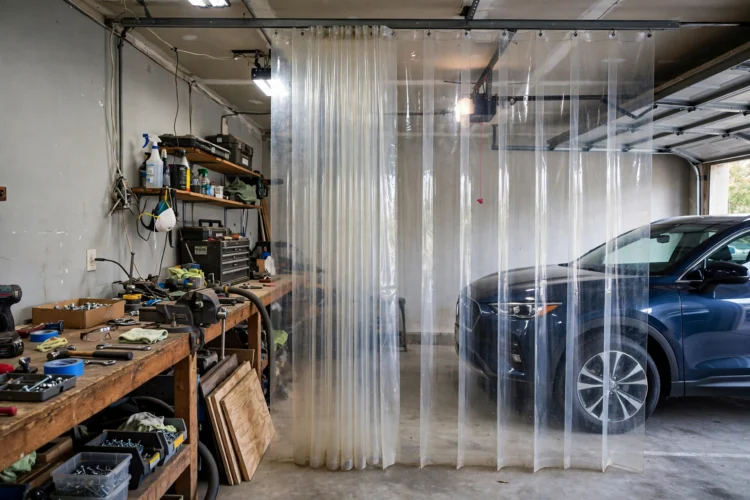
A clear plastic curtain works as a dust curtain partition, turning one garage into two rooms. Hang it from the ceiling joists on a wire or a curtain track, with enough overlap at the seams to block drifting dust. The work zone stays dusty, the parking bay stays clean, and the car never wears a coat of sawdust again.
Use 6-mil clear sheeting so light still passes through and you can see the other side. Weight the bottom edge with a length of chain or a strip of wood so the curtain hangs straight instead of billowing every time the door opens. Leave a gap at one end as a walk-through, and overlap two panels there so the gap seals itself when you pass.
For a cleaner look, screw a simple valance board to the ceiling and staple the sheeting to it. The board hides the ragged top edge and gives the curtain a finished line from the parking side.
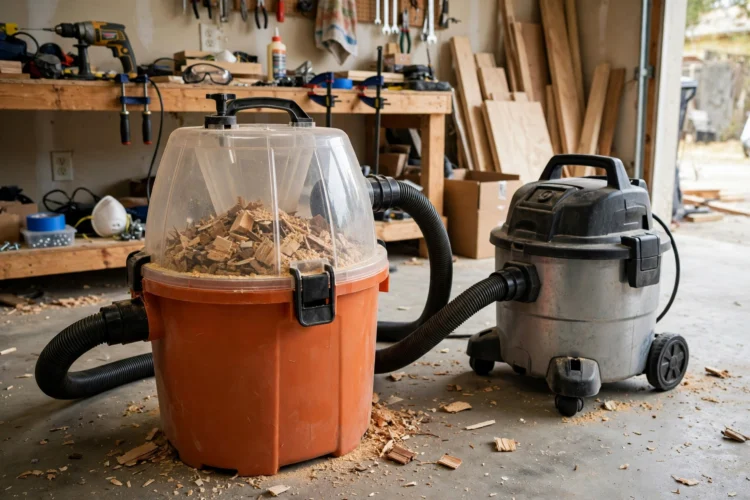
A cyclone separator sits between the tool and the vac and spins heavy chips out of the airstream before they reach the filter. The chips drop into a bucket, the vac filter stays clean for weeks instead of hours, and suction stays strong through a long session.
Build one from a five-gallon bucket and a molded cyclone lid, or buy a ready-made lid that drops onto a standard bucket. Either way, keep the bucket sealed. A leak at the lid rim kills the cyclone effect and sends dust straight to the filter.
This is the single best upgrade for anyone who sands a lot. Sanding dust is the finest and the most stubborn, and a separator keeps it out of the vac drum where it would otherwise pack the filter solid.
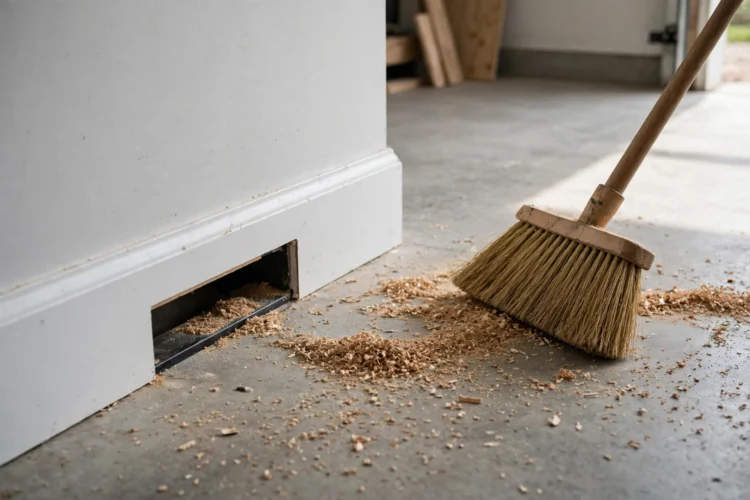
A floor sweep is a wide slot in the baseboard connected to the vac hose. Flip the vac on, sweep dust toward the slot, and it disappears down the hose. No dustpan, no cloud of dust kicked up by the broom, and no bending over with a pan.
Mount the sweep at the end of the bench where you do most of your cutting, and run a length of PVC pipe along the wall back to the vac. A blast gate in the line lets you shut the sweep off when the vac is hooked to a tool.
Keep a stiff push broom by the sweep and a soft brush for the bench. The push broom moves chips fast, the bench brush clears the fine layer without launching it into the air. This small habit matters most on a coated floor, and the right finish helps too, as these garage floor coating ideas for daily wear show.
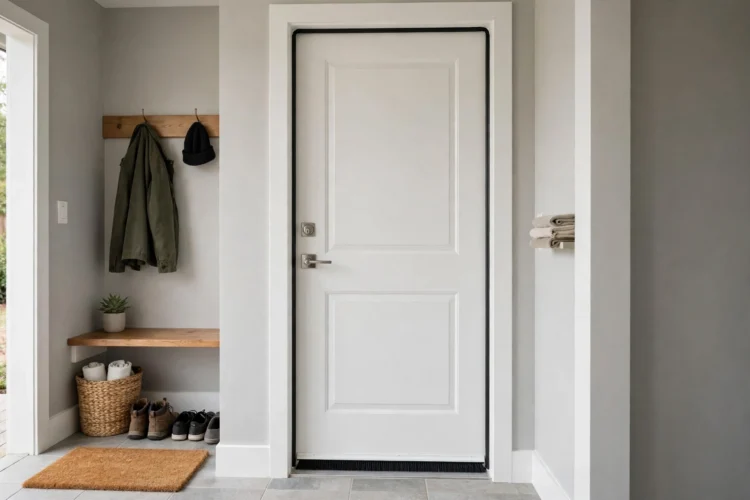
The door between the garage and the house is the main route dust takes indoors. Check the weatherstripping around it and replace anything cracked or flattened. A new door sweep on the bottom edge closes the gap where fine dust slips through with every gust.
For a tighter seal, add a foam compression strip to the door frame and a threshold plate on the floor. Close the door and look for daylight around the edges. Any light you see is a path for dust, and a path for cold air in winter too.
Make it a rule that the house door stays shut while tools run. It sounds obvious, but an open door defeats every other dust control idea on this list in about thirty seconds.
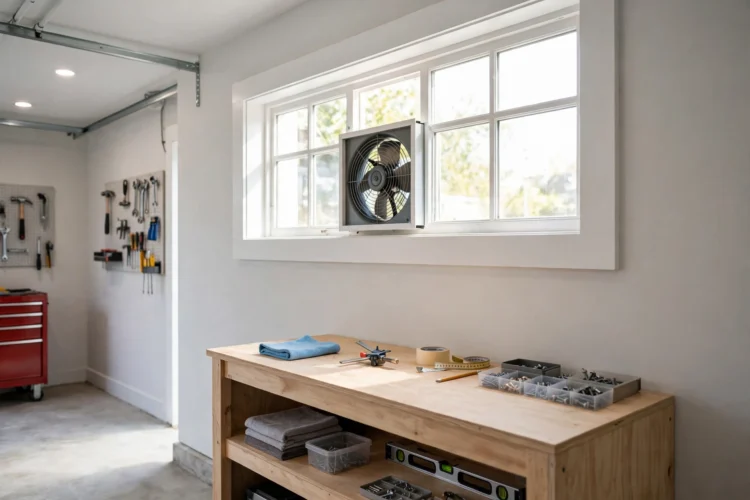
Fresh air helps, but a wide-open garage door creates a wind tunnel that blows dust onto everything. Crack a side window or a small vent high on the wall instead, and let the air filter box do the real work. A slow, steady exchange of air clears the haze without stirring up the floor.
If your garage has a ridge vent or gable vent, keep it clear of boxes and insulation. Stale, dusty air needs somewhere to go, and a blocked vent traps it inside. A small exhaust fan on a timer switch can pull dusty air out for twenty minutes after a session, then shut itself off.
Never vent a running saw straight at a neighbor’s yard or a shared driveway. Aim exhaust away from walkways and keep the hose pointed down toward the ground, where dust settles instead of drifting.
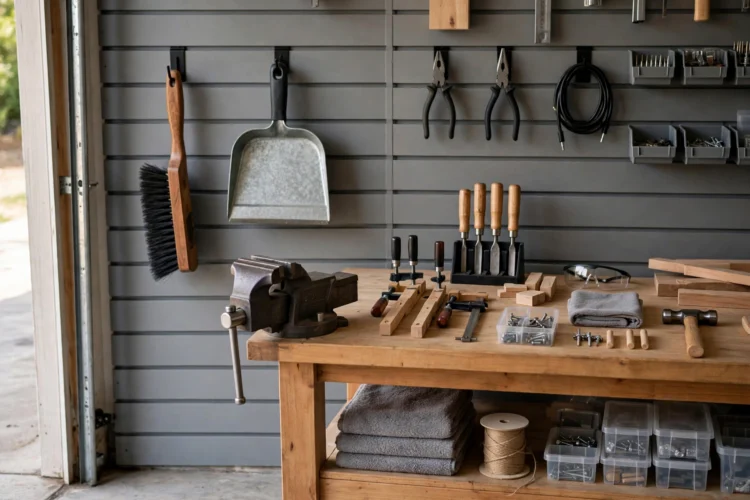
Some dust control is just habit. A bench brush and a dustpan that live on the wall by the workbench get used. The same tools buried in a drawer do not. Brush the bench and the tool table at the end of every session, while the dust is still loose.
Use a brush with natural bristles for wood dust. Synthetic bristles build static and fling fine dust back into the air. A quick wipe with a damp rag after brushing picks up the last thin layer that the brush leaves behind.
Store the brush on a hook at eye level, not in a cabinet. Visibility is the whole point. A tidy wall setup also keeps the brush off the bench, and a good garage storage wall beyond pegboard gives every brush and broom a home.
Sawdust control fails quietly. Filters load up a little at a time, suction fades a little at a time, and one day the shop is dusty and nobody knows why. A two-minute filter check at the start of each session stops that slide.
Tap the shop vac filter against the side of a trash can outside, then check the air filter box for gray pleats. If the filter looks loaded, swap it. Mark the swap date on the filter frame with a marker so you can see how long each one lasts in your shop.
Keep one spare filter on the shelf at all times. The day you need it is the day the store is closed or the delivery is late, and a shop with no filter is a shop that fills with dust. Pair the habit with smart lighting so you can actually see the dust you are fighting, using these garage lighting ideas for work and parking zones as a guide.