Physical Address
304 North Cardinal St.
Dorchester Center, MA 02124
Physical Address
304 North Cardinal St.
Dorchester Center, MA 02124

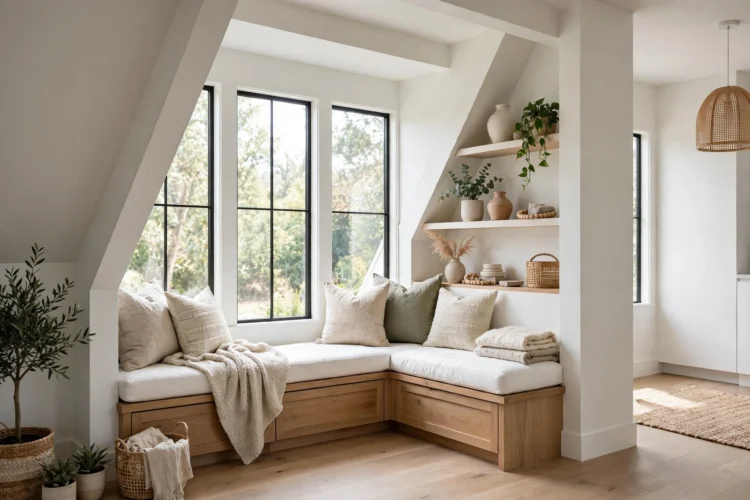
A window seat can turn a dead corner into the best spot in the house. These ten ideas cover built-in benches, freestanding seats, and storage that hides the clutter.
Good window seat ideas start with the spot nobody knows what to do with. That bay window with a radiator below it, the narrow hall window, the landing with a view and no purpose. A seat changes all three. It gives you a place to read, a place to put shoes, and a place to hide blankets, board games, and the things that never seem to have a home. The trick is to match the seat to the shape of the window, not the other way around.
Before you build or buy anything, measure the width, the depth, and the height of the sill. Sit on a chair at that height and check whether your feet touch the floor. Look at the light at different times of day, and check how the window opens. A seat that blocks a casement window or sits too high to climb onto will sit empty. The ten ideas below work for different rooms and budgets, and most of them add storage at the same time.
A built-in window seat is the classic choice for a bay window because it follows the angles instead of fighting them. A carpenter or a confident DIYer can build a low box bench with a hinged lid or drawers, then top it with a firm cushion cut to the same shape. The seat height usually lands between 45 and 50 centimetres, which suits most adults and still leaves room for storage below. Keep the cushion in a washable fabric if the seat sits in a sunny spot, and pick a foam that holds its shape instead of going flat after a month.
Storage is where this design earns its keep. Deep drawers hold throws and cushions, while a lift-up lid suits bulkier items such as board games and winter coats. If the bay has a radiator, leave a vent gap at the front so warm air can still move into the room. For more ways to dress the bay itself, these bay window living room ideas show how the seat, curtains, and cushions can work as one setup rather than three separate decisions.
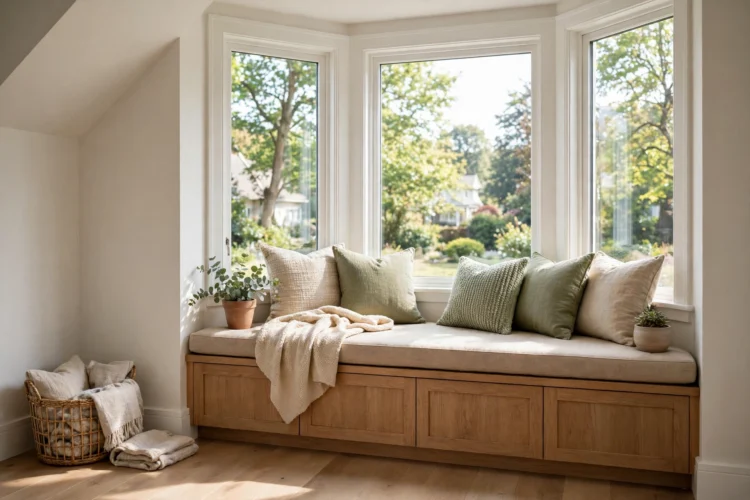
A narrow hall window looks too small for a seat until you measure it. A bench 30 to 35 centimetres deep is enough for sitting sideways with a book, and it still leaves a clear path past the front door. Build the bench the full width of the window recess so it looks planned, not squeezed in. A slim cushion, a single throw pillow, and a hook above for a coat are all the styling this spot needs.
This is also a practical drop zone. Put shoe storage under the seat and a small tray on top for keys and post. A light colour on the bench keeps a dark hall from feeling tighter, and a mirror on the opposite wall bounces the window light back into the space. If the hall window is low, add a short back cushion so you can lean against the wall without sliding off the seat.
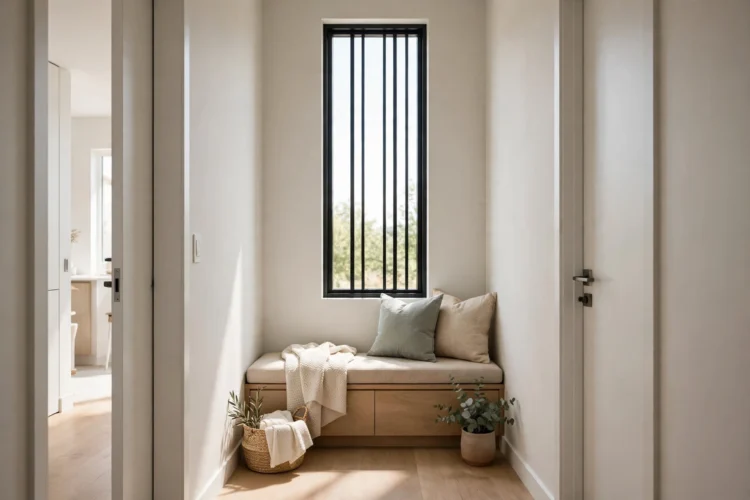
A reading seat needs more padding than a hallway bench. Aim for a cushion at least 10 centimetres thick, with a firm base and a softer top layer, so you can sit for an hour without feeling the wood underneath. A window seat cushion in a textured fabric such as cotton twill or bouclé adds grip, which stops you sliding toward the glass. Add two pillows, one for your lower back and one to hug or prop a book on, and the seat becomes a place you actually use every day.
Shelves beside the seat keep books within reach and stop the pile on the cushion from growing. A single tall shelf on one side works in a tight corner, while shelves on both sides frame the window and make the whole nook look built in. Keep the shelves shallow, about 20 centimetres deep, so they hold books without eating floor space. Put the books you are reading now at arm height and the rest higher up, and leave one shelf free for a cup of tea and a small lamp.
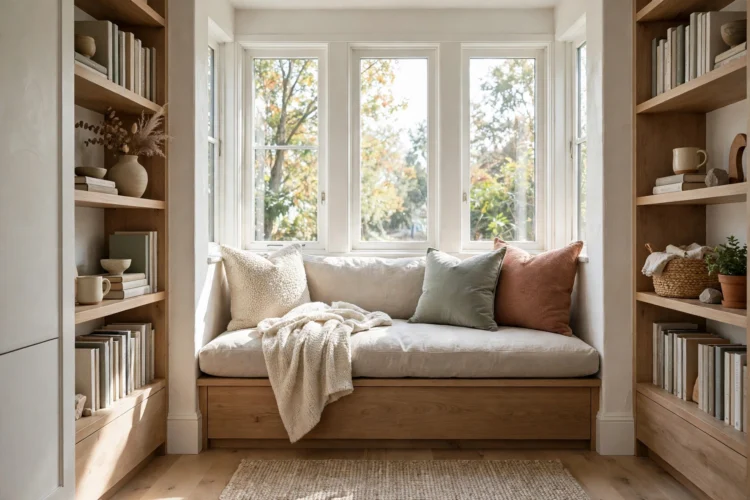
Not every window seat needs to be fixed to the wall. A freestanding bench works well in a rented home, a room you plan to change, or a window where you are not sure a built-in will suit the space. Look for a bench with a solid frame, a flat top, and feet that sit level on your floor. A storage bench with a lift-up lid gives you the same hidden space as a built-in, and you can slide it under a different window if you rearrange the room.
Style it the same way you would a built-in. A cushion cut to size, a folded throw, and a basket underneath for shoes or magazines make it look settled rather than temporary. Measure the window first, and leave a gap of a few centimetres on each side so the bench does not scrape the frame. If the bench wobbles, stick felt pads under the feet before you blame the floor.
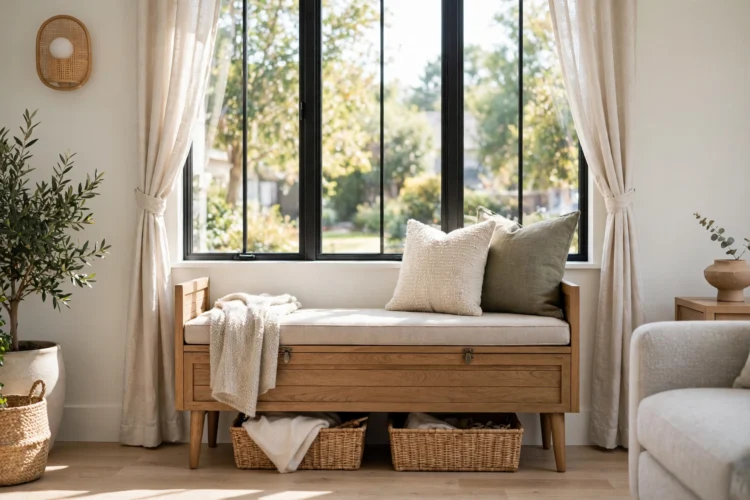
A kitchen window often sits beside a table that is too small for chairs on every side. A bench under that window solves the problem and adds storage at the same time. A low bench with drawers underneath holds placemats, tablecloths, and the serving dishes you only use on weekends. Pair it with a small round or square table, and the nook seats three people where two chairs used to fit.
Pick materials that can handle kitchen life. A painted wood bench wipes clean, and a cushion with a removable, washable cover survives spills. Keep the cushion thin, around 7 centimetres, so you sit at table height and can slide in and out without a struggle. If you want more ideas for the same kind of corner, these breakfast nook ideas cover sunny morning corners with the same mix of seating and storage.
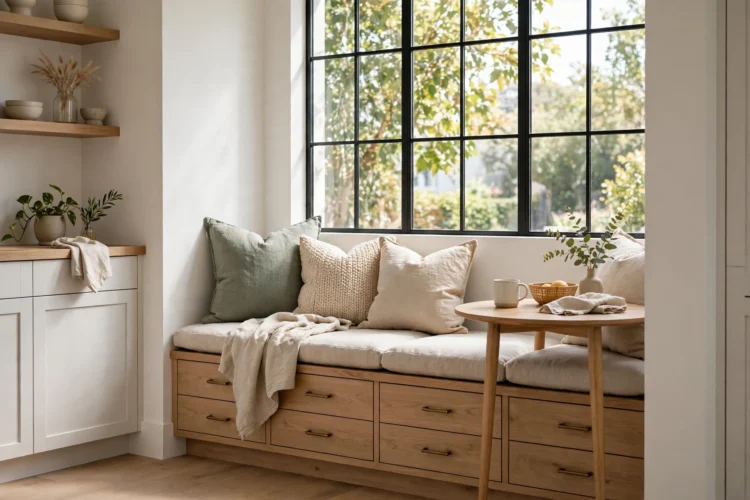
A bedroom window in an unused corner makes a calm place to sit while you put on shoes or plan the day. A bench at the same height as the bed works well, and a cushion in a soft, plain colour keeps the room feeling restful. Add a small side table or a wall shelf for a book and a glass of water, and the corner stops being dead space. These bedroom reading nook ideas show how a simple seat and a lamp can turn an empty corner into a nightly habit.
Window seat storage works hardest in a bedroom, where spare bedding and off-season clothes always need a home. A lift-up lid suits big, soft items such as duvets and thick jumpers, while drawers suit folded clothes you reach for often. Line the inside of the bench with a washable fabric or a simple liner so clothes stay clean, and add a slow-close hinge so the lid never slams on your fingers. Label the inside of the lid if more than one person uses the bench, so nobody has to lift it twice to find a blanket.
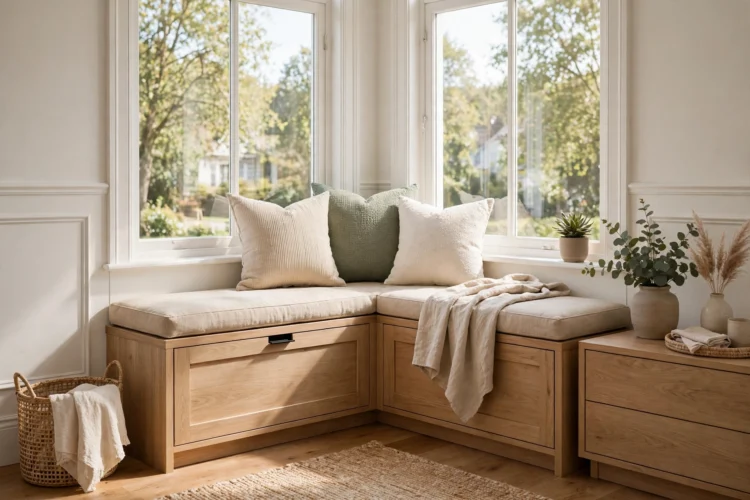
A stair landing with a window is one of the most wasted spots in a house. It is too small for furniture and too good a view to ignore. A short bench across the window turns it into a pause point, a place to read for ten minutes, or a spot to sit while you wait for someone to get ready. Build the bench to the width of the landing, keep it low, and leave the walkway clear so nobody has to step around it on the way upstairs.
Safety matters here more than in other rooms. Fix the bench to the wall so it cannot tip, and keep the cushion thin so the seat does not raise you too close to the sill. A basket under the bench holds books or a pair of slippers, and a small wall light above the seat lets you use the spot after dark without adding a lamp to a narrow space.
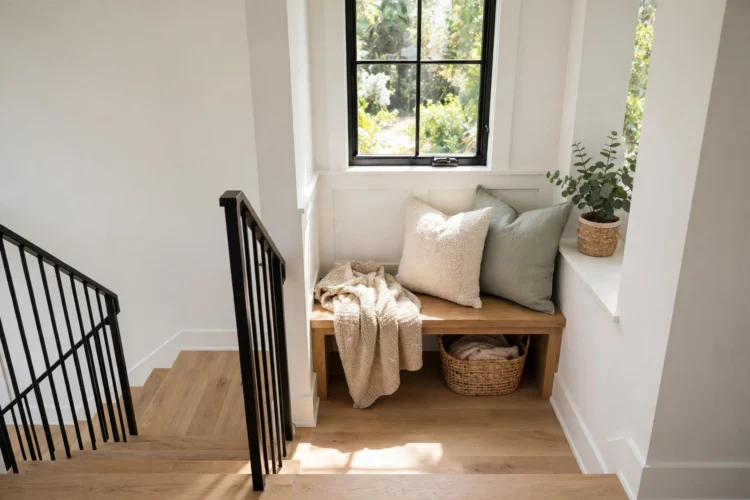
A dormer window in an attic room creates a nook with sloped sides and a low sill, which is awkward for standard furniture and perfect for a custom seat. Build the bench to fit the exact width of the dormer, with the cushion level with the sill so you can sit and look out without ducking. Storage drawers under the seat suit the room well, because attic rooms rarely have enough cupboard space. A cushion in a warm colour softens the sharp angles of the dormer.
Think about the window treatment before you finish the seat. A blind that fits inside the dormer frame keeps the seat clear, while curtains hung on the flat wall outside the dormer can block the seat or catch on the cushion. If the dormer window is hard to open, check the handle clears the cushion before you fix anything in place. For windows that need a cleverer cover, these window treatment ideas for tricky windows are a useful next read, and the same care with angles applies to a dining corner, as these dining nook ideas for awkward corners show for alcoves that need a seat built to fit.
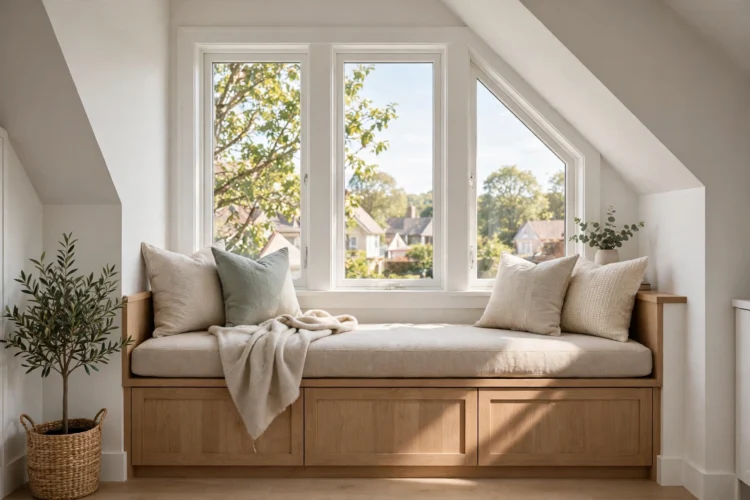
Start with the window you already ignore, measure it twice, and pick the seat that fits its shape. A bay takes a built-in bench, a hall takes a slim seat, a landing takes a short fixed bench, and a dormer takes a custom fit. Add a firm cushion, storage underneath, and one good light, and the corner you walked past will become the seat everyone argues over. Build the simplest version first, live with it for a month, and change the cushion or the storage only after you know how you actually use it.