Physical Address
304 North Cardinal St.
Dorchester Center, MA 02124
Physical Address
304 North Cardinal St.
Dorchester Center, MA 02124

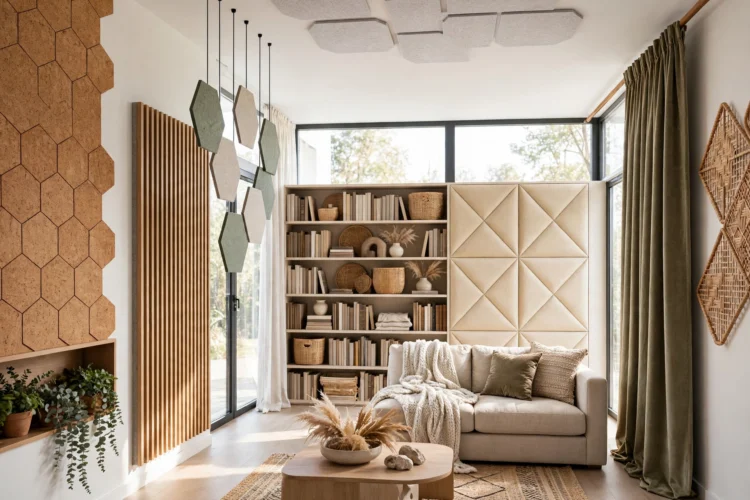
Fabric panels, heavy curtains, and bookshelf walls can quiet a noisy room while making it look more finished. Here are nine ideas that do both jobs at once.
Most rooms sound hard because hard surfaces bounce noise back at you. Bare walls, wood floors, and glass windows send every footstep, voice, and television line straight back into the room. These decorative soundproofing ideas change that without turning your home into a recording studio. Fabric, wood, books, and curtains do the quiet work while the room still looks like a place you want to live in.
Soundproofing at home works in two ways. Some pieces absorb sound inside the room, so voices stop echoing off bare walls. Others add mass and slow sound passing through a wall or under a door. The ideas below do at least one of those jobs, and none asks you to cover a wall in plain foam. Each one earns its place by looking good first and quieting the room second.
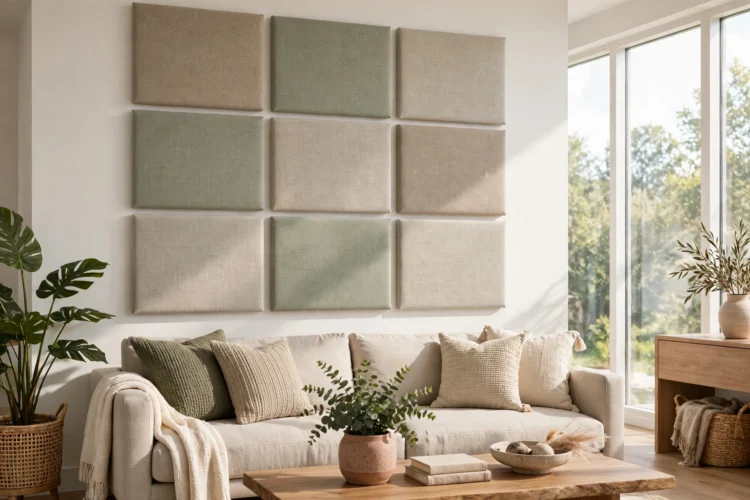
Fabric acoustic panels are the most direct way to calm echo in a living room, office, or bedroom. A panel is a firm core wrapped in fabric, hung on the wall like art. Sound hits the soft face instead of a flat painted wall, and much of it stays in the fabric instead of bouncing back. The effect is easy to hear in a room with wood floors and little furniture, where a single conversation can sound sharp and loud.
Choose fabric acoustic panels in a color that already lives in the room. A deep green panel above a sofa, a warm cream set in a hallway, or a dusty blue pair flanking a television all read as design choices. Start behind the spot where people talk most, such as the sofa or dining table, and add panels on the wall opposite a large window, since glass reflects sound well. Three or four well placed panels often change the sound of a room more than a full wall of panels placed at random.
Windows are one of the loudest surfaces in a room. Glass reflects sound, and thin curtains do little to slow it down. Heavy curtains change both problems at once. Thick linen, velvet, or lined cotton adds a soft layer over the glass, and the folds trap sound in a way a flat blind never will. The room sounds softer, and the window looks finished at the same time.
Hang the rod high, close to the ceiling, and let the curtain fall to the floor. Let the panels extend a few inches past each side of the frame so they cover the wall beside the glass as well. That extra width gives the fabric more surface to absorb sound, and it makes the window look wider. For hanging and styling help, see these living room curtain ideas for height and light before you pick a rod. Sound absorbing curtains work best when they are full and pleated rather than pulled flat, since soft folds give sound many layers to pass through.

A full bookshelf is one of the oldest sound tricks in a home, and it still works. Books have weight, and a wall of them adds mass that slows sound passing through. The uneven spines, varied book heights, and small gaps between objects break up sound waves instead of letting them bounce in one clean line. A bare wall reflects. A filled shelf scatters and absorbs.
Build the shelf wall against the shared wall you hear most through, such as the wall beside a neighbor or a hallway. Fill the shelves with books first, then add boxes, baskets, and framed photos in the gaps. A bookshelf wall soundproofing plan works best when the shelves run from floor to ceiling with no large empty stretch, since an empty shelf is just another hard surface. If you want the shelf to divide a space, these bookshelf room divider ideas that add storage show how to place one so it splits a room without closing it off. Keep the back panel solid if noise is your main concern.

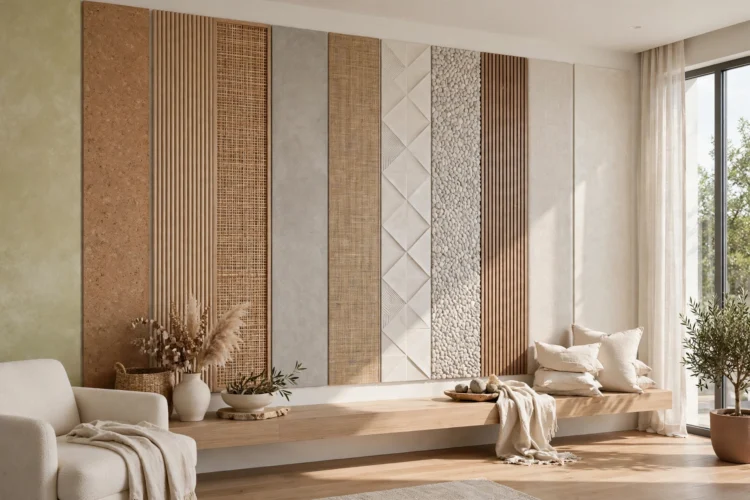
Wood slat walls bring warmth to a room, and with the right backing they quiet it too. Thin wood slats on their own reflect sound, but slats fixed over a felt or fabric backing create a surface with gaps, soft material, and varied depth. Sound enters the gaps, hits the soft backing, and loses energy instead of bouncing straight back. The result is a wall that looks like a design feature and sounds calmer than flat drywall.
Use slat panels behind a sofa, behind a bed, or on the wall where a television sits. Keep the slats vertical for a taller look, or run them horizontal in a low, wide room to stretch the wall. Look for panels with a real felt or acoustic backing, not just slats glued to a hard board, since the backing does most of the quiet work. For styling help, these wood panel accent wall ideas for the living room show how to size a panel, pick a finish, and place it so it frames the furniture in front of it.

Hard floors carry sound in two directions. They reflect voices upward, and they pass footsteps and dropped objects straight through to the room below. A rug breaks both paths. The fibers absorb sound in the room, and the layer between shoe and floor softens the impact before it travels. In a room with wood or tile floors, a rug is often the first change you can hear.
Place a thick rug where feet land most: beside the bed, in front of the sofa, under the dining table, and along the path between rooms. A low, flat rug looks neat but absorbs little. A rug with a deep pile or a woven wool texture traps more sound and feels better underfoot. Let the front legs of the sofa or chairs sit on the rug so the soft surface covers the area where people sit and talk.
A rug pad is the quiet partner under the rug. A thick felt pad adds another soft layer, keeps the rug from sliding, and cushions each step. Felt pads absorb more sound than thin rubber grips, and they also protect the floor underneath. Choose a pad slightly smaller than the rug so it stays hidden, and replace it when it flattens out after years of use. In a bedroom, a pad under a bedside rug makes early morning steps softer.

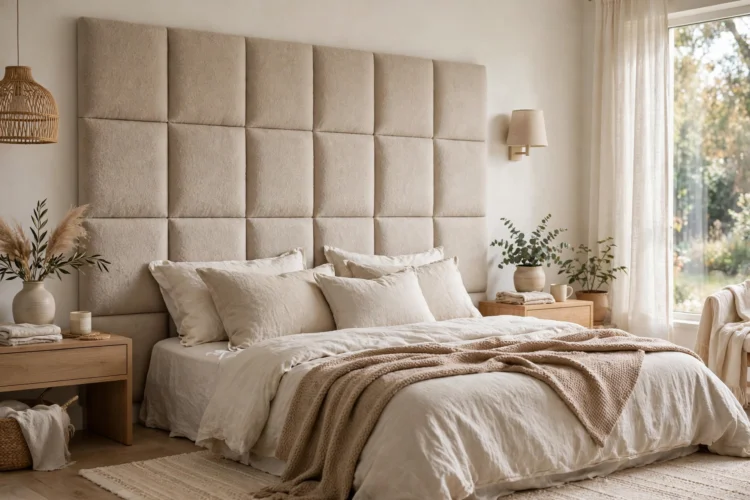
Bedrooms echo more than people expect. Two bare walls, a hard headboard, and a wood floor can turn a quiet room into a boxy one. An upholstered headboard fixes the wall right behind the bed, which is where voices and late night reading all bounce. Padded fabric over a firm core absorbs sound at the source and gives the bed a softer, more finished look.
Pick a headboard that runs the full width of the bed, or wider if the room allows it. A tall headboard covers more wall and creates a clear focal point. Linen, velvet, and bouclé all work well, and a tufted or channel stitched design adds depth that helps break up sound. Add a thick throw across the foot of the bed, soft cushions, and a fabric wall hanging on the opposite wall. Heavy bedding helps too, since a thick duvet covers a large soft surface every night.
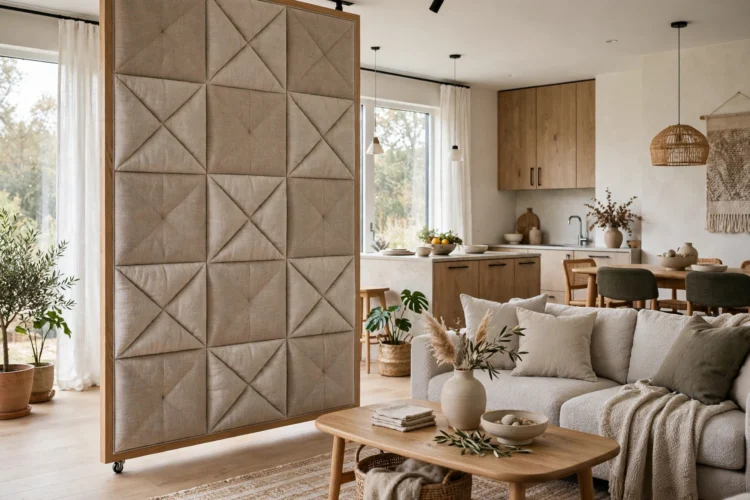
Large open rooms sound empty because sound travels a long way before it hits anything soft. A room divider shortens that path. A freestanding screen, a fabric panel, or a low bookshelf placed across the room breaks the space into smaller zones, and each break gives sound a surface to hit and lose energy. The room still feels open, but it stops sounding like a hall.
Choose a divider with soft or filled surfaces rather than a flat sheet of glass or thin plastic. A fabric screen with a wooden frame, a woven panel, or a divider with shelves and books all absorb more than a hard panel. Place it where the room changes use, such as between a living area and a workspace. For a softer version, these curtain room divider ideas for soft separation show how a heavy curtain on a ceiling track can split a room and quiet it at the same time. In a rental, a freestanding divider is often the easiest sound fix of all, since it needs no nails and no glue.
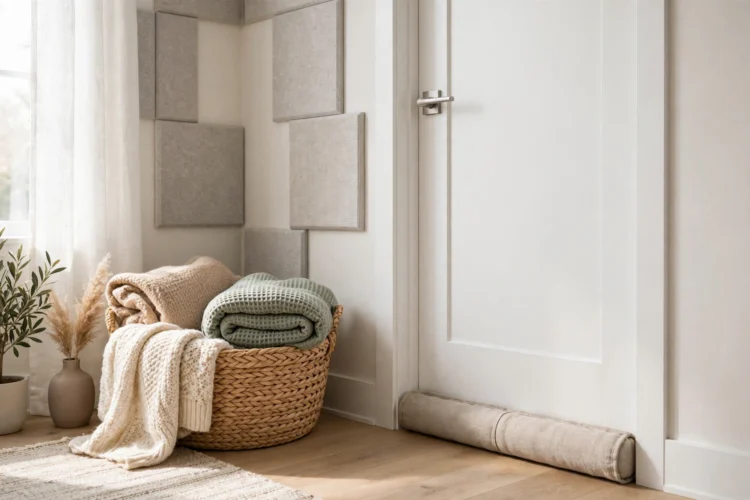
Not every sound fix needs a new piece of furniture. Small gaps let in more noise than people expect. Start with the door. A gap under a bedroom or office door lets hallway noise straight in, and a simple draft stopper or door sweep closes it. Add a strip of foam or rubber weatherstripping around the frame if light still shows through the edges when the door is shut. The door should feel snug when it closes, with no rattle and no visible gap.
Look at the corners next. Empty corners reflect sound in a tight loop, and a soft piece in the corner breaks that loop. A tall basket with rolled blankets, a floor cushion, or a pile of folded throws all work. Plants help in a smaller way. A large plant with broad leaves adds a soft, uneven surface, and a group of plants in a corner fills space that would otherwise stay hard and bare. Plants will not block much noise on their own, so treat them as a finishing touch rather than the main fix.
Pick one room this weekend and try two ideas from this list together, such as a rug with a pad plus a heavy curtain on the noisiest window. Live with the change for a few days, then add the next layer only if the room still sounds sharp. A quiet room rarely comes from one large purchase. It comes from soft layers placed where sound actually travels, and each layer makes the next one work better.