Physical Address
304 North Cardinal St.
Dorchester Center, MA 02124
Physical Address
304 North Cardinal St.
Dorchester Center, MA 02124


A laundry chute turns the daily pile of dirty clothes into a two-second drop. These nine designs cover placement, doors, and the safety details that keep the system working for years.
Carrying a laundry basket down two flights of stairs gets old fast, and it is the kind of daily chore that adds up to real time and real risk of a stumble. These laundry chute ideas use gravity to do the carrying for you. A two-story laundry chute is a smooth shaft inside the wall that runs from an upstairs room down to the laundry room, so dirty clothes land where they get washed. The best designs are simple, quiet, and safe, and they hide in plain sight behind a small door. Pick the version that fits your floor plan, and the stairs stop being part of laundry day.
The classic setup starts in the upstairs bathroom, where most dirty clothes and towels are already in hand. A laundry chute door in the bathroom wall opens to a vertical shaft that drops straight to the laundry room below, and a straight run means nothing snags on the way down. Keep the shaft clear of pipes and wires, line it with smooth plywood or metal, and size the opening around 12 by 12 inches so folded towels and jeans pass through without folding themselves into a jam. A soft-close hinge keeps the door from slamming at night, and a magnetic catch holds it shut between loads.
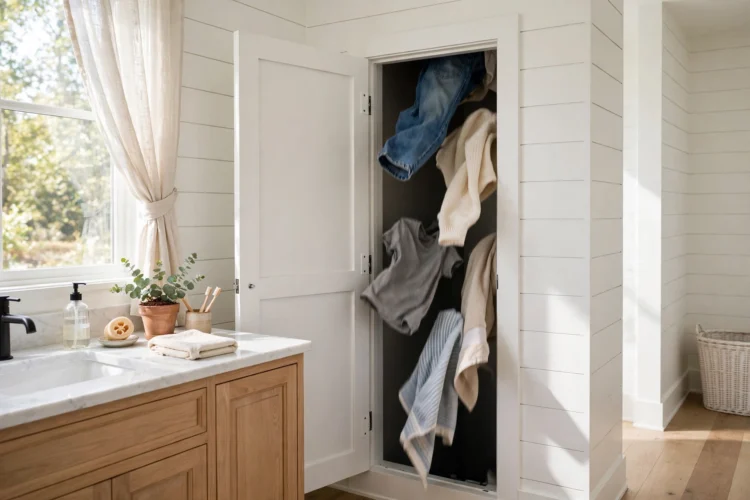
When the bathroom wall has no room for a shaft, the hallway linen closet often does. The closet already sits against the wall cavity, and its shelves hide the chute opening from view. Cut the opening through the closet floor, frame it with 2×4 lumber, and mount the door on the closet wall at waist height so nobody has to bend or reach overhead. Good laundry chute placement puts the door where dirty clothes already gather, and this spot works well for sheets and towels because the linen closet is where clean ones live anyway, which keeps the whole loop short. Label the door discreetly if guests use the closet, since a laundry chute looks like ordinary cabinetry once it is closed.
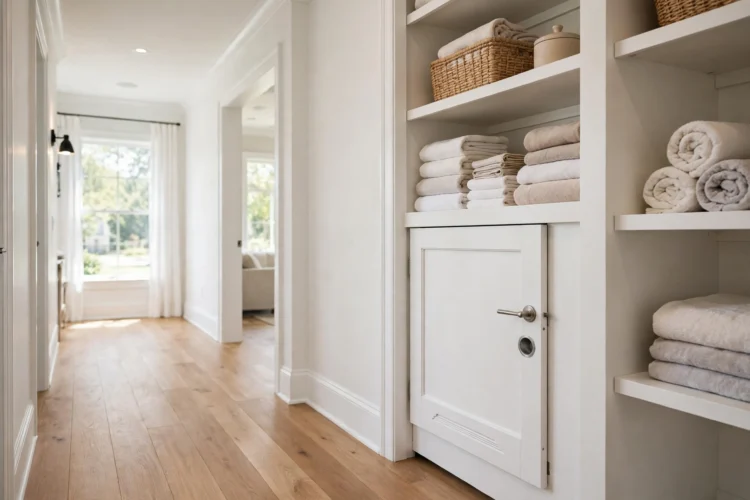
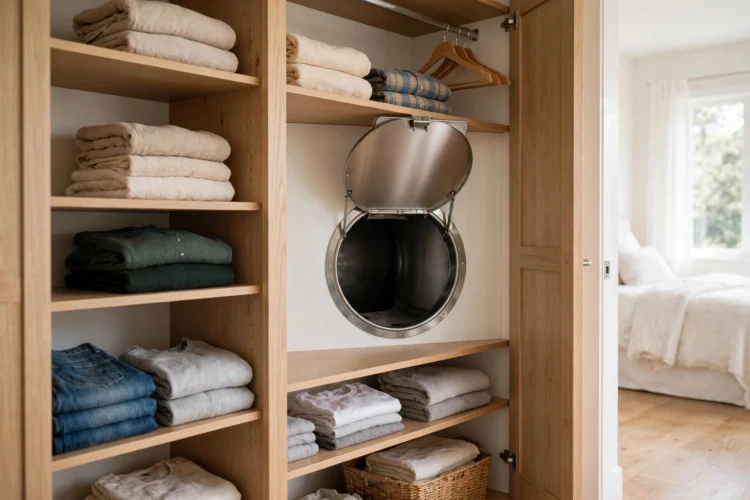
The master bedroom closet is where most of the daily laundry starts, so a chute there saves the most trips. A small door set into the closet wall at knee height lets you toss clothes in while you change, and the shaft runs down inside the wall to the laundry room. Because bedroom closets back onto interior walls more often than bathrooms do, the framing is usually simpler and the shaft stays away from plumbing. Add a shallow basket or a fabric bag hooked just inside the door to catch items you want to keep separate, like delicates. The stacked washer dryer ideas for small bathrooms show how the receiving end can stay compact when floor space is tight.
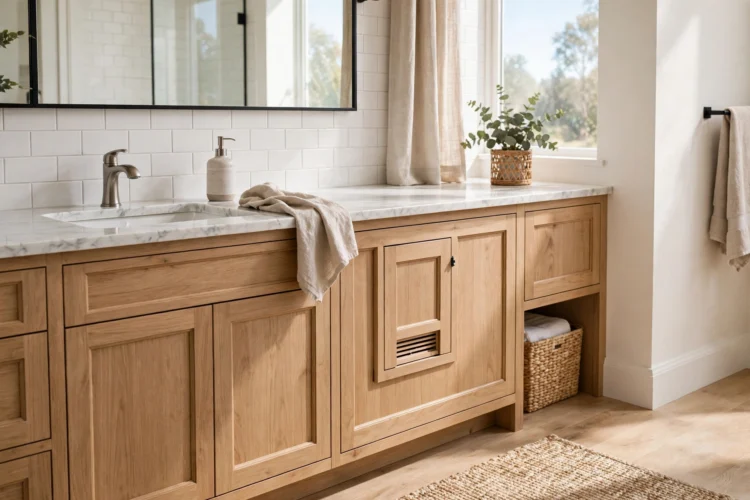
Small bathrooms can still have a chute if the door hides inside the vanity cabinet. The opening sits in the back or side panel of the cabinet, low and out of sight, and the shaft runs down behind the vanity into the wall below. This version suits homes where the bathroom sits directly above the laundry room and the drop is short. Use a cabinet door with a simple push latch so wet hands can open it, and line the shaft so damp towels slide instead of sticking. It is a good choice for a guest bath too, because the chute stays invisible until someone opens the cabinet.
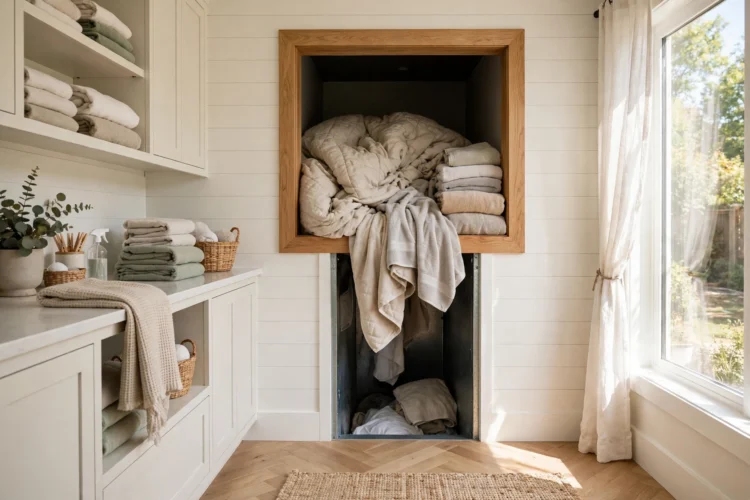
Standard chute openings handle shirts and towels, but sheets, duvet covers, and blankets need more room. A wide chute uses an opening closer to 16 by 16 inches and a shaft built from smooth sheet metal so bulky items glide instead of bunching at the edges. The wider shaft needs solid framing and a clear path with no offsets, so it fits best in new builds or during a full remodel when walls are open. Put the wide door in the room where bedding changes happen, usually the master bedroom or the linen closet, and keep a second standard door upstairs for everyday clothes.
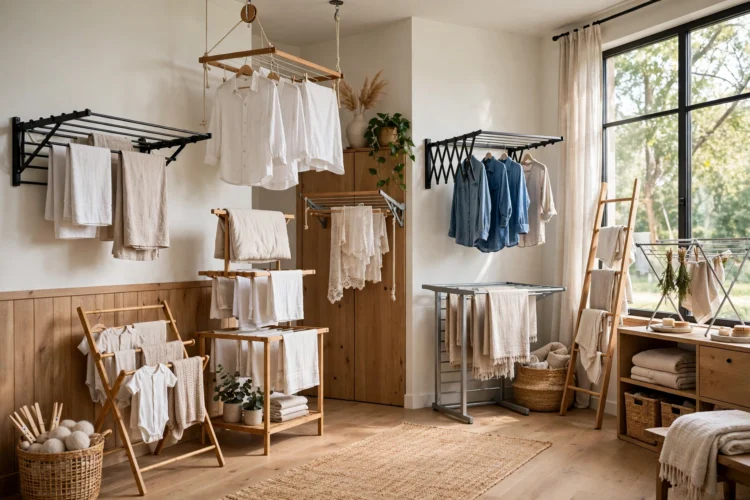
Safety matters as much as convenience, because a chute is a vertical opening between floors. Many building codes treat the shaft like a small duct and ask for fire-rated material at the bottom, so fit a self-closing, fire-rated door where the chute meets the laundry room. The door should close on its own every time, which stops smoke and hot air from traveling up the shaft. Check your local code before you cut anything, since rules differ by town, and ask your inspector whether the shaft needs metal lining. A laundry drying rack setup placed beside the chute outlet keeps the landing zone tidy while wet loads wait for the dryer.
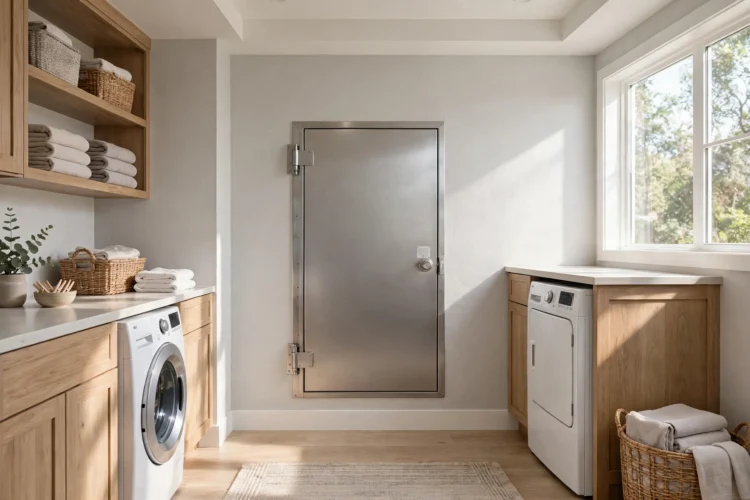
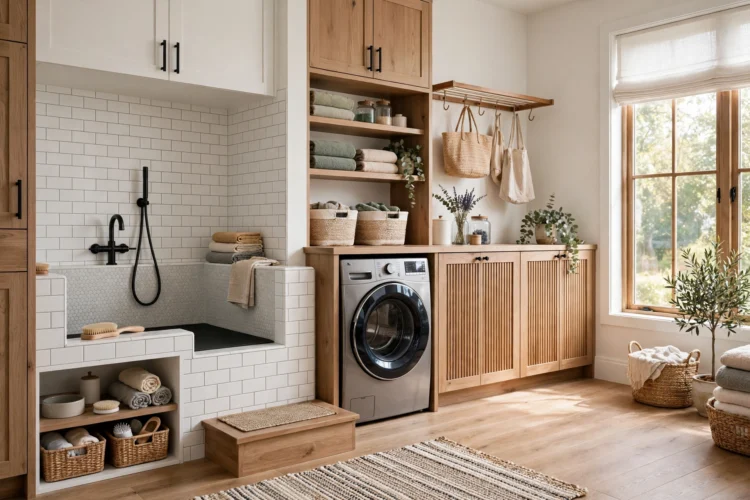
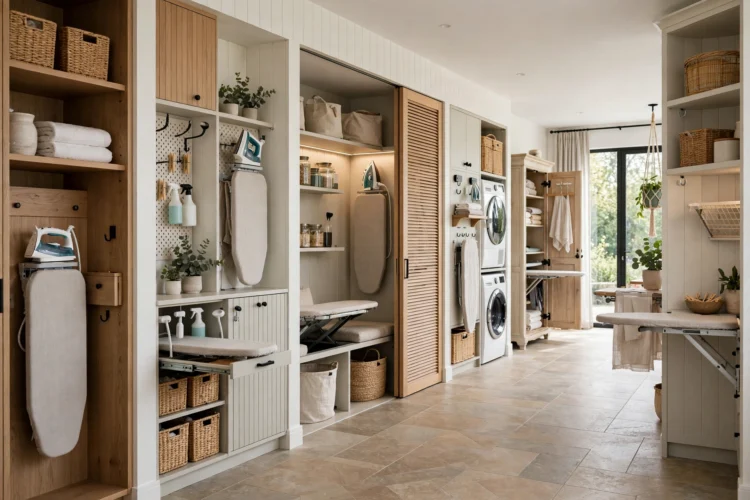
Clothes that land on a bare floor scatter and get stepped on, so give the chute a soft landing. A large wicker hamper or a rolling laundry cart parked directly under the outlet catches everything in one place, and a removable liner makes the trip to the washer a one-handed job. Leave enough clearance below the outlet for the basket to slide out, and add a small shelf above it for stain spray and detergent. This setup also tells you at a glance how full the load is, so you can run the washer when the basket hits the top instead of guessing. Pair it with one of the laundry ironing station ideas that save space and the whole room works as a single laundry loop.
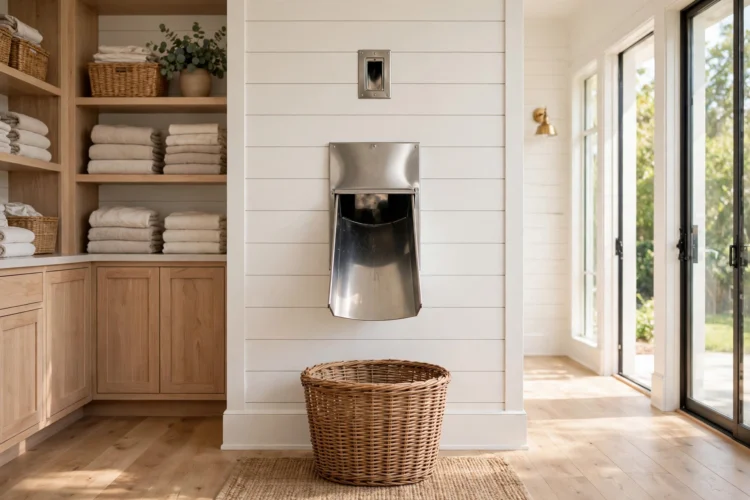
If your laundry room already sits upstairs, a short chute still helps. A chute from the master closet or the kids bathroom to a second-floor laundry room keeps dirty clothes off the bedroom floor and out of the hallway, and the drop is only a few feet, so the build is simple and the shaft is easy to inspect. The short run also means less noise and less chance of a jam. This layout works best when the laundry room shares a wall with a bedroom or bath, which many two-story plans already do. The landing basket can sit in a closet nook, leaving the machines free for folding space.
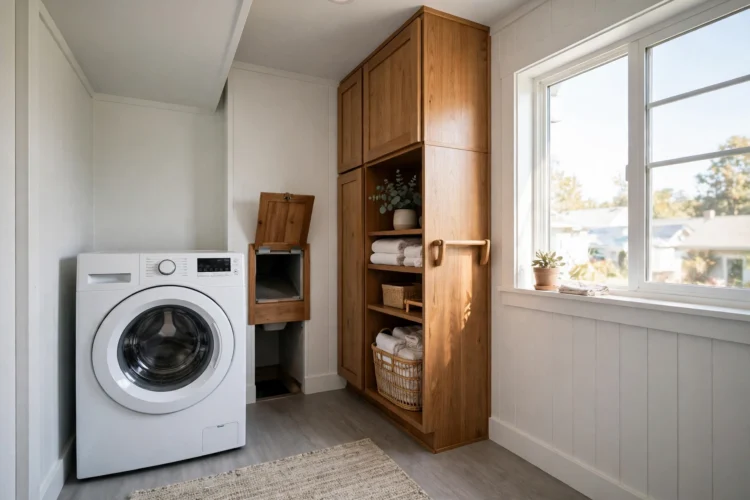
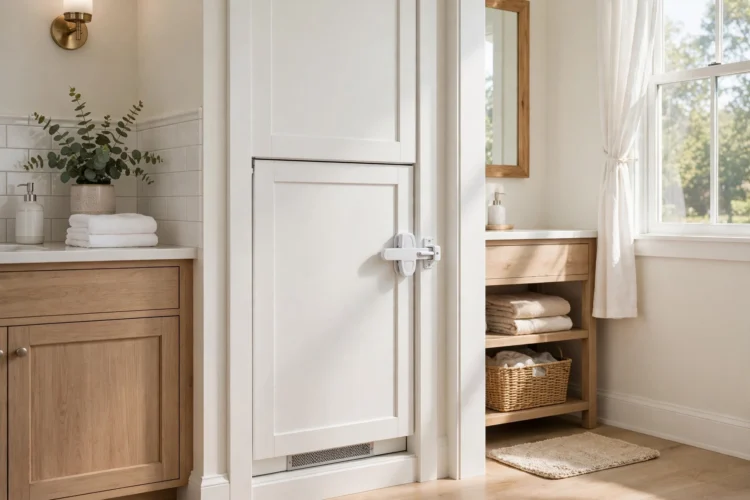
Any opening big enough for laundry is big enough to worry a parent, so the door hardware deserves real attention. Fit a chute safety latch that a small child cannot open from the outside, and choose a door that closes and latches on its own so it never sits open by accident. Keep the opening at least a few feet above the floor in kids bedrooms, and never place a chute door where a child could climb into it. A simple magnetic child lock costs little and removes the worry entirely. Talk through the rules with the family once the chute is in, and check the latch every few months the same way you would check a stair gate. A pet wash station in the laundry room uses the same idea of keeping the messy jobs contained in one safe, washable spot.
A good chute disappears into the house and only shows up when you need it. Start with the room that produces the most laundry, keep the shaft straight and smooth, and fit a door that closes on its own. The rest is just picking the spot where a two-second drop replaces a trip down the stairs.