Physical Address
304 North Cardinal St.
Dorchester Center, MA 02124
Physical Address
304 North Cardinal St.
Dorchester Center, MA 02124

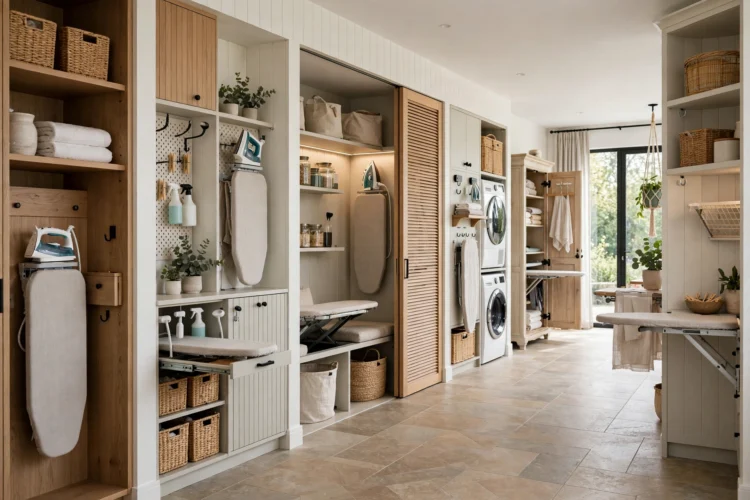
Give ironing a fixed home with a fold-down board, a pull-out drawer, or a wall cabinet that closes flat. These nine setups save floor space and keep the iron within reach.
A freestanding ironing board eats floor space in a small laundry room, and it always seems to be in the way when you carry a basket past it. These laundry ironing station ideas give pressing a fixed home instead, so the board folds away when you finish and the iron has a place to live. Each idea below fits a different room shape, from a narrow wall beside the washer to a deep drawer under the counter. Pick the one that matches how often you iron and how much wall or cabinet space you can spare.
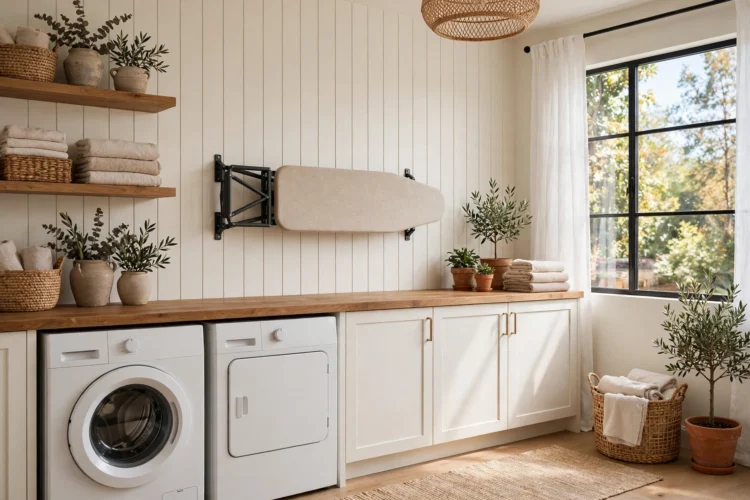
A fold-down ironing board mounts to the wall and drops flat when you need it, then folds up into a slim cabinet or panel when you finish. It takes no floor space at all, which makes it the best starting point when the washer and dryer already fill most of the room. Look for a board with a solid hinge and a latch that holds it shut, so it stays closed when kids or pets brush past it.
Mount the board at a height that lets you press without hunching over it. Most adults press comfortably when the board sits near hip height, so test the height with a strip of tape on the wall before you drill. Leave a clear patch of floor in front of it, about the width of the board, so you can stand square and move the iron along a sleeve or a shirt front without stepping sideways.
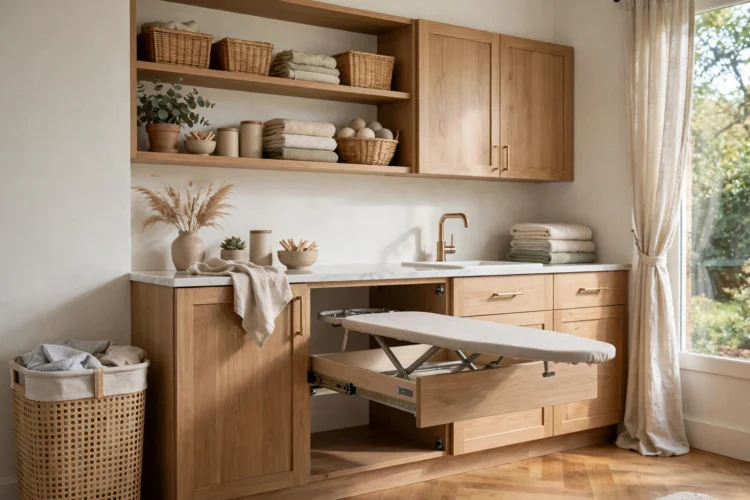
A built-in ironing drawer hides a small board inside a cabinet drawer, and it slides out only when you need it. The board sits at counter height, so you can press a shirt while the washer runs its next load. When you push the drawer shut, the whole station disappears behind a cabinet front, and the room looks tidy again.
This setup suits people who iron in short bursts rather than in long sessions. A drawer board is shorter than a full board, so it handles collars, cuffs, hems, and touch-ups with ease, while a full-length dress may need a second pass. If you sew or press craft fabric, the same drawer can hold a small pressing cloth and a tailor’s ham. The idea borrows its logic from pull-out storage ideas for deep cabinets, where a sliding shelf turns dead space into a work surface you can reach without bending.
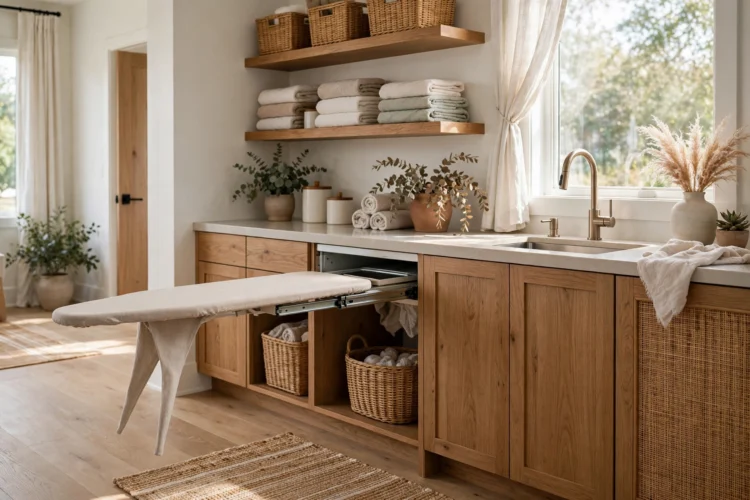
A slide-out board lives in a shallow slot under the counter, much like a cutting board that pulls out from a kitchen cabinet. You tug a handle, the board glides out on its runners, and a leg or a support bracket locks it in place. The counter above stays free for folding, so one stretch of counter does two jobs.
Measure the slot before you buy, because the board needs a few inches of clearance on each side to slide without catching. A board that is too wide will scrape the cabinet frame, and one that is too narrow will wobble when you press near the tip. If your counter has a lip or an overhang, check that the board clears it when it pulls out. A heat-safe pad on the board keeps the surface flat and protects the wood beneath it from steam.
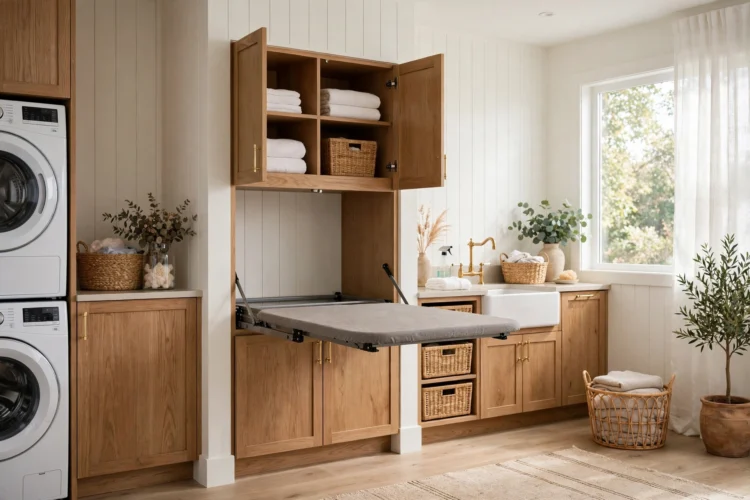
A wall-mounted ironing board inside a shallow cabinet gives you a board, a mirror, and storage in one wall unit. Open the cabinet door and the board drops down on its hinge. Close it and the door hides the board, the iron rest, and a few small supplies. The cabinet looks like a plain wall panel, so it suits a laundry room that doubles as a hallway or a mudroom.
Place the cabinet near the dryer, so you can pull a warm shirt straight out and press it on the wall-mounted ironing board before it cools and creases set in. Keep the iron on a heat-safe rest inside the cabinet, with the cord wrapped on a hook, so nothing dangles when the door closes. The same wall-first thinking shows up in wall-mounted storage ideas that free the counters, where the wall carries the load and the work surface stays clear for the job at hand.
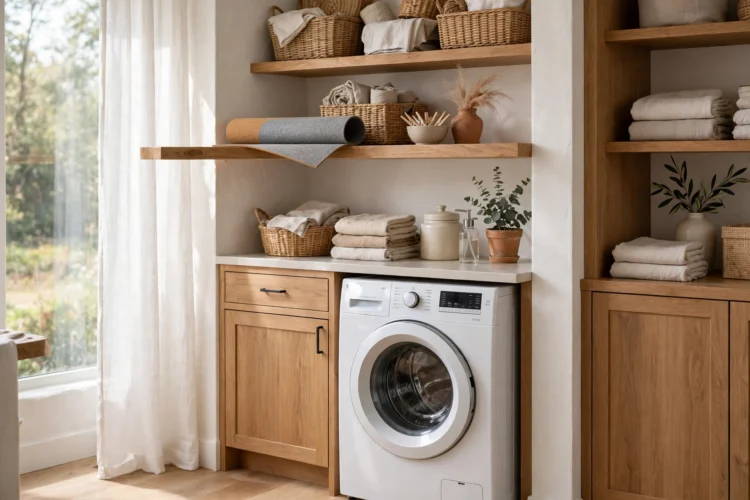
When no wall or drawer is free, a sturdy shelf above the washer can act as a pressing spot for quick jobs. Fit a heat-safe pressing mat on the shelf, and you can smooth a collar or a hem while the next load washes. The shelf still holds detergent and stain spray at one end, so the space works twice as hard.
This setup only works if the shelf is fixed solidly and sits at a height you can reach without stretching. A shelf that is too high forces your shoulders up and makes pressing tiring after a few minutes. Keep the mat rolled or folded at the back of the shelf when you are not using it, and wipe the shelf dry before you lay fabric on it, since laundry rooms collect dust and stray drips from detergent bottles.
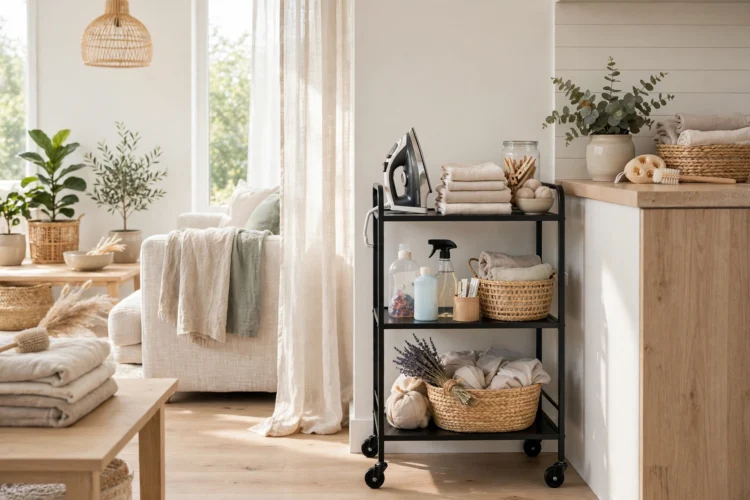
A narrow rolling cart parks in the gap between the washer and the wall, and it rolls out when ironing time comes. The top holds a small pressing pad, the middle shelf holds the iron, and the bottom basket holds spray bottles and a lint brush. When you finish, you push the cart back into its gap and the room regains its floor.
Pick a cart with locking wheels, so it stays put while you press and does not drift across a smooth floor. A cart with a solid top works better than one with open slats, since the iron needs a flat, steady base. This kind of rolling storage follows the same small-space logic as small-space ideas that make every inch count, where a slim piece of furniture earns its keep by fitting a gap that would otherwise sit empty.
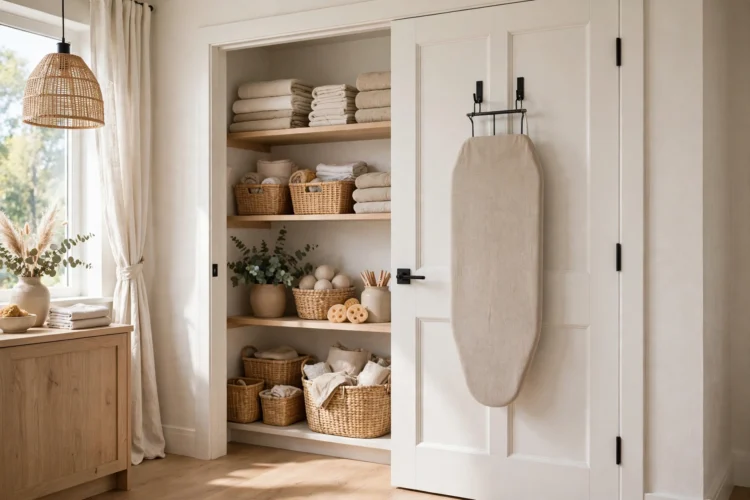
Some laundry rooms have no free wall at all, because the washer, dryer, and shelves already cover every side. A board that hooks over a closet door solves that problem. It hangs flat against the door when you are not using it, and you lift it off the hooks and set it on a counter or a table when you need a pressing surface.
Choose hooks that grip the top of the door without scratching the paint, and check that the door still closes with the board hanging on it. A lightweight board is easier to lift on and off, so it suits a quick press before work better than a heavy wooden board does. The same door can also hold a hanging organizer for supplies, which borrows from small closet organization ideas that turn a door into storage instead of leaving it blank.
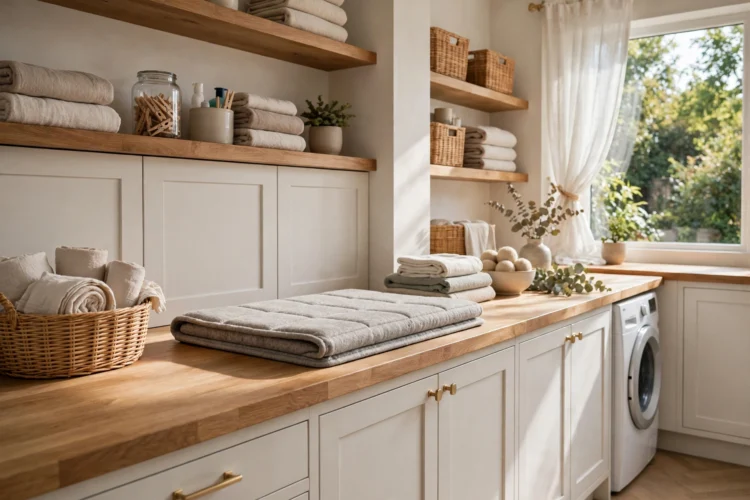
A countertop pressing pad is the simplest station of all, and it needs no building work. Lay a thick, heat-safe pad on the folding counter, plug in the iron, and press the two or three items that need it. Roll the pad up and store it in a cabinet when you finish, and the counter goes back to folding duty.
Pads come in sizes that fit a full counter or just half of one, so measure your counter and leave room for a folded pile at the other end. A pad with a non-slip base stays in place while you move the iron, which matters more than it sounds when you press a slippery blouse. Keep a small spray bottle and a pressing cloth beside the pad, so a touch-up takes a minute instead of turning into a full setup and pack-down routine.
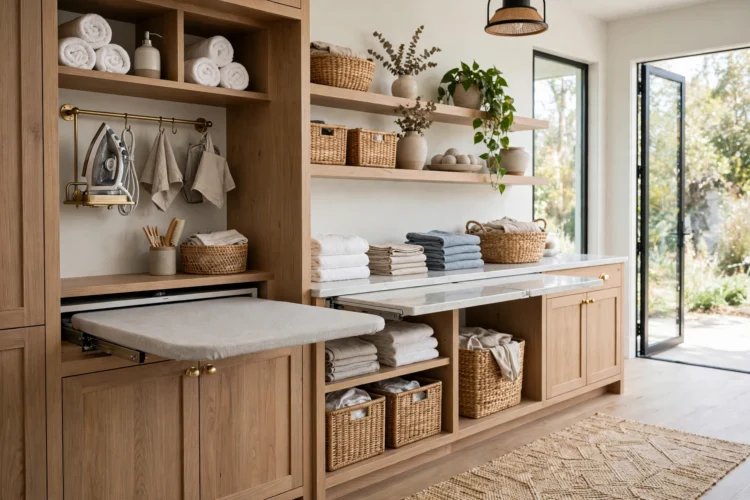
A built-in pressing station pairs a fixed board with the folding counter, so dirty clothes go in one end of the room and pressed clothes come out the other. The board sits at the same height as the counter, which creates one long work surface for sorting, folding, and pressing in a single pass. A shelf above holds the iron, and a drawer below holds pressing cloths and stain pens.
This is the most permanent option in the list, and it suits a laundry room you plan to keep for years. Plan the layout on paper first, with the washer, dryer, counter, and board in a line that matches how you move through a load. A small laundry room ironing setup like this works best when the board sits beside the dryer, so warm clothes travel the shortest distance from drum to board. If you iron only once a week, a fold-down board may serve you better, but if you press most days, a fixed station saves the setup time that adds up across a month.
Start with the wall or drawer you already have, and add one small laundry room ironing setup that fits it. A fold-down ironing board on a bare wall, a built-in ironing drawer in a spare cabinet, or a pad on the counter you already own can each turn ironing from a chore that needs setup into a quick step in the laundry routine. Pick the setup that matches your room, mount it solidly, and keep the iron and supplies in the same spot, so pressing takes minutes instead of a full unpacking session.